Showing posts with label Japanese culture. Show all posts

Wednesday, August 5, 2026

MURDER AT THE END OF THE WORLD, Pushkin Vertigo brings prize-winning debut Japanese mystery to Anglophones


MURDER AT THE END OF THE WORLD
AKANE ARAKI
(tr. Jesse Kirkwood)
Pushkin Vertigo (non-affiliate Bookshop.org link)
$13.99 ebook, available now

Rating: 4* of five

The Publisher Says: An unlikely duo embarks on a road trip to find a serial killer before the apocalypse in this prize-winning Japanese murder mystery.

Perfectly blends the dystopian humor of Zombieland and the thrills of My Sister the Serial Killer!

From Japan’s most exciting new crime writer Akane Araki, this thrillingly funny, high-concept murder mystery follows a young woman and her driving instructor as they face a compelling moral dilemma: should they work to stop a serial killer before the end of the world? A meteor is on a collision course with Earth. The entire human race has 3 months to live. Uncontrollable panic has set in across the globe, but 23-year-old Haru is still determined to finally get her driver’s license.

When Haru and her ex-cop driving instructor Isagawa open their car trunk one day to find the corpse of a murder victim inside, they feel duty-bound to investigate. Together, they set off on a road trip through the crumbling landscape around them to hunt for the killer. As more bodies start appearing, more questions surge. Why would a serial killer begin work three months before the end of the world? And does justice lose its meaning with humanity on the brink of extinction?

And it turns out that Haru's driving instructor is not just an ex-cop but one with a manic devotion to justice. So, despite the small matter of an impending apocalypse, the pair team up to catch the culprit, no matter where it takes them. After all, the world's not quite over yet...

Quirky, fast-paced, and packed full of surprising heart, Murder at the End of the World will delight fans of Stuart Turton’s audacious plots and the humorous, life-affirming bent of dystopian favorites like Zombieland and Shaun of the Dead.

I RECEIVED A DRC FROM THE PUBLISHER VIA EDELWEISS+. THANK YOU.

My Review
: I really liked The Last Policeman when it came out. I'm still salty that it never made it onto the screens of the world where I really felt it deserved to be. So I was all ready to be this book's fanboy.

I'm on record as not wanting to read about women being sexually abused and murdered for plot purposes. This story, led by an amateur sleuth who's female, does indeed have a woman abused and murdered in it, so why am I breaking my strong preference not to read that plot?

Because it's not the first death (that's her father's suicide), and it's not the glorified, prurient point of the victim's death, but is instead an indictment of a patriarchal system I found myself willing to spend my entertainment eyeblinks on this topic. It's a sleuthing excursion led by two women who found a shared compass in bringing justice to the victim. In spite of flaming death for the whole human race racing towards the planet.

That, mes vieux, is a moral compass. We're going to die. And that's still no reason not to bring justice to a terribly abused woman by making her abuser pay for his crime. Haru greets us, so to speak, by discovering her father has hanged himself; her response is to arrange his body respectfully and goes to finish her driving lessons. Her instructor Isagawa is a retired cop, determined like Haru to keep her world in balance and thus cope with the existential crisis of certain doom.

I'm quite taken by the nature of these end-is-nigh narratives; they add a weird frisson to the most quotidian conversations. Haru and Isagawa discover the horribly mutilated body of a young woman in the trunk of their randomly selected driver-training car, which would occasion much screaming and dialing of 911 if I happened to be there; the women are incensed, repulsed, but the police are not inclined to do anything as no one else is fussed about all the dead girls piling up around town...the world is ending, and Isagawa already knows the local police well so tells Haru this victim will receive no attention to speak of (nor would she ever have).

They discuss what to do. They really get into it. They have powerful feelings about it even as extinction faces them; ultimately they decide to investigate this murder for themselves. And it takes paragraphs (reported by Haru in first person) to do it. There is deeply important stuff at stake for Isagawa that might help her process her decisions leading up to her leaving the police in the first place. I'm all for redemption arcs.

Seriously y'all...there's a mutilated dead person in the trunk. These women stand there and talk. My hysterical, overemotional male self would be retching, screaming, generally freaking out at the top of my lungs as I speed-dialed the cops skatey-eight skabillion times to tell them to come get this corpse RIGHT NOW. Haru and Isagawa discuss, calmly, how to approach the process of identifying who killed her and why. While an asteroid's speeding towards Earth to end life as we know it. So, no...not ordinary circumstances, therefore not ordinary responses, and honestly the chats they're having would be fascinating no matter what but the existential stakes make them so deeply, touchingly human. These two very different people, Haru cheated out of a full life by the asteroid and Isagawa processing her much-closer end as a chance to do the right thing with her last actions on Earth, confront a serial killer...a thing I never want to do yet they're just doing it...and, in the least effective narrative choice made by Author Araki, that scumbag goes into the cliched villain monologue. More infuriatingly, Haru reveals she's known something central to the case, something coincidentally itportant, since the beginning. Fifth star sliding under the waves in 3...2...1....

I'm recommending this read to you because it is, for its structural flaws, a fascinating meditative tale. It delves into serious, interesting, well-thought-out moral discussions; it gives these two oddly assorted road-trippers ample scope to let their thoughts stew, serve them up, and discuss together and in company with odds-and-sods they collect along the road. It's often funny stuff, occasionally maudlin, usually prolix as anything.

As much as I really got annoyed I'm even more pleased that Haru and Isagawa brought me along with them as they maintained ma'at in extremis.

Saturday, February 7, 2026

LION CROSS POINT, short novella about the magic moment kidhood ends


LION CROSS POINT
MASATSUGU ONO
(tr. Angus Turvill)
Two Lines Press (non-affiliate Amazon link)
$9.99 Kindle edition, available now

Rating: 5* of five

The Publisher Says: When 10-year-old Takeru arrives at his mother's home village in the middle of a scorching summer, he's all alone and in possession of terrible memories. Unspeakable things have happened to his mother and his mentally disabled 12-year-old brother.

As Takeru gets to know Mitsuko, his new caretaker, and Saki, his spunky neighbor, he meets more of his mother's old friends, discovering her history and confronting the terrible acts that have left him alone. All the while he begins to see a strange figure that calls himself Bunji—the same name of a delicate young boy who mysteriously vanished one day on the village's coastline at Lion's Cross Point.

At once the moving tale of a young boy forced to confront demons well beyond his age, a sensitive portrayal of a child's point of view, and a spooky Japanese ghost story, Lion's Cross Point is gripping and poignant. Acts of heartless brutality mix with surprising moments of pure kindness, creating this utterly truthful tale of an unforgettable young boy.

I RECEIVED AN ARC FROM THE PUBLISHER. THANK YOU.

My Review
: I'll start with my favorite thing about the read. Its translator has chosen a Zazie in the Metro-type interpretation of the child PoV's speech, extending it to all the people in this very small, very young group. This includes no "ng" dipthongs in English...which made me wonder what the Japanese equivalent must be since the language does not use dipthongs...and lots of elisions like "happy t'see me?" and the like. It's something that will, if the occasional comments I receive on my own usage of this technique are any indicator, make some of y'all really mad. I myownself felt as though I was sitting there, in Ken's car, or when Sasaki buys Takeru (our PoV boy) a soda. As Sasaki does not use the elisive speech pattern we're reinforced that he's really old. "You're a grandpa?" Takeru asks him in surprise. "Certainly am," replies Sasaki; Ken, not anything like as old as Sasaki despite being old enough to have a car and to run around with the kids all over, is a serial elider.

It felt right and welcoming to me. You do you.

The fancier people who surround Takeru's absent mother all speak something rendered as Standard English, like Sasaki; this device lets us know we're in rural Otherland coompared to the sophisticates Takeru's mother prefers to him and his developmentally delayed brother. They live in this village, the one where their mother grew up because some stuff happened and it was wiser and safer her for mother to send her boys to live with her mother. She's never there. She hates it there: "I hated it. Detested it. I wanted to get away as soon as I could." Relatable to many, though why she then sends her boys there...other solutions to the issue that made a change necessary were available.

We're not let in on the cause of this family separation. It becomes obvious during the course of the kids being in this lovely summer idyll, looking for dolphins, going to see them at the titular Lion's Cross Point and adjacent beaches and oceanside fun. Takeru has a relatable moment of real fear when told he can see the dolphins at Lion's Cross Point and won't that be great? He's seized by the sudden terror that he might have to go swimming with the dolphins; on being reassured that he won't, his chest-expanding deep breath of relief made me feel so protective of him.

In a hundred or so pages Author Ono (a translator from English to Japanese himself) and Translator Turvill do nothing, nothing happens, there's no action to speak of; but everything changes, Takeru becomes a youth from the chrysalis of kidhood. And he does it in front of you, though you're never told nor shown just how it happens. Like with real kids, you have to listen, examine what's going on quietly without intruding, and reach your best conclusion. You might be right, you might not, because the inner life of a young person is taking root. It happens in front of you but invisible to you.

The end result, however, leaves you in no doubt that something seismic has shifted. All five of my stars and a gentle push to get it into your cart.

Wednesday, December 10, 2025

STREET LEVEL JAPAN: Experience the Bustling Streets of Japanese Cities, lovely photo essay on urban Japan


STREET LEVEL JAPAN: Experience the Bustling Streets of Japanese Cities
HIROKI HARADA

Epic Ink (non-affiliate Bookshop.org link)
$35.00 all editions, available now

Rating: 5* of five

The Publisher Says: Street Level Japan take viewers on a photo journey through the intriguing urban spaces of Japan’s major cities. Embark on a visual tour of urban Japan, captured through Tokyo-native Hiroki Harada’s eyepopping photography.

Street Level Japan immerses you in the unique city streets of Japan. Explore hidden alleys, peruse storefronts, and marvel at cityscapes through over200 stunning photographs that perfectly capture the light, mood, and beauty of Japan’s cities. Each photo is accompanied by a caption that provides background on the location and the inspiration for the photograph. Featured in the Photographize Magazine’s 100 Best in 2023, Harada’s acclaimed images have captured the attention of tens of thousands of followers on social media (@funky_side_of_town). Through a series of photos, Harada guides you through Japan’s most famous cities, including:
  • Tokyo
  • Kyoto
  • Osaka
  • Nagoya
  • Yokohama
  • and more!
  • Street Level Japan is packed with impressive visuals that will draw you in with their intricate detail and realistic nuance. Whether you’re an armchair explorer or world traveler, prepare to be wowed by these incredible visual narratives.

    I RECEIVED A DRC FROM THE PUBLISHER VIA EDELWEISS+. THANK YOU.

    My Review
    : I think Japan is physically very beautiful. Its cultural milieu is a mixed bag for me, but as expressed in its built environment, it appeals greatly. As a natural world, it's gorgeous indeed. If you're not familiar with its dramatic, majestic landscapes, Google is your friend. (Don't use a chatbot.)

    The city photography in this volume appeals to me greatly, because it looks (to my outsider's eye) so intentional, so much a consensus-culture's expression of what's needed and wanted.

    I've selected seven of the dozen or so images supplied for publicity. More out of respect for my storage limitations than any other reason. I'd post the whole book if possible but there would be Repercussions I do not want.

    I hope it's given you a picture (!) of a good recipient for a modestly-priced luxury item. Who among your giftees loves manga, reads Japanese literature obsessively, and adores anime? Thirty-five bucks ain't a bad price to say "I see you, I love you" to such a one.

    Unlike many of the illustrated books I tell y'all about, this one seems designed to be an ideal tablet-reader's art book. It looked fine on my modestly-priced Galaxy S11 tablet. The tree book is, of course *chef's kiss* but it's good to have another arrow in your quiver.

    For your consideration. (If it works for getting Academy voters to pay attention to films, why not books too.)

    Saturday, September 28, 2024

    A BOOK I READ FOR MY LONG-AGO BOOK CIRCLE: SNOW COUNTRY by Nobel-winner YASUNARI KAWABATA


    SNOW COUNTRY
    YASUNARI KAWABATA
    (tr. Edward G. Seidensticker)
    Vintage Books
    $11.99 Kindle edition, available now

    Rating: 3.5* of five

    The Publisher Says: Nobel Prize recipient Yasunari Kawabata's Snow Country is widely considered to be the writer's masterpiece, a powerful tale of wasted love set amid the desolate beauty of western Japan.

    At an isolated mountain hot spring, with snow blanketing every surface, Shimamura, a wealthy dilettante meets Komako, a lowly geisha. She gives herself to him fully and without remorse, despite knowing that their passion cannot last and that the affair can have only one outcome. In chronicling the course of this doomed romance, Kawabata has created a story for the ages, a stunning novel dense in implication and exalting in its sadness.

    I CHECKED THIS BOOK OUT OF MY LOCAL LIBRARY. USE THEIR SERVICES OFTEN, THEY NEED US!

    My Review
    : Married, bored (but I repeat myself) aesthete, philanderer, and flâneur Shimamura, an aficionado of Western ballet (although he's never seen one), takes a solo trip into Japan's Snow Country. While there in the wildest of boondocks Japan possesses, he meets Komako, probably the world's worst geisha, but apparently a fascinating contrast to all other women for Shimamura. They meet a total of three times in two years. Another woman, Yoko, hovers purposelessly around the narrative until, for no apparent reason, Komako and Shimamura have a fight over his feelings (?) for Yoko, who for some reason nursed Komako's not-quite-fiance Yukio while he died, despite the fact that Komako indentured herself to the (apparently quite unsuitable) career of geisha to pay for his death expenses.

    Then a fire breaks out and Komako runs into the burning building and saves Yoko while Shimamura stands there and looks up at the sky. Fin.

    No, seriously.

    I spent the entire month I was reading this book, all 175pp of it, alternately claustrophobic and bemused. WTF, I kept thinking, why am I still at this rock-pile, trying to winkle out some small purpose to the narrative; then along would come a gem, eg:
    It was a stern night landscape. The sound of the freezing of snow over the land seemed to roar deep into the earth. There was no moon. The stars, almost too many of them to be true, came forward so brightly that it was as if they were falling with the swiftness of the void.

    p44, 1996 Vintage ed.

    Oh wow, I thought, and plowed on. And on. And on. Every damn time Komako exhibits what today we'd call a bipolar break exacerbated by alcohol abuse, I'd find myself thinking, "This damned book is Come Back, Little Sheba directed by Kurosawa." Seriously. Shirley Booth did the same bloody role in that movie, only Burt Lancaster (whose role as her husband bewitched by a younger woman was pretty much exactly like Shimamura) is the one who drank.

    I drank a good bit myself, trudging ever onward, marching off to war with the cross of Jesus going on before; okay, I'm a piss-poor Christian soldier, but you get the sense of futility I was experiencing. Then, it happened.
    He had stayed so long that one might wonder whether he had forgotten his wife and children. He stayed not because he could not leave Komako nor because he did not want to. He had simply fallen into the habit of waiting for those frequent visits. And the more continuous the assault became, the more he began to wonder what was lacking in him, what kept him from living as completely...All of Komako came to him, but it seemed that nothing went out from him to her. He heard in his chest, like snow piling up, the sound of Komako, an echo beating against empty walls. And he knew he could not go on pampering himself forever. pp154-155
    So there *is* a point to this hike! And a profound one: The sudden awakening of human feeling in an otherwise dead heart. It was a payoff, and a major one. But did it have to be such a Bataan Death March of a journey to get here? And the stupid-ass last line of the book, which made me so bloody angry that I began raining curses on the lady whose idea it was our book circle read the book...! INFURIATINGLY SOPHOMORICALLY PORTENTOUS, I shrieked. The dog ran away from me. The same dog who, at an earlier moment in my tossing about of the book, expressed her opinion of it by fanging the corner. She calmed down after I did, but really...does one *want* to read this book? I won't do it again. But, on balance and after sleeping on it, I'm glad that I did.

    Monday, August 26, 2024

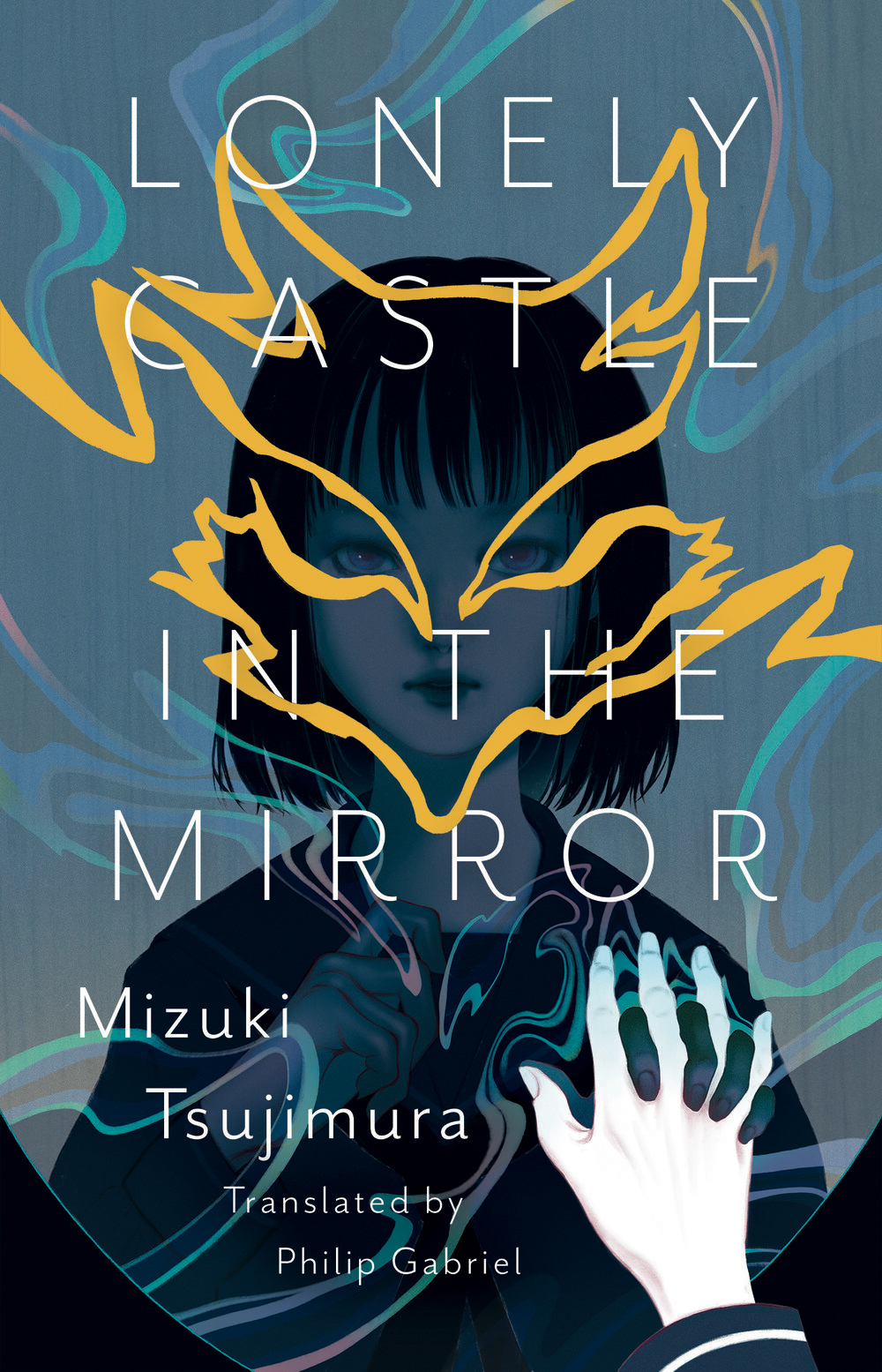
    LONELY CASTLE IN THE MIRROR, #WITMonth Japanese YA fantasy page-turner


    LONELY CASTLE IN THE MIRROR
    MIZUKI TSUJIMURA
    (tr. Philip Gabriel)
    Erewhon Books
    $27.95 hardcover, available now

    Rating: 4.5* of five

    The Publisher Says: In a tranquil neighborhood of Tokyo seven students are avoiding going to school—hiding in their darkened bedrooms, unable to face their family and friends—until the moment they find the mirrors in their bedrooms are shining.

    At a single touch, they are pulled from their lonely lives into to a wondrous castle straight out of a Grimm’s fairy tale. This whimsical place, oddly lacking in food and running water but full of electrical sockets, is home to a petulant girl in a mask, named Wolf Queen and becomes their playground and refuge during school hours. Hidden within the walls they’re told is a key that will grant one wish, and a set of clues with which to find it. But there's a catch: the key must be found by the end of the school year and they must leave the premises by five o'clock each day or else suffer a fatal end.

    As time passes, a devastating truth emerges: only those brave enough to share their stories will be saved. And so they begin to unlock each other's stories: how a boy is showered with more gadgets than love; how another suffers a painful and unexplained rejection and how a girl lives in fear of her predatory stepfather. As they struggle to abide by the rules of the game, a moving story unfolds, of seven characters trapped in a cycle of misunderstanding and loneliness, who are ultimately set free by the power of friendship, empathy, and sacrifice.

    Exploring vivid human stories with a twisty and puzzle-like plot, this heart-warming novel is full of joy and hope for anyone touched by sadness and vulnerability. At the heart of this tender, playful tale is a powerful message about the importance of reaching out which shows how with one kind act you can change your life for the better, and more importantly, you can change the lives of others.

    I RECEIVED A DRC FROM THE PUBLISHER VIA EDELWEISS+. THANK YOU.

    My Review
    : A story about coming out, though not the kind that phrase currently evokes. These socially maladroit and thus ostracized middle-schoolers are magically transported away from the bullying horrors of that age...the characterization of reincarnation as an endless round of middle-school lifetimes makes me so very glad I'm not A Believer...but, of course, there's a price to pay for this act of rescue. The seven of them must open up, honestly share their experiences, and only then will they be truly safe.

    Well. That sounds like something I'd be sharpening my flensing knife with a ghoulish grin on my face, doesn't it? More adolescent exceptionalism! And with an added splodge of fantasy goo! "Oh he's gonna go to town on this one!"

    Not this time.

    Any story in which adolescent readers are encouraged, without bludgeoning, to share, and to respect the gift of sharing from another, gets my vote. Then to put it in a fantasy world that protects the wounded ones? Bonus points! To go on with the worldbuilding in a way that connects their safe escape spot back to the world they're rescued from, yet without the toxicity they need rescuing from flooding in after them? Rare and delicate flower, let me inhale you! The most usual problems are here, the bullying and the losses of safety and love. Each person's also shown to be made aware from the response to the issue that led the sufferer to this magical safe space of how much different the same stimulus can feel to different people.

    Literally the point of this entire book is to learn the art of perspective in dealings with others.

    I would like to experience no surprise, no extra frisson of happiness at this. The world would be a better place if I didn't. But I did, and I encourage all y'all with grands, niblings, kids of twelve or more, to grab this story up thence to present it ever-so-casually to them. It's a message, one of kindness and the presumption of goodwill on the part of all who are not genuinely rotten-souled, that I'd strongly urge getting into their heads.

    Their dads and uncles, older brothers, and so on, as well.

    Wednesday, December 13, 2023

    DAYS AT THE MORISAKI BOOKSHOP, charming bestseller set in a bookshop


    DAYS AT THE MORISAKI BOOKSHOP
    SATOSHI YAGISAWA
    (tr. Eric Ozawa)
    Harper Perennial
    $16.99 trade paper, available now

    Rating: a generous 4* of five

    The Publisher Says: The moving international sensation about new beginnings, human connection, and the joy of reading.

    Hidden in Jimbocho, Tokyo, is a booklover's paradise. On a quiet corner in an old wooden building lies a shop filled with hundreds of second-hand books.

    Twenty-five-year-old Takako has never liked reading, although the Morisaki bookshop has been in her family for three generations. It is the pride and joy of her uncle Satoru, who has devoted his life to the bookshop since his wife Momoko left him five years earlier.

    When Takako's boyfriend reveals he's marrying someone else, she reluctantly accepts her eccentric uncle's offer to live rent-free in the tiny room above the shop. Hoping to nurse her broken heart in peace, Takako is surprised to encounter new worlds within the stacks of books lining the Morisaki bookshop.

    As summer fades to autumn, Satoru and Takako discover they have more in common than they first thought. The Morisaki bookshop has something to teach them both about life, love, and the healing power of books.

    I RECEIVED A DRC FROM THE PUBLISHER VIA NETGALLEY. THANK YOU.

    My Review
    : A book about books, and a bookshop, and the gentle art of connecting to others in the broken places life inflicts on us? A non-reader learning the power of books, and stories, to help and heal and bring us together? Sign me up!

    You get all of that in this internationally bestselling novel. It is exactly correctly marketed, and aimed directly at the book-gollum that lurks in your #Booksgiving circle...the mid-teens niece who gobbles the usual suspects of YA fiction, the later tween granddaughter who needs a fresh subject to care passionately about. The reader who is also a bookaholic is likely to get less from it than a newer reader, as this is largely well-traveled territory for most of us over a certain age; still enjoyable, certainly, and so short that it's a long sitting of reading.

    I've just been here before quite often. Moods and atmosphere make for fun experiences of reading and Jimbocho, in a few deft strokes feels real. Why then am I recommending it for your teen bookeaters? It's...fine. It's not more than fine, but it's solidly...fine. I reserve phrases like "good enough" to damn with faint praise. This is..fine. Sitting around with one's less than riveting relatives of a Yuletide eve, this is the best kind of read to have, and so to give to someone who's in that situation.

    Coping with heartbreak is always going to appeal to younger audiences. They experience so much of it. The nature of Takako's dumping by her pretty rotten boyfriend is going to appeal; the nature of Satoru and Motoko's estrangement will certainly raise a lot of tissues.

    Finding Family within one's family is a rare and wonderful experience. I think the story is a hit around the world for a very clear reason. Get it into the right hands and it will make the Yuletide bright, shiny, and bearable.

    Wednesday, September 28, 2022

    THE PACHINKO PARLOR, 2nd novel from Korean French author about Japanese colonialism ***SPOILERS***


    THE PACHINKO PARLOR
    ÉLISA SHUA DUSAPIN
    (tr. Aneesa Abbas Higgins)
    Open Letter (non-affiliate Amazon link)
    $16.95 trade paper, available now

    Rating: 4.5* of five

    The Publisher Says: The days are beginning to draw in. The sky is dark by seven in the evening. I lie on the floor and gaze out of the window. Women’s calves, men’s shoes, heels trodden down by the weight of bodies borne for too long.

    It is summer in Tokyo. Claire finds herself dividing her time between tutoring twelve-year-old Mieko, in an apartment in an abandoned hotel, and lying on the floor at her grandparents: daydreaming, playing Tetris and listening to the sounds from the street above. The heat rises; the days slip by.

    The plan is for Claire to visit Korea with her grandparents. They fled the civil war there over fifty years ago, along with thousands of others, and haven’t been back since. When they first arrived in Japan, they opened Shiny, a pachinko parlor. Shiny is still open, drawing people in with its bright, flashing lights and promises of good fortune. And as Mieko and Claire gradually bond, a tender relationship growing, Mieko’s determination to visit the pachinko parlor builds.

    The Pachinko Parlor is a nuanced and beguiling exploration of identity and otherness, unspoken histories, and the loneliness you can feel amongst family. Crisp and enigmatic, Shua Dusapin’s writing glows with intelligence.

    I RECEIVED A DRC FROM THE PUBLISHER VIA EDELWEISS+. THANK YOU.

    My Review
    : I'm aware of two things about this read, two very strong responses that wouldn't be elicited by any other read I've encountered this year: 1) Food looms very, very large in my experience of a story. This book, it's Claire and her inability to enjoy any food she encounters in Japan. 2) Author Shua Dusapin builds very intricate clockworks of interdependent imagery to support her stories of women without pleasure in the worlds they're in. The recurring fish-object images in this book join Winter in Sokcho's cold, echoing spaces. I mean, when a child's desire to act on the world is performed in explicit imitation of a cleaner fish, and a train pulling into a station summons from its immensity and speed the idea of a fish in Claire, our main character, then the author's going about her business with a degree of bravura that demands to be noted. As to whether it worked, I cannot say. I noticed it...I never thought of not noticing it...but derived nothing but the most facile conclusions from its obviousness. Me, or the choice? A case is readily made for either.

    Claire's visit to her Korean grandparents, whose lives have taken them to batten on the economic lifeblood of their erstwhile colonizers, is always...off. Claire has little knowledge of Korean to offer in her attempts to connect with them. None of them deign to speak Japanese among themselves. So, to skirt around the grandparental reticence with their native language (a reticence they did not demonstrate with Claire's Swiss boyfriend, she notes) and still manage to communicate, they use English. Another colonial tongue...one associated in Korea with the US...another occupying power, though perhaps more palatable (!) because it's used by the Japanese's modern overlords.

    Pachinko earns profits for her Korean grandparents...the only legal way for Japanese to gamble, or Koreans to earn...Japan making an apology for its colonial past? Or simply making it obvious who the vampires sucking the country's vice income into themselves are. Both...either...not for nothing is Japan's food disagreeable to Claire. Its artifice (a description of a raspberry atop a dessert was so revolting I had to put the book down:
    I look down at my tart. A single raspberry glistens atop a lump of whipped cream. Compact and rubbery-looking. I pick up my knife, cut the tart into sections and start eating. It tastes fatty. I spit it out into my napkin. The raspberry stares up at me, still intact, coated in a film of jelly.

    ...it made something lush and luscious sound so unheathily slimy!) is removed from nature, is devoid of dirt or even signs of human hands in its preparation...something very Japanese about that. And Claire's not having it inside her, not willingly anyway.

    Mieko serves as Claire's out, her means of contributing something to this life she's temporarily trapped in (it's a visit, not an emigration!) and unhappily isolated within. Mieko is a young Japanese girl whose mother hires Claire to teach French. (Which is odd, given the mother's fluency...permaybehaps seeking a genuinely French accent? from a Swiss Korean?) Mieko's, um, a little odd. Her ordinary-kid desires, eg going to theme parks or eating, are all as not-Japanese as is Claire's role in her life of teaching her a European language. Mieko is for Claire, unsurprisingly, the friend whose strangeness meets one's own in silent weirdo communion.

    Claire's main failing as a character is simply that she is so passive. She drifts, she causes nothing to happen...teaching Mieko French and acting as her escort to theme parks aren't things Claire causes or even proposes...and, in the end, her presence changes nothing. The grandparents she's there to visit aren't communicative, make no demands and accept no role in the granddaughter who came around the world to enable a much-mooted visit to Korea for them's life while she's there. The visit itself, a "return" to a country that the grandparents left before there was a North or a South or an American- or Chinese-backed state, is...inconclusive. Did it happen? We aren't vouchsafed that information...Claire's climbing a gangway, thinking her grandparents are behind her...and they aren't.

    What makes me not-best-pleased about that ending, that tunnel Claire's climbing to visit a place she's not been to, she's there to allow others to experience before they die...is the fact that it does nothing like an ending to resolve the family's generational hurts. It's a story about a disintegrating family's stop at a roadside attraction on its way somewhere and suddenly the stop's over but not everyone's in the car.

    It is, in other words, a bit too much like Winter in Sokcho to be ignored. That tale's very French-feeling plot of plotlessness as families unite around the goal of making everyone feel as miserable as possible worked because it was the author's introduction to the Anglophone reading world. It's no less beautifully wrapped in sentences here, the imagery is lovely, but...it's not my first trip to the well.

    I am glad I read this story. I am eager to see what else the author has in mind for me to read in future. I hope it will ring more than a change of scenery on the story next time. Once was enough; twice a bit troublesome; no more now, if you please.

    Wednesday, August 14, 2019

    CONVENIENCE STORE WOMAN, how the world looks to someone who isn't like the rest of us


    CONVENIENCE STORE WOMAN
    SAYAKA MURATA
    (tr. Ginny Tapley Takemori)
    Grove Press
    $15.00 trade paper, available now

    The Independent Press Top 40 Bestsellers: Fiction For the week ending April 12, 2026

    Rating: 3.5* of five

    The Publisher Says: Keiko Furukura had always been considered a strange child, and her parents always worried how she would get on in the real world, so when she takes on a job in a convenience store while at university, they are delighted for her. For her part, in the convenience store she finds a predictable world mandated by the store manual, which dictates how the workers should act and what they should say, and she copies her coworkers' style of dress and speech patterns so she can play the part of a normal person. However, eighteen years later, at age 36, she is still in the same job, has never had a boyfriend, and has only few friends. She feels comfortable in her life but is aware that she is not living up to society's expectations and causing her family to worry about her. When a similarly alienated but cynical and bitter young man comes to work in the store, he will upset Keiko's contented stasis—but will it be for the better?

    Sayaka Murata brilliantly captures the atmosphere of the familiar convenience store that is so much part of life in Japan. With some laugh-out-loud moments prompted by the disconnect between Keiko's thoughts and those of the people around her, she provides a sharp look at Japanese society and the pressure to conform, as well as penetrating insights into the female mind. Convenience Store Woman is a fresh, charming portrait of an unforgettable heroine that recalls Banana Yoshimoto, Han Kang, and Amélie.

    I CHECKED THIS BOOK OUT FROM MY LOCAL LIBRARY. THANK YOU FOR ORDERING IT!

    My Review
    : I dunno, y'all. Miss Furukura and Shiraha aren't people I'd want to hang with. I kept reading their names as "Lieutenant Uhura" and "Sriracha," which didn't help me identify them as actual people.

    Oh wait....

    This is definitely a sharp, pointed tale. It takes on the internal and external expectations of women and their "proper" roles. It's a culture that is, in some disturbing ways, behind my own culture's flawed and unhelpful attitudes towards women. As this is a translation from a language with which I feel absolutely no kinship, I'll confine my observations about the writing to: this is a very quick read, possessed of enough narrative drive to make reading it with dilated eyes and a headache (as I waited to go home from an eye doctor visit) seem like a good idea. I was diverted, I cared a strangely large amount about Keiko Furukura, and while there was not one single surprise or twist in the tale, it was keenly observed and honestly told.
    First we practiced the various phrases we needed to use in the store. Standing shoulder to shoulder in a line, our backs straight, we lifted the corners of our mouths to match the smiling face in the training poster and in turn called out the stock welcoming phrase: Irasshaimase! ... I was good at mimicking the trainer's examples and the model video he'd shown us in the back room. It was the first time anyone had ever taught me how to accomplish a normal facial expression and manner of speech.
    I have never been so glad in my life as when Author Murata stopped banging my eyeballs with "Irasshaimase" about halfway through the book. I am one of those subverbal-vocalizers, and that phrase got my entire limbic system into an uproar because, although I know Japanese pronunciation is dipthongless, I could *not* scan that alphabet soup to save my life, and the YouTube videos pronouncing it for me made my nose hairs hurt. I think Japanese is a hideous language. Cool words, great concepts, please don't speak it to me.

    Anyway. So Lieutenant Uhura meets Sriracha and things get weird. Only they don't because, well, they're exactly alike and while that's an awful thing to say, it's just the truth. She's one step away from a serious psychiatric break when she visits her younger sister and interacts (sort of) with her infant nephew. He (Shiraha) is already broken, beaten by expectations he is incapable of meeting. Her broken self's saving grace is that she knows *she* is the problem:
    "Um, you do realize you'll be fixed?"
    "What?" {Shiraha} asked, as if he hadn't heard right.
    "Oh, nothing. Hurry up and change so we can do the morning practice!"
    A convenience store is a forcibly normalized environment, so the likes of you are fixed right away I thought as I watched him taking his time getting changed. But I didn't say it out loud.
    And that, in a nutshell, is why the tale kept me reading. I was fascinated against my will by the savvy that she brought to the problem of acting human when she quite simply isn't. She knows she lacks something, hasn't a clue what it is, and no one knows how to explain it to her; what she stumbles upon in the convenience store is a model she can emulate. A worker is supposed to BE the job in the convenience store and she needs someone to be. Perfection.

    Poor Sriracha is an incel, as we call them these days, a loser/misfit/nobody whose essential wrongness comes from the other usual place this unsocialized-male issue comes from: He knows what being human means but he's too lazy to do it, then feels outrage and anger when he isn't given all the privileges being a human male customarily affords the Y-chromosomally endowed. Lieutenant Uhura can't grok this, since she's a hard worker and a genuinely indifferent-to-normal-humans person. She doesn't feel excluded, as he does; she realizes she is excluded and takes steps to minimize the exclusion so others will feel happier:
    You eliminate the parts of your life that others find strange—maybe that's what everyone means when they say they want to "cure" me.
    These past two weeks I'd been asked fourteen times why I wasn't married. And twelve times why I was still working part-time. So for now I'd decide what to eliminate from my life according to what I was asked about most often I thought.
    Deep down I wanted some kind of change. Any change, whether good or bad, would be better than the state of impasse I was in now.
    See? Faultlessly logical. Not human, but deeply logical.

    So fiction about the neurodiverse made my uncomfortable day of eye-doctoring, riding back and forth in a cramped position, and having to soak the bloodstains from my knee-rocks breaking through the skin due to sitting *ptooptoo* on sitting! for five hours, bearable. That by itself deserves praise. It's hard to know what to do about recommending such a quirky tale to others. In general, I'm against "must read" recommendations in all but a very few cases. I think this read will quite rightly polarize people's opinions, as did that "Completely Fine" thing that made me so bone-rattlingly mad that I Pearl-Ruled its condescending self. But this story, told by a person whose grasp on how to be human was tenuous and whose desire to figure it out was other-directed, is a different matter altogether. I might not love the way it ended, which I won't discuss, but I fully agree that it was an inevitable ending. I ended up glad I'd read it, and that's saying something.

    Tuesday, January 8, 2019

    MY BROTHER'S HUSBAND vol. 2, second manga by a gay man about overcoming eww-ick homophobia


    MY BROTHER'S HUSBAND, volume 2
    GENGOROH TAGAME
    (trans. Anne Ishii)
    Pantheon Books
    $25.95 hardcover, available now

    Rating: 4* of five

    The Publisher Says: The concluding volume in the story of Yaichi, his daughter Kana, and how their meeting Mike Flanagan--Yaichi's brother-in-law--changes their lives and perceptions of acceptance of homosexuality in their contemporary Japanese culture.

    As Mike continues his journey of discovery concerning Ryoji's past, Yaichi gradually comes to understand that being gay is just another way of being human. And that, in many ways, remains a radical concept in Japan even today. In the meantime, the bond between Mike and young Kana grows ever stronger, and yet he is going to have to return to Canada soon--a fact that fills them both with impending heartbreak. But not before more than a few revelations come to light.


    SECOND VOLUME IN SERIES BEGUN IN MY BROTHER'S HUSBAND vol. 1

    My Review
    : Yaichi's gay twin, Ryuji, married Canadian bear Mike after emigrating to escape his repressive, hidebound culture. He promised, swore!, he would have his twin—his only remaining family—know Mike as his husband. Then, as is the way with sworn promises, Ryuji died. Mike, to make his dearly beloved husband's promise come true, visits Yaichi and his daughter Kana in their home.

    We pick up the story in medias res, this being a two-volume omnibus edition of the manga. Yaichi, a lovely man (for legal purposes), has his most acute attack of the collywobbles yet. Mike mentions that it's possible Kana will be a lesbian. These two pages made me laugh so hard I almost choked:
    Poor Yaichi! What's a traditional Japanese father to think? My daughter with a woman?! HEEELLLP!!!!

    The rest of the story is Yaichi coming to value and care for Mike, whose love for his brother is strong. They've lost so much, they've got to come to peace with each other. Mike has no problem with this, since he's been out a long time; Yaichi finds himself saddened that he didn't try harder to connect with Ryuji while he was alive because now he can't. All while being a divorced custodial dad to a little girl. Who has fallen utterly in love with her big Canadian bear-uncle.

    A very telling scene comes when Mike goes to Kana's school, to be met with hostility and suspicion. It's really amusing at first because Mike doesn't see it, but it becomes a major Thing between Yaichi and his inner demons. It provides Yaichi with a chance to work through what he thinks about Mike's gayness and what Japan as a whole thinks about gayness. The men resolve their desire to be close to each other over a look at Mike's photo album, including wedding pictures. Yaichi realizes how much he will miss Mike as he's about to leave, and Kana asks for a sworn promise that Mike will visit again, or she gets to come to Canada to visit Mike.

    And now I venture into personal territory. My Young Gentleman Caller, Rob, is 34 (thirty-four) years younger than I am. We might as well be Canadian and Japanese, since I understand his culture about as well as he does mine. The Moon landing was 50 years ago. I remember it vividly. I had to YouTube footage for Rob, who had sort-of heard about it. His FATHER was born two years after it happened. So we both relate to the "...say what now?" moments between Yaichi and Mike.

    We talked at some length about the way it feels to be so different from someone you care very much about, and how that puts strains on one's inner sense of peace and quiet. We both worry about the other's feelings being hurt when we're being our separate selves...we both worry about the way our beloved handles the need we have to be understood. Am I trying hard enough, too hard, do I even know what he means? And it was this manga that called that conversation into being.

    If you don't read the series for any other reason, read it for that one. It is good enough to start a life-altering conversation between people too different to know where or how to begin to do that for themselves.

    THAT's good storytelling!

    Also! Extra! May the US be blessed with the live-action TV series! Here's a promo photo of the amazing casting:

    Saturday, January 13, 2018

    MY BROTHER'S HUSBAND, manga by gay man about eww-ick homophobia


    MY BROTHER'S HUSBAND
    GENGOROH TAGAME
    (trans. Anne Ishii)
    Pantheon Books
    $24.95 hardcover, available now

    Rating: 3.5* of five

    The Publisher Says: Yaichi is a work-at-home suburban dad in contemporary Tokyo; formerly married to Natsuki, father to their young daughter, Kana. Their lives suddenly change with the arrival at their doorstep of a hulking, affable Canadian named Mike Flanagan, who declares himself the widower of Yaichi's estranged gay twin, Ryoji. Mike is on a quest to explore Ryoji's past, and the family reluctantly but dutifully takes him in. What follows is an unprecedented and heartbreaking look at the state of a largely still-closeted Japanese gay culture: how it's been affected by the West, and how the next generation can change the preconceptions about it and prejudices against it.

    My Review: In my ongoing quest to retard the ossification of my brain, I made it my business to choose a graphic novel to read. I detest graphic novels. It's hard for me to follow the story, what there is of it, and I am routinely unimpressed by the artwork. I keep trying because there are occasions where the graphic format is the only one that can tell a particular story, and once in a while it's a pleasant discovery to learn that not everything in a given format is as tooth-grindingly annoying as I expect it to be.

    The story is one I relate to. I've been Mike Flanagan, the Canadian bear whose dead husband's family he's meeting by his own insistence, in relationships. (Y'all shoulda seen the 24-year-old's father's face when he caught us kissing. And incidentally, Dad's a decade younger than I am, hot, and I would totally trade up.) (Just kidding about that last part, honey!) (It says here.) It's weird to see that experience told from this point of view, that is, the family that's being invaded by strangeness.

    Oh my...poor Mike...hugging a straight man in a foreign country...Yaichi shouts at him to let go, of course, and everyone's thoroughly flustered and freaked. Yeah, this'll go well.

    But it does, after the two men are joined by Yaichi's daughter Kana. She just wants to know why she never knew she had an uncle, why men can't get married in Japan, how Mike got so hairy...

    ...everything a kid wants to know, in short, about someone new in her life. Who was the wife, Kana wonders, and when Mike explains that there was no wife but there were two husbands Yaichi goes into a reverie about how he always wondered the same thing only about their sex life...and then Yaichi snaps out of it and reprimands himself for wondering such a crude thing when he wouldn't question a mixed marriage's sex life.

    Yaichi's "acceptance" of his identical twin's sexual nature was, in fact, simply refusal to think about it or process it.

    Now here's this big gaijin staying in his home, charming his daughter, making his ex-wife laugh and smile when she pays a visit, and generally going out of his way to be sweet and agreeable. Yaichi the orphan, now siblingless, is getting to grips with the cost of his absence of acceptance. By the end of this fat little volume, he's on a major journey into what his brother's husband has done to his future life.

    Reading the manga way is weird for Westerners, or at any rate old ones like me. Back to front, right to left...and add in the graphic parts! Well, it was a read outside my comfort zone. The more alert among you will have noticed a favorable star rating atop the review's text. I liked the story of a man's journey from unquestioning homophobia to questioning discomfort through to earnest effort to understand and integrate The Other into his world. I wasn't comfortable with the format and I'm not a bit convinced that the story couldn't have been told another way, but the story itself is a good and timely one for 45's America as well as for Japan at any time.

    I most certainly will not buy the book for $25 but checked out of the library it's a well-spent afternoon. I'd say graphically oriented consumers would do well to visit Yaichi, Kana, and Uncle Mike. They are good company and the world they find themselves working to understand and create is one I'd say is very, very important for us all to visit. Who knows, y'all might wanna set a spell.

    Sunday, February 26, 2017

    TANUKI TANGO OVERDRIVE, sensitive readers strongly...STRONGLY...cautioned to pass by


    TANUKI TANGO OVERDRIVE: Stories
    ARTHUR GRAHAM

    Arthur Himself
    $7.99 trade paper, available now

    Rating: 4* of five

    The (Self-)Publisher Says: What happens to Japanese yĹŤkai once they reach middle age? How do they adapt to the sex-crazed, ultraviolent hyperreality of our modern world? And who all wants to fuck? Find out in TANUKI TANGO OVERDRIVE, by Arthur Graham!

    Includes the following stories:

    - Tanuki vs. the Aokigahara Swingers Club
    - Tinseltown Tanuki
    - Shinkansen of Love

    BONUS ATTRACTION! Arthur's dulcet tones on Leo Robertson's podcast!

    My Review: The tanuki is an actual living creature, a pretty one at that:
    Totes adorbs! I mean, could you DIE from the cute!

    But those are images of the REAL tanuki, a canid basal species unrelated to the raccoon that it resembles, but not closely related to Fifi or Duke either. They're considered an invasive species in some parts of their naturalized Baltic homeland. They're generalists, eating whatever they can find; they don't fear mankind particularly; and they have lovely, silky fur. They're hunted for the fur which is then knowingly mismarketed as "faux fur." Since they're not endangered, I don't much care about that. I care that the little darlings threaten endangered riparian-nesting birds and several threatened turtle species with their omnivorous ways. But enough about these dratted doggies! Arthur didn't write about them. He wrote about these guys:
    Not quite so cute, but funny, tipsy trickster spirits. Japanese culture isn't as familiar to me as Western cultures are, but what I know leaves me verschmeckeled. Dog-men with big balls that they sling over their shoulders get drunk and play pranks on mere humans. Okaaaaay...I guess I'd be more impressed by this if, say, Alexander Skarsgard, Chris Hemsworth, and Ryan Gosling played live-action versions of them. Hint, hint Hollywood.

    The Tanuki Tales are amusing, the translated ones I've read are anyway. They're Rabelaisian and bawdy and utterly unlike the Japanese culture of my stereotypes. It's a little like stumbling across Japanese porn in its head-scratching strangeness. Then Arthur got his mitts on the concept. Ever tried putting out a grease fire with a hose? Pretty much gives you the sense of what Our Hero has in store for the intrepid reader. Three tales that present Arthur's intelligence and erudition in an absurd light as evidence that he doesn't take himself or that education he worked so hard to get seriously. Now, I'll give you my opinion story-by-story in the simply named technique called the Bryce Method.

    Tanuki vs. the Aokigahara Swingers Club has Mr. Tanuki, a bored middle-aged salaryman, having dinner with his wife and his bottle. A mysterious invitation to a swingers' club arrives, which his wife seems suspiciously unsurprised by, and she talks him into attending without a whole lot of trouble. Once there, Mrs. Tanuki vanishes and Mr. Tanuki gets an offer he can't refuse from a luscious redhead called Kit. Who turns out to be Kitsune, the trickster god of Japanese myth. Does the concept "monster porn" exist in your bubble yet? If not, it soon will...and this somewhat bizarre twist on the meaning of swingers and the nature of zombies will make your hairs do a little dance.

    Tinseltown Tanuki revisits the Tanukis' salad days of great wealth in the wake of Super Mario Bros 3 featuring Mr. Tanuki's trickster demon talents. From great heights there are only great falls, and the Tanukis end up living as raccoon-dogs in an East LA trash can before long. One night at their local dive bar, they meet a stranger...a famous stranger...and an indecent proposal changes their lives. Not quite as much as it changes the famous stranger's, of course, these being Tanuki.

    Shinkansen of Love goes where no bullet train has gone before. Several times. Poor Mrs. Tanuki, she's spoiled for good after this one....

    So, in less than 100pp, Arthur has sent up zombie flicks, monster porn, cheesy mid-1990s Hollywood mind-rot, 9/11, and the loneliness of long-term love. Don't get taken in by this trickster: The point of the stories isn't to gross you out or make you squirm, the point is to gross you out while you squirm through the real stories of loss and ennui under the plaster façade. Those inclined towards lip-pursing are better off leaving Arthur alone. Those inclined towards gonzo grinning are encouraged to spend their substance on these tricky tales.

    Saturday, September 24, 2016

    ARE YOU AN ECHO? stuns with its poetical economy and perfect pitch


    ARE YOU AN ECHO?: The Lost Poetry of Misuzu Kaneko
    DAVID JACOBSON
    SALLY ITO
    MICHIKO TSUBOI
    (editors and translators)
    Chin Music Press

    The Publisher Says: In early-1900s Japan, Misuzu Kaneko grows from precocious bookworm to instantly-beloved children’s poet. But her life ends prematurely, and Misuzu’s work is forgotten. Decades later her poems are rediscovered—just in time to touch a new generation devastated by the tsunami of 2011. This picture book features Misuzu’s life story plus a trove of her poetry in English and the original Japanese.

    **CHIN MUSIC PRESS OFFERED ME AN ARC OF THIS TITLE IN EXCHANGE FOR AN HONEST REVIEW**

    My Review: Whenever a package arrives from Chin Music Press, I know that everything else has to go to the Later pile. As always, I was *so* richly rewarded when I opened these covers.

    This gorgeous and extremely touching sampler of Kaneko Misuzu's poetry is perfectly illustrated. It is introduced by a brief recounting of Kaneko's unhappy life. While I would most definitely want my grandkids to read the poetry, I'd want to read Kaneko's story to them, and make sure I was fully present to gauge their need for explanation and/or comfort as the tale unfolds.

    Even if you have no kids, grandkids, nieces, nephews, or strange kids you can borrow, buy this beautiful object for your coffee table. You will be the coolest kid on the block.


    Big Catch

    At sunrise, glorious sunrise
    it’s a big catch!
    A big catch of sardines!

    On the beach, it’s like a festival
    but in the sea, they will hold funerals
    for the tens of thousands dead.

    Friday, September 23, 2016

    YOKOHAMA YANKEE, the burden and blessing of Being Other in one of the world's most homogeneous societies


    YOKOHAMA YANKEE: My Family's Five Generations as Outsiders in Japan
    LESLIE HELM

    Chin Music Press
    $16.95 trade paper, available now

    The Publisher Says: Leslie Helm's decision to adopt Japanese children launches him on a personal journey through his family's 140 years in Japan, beginning with his great-grandfather, who worked as a military advisor in 1870 and defied custom to marry his Japanese mistress. The family's poignant experiences of love and war help Helm overcome his cynicism and embrace his Japanese and American heritage.

    This is the first book to look at Japan across five generations, with perspective that is both from the inside and through foreign eyes. Helm draws on his great-grandfather's unpublished memoir and a wealth of primary source material to bring his family history to life.

    **CHIN MUSIC PRESS PROVIDED ME WITH AN ARC OF THIS TITLE AT MY REQUEST**

    My Review: It's the "to life" part of the book description that I want to discuss. How many of us have family secrets? Okay, silly of me to ask. How many of us wish we could spill the family secrets and get away with it? Helm decides to take a look back at the whole sweep of his German-Japanese-American family's riot of repression and dysfunction so as not to have to write Yet Another Adult Child of Alcoholic Father story. I don't like Helm's father Don, not because he's an alkie but because he's a mean drunk. Got no time for that. Me, I'm a happy drunk, I like to laugh and screw and do pep-u-uppo drugs while drinking. Still not someone who should engender and "raise" four kids as Helm senior did. Or didn't, exactly.

    So Helm sets out to put the whole sad affair into a multigenerational context that stops this from being cringe- and yawn-worthy, going into detail about the life of his ancestors in Germany and Japan before and between the World Wars in a well-documented and quite vividly drawn way. It's here that the narrative launches itself into some very interesting territory, and here that the stars are earned. Once we get to Don and Barbara, I don't care anymore because we've heard it all a zillion times and nothing makes this iteration any more interesting than the others were. Leslie and his wife facing racism in Japan was fascinating to me; the sheer incomprehension of Japanese people as to why these weirdos would adopt *strangers* which is to say the children of people they aren't related to makes me a lot clearer on the reason Japan's such a strange place, so much duty and honor and ceremony and so little welcome for the other, the different.

    I won't quibble with the odd absence of wartime tales and stories. It's a great deal like Memoirs of a Geisha in that way; a paragraph or two of musings and oh will you look at the time it's 1945! What is it that exerts such a very powerful repulsion on those who write about Japan, let alone the Japanese, when WWII comes up?

    This trope, or rather tropelessness, aside, the book is an engrossing and edifying read, and a pleasure to look at, and a very entertaining way to spend a day or so. The photos throughout are well-chosen and the design accommodates them exactly as one wishes all publishers would require it to do. This being a Chin Music Press title, that statement could easily go without saying, but I enjoy saying it.