Showing posts with label Japanese translation. Show all posts

Wednesday, August 5, 2026

MURDER AT THE END OF THE WORLD, Pushkin Vertigo brings prize-winning debut Japanese mystery to Anglophones


MURDER AT THE END OF THE WORLD
AKANE ARAKI
(tr. Jesse Kirkwood)
Pushkin Vertigo (non-affiliate Bookshop.org link)
$13.99 ebook, available now

Rating: 4* of five

The Publisher Says: An unlikely duo embarks on a road trip to find a serial killer before the apocalypse in this prize-winning Japanese murder mystery.

Perfectly blends the dystopian humor of Zombieland and the thrills of My Sister the Serial Killer!

From Japan’s most exciting new crime writer Akane Araki, this thrillingly funny, high-concept murder mystery follows a young woman and her driving instructor as they face a compelling moral dilemma: should they work to stop a serial killer before the end of the world? A meteor is on a collision course with Earth. The entire human race has 3 months to live. Uncontrollable panic has set in across the globe, but 23-year-old Haru is still determined to finally get her driver’s license.

When Haru and her ex-cop driving instructor Isagawa open their car trunk one day to find the corpse of a murder victim inside, they feel duty-bound to investigate. Together, they set off on a road trip through the crumbling landscape around them to hunt for the killer. As more bodies start appearing, more questions surge. Why would a serial killer begin work three months before the end of the world? And does justice lose its meaning with humanity on the brink of extinction?

And it turns out that Haru's driving instructor is not just an ex-cop but one with a manic devotion to justice. So, despite the small matter of an impending apocalypse, the pair team up to catch the culprit, no matter where it takes them. After all, the world's not quite over yet...

Quirky, fast-paced, and packed full of surprising heart, Murder at the End of the World will delight fans of Stuart Turton’s audacious plots and the humorous, life-affirming bent of dystopian favorites like Zombieland and Shaun of the Dead.

I RECEIVED A DRC FROM THE PUBLISHER VIA EDELWEISS+. THANK YOU.

My Review
: I really liked The Last Policeman when it came out. I'm still salty that it never made it onto the screens of the world where I really felt it deserved to be. So I was all ready to be this book's fanboy.

I'm on record as not wanting to read about women being sexually abused and murdered for plot purposes. This story, led by an amateur sleuth who's female, does indeed have a woman abused and murdered in it, so why am I breaking my strong preference not to read that plot?

Because it's not the first death (that's her father's suicide), and it's not the glorified, prurient point of the victim's death, but is instead an indictment of a patriarchal system I found myself willing to spend my entertainment eyeblinks on this topic. It's a sleuthing excursion led by two women who found a shared compass in bringing justice to the victim. In spite of flaming death for the whole human race racing towards the planet.

That, mes vieux, is a moral compass. We're going to die. And that's still no reason not to bring justice to a terribly abused woman by making her abuser pay for his crime. Haru greets us, so to speak, by discovering her father has hanged himself; her response is to arrange his body respectfully and goes to finish her driving lessons. Her instructor Isagawa is a retired cop, determined like Haru to keep her world in balance and thus cope with the existential crisis of certain doom.

I'm quite taken by the nature of these end-is-nigh narratives; they add a weird frisson to the most quotidian conversations. Haru and Isagawa discover the horribly mutilated body of a young woman in the trunk of their randomly selected driver-training car, which would occasion much screaming and dialing of 911 if I happened to be there; the women are incensed, repulsed, but the police are not inclined to do anything as no one else is fussed about all the dead girls piling up around town...the world is ending, and Isagawa already knows the local police well so tells Haru this victim will receive no attention to speak of (nor would she ever have).

They discuss what to do. They really get into it. They have powerful feelings about it even as extinction faces them; ultimately they decide to investigate this murder for themselves. And it takes paragraphs (reported by Haru in first person) to do it. There is deeply important stuff at stake for Isagawa that might help her process her decisions leading up to her leaving the police in the first place. I'm all for redemption arcs.

Seriously y'all...there's a mutilated dead person in the trunk. These women stand there and talk. My hysterical, overemotional male self would be retching, screaming, generally freaking out at the top of my lungs as I speed-dialed the cops skatey-eight skabillion times to tell them to come get this corpse RIGHT NOW. Haru and Isagawa discuss, calmly, how to approach the process of identifying who killed her and why. While an asteroid's speeding towards Earth to end life as we know it. So, no...not ordinary circumstances, therefore not ordinary responses, and honestly the chats they're having would be fascinating no matter what but the existential stakes make them so deeply, touchingly human. These two very different people, Haru cheated out of a full life by the asteroid and Isagawa processing her much-closer end as a chance to do the right thing with her last actions on Earth, confront a serial killer...a thing I never want to do yet they're just doing it...and, in the least effective narrative choice made by Author Araki, that scumbag goes into the cliched villain monologue. More infuriatingly, Haru reveals she's known something central to the case, something coincidentally itportant, since the beginning. Fifth star sliding under the waves in 3...2...1....

I'm recommending this read to you because it is, for its structural flaws, a fascinating meditative tale. It delves into serious, interesting, well-thought-out moral discussions; it gives these two oddly assorted road-trippers ample scope to let their thoughts stew, serve them up, and discuss together and in company with odds-and-sods they collect along the road. It's often funny stuff, occasionally maudlin, usually prolix as anything.

As much as I really got annoyed I'm even more pleased that Haru and Isagawa brought me along with them as they maintained ma'at in extremis.

Wednesday, May 20, 2026

THE TRAITOR, last major novel of Kōbō Abe's to reach Anglophones


THE TRAITOR
KŌBŌ ABE
(tr. Mark Gibeau)
Columbia University Press (non-affiliate Bookshop.org link)
$26.40 paperback, available now

Rating: 4* of five

The Publisher Says: In postwar Japan, a writer meets a small-town innkeeper who is obsessed with a tale from the nineteenth century. He relates the saga of Enomoto Takeaki, an admiral in the final years of the Tokugawa shogunate who regained authority under the Meiji government. A former member of imperial Japan's military police, the innkeeper dwells on the question of loyalty even as he struggles with his responsibility for the arrest and murder of his brother-in-law during the war. Later, he sends the writer a mysterious manuscript purporting to be the account of a peddler turned samurai whom Enomoto betrayed.

Part historical fiction, part detective story, The Traitor is a remarkable novel about navigating changing political landscapes by one of the most significant modern Japanese writers. In his only historical novel, Abe Kōbō turns to a pivotal moment in Japan's past to explore profound questions about the nature of loyalty and the choices that people must make when they encounter forces beyond their control or understanding. Published in 1964, when a new generation had begun asking their parents about the war, Abe's tale of betrayal sparked controversy across the political spectrum. The great writer's most important previously untranslated novel, The Traitor displays Abe's literary mastery from a new angle.

I RECEIVED A DRC FROM THE PUBLISHER VIA NETGALLEY. THANK YOU.

My Review
: An historical novel from its inception, this read is now itself an historical artifact being sixtyish years old, but is also framed as an historical tale recounted in a period earlier than it was authored. Translator Gibeau is the first to render the historic-historical novel into English. I was initially surprised this was the case; the beginning of the story is that quick to capture one's attention with its immediate postwar framing device. It's a long story, though, with all the pacingissues that can lead to (sadly) being present.

It was an enjoyable read for me, to be sure. I say that despite needing to stop and re-read some of the middle third of the book, where lots of names and dates and cultural touchstones are presented but not explained as they would be in a work of non-fiction. There is an Afterword from Translator Gibeau that provides context and explains some cultural resonances. It's a bit difficult to read that after the confusion of the midsection of the read and relate the information to the proper spots. I found I was curious enough about the Kempetai, for example, to go looking for information on the internet while I was reading.

I'm not really doing a very persuasive job of selling you on the read am I. In truth I think this read is one for the Japanese-culture vultures. I'd love to tell all y'all to get and read it but there would be much throwing of bricks and dropping of gloves if I succeeded and too many of y'all did not want to do that much work. The techniques of surrealist literature aren't overused here, as I sometimes feel they are in his more famous work; but they're present, so the allergic are informed.

The most interesting thing about the read to most people is likely to be the cravenness of the WWII character's motivation for seeking out the truth of the Meiji-era story he discovers, that provides the direct reason for the title. It's a punchy title, isn't it? I was almost put off by its sinplicity because I thought it might be a sign of a reductive storyline. In truth, it's the only possible title for the tale unwound for our pleasure because it provides a powerful pleasure of slow-dawning realization and deepening of the reading experience.

Note to the Spoiler Stasi: you won't spot it until the author wants you to. No I won't say more.

I hope to have piqued the curiosity of enough of y'all to give this not-easy, not-simple, very rewarding effortful read a shot. Please do, it is good exercise for your little grey cells with less than the usual puzzle-like story's obfuscation.

History lessons can be entertaining, and this newly-translated novel from the renowned author of The Woman in the Dunes amply demonstrates. Please give it a try.

Monday, March 30, 2026

SISTERS IN YELLOW, exploring women's wrongs in Women's History Month


SISTERS IN YELLOW
MIEKO KAWAKAMI
(tr. Laurel Taylor & Hitomi Yoshio)
Alfred A. Knopf (non-affiliate Bookshop.org link)
$14.99 ebook, available now

Rating: 3.8* of five

The Publisher Says: Rising star Mieko Kawakami reaches new heights in this pacy, thrilling novel, a Japanese Breaking Bad, in which a group of friends fight for freedom, independence, and survival in Tokyo of the 1990s, a world rapidly dividing into haves and have-nots.

All of them are fleeing something. Growing up without a father, Hana’s tired of the pity in her classmates’ eyes, and finds a flashier mother figure in Kimiko. Kimiko is older than Hana's mother but seems much younger, chatting easily about school and boys and wanting a better life. Fate throws them together with two more young women—bruised but not broken by life. Together the four set out to remake their lives, fighting predatory lenders, organized criminals, and plain bad luck as they open a bar called Lemon.

Keeping the business going, and trying to take care of each other, forms the core of this enrapturing novel. It is a story of startling reversals and vivid portraits of the matriarchy of Tokyo nightlife and its adjacent criminal underclasses. From the bar owners to the aging hostesses to the young street touts coaxing people off the street to places like Lemon, everyone wants a chance at renewal, but can everyone get it?

Narrated by Hana in Kawakami’s trademark evocatively poetic style and paced like a noir, Sisters in Yellow will be the literary blockbuster of the season. This epic of friendship and betrayal is the kind of book one longs to return to when away from a world until itself, and a book that makes you think while it produces immensities of feeling. It is a major novel that, like so many of the best recent phenomena—from Donna Tartt to Hanya Yanigahara—explores how we survive (or don't) together.

I RECEIVED A DRC FROM THE PUBLISHER VIA NETGALLEY. THANK YOU.

My Review
: What if someone who liked noir novels thought, "let's make the women the active partners, and add overtly emotional tropes to a fear of abandonment-fueled story?"

Meet Mieko Kawakami.

The emotional stakes are huge. Hana, our PoV character, remembers the events of her teenaged life when she was seen, valued, and trained by Kimiko, an older woman with...situational...morals and a very large store of useful knowlegdge whose origins a sensible person would not pry into. As Hana is a completely neglected child of an emotionally absent mother and no visible father, Kimiko's louche lifestyle carries the allure of being chosen, paid attention to, seen as valuable for once...though her value makes older, more experienced readers shudder a little for what's likely to happen to her as she gains her experience points in the Dungeons and Dragons game of life.

Unlike man-centered noirs, this story is less about the crimes the gruesome twosome at the center of the story commit with their scoobygroup; more about how they, by working in tandem, learn things from each other and by making mistakes entirely new to each of them. We don't often get stories like this from Japanese writers, or at least not translated into English. These are hardscrabble folk, no expectation they'll be taken care of by the system. They're women, so of lesser value in their society no matter what they need from it; they are not likely to get much in any case. It sets the stakes of their efforts to make a living very high indeed. I'm impressed at Author Kawakami's willingness to have her women suffer for their mistakes, as well as fight to get what they need from an indifferent world.

But at least they're all in it together as the Japanese economy contracts post-1980s bubble. They're all grafting hard, grifting when they must, but they have each other's backs.

Oh dear.

No lesson without pain; every birth must have blood. Hana, now an adult, relives her hard growing up of schemes and crimes, when she sees Kimiko's name in the news as a blackmailer; it's no surprise, but it's a painful jolt of relived trauma nonetheless. Hana's insecurity has always led her into money traps. It's no surprise her insecurity is alive and well. of course it's not because her entire life is built on the reality of betrayal from neglectful mothering on to her time with chosen mother figure Kimiko.

It's not on the same craft level as the magisterial Breasts and Eggs. Pages spent explaining things now common knowledge are wasted space and/or padding. The noir/crime aspect of the story, so tonally important, assorts oddly with the flashback structure; is there tension meant to lead us on when it's obvious Hana survived her past reasonably intact?

It's a good read but not a perfect one. I'll recommend you check it out of the library, but do get your head around how young women do very seedy things without being forced by men into them. Celebrate Women's Wrongs this Women's History Month.

Saturday, February 7, 2026

LION CROSS POINT, short novella about the magic moment kidhood ends


LION CROSS POINT
MASATSUGU ONO
(tr. Angus Turvill)
Two Lines Press (non-affiliate Amazon link)
$9.99 Kindle edition, available now

Rating: 5* of five

The Publisher Says: When 10-year-old Takeru arrives at his mother's home village in the middle of a scorching summer, he's all alone and in possession of terrible memories. Unspeakable things have happened to his mother and his mentally disabled 12-year-old brother.

As Takeru gets to know Mitsuko, his new caretaker, and Saki, his spunky neighbor, he meets more of his mother's old friends, discovering her history and confronting the terrible acts that have left him alone. All the while he begins to see a strange figure that calls himself Bunji—the same name of a delicate young boy who mysteriously vanished one day on the village's coastline at Lion's Cross Point.

At once the moving tale of a young boy forced to confront demons well beyond his age, a sensitive portrayal of a child's point of view, and a spooky Japanese ghost story, Lion's Cross Point is gripping and poignant. Acts of heartless brutality mix with surprising moments of pure kindness, creating this utterly truthful tale of an unforgettable young boy.

I RECEIVED AN ARC FROM THE PUBLISHER. THANK YOU.

My Review
: I'll start with my favorite thing about the read. Its translator has chosen a Zazie in the Metro-type interpretation of the child PoV's speech, extending it to all the people in this very small, very young group. This includes no "ng" dipthongs in English...which made me wonder what the Japanese equivalent must be since the language does not use dipthongs...and lots of elisions like "happy t'see me?" and the like. It's something that will, if the occasional comments I receive on my own usage of this technique are any indicator, make some of y'all really mad. I myownself felt as though I was sitting there, in Ken's car, or when Sasaki buys Takeru (our PoV boy) a soda. As Sasaki does not use the elisive speech pattern we're reinforced that he's really old. "You're a grandpa?" Takeru asks him in surprise. "Certainly am," replies Sasaki; Ken, not anything like as old as Sasaki despite being old enough to have a car and to run around with the kids all over, is a serial elider.

It felt right and welcoming to me. You do you.

The fancier people who surround Takeru's absent mother all speak something rendered as Standard English, like Sasaki; this device lets us know we're in rural Otherland coompared to the sophisticates Takeru's mother prefers to him and his developmentally delayed brother. They live in this village, the one where their mother grew up because some stuff happened and it was wiser and safer her for mother to send her boys to live with her mother. She's never there. She hates it there: "I hated it. Detested it. I wanted to get away as soon as I could." Relatable to many, though why she then sends her boys there...other solutions to the issue that made a change necessary were available.

We're not let in on the cause of this family separation. It becomes obvious during the course of the kids being in this lovely summer idyll, looking for dolphins, going to see them at the titular Lion's Cross Point and adjacent beaches and oceanside fun. Takeru has a relatable moment of real fear when told he can see the dolphins at Lion's Cross Point and won't that be great? He's seized by the sudden terror that he might have to go swimming with the dolphins; on being reassured that he won't, his chest-expanding deep breath of relief made me feel so protective of him.

In a hundred or so pages Author Ono (a translator from English to Japanese himself) and Translator Turvill do nothing, nothing happens, there's no action to speak of; but everything changes, Takeru becomes a youth from the chrysalis of kidhood. And he does it in front of you, though you're never told nor shown just how it happens. Like with real kids, you have to listen, examine what's going on quietly without intruding, and reach your best conclusion. You might be right, you might not, because the inner life of a young person is taking root. It happens in front of you but invisible to you.

The end result, however, leaves you in no doubt that something seismic has shifted. All five of my stars and a gentle push to get it into your cart.

Friday, December 19, 2025

THE BLACK SWAN MYSTERY, looking back nigh-on seventy years at a crime that rings familiar bells today


THE BLACK SWAN MYSTERY (Inspector Onitsura #1)
TETSUYA AYUKAWA (tr. Bryan Karetnyk)
Pushkin Vertigo (non-affiliate Bookshop.org link)
$12.99 ebook, available now

Rating: 4.5 of five

The Publisher Says: THE JAPANESE CRIME FICTION CLASSIC: A prize-winning railway murder mystery set in 1960s Japan—for fans of Agatha Christie and Seicho Matsumoto! Full of devious twists and turns, this brilliant puzzle mystery is considered to be one of the greatest alibi deconstruction mysteries ever written

Early one morning, the owner of a local mill is found lying next to the railway tracks just outside of Kuki Station. Suspicion initially falls on the workers' union, with whom the man had been embroiled in a labour dispute, then on a new religious sect that has been gaining followers recently.

Chief Inspector Onitsura and his assistant Tanna are called in to investigate, and soon set off in a journey across Japan, from Tokyo to Kyoto and Osaka, and finally to the island of Kyūshu, in a hunt for the killer.

But as they investigate, the killer strikes again, and again. Will they be able to catch the murderer before even more people are slain?

Fans of Agatha Christie’s 4.50 from Paddington and Seicho Matsumoto’s Tokyo Express will delight in the devious twists and turns of The Black Swan Mystery, as well as in the characterisation and portrait of 1960s Japan.

The author, Tetsuya Ayukawa, is considered to be the master of alibi deconstruction mysteries–a talent that is on full display in this brilliant classic railway murder mystery, which won the prestigious Japanese Detective Writers Club Prize.

I RECEIVED A DRC FROM THE PUBLISHER VIA EDELWEISS+. THANK YOU.

My Review
: I really struggled to apply the tag "historical mystery" to the 1960s setting of this story. It was written in the time period, and wasn't ever revised by the author to reflect later knowledge; but people born in the 1960s are (great-)grandparents as I have cause to know. Historical mystery it is.

Japan's train-riding culture is alive and well today unlike the US version. That alone makes this short novel feel very much like historical fiction in 2025. That and the clues being heavily involved in facts of train-riding culture, so harking back to another of Dame Agatha's classic mysteries, The ABC Murders. An interesting side note on the choice of trains as the setting for this story is that the author was an employee of Japan's imperial colonial railway system in Manchuria until that regime ended in 1944.

The death of a wealthy industrialist embroiled in an ugly labor dispute is seldom cause for me to weep. As ma'at must be preserved, and as those who transgress must be made to feel the weight of their arrogation of the power of life and death, I was reluctantly drawn into the procedural search for a murderer whose crime seemed reasonable to my id.

There is a lot of to-and-fro travel as Onitsura-san does his evidence-gathering...it felt a lot like a train-travel brochure at times...but the result is one of those logic puzzles that, when it comes together, one can't unsee the pattern. I'm not a sympathetic audience to those who holler about spoilers. In the case of intricate designs like this, however, any tiny hint of the real way the thing happened can feel just too revealing too soon. The pleasure of this Japanese crime classic is matching wits with the criminal beside the sleuth. I'll assert my inalienable human privilege to be inconsistent and decline to say more about the mystery bit.

I'll tell you instead about the reading experience. Translator Karetnyk did a very good job of enabling me to feel I was reading a fresh, new work. I was not given the occasionally inevitable experience of dislocation, of distance from the story being told about a culture not my own in a time gone by.

That's quality work, that is. I really hope it sparks a demand to translate the entire series of Onitsura stories...I'm here for 'em. See if you are too.

Thursday, December 18, 2025

THE MEIJI GUILLOTINE MURDERS, seeing the birth of Japan's modern police


THE MEIJI GUILLOTINE MURDERS
FUTARO YAMADA
(tr. Bryan Karetnyk)
Pushkin Vertigo (non-affiliate Bookshop.org link)
$12.99 ebook, available now

Rating: 4.75* of five

The Publisher Says: A classic Japanese mystery—a pair of sleuths investigate a series of bloody murders in 19th century Tokyo

A captivating locked room murder mystery perfect for fans of Stuart Turton and Janice Hallett!

Japan, 1869. A time of reform and rebellion.

Detectives Kazuki and Kawaji are assigned to investigate a series of seemingly impossible murders. Together with the help of a mysterious shrine maiden, can they solve each gruesome death and piece together the dark connection between them?

Taking us deep into the heart of 19th century Tokyo, The Meiji Guillotine Murders is a fiendish murder mystery from one of Japan's greatest crime writers.

I RECEIVED A DRC FROM THE PUBLISHER VIA EDELWEISS+. THANK YOU.

My Review
: One of those wonderfully Japanese locked-room puzzles that regularlt defeat me, forcing me to rethink my self-image as an experienced mystery solver, all while the author's playing fair with the reader. It's exhilarating.

You read that right. I find being bested in these contests fun because I need to feel challenged in order to feel awake not simply trudging ox-like in the ruts already worn in. Chief Inspector Kawaji Toshiyoshi (a real historical man who established Japan’s modern police force) and his colleague, the fictional Chief Inspector Keishiro Kazuki, of the new Imperial Prosecuting Office, each feel that way as well. They decide to keep themselves sharp by engaging in a rivalry over the case resolutions each attains...to demonstrate they're both the cream of the crop, to share triumphs and get input on tougher cases.

Meiji Japan must've been as exciting a place to live as 1960s London as the stifling fog of overweening tradition was beginning to lift. It extended into such modern ideas as policing, crminal prosecution, and execution of the condemned. Kazuki, whose naming convention was altered to Western style while he was living in France (!!!–a Japanese person voluntarily living abroad!) returns to his new appointment to the Imperial Prosecuting Office to fight the scourge of corruption that lingers from the Shogunate's old-style power dynamics. Kazuki believes passionately in merit and fairness, being the beneficiary of them. He also returned with two guillotines: one device, one woman. The Frenchwoman Esmeralda Guillotine is Kazuki's mistress and a trained...medium/mystic/seer.

Kawaji is more of the old school, more deferential, more traditional..but steely in his determination to see crime and corruption extirpated. He is less the big-picture man in the dynamic duo of this novel (while it is seventh in the Japanese series order, it works fine as an introduction to it). A number of details he spots are crucial to resolving the seven cases in this novel. I feel it's more a braided-stories novel, but with far more robust linking material than that description usually implies.

Esmeralda was the real surprise to me. Kazuki bringing an intimate partner back from France where she faces truly appalling racism and equal fascination from the Japanese was the touch that set the stories apart. Her central contribution to crime resolutions isn't from detection but from more...esoteric...sources. I enjoyed this flip from the usual stereotype of Eastern mysticism I see in Western fiction: the exotic Westerner has access to the Beyond! she can help us!. And she does.

I hope Pushkin Vertigo commissions more translations of this series. It's very high-quality reading for the ma'at addicts. A wonderful, pausable way to distract yourself briefly from Yule duties, or an immersive read depending on your need of the moment.

Saturday, September 27, 2025

MURDER IN THE HOUSE OF OMARI, modern iteration of the Japanese locked-room mystery


MURDER IN THE HOUSE OF OMARI
TAKU ASHIBE
(tr. Bryan Karetnyk)
Pushkin Vertigo (non-affiliate Bookshop.org link)
$12.99 ebook available now

Rating: 3.75* of five

The Publisher Says: Osaka, 1943: as the Second World War rages and American bombers rain death down upon the city, the once prosperous Omari family is already in decline, financially ruined by the terrible conflict. Then the household is struck by a series of gruesome murders.

Can anyone solve the mystery of these baffling slayings before the Omari line is extinguished entirely? To do so, and unravel the killer's fiendish plot, they will have to delve into the family's past, where a dark and deadly secret has been festering for decades...

I RECEIVED A DRC FROM THE PUBLISHER VIA EDELWEISS+. THANK YOU.

My Review
: Dark secrets! Wartime as economic disaster! Lies and murder in a beauty-products business! What more can a mystery reader want?

How about a family saga (bookmark the list of characters or all is lost), with an old family business floundering after losing...somehow...the heir to the place, the prestige slice of the health-and-beauty market they'd banked on keeping to wartime supply and in general the economic depression inherent in postwar economies, and the new head (adopted after marrying the lost heir's sister) not having the power to make changes?

All that and more coming soon. First, though, understand the pace is not twenty-first-century but period-appropriate. The book was written and published in the 2020s, but it feels more vintage than it is. I myownself think this is a feature not a bug, but you might not. Take heed.

This isn't a story with huge revelations, or shocking twists, but with the women who decide to solve it working it through because, well, what's another death in a country so very recently ravaged by World War II and its often-fatal privations? Natsuko, a doctor, is primarily a rational thinker and a keen observer...doctors tend to be both...who sees things differently from the other women, Mineko and Tsuruko, who are her fellow sleuths.

It's not the fair-play playbook, but the clues *are* there; you can indeed solve the murders, and trace the lines of motive, if you're attentive. I paid attention and got it 50% right...it was one of two people and one indeed was guilty.

I found a lot of the interpolations of newspaper stories and the like to be pacing-killers (those missing stars), but enjoyed them nonetheless. I was kept happily engrossed the entire read. I hope you will be as well.

THE TOKYO ZODIAC MURDERS, a fair-play, betcha-you-won't-solve-it Japanese locked room mystery


THE TOKYO ZODIAC MURDERS
SŌJI SHIMADA
(tr. Ross MacKenzie & Shika MacKenzie)
Pushkin Vertigo (non-affiliate Bookshop.org link)
$9.99 ebook, available now

Rating: 4.5* of five

The Publisher Says: An amateur detective races to solve a decades-old murder mystery in this “bloody and bizarre” Japanese crime novel with a twist hailed as “one of the most original” (Daily Mail).

Astrologer, fortune teller, and self-styled detective Kiyoshi Mitarai must solve a macabre murder mystery that has baffled Japan for 40 years—in just one week.

With the help of his freelance illustrator friend, Kiyoshi sets out to answer the questions that have haunted the country ever since: Who murdered the artist Umezawa, raped and killed his daughter, and then chopped up the bodies of six others to create Azoth, ‘the perfect woman’?

With maps, charts, and other illustrations, this story of magic and illusion—pieced together like a great stage tragedy—challenges the reader to unravel the mystery before the final curtain falls.

This quintessential Japanese “logic mystery”—eerie, gory, and intriguing—combines the puzzle-solving of Golden Age Western detective fiction with elements of shocking horror and dark humor.

I RECEIVED A DRC FROM THE PUBLISHER VIA EDELWEISS+. THANK YOU.

My Review
: Japanese locked-room mysteries are pretty much exemplars of the genre. Unlike Dame Agatha's versions of the genre, they include a bit more gore...this one feels like it could easily have made itself a mild body-horror story with very little authorial effort...but the focus really is on the puzzle.

That focus is evident from the epistolary outset. The entire first thirty-plus pages is a letter written in 1936. It is the statement of purpose for the rest of the book: A murderer pens is intended crimes in detail, explaining why he intends to do these...vile, violent, violating...things to women.

Now, that right there? The crimes being committed against women for a man's gratification? That will get me to Pearl-Rule a book for good and ever. In this case I did not because I felt the facts presented in this introductory letter-cum-statement-of-purpose put the reader into the mindset of knowing the murderer's sickness. As a result, there was no prurient titillation of discovering the women's bodies to learn what had been done to them. I got in my head the purpose of the story, as it shifted into forensics, into crime-solving, because I knew what the crimes were for. I had already decided how twisted and sick the crimes were.

You should know this going in: Misogyny is on full display in very deeply disturbing ways.

Kiyoshi Mitarai, our sleuth, is in the modern day of the book...early 1980s Japan...solving an unsolved cold case. He's unusual in today's world for being a New-Age practitioner of astrology, a thing that was really prominent in culture at that time. He gets interested because the daughter of the police detective who failed to solve the case, dead now after a blighted career from this case, thinks her dad's soul can rest if the failure is reversed by solving it. Her brother horns in and sets our sleuth a serious time limit of five days to complete the puzzle, or the son will blow up old dirt about Kiyoshi.

As is necessary for a locked-room puzzle to get solved, Kiyoshi has a sidekick to think out loud to, and to do some legwork that the audience doesn't need to see. We'll learn it when mystery book lover, and importantly book illustrator, Kazumi Ishioka delivers the information anyway. (Side note: There is, for each timeline, a dramatis personae...prepare to use it A LOT.) The way the story is presented is largely through these two guys sitting and talking through what they know, how they know it, where they've been, and the like. Direct action? Not a lot. Fun little grace notes of these dudes preening for each other, making friend-jokes, talking about stuff that really does have something to do with the case but does not look like it? I'll read that over a run-around drenched in gore-fest. The world is violent enough.

The story's replete with floorplans and crime-scene illustrations (courtesy of Kizumi) and the details are numerous, hard to track, well-buried meanings abound. It is a delightful time for logic-puzzle reader. It turns meta when, approaching the end, the author directly addresses the reader, asking if we've solved the puzzle yet. Okay, thought I, now I'm aware that I have all the information I need to do it. So I sat me down to think. I flipped to some illustrations. I thought some more. I came up with a perp's identity. I read the rest of the story.

I was wrong. I was sure I was right, and I did not see until it was explained to me what I had missed.

That's a reading experience I really enjoy a lot. Get you one for some #Deathtober fun and games.

Friday, September 12, 2025

SYMPATHY TOWER TOKYO, so very timely; so very deep; not very lovable


SYMPATHY TOWER TOKYO
RIE QUDAN
(tr. Jesse Kirkwood)
Summit Books (non-affiliate Bookshop.org link)
$27.00 hardcover, available now

Rating: 4* of five

The Publisher Says: The award-winning, bestselling Japanese phenomenon: a speculative, prophetic novel following a young and brilliant celebrity architect in Tokyo who takes on her most controversial project yet—perfect for readers of Klara and the Sun and Chain-Gang All-Stars.

Welcome to the Japan of tomorrow. Here, the practice of radical sympathy toward criminals has become normalized. The incarcerated are considered victims influenced by their environments to commit crime and are labeled accordingly as Homo miserabilis.

A grand, yet controversial, skyscraper in the heart of Tokyo is planned to house lawbreakers in compassionate comfort—Sympathy Tower Tokyo. Acclaimed architect Sara Machina has been tasked with designing the city’s new centerpiece but is filled with doubt. Haunted by a terrible crime she experienced as a young girl, she wonders if she might inherently disagree with the values of the project, which should be the pinnacle of her career. As Sara grapples with these conflicting emotions, her relationship with her gorgeous—and much younger—boyfriend grows increasingly strained. In search of solace and in need of creative inspiration, Sara turns to the knowing words of an AI chatbot…

The recipient of Japan’s highest literary prize, Sympathy Tower Tokyo is an extraordinary novel from one of the most exciting new global voices. Partly inspired by conversations with an artificial intelligence, it offers an urgent and brilliant defense of the power of language written by humans, a moving exploration of the imaginative impulse, and an often hilarious send-up of our modern world’s unrelenting conformity.

I RECEIVED A DRC FROM THE PUBLISHER VIA NETGALLEY. THANK YOU.

My Review
: Short, intense, very very Japanese.

What do I mean by that?
This I liked less—his tendency to mansplain things I hadn't actually asked about. Was his smooth, polite facade really just an attempt to mask his greatest flaw—that he was, at heart, illiterate? For all his computational might, it seemed Al-built didn't have the strength to face up to his own weakness. He'd become so used to stealing the words of others without repercussion that he felt no shame, had no awareness even, of his own ignorance. The question of how humans had learned to use the word "discrimination," of the ordeals that had led us to it and which of us had suffered through them, was of no interest to him. He was incapable of curiosity. He did not thirst for knowledge.
"He", as you might surmise from context, is an LLM, or as we persist in calling them, an "AI", which does not exist...yet. There was a kerfuffle about the author using AI in writing a novel largely about AI that even the usually sensible Guardian sensationalized. Well, having read the piece at the link, the reasoning for doing what she did makes sense to me, and the hype likely did no harm to her sales. Not that this was likely...the deeply prestigious Akutagawa Prize gave this story its nod (and a million yen) in 2023. The Prize has gone to some excellent works available in English (see the list at the link) so I feel little concern for this affecting Rie Qudan's career taking off into the stratosphere.

Should it have done?
Sympathy Tower Tokyo would throw our language into disarray; it would tear the world apart. Not because, dizzy with our architectural prowess, we had reached too close to heaven and enraged the gods, but because we had begun to abuse language, to bend and stretch and break it as we each saw fit, so that before long no one could understand what anyone else was saying.
I think this novel's premise...what the hell do we do about AI in regard to the needs of humans...is not only timely but the angle chosen is so perfectly suited to my concerns it's like she got it from my head. I am, in other words, The Platonic Ideal of her reader. Sara Machina has my sympathetic attention from jump. She's ambitious, intellectually curious, and has strong opinions about language, its use, and its power.

Also, her boyfriend is gorgeous and twenty-five years younger than she is.

You go, girl.

Sara is, in this book-2026, in a different world from ours but only just. It's clear that the author chose to differentiate book-Tokyo from ours enough to enable we-the-readers to feel our real feelings but not pour them over, or incorporate them into, out-of-book reality. Sara's designing the titular structure, a prison-cum-asylum, and is conflicted about its kindly parameters versus its actual intent. (The synopsis clarifies this if you have not read it yet.) Sara also has some extremely Japanese concerns that require significant explanation to the US reader, regarding Japanese writing: transliterating foreign language is usually done using sound-characters called "katakana" to mimic the sound of the foreign word, instead of the Chinese import ideograms called "kanji".

Many are the switched-off brains, reaching absently for the browser tab next in line. I want you to know that it's not just fuss-and-feathers preciousness. It genuinely adds a layer of understanding to the heart of the book, the need to use language in ways appropriate to a given task; to use language as a human, conveying layer after layer of meaning, commentary, information plus context, all very much at the heart of Large Language Models and their masquerade as Artificial General Intelligence. The AGI you hear so much about is not there yet, it's still LLM, and see the first quote for why that very much matters in 2025. The algorithms are very sophisticated, the processing power is behind their use is *staggering* but generative and creative is not available. Yet.

Quite a lot of this read was only subtly conveyed. I went off to do research after it, because my spidey-senses told me there was a lot more to this than meets the eye. There was. Do I think that will give everyone the pleasure in poking around the internet that it did me? No. Will the read be as pleasant for those less thirsty for data than I am? Yes. The bone of speculative storytelling that pokes through is more than involving enough, the parallels among all the ways humans create, use, abuse the structures they create to help, harm, hurt, elucidate...all readily available without digging any deeper than the text.

I don't know if large numbers of speculative fiction/alternate-history readers will cotton on to those elements thus find the book; others put off by those elements will see them clearly and not like that they weren't informed they were in for that. The 2020 Tokyo Olympics occurring on schedule will throw some. A few will see the Zaha Hadid connection without prompting, but I was not one; I wish I had known in advance because I'm a giant nerd and would've savored the effect of that knowledge on my read. The in-text mentions of her sent me searching; better I should've had an endnote.

So you see why I gave no fifth star. I'm glad I read the book; I think it deserved the Akutagawa Prize; the way the author used Chat to enhance the text fails to rouse my readily roused ire should say a lot; but in the end I think this is a read I admired more than loved.

Wednesday, August 27, 2025

THE STORY OF A SINGLE WOMAN, written in 1972 and still dividing opinion


THE STORY OF A SINGLE WOMAN
UNO CHIYO
(tr. Rebecca Copeland)
Pushkin Press Classics (non-affiliate Bookshop.org link)
$12.99 ebook, available now

Rating: 4.5* of five

The Publisher Says: A piercingly beautiful and candid novel of love, sex and independence in 1920s Japan by a trailblazing Japanese writer.

She left her home, just a girl, determined to live alone. But wasn’t this the very life her late father had most fervently forbidden?

As an older woman, Kazue looks back on her tumultuous younger years with piercing clarity. Growing up in a tiny Japanese mountain village at the start of the twentieth century, her life was shadowed by the demands and expectations of her troubled, alcoholic father. While she is still a young teenager, her family arranges for her to marry an older cousin; Kazue stays with the boy for only ten days before returning home alone.

This is the beginning of a life of questing independence, which will see Kazue forced to leave her home at eighteen following a love affair, going first to Korea and then to Tokyo. Driven by her impulses and an indomitable spirit of hope, Kazue moves from one relationship to another, hungry for experience. As her sense of identity and voice grows, she takes to writing as a means to live a life on her own terms.

Candidly told and full of stunning imagery, The Story of a Single Woman is an autobiographical novel by one of Japan’s most significant 20th-century writers, a trailblazer who lived and wrote like no-one else.

I RECEIVED A DRC FROM THE PUBLISHER VIA EDELWEISS+. THANK YOU.

My Review
: A short work of autofiction, in Japanese called "watakushi-shōsetsu" which Translator Copeland helpfully renders as "I-novel"; very much like the French récit, with the subject one's self but lightly fictionalized. I like this form because it allows us to focus on the experience of the events without dilution by considering other PoVs.

That's also why it's short. It's easy to see that this technique could become overbearing, solipsistic, even unpleasantly claustrophobic, at any great length.

Considering the era...early twentieth century...when this character, Kazue, lived, and considering it's the life of Chiyo herself, this is a remarkably unconventional narrative. Kazue is married off, but decides that is not for her. She simply...leaves. There are women in 2025 who would not be able to muster that up in themselves; she did it over a hundred years ago. Left, never went back, never yoked herself to another man without her choice, just went about the task of living her own life with whatever company from whatever man she chose. Of course, this being a real life's events, there were men who used her; the unusually frank thing is there were men she discussed that she used, too.

I think a lot of readers are inclined to judge the resolute focus on herself, her inner world, unkindly where, for example, they would not judge Cheever or Updike (to name but two navel-gazing solipsistic men of celebrity) in that way. A woman writing so closely about herself, about how her behaviors feel to her and why she decided to do them, is still "transgressive" but it's another unquestioned privilege for men. Reviewers might tut over the man's unreflective gaze but no one would complain that he left no room in the story for others; feelings. He's a man. No one expects him to.

So here's Author Uno making that choice, and many are the assessments of that as a problem; but it's never formulated as taking a man's freedom or something direct like that. It's a quiet assumption that women must always write about, therefore consider and even center, the feelings of others in their lives as well as in their creative ways.

Interesting to me that privilege is not only pervasive but also invisible until you choose to see it. Judging Author Uno as not giving you what you were never promised in her story is, it seems to me, pretty clearly applying misogynist standards to her. Her life was less destructive to others than her own wastrel father's was, yet I know many judge her behavior in their reviews not dismiss that behavior as a product of her upbringing so to be smiled indulgently upon.

That feels essentially unfair to me. I'm pretty sure I'd've done it too until recently. The world has changed, and it took me with it.

But for all my appreciation of Kazue's candor, I was not convinced that this story should not have been a novel-novel instead of an I-novel. It wasn't always clear to me that we gained enough by that technique to make it worth losing the richness of a novel's scope for settings and emotional responses to events. I'm not quite, then, at all five stars, but no lower than four and a half because, even in the twenty-first century it feels radical to many readers for a woman to be so unapologetically focused on herself and her feelings.

Saturday, March 1, 2025

POPULAR HITS OF THE SHOWA ERA, reposting my 2010 review


POPULAR HITS OF THE SHOWA ERA
RYU MURAKAMI
(tr. Ralph McCarthy)
W.W. Norton (non-affiliate Amazon link)
$9.99 ebook edition, available now

Rating: 2.5* of five

The Publisher Says: In his most irreverent novel yet, Ryu Murakami creates a rivalry of epic proportions between six aimless youths and six tough-as-nails women who battle for control of a Tokyo neighborhood. At the outset, the young men seem louche but harmless, their activities limited to drinking, snacking, peering at a naked neighbor through a window, and performing karaoke. The six "aunties" are fiercely independent career women. When one of the boys executes a lethal ambush of one of the women, chaos ensues. The women band together to find the killer and exact revenge. In turn, the boys buckle down, study physics, and plot to take out their nemeses in a single blast. Who knew that a deadly "gang war" could be such fun? Murakami builds the conflict into a hilarious, spot-on satire of modern culture and the tensions between the sexes and generations.

I RECEIVED AN ARC FROM THE PUBLISHER. THANK YOU.

My Review
: Six dreadfully bored, dreadfully sociopathic young twentysomething men find each other, and for want of anything better to do, start hanging out. They drink, they eat, they talk at but not to each other, and no one bothers to listen because no one has anything to say that means any-damn-thing in the others' solipsistic brainiverses.

Six dreadfully bored, dreadfully ugly and unloving, unloved thirtysomething women find each other, and for want of anything better to do, start hanging out. They drink, they eat, they talk at but not to each other, and no one bothers to listen because no one has anything to say that means any-damn-thing in the others' solipsistic brainiverses.

One day, one of the men decides, after a horrible sleepless night, to kill one of the women. Thus begins a kind of grisly tontine scheme of murder and reprisal that ends in the death of an entire Tokyo suburb.

Ick. I feel defiled. There is nothing believable about this book, thank goodness, because if there *was* I would be forced to sharpen my longest knife and go out randomly slitting the throats of passers-by.

Ryu Murakami, it would seem, is the Dennis Cooper of the Japanese literary scene, exploring the revolting images that modern Japanese society casts in the funhouse mirror. He's won a boatload of prizes for doing this. All I can think is, Japanese society being so buttoned up and tightly controlled, this kind of transgressive hooliganism carries more of a shock-and-awe sensation than it does in our American laissez-faire emotional environment. All it does for me is make me feel like I've spent several hours with the most absurdly overacting players of overwritten parts in an overwrought melodrama that, while effectively satirizing the anomie and autarky of armed camps that constitute modern societies, loses a lot of its force and impact to sheer overexuberance.

Thank goodness it's short. Fifty more pages and I'd have to mail-bomb the publisher's offices.

Monday, February 24, 2025

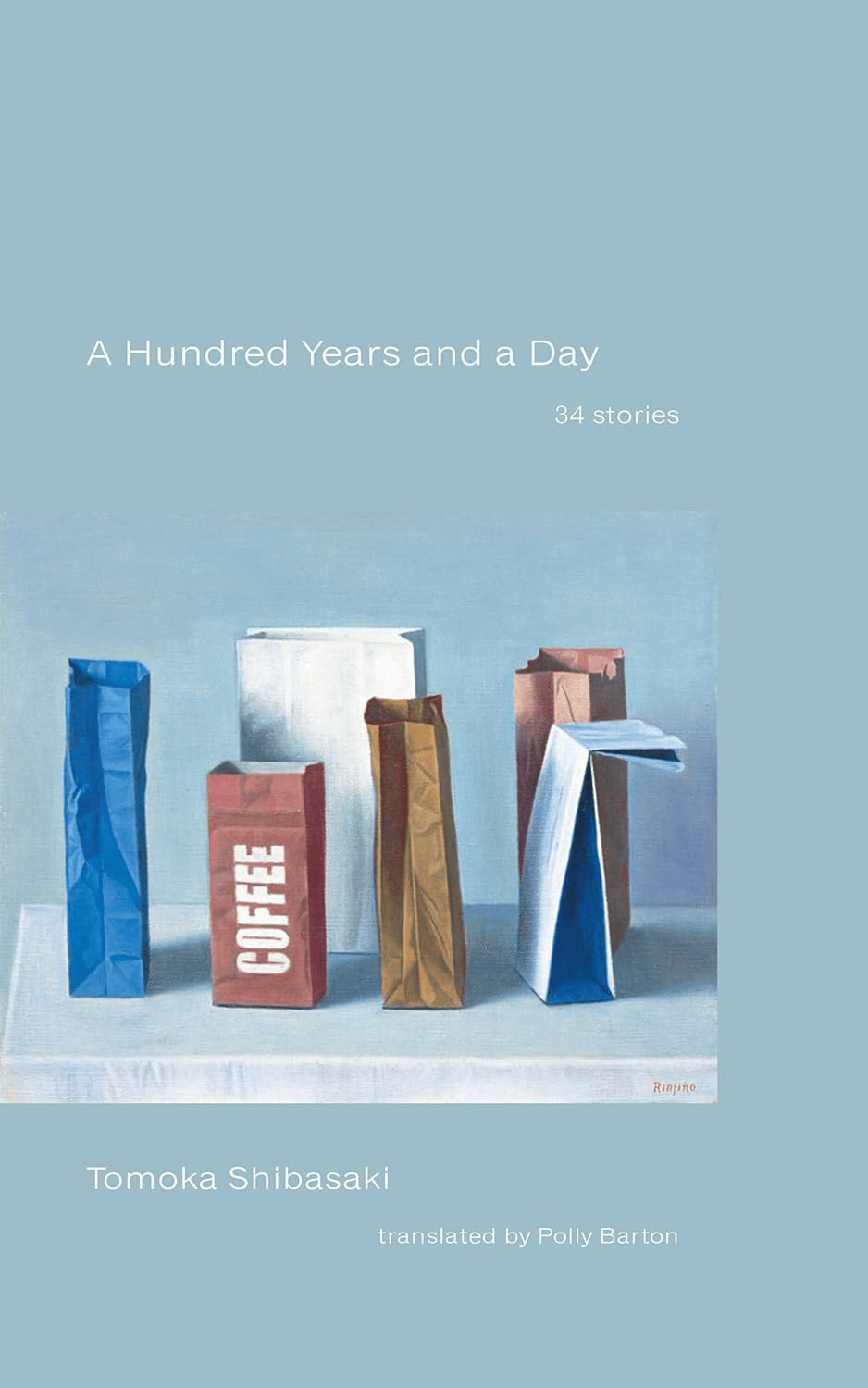
A HUNDRED YEARS AND A DAY: 34 Stories defies all the Japanese-fiction expectations by embracing the form


A HUNDRED YEARS AND A DAY: 34 Stories
TOMOKA SHIBASAKI
(tr. Polly Barton)
MONKEY/Stone Bridge Press (non-affiliate Amazon link)
$9.95 ebook edition, available now

Rating: 4.5* of five

The Publisher Says: This ground-breaking collection from Tomoka Shibasaki, author of the acclaimed novel Spring Garden, pushes the short story to a new level.

In these stories of human connection in a contemporary, alienated world, people come together to share pieces of their lives, then part. We meet the women who share a house after the outbreak of war before going their separate ways once it is over; the man who lives in a succession of rooftop apartments; the diverging lives of two brothers who are raised as latch-key kids by factory workers; the old ramen restaurant that endures despite the demolition of all surrounding buildings; people who watch a new type of spaceship lift off from a pier that once belonged to an island resort; and more.

These 34 tales from all over the planet have the compulsive power of news reports, narrated in a crisp yet allegorical style.

I RECEIVED A DRC FROM THE PUBLISHER VIA NETGALLEY. THANK YOU.

My Review
: There is a pattern I follow when reviewing short stories: I call it, for convenience, The Bryce Method after my old friend Bryce and his collection-spanning short summary followed by a very short summary and rating of the individual story habits from his blogging days.

Not going to work here.

Thirty-four stories in two hundred pages is problem one; not much between summary and spoiler. Two is these are stories that begin with something I'd call a spoiler: a summary-like paragraph set off from the text, which honestly took a half-star off my overall rating for off-puttingness. I think it's pointless, for these reasons, to use my old method as it would really add to the wall-to-wall spoilers. To avoid a close encounter with the shrieking Spoiler Stasi maniacs, allow me to review the gestalt of the collection for you.

It was fine. Nice prose, I'd say based on a long reading life with more than the usual number of translated works in many genres, quite gracefully translated. Plenty of well-woven-in clues to words that wouldn't translate. A solid, creditable job for a nice book of stories.

Does anything here do something that "pushes the short story to a new level"? No.

Does it really need to? No. Breathless copy does nothing good for this solid, well-crafted collection of short fiction mostly exploring the horrors of trying to communicate with actual other human beings in mutually satisfying connective ways. It's a collection full of fun, if weird, ways for that to fail. It has no central character or group, unlike that Ryu Murakami book I wasn't keen on that did mostly the same thing. It isn't set in one place like Pleasantville, that braided-stories novel I liked so well. In the off-kilter liminal spaces we're in for the whole collection, I'm most put in mind of the way Brian Evenson, in his uneasy style, makes the world feel. These are *not* horror, or even horror-adjacent, stories; instead, they partake of the weirdness and not-quite-ness of horror without any of the sillier trappings.

Polly Barton's ear for, say, how a wisteria vine relates to the wisteria vine it's been entwined with for goddesses only know how long, is the main vehicle for little minds like thee and me to get access to the core of longing and need in each of these very Japanese tales. Will we really know what's what? Not in my experience, and all the more fun to read because of it.

When I finished this read I had to sit a minute and look into my emotional reactor core to see what this bolus of new fuel was doing. I'm impressed that the way Author Shibasaki and her able translator, Polly Barton, never once threw a sucker punch. These stories deliver their intensely meant, unshielded radioactivity to you direct. It's not fussy; it's not overwrought; it's the high-quality story-ore, direct to your well-shielded reactor core to be processed.

I gave it a half-star less than perfect because, in some cases, the oddball opening paragraphs say too much even for me. That's hard to do!

Friday, January 17, 2025

STRANGE PICTURES, aptly titled off-kilter murder-mystery narrative translated from Japanese


STRANGE PICTURES
UKETSU
(tr. Jim Rion)
HarperVia (non-affiliate Amazon link)
$13.99 Kindle edition, available now

Rating: 4* of five

The Publisher Says: The spine-tingling bestseller that has taken Japan by storm—an eerie fresh take on horror for fans of Hidden Pictures and Junji Ito, in which a series of seemingly innocent pictures draws you into a disturbing web of unsolved mysteries and shattered psyches.

An exploration of the macabre, where the seemingly mundane takes on a terrifying significance. . . .

A pregnant woman's sketches on a seemingly innocuous blog conceal a chilling warning.

A child's picture of his home contains a dark secret message.

A sketch made by a murder victim in his final moments leads an amateur sleuth down a rabbithole that will reveal a horrifying reality.

Structured around these nine childlike drawings, each holding a disturbing clue, Uketsu invites readers to piece together the mystery behind each and the over-arching backstory that connects them all. Strange Pictures is the internationally bestselling debut from mystery horror YouTube sensation Uketsu—an enigmatic masked figure who has become one of Japan's most talked about contemporary authors.

I RECEIVED A DRC FROM THE PUBLISHER VIA NETGALLEY. THANK YOU.

My Review
: Visual horror...sequential art, film, artworks...isn't very effective on me. My idea of horror is Wrongness, and that's deeply individual in its iconography, therefore effective representation. I'm more afraid of people than Supernatural Forces because the Supernatural, by definition, can't be identified until we know all the laws of nature, and know that we know all of them. Until then, everything that happens, including things that break the known laws of physics, are simply unexplainable but still not supernatural.

Reality stinks, mono- or a-theistic religious nuts. Miracles and superheroic gods are improbable but not impossible because nature is not even a billionth of a percent explained yet. Stay agnostic, it's the only defensible stance.

This effort at image-enhanced horror is very interesting, though I'm pretty convinced it's one of that most Japanese of stories, the eerie murder mystery. I've reviewed plenty of those. This is another one. It's...fine, perfectly readable (as a mystery), and in spots enjoyable. It's a complex puzzle, not at all easy or simple to solve. It defeated me. I was sure one particular thing was true, and it explicitly wasn't. That made the read much more interesting to me than it would've been if I'd been correct.

Like so many mysteries from Japan, the characters are more gesturally indicated than developed. Mystery-genre readers in the US are less tolerant of this than they could be; we tend to look for people to invest emotional energy in, not just puzzles that rake place in a brooding ill-defined space. I think the ideal reader for this story, among my Anglophone audience, is likely to be someone who really enjoys Julio Cortázar or Umberto Eco.

I was not particularly enraptured by the read until after I finished it. This was more akin to a storyboard pitch to investors about an idea for a horror story connecting some...suspicious deaths that were or could've been Influenced From Beyond than itself a horror story. Thinking about the read, which I finished last night after taking a week to read (in my habitual scattershot way interspersed with other books), I realized I was very, very successfully manipulated from the off. A child psychologist explaining how a little murderer's artwork provided clues to the reality that child operated within initially felt a bit In Cold Bloody to me. Should I believe the narrative? Should I be interested in *how* or why? Or permaybehaps what....

That's top-quality misdirection for that to work on a reader with sixty years' experience.

Will you love it? I doubt it; I didn't. Will you enjoy reading it? See my comps, if you love them you might get a charge out of this off-kilter, well-crafted read.

Monday, September 30, 2024

THE SEISHI YOKOMIZO PAGE (3): THE LITTLE SPARROW MURDERS & THE DEVIL'S FLUTE MURDERS, fifth and sixth of the Kindaichi series translated into English


THE LITTLE SPARROW MURDERS
SEISHI YOKIMIZO
(Kosuke Kindaichi #6; tr. Bryan Karetnyk)
Pushkin Vertigo (non-affiliate Amazon link)
$16.95 trade paper, available now

Rating: 4* of five

The Publisher Says: An old friend of Kosuke Kindaichi's invites the scruffy detective to visit the remote mountain village of Onikobe in order to look into a twenty-year-old murder case. But no sooner has Kindaichi arrived than a new series of murders strikes the village - several bodies are discovered staged in bizarre poses, and it soon becomes clear that the victims are being killed using methods that match the lyrics of an old local children's song...

The legendary sleuth investigates, but soon realises must unravel the dark and tangled history of the village, as well as that of its rival families, to get to the truth.

PAGE ONE IS HEREPAGE TWO IS HERE
PAGE THREE IS HERE
I RECEIVED A DRC FROM THE PUBLISHER VIA EDELWEISS+. THANK YOU.

My Review
: An interesting cross between Kawabata's masterwork Snow Country and a sideways take on Dame Agatha's lesser work Hickory Dickory Dock mixed with her absolute chef d'œuvre The Murder of Roger Ackroyd, only in 1950s Japan.

One factor that must be attended to by Anglophone readers of this series is that in Japan they are historical fiction. Japanese readers will be as "at sea" as any Anglophone reader would be; the story is sixty-five years old, and was about a bygone way of life even then. So there's a layer of anachronism baked into the modern reading experience irrespective of language it's read in. That doesn't mean it's not a good read. It is indeed a fun story to follow. Don't expect fair play in modern mystery terms, and all will be well. Read it for atmosphere, read it for the trip to the past...you'll enjoy it more that way.

Dysfunctional family dynamics are crime-fiction evergreens. The rage and hatred needed to work a person up to killing someone build in that pressure cooker. This story has a corker of a horrible family in it. The murder Kindaichi investigates took place twenty years before the present...remembering that present is 1959...and the victim is one of those folks who just need killin' in the old US Southern idiom. Mysteries exist because we, as a society, need to see ma'at maintained in our fiction because it seems so unmaintained in the world. The zeitgeist of 1950s Japan would reasonably suggest itself as a similarly traumatized one. I suspect the Kosuke Kindaichi series serves much the same function as the Poirot series did post-Great War...a superior intellect comes along and apportions blame for the guilt of tearing the already fragile fabric of a society in flux.

Letting the reader in on all the clues, all the information the superior intellect possesses, isn't the playbook for the crime stories of this period. I'm sure some sociology thesis treats this topic, but I don't have access to such material. I suspect it goes along with the social norms of trusting experts, even...especially...if they know more than The Authorities...which seems almost quaint in this day and time.

It's a series I get a lot from reading. I enjoy the historical aspects on several levels, within the story told and the storytelling itself. It feels, in these translations at any rate, like work that could have come from the same era as the original Japanese work.

That's a compliment. Four stars for solid enjoyment of a fun-to-read story.

++++++++++++++++++++++++++++++++++++++++++++++++++++++++++++++++


THE DEVIL'S FLUTE MURDERS
SEISHI YOKIMIZO
(Kosuke Kindaichi #5; tr. Jim Rion)
Pushkin Vertigo (non-affiliate Amazon link)
$9.99 ebook editions, available now

Rating: 4* of five

The Publisher Says: An ingenious and highly atmospheric classic whodunit from Japan’s master of crime.

Amid the rubble of post-war Tokyo, inside the grand Tsubaki house, a once-noble family is in mourning.

The old viscount Tsubaki, a brooding, troubled composer, has been found dead.

When the family gather for a divination to conjure the spirit of their departed patriarch, death visits the house once more, and the brilliant Kosuke Kindaichi is called in to investigate.

But before he can get to the truth Kindaichi must uncover the Tsubakis’ most disturbing secrets, while the gruesome murders continue…

I RECEIVED A DRC FROM THE PUBLISHER VIA NETGALLEY. THANK YOU.

My Review
: A peek at the very immediate aftermath of WWII in bombed-out Tokyo, and the dreadful inconvenience all this war nonsense with its barbaric social leveling brings to The Better Classes.

Deeply dislikable "noble" people doing disreputable things for ignoble motives, aaahhh there's the sweet spot for a story! The supernatural window-dressing was sort of fun. Seances are entertaining silliness in fiction, cynical and sordid manipulations in person. The one in this book is, oddly, both; the fact is the "supernatural" gubbins of the music playing eerily would not work at all in today's world, but was very amusingly handled so flew under my eyeroll threshhold.

Again, and as always in this vintage of Japanese crime novels (based on my limited sample size, anyway), be prepared for the sleuth to know things you do not. You're here to be Dr. Watson, or Inspector Japp, not Hercule or Sherlock. Accept this and enter in the spirit of "what did bombed-out Tokyo look like?" and this read will both entertain and educate you. Kosuke Kindaichi's rumpled Columbo-like presentation of self is a lot more...unusual, noticeable, in Japanese society both then and now. The author's choice to make him rumpled is making a statement about surfaces in a country where they're even more important than they are here in the West.

I land on four stars, per usual in this series, for the fun of being in this very, very dissimilar-to-mine world.

Saturday, September 28, 2024

A BOOK I READ FOR MY LONG-AGO BOOK CIRCLE: SNOW COUNTRY by Nobel-winner YASUNARI KAWABATA


SNOW COUNTRY
YASUNARI KAWABATA
(tr. Edward G. Seidensticker)
Vintage Books
$11.99 Kindle edition, available now

Rating: 3.5* of five

The Publisher Says: Nobel Prize recipient Yasunari Kawabata's Snow Country is widely considered to be the writer's masterpiece, a powerful tale of wasted love set amid the desolate beauty of western Japan.

At an isolated mountain hot spring, with snow blanketing every surface, Shimamura, a wealthy dilettante meets Komako, a lowly geisha. She gives herself to him fully and without remorse, despite knowing that their passion cannot last and that the affair can have only one outcome. In chronicling the course of this doomed romance, Kawabata has created a story for the ages, a stunning novel dense in implication and exalting in its sadness.

I CHECKED THIS BOOK OUT OF MY LOCAL LIBRARY. USE THEIR SERVICES OFTEN, THEY NEED US!

My Review
: Married, bored (but I repeat myself) aesthete, philanderer, and flâneur Shimamura, an aficionado of Western ballet (although he's never seen one), takes a solo trip into Japan's Snow Country. While there in the wildest of boondocks Japan possesses, he meets Komako, probably the world's worst geisha, but apparently a fascinating contrast to all other women for Shimamura. They meet a total of three times in two years. Another woman, Yoko, hovers purposelessly around the narrative until, for no apparent reason, Komako and Shimamura have a fight over his feelings (?) for Yoko, who for some reason nursed Komako's not-quite-fiance Yukio while he died, despite the fact that Komako indentured herself to the (apparently quite unsuitable) career of geisha to pay for his death expenses.

Then a fire breaks out and Komako runs into the burning building and saves Yoko while Shimamura stands there and looks up at the sky. Fin.

No, seriously.

I spent the entire month I was reading this book, all 175pp of it, alternately claustrophobic and bemused. WTF, I kept thinking, why am I still at this rock-pile, trying to winkle out some small purpose to the narrative; then along would come a gem, eg:
It was a stern night landscape. The sound of the freezing of snow over the land seemed to roar deep into the earth. There was no moon. The stars, almost too many of them to be true, came forward so brightly that it was as if they were falling with the swiftness of the void.

p44, 1996 Vintage ed.

Oh wow, I thought, and plowed on. And on. And on. Every damn time Komako exhibits what today we'd call a bipolar break exacerbated by alcohol abuse, I'd find myself thinking, "This damned book is Come Back, Little Sheba directed by Kurosawa." Seriously. Shirley Booth did the same bloody role in that movie, only Burt Lancaster (whose role as her husband bewitched by a younger woman was pretty much exactly like Shimamura) is the one who drank.

I drank a good bit myself, trudging ever onward, marching off to war with the cross of Jesus going on before; okay, I'm a piss-poor Christian soldier, but you get the sense of futility I was experiencing. Then, it happened.
He had stayed so long that one might wonder whether he had forgotten his wife and children. He stayed not because he could not leave Komako nor because he did not want to. He had simply fallen into the habit of waiting for those frequent visits. And the more continuous the assault became, the more he began to wonder what was lacking in him, what kept him from living as completely...All of Komako came to him, but it seemed that nothing went out from him to her. He heard in his chest, like snow piling up, the sound of Komako, an echo beating against empty walls. And he knew he could not go on pampering himself forever. pp154-155
So there *is* a point to this hike! And a profound one: The sudden awakening of human feeling in an otherwise dead heart. It was a payoff, and a major one. But did it have to be such a Bataan Death March of a journey to get here? And the stupid-ass last line of the book, which made me so bloody angry that I began raining curses on the lady whose idea it was our book circle read the book...! INFURIATINGLY SOPHOMORICALLY PORTENTOUS, I shrieked. The dog ran away from me. The same dog who, at an earlier moment in my tossing about of the book, expressed her opinion of it by fanging the corner. She calmed down after I did, but really...does one *want* to read this book? I won't do it again. But, on balance and after sleeping on it, I'm glad that I did.

Monday, August 26, 2024

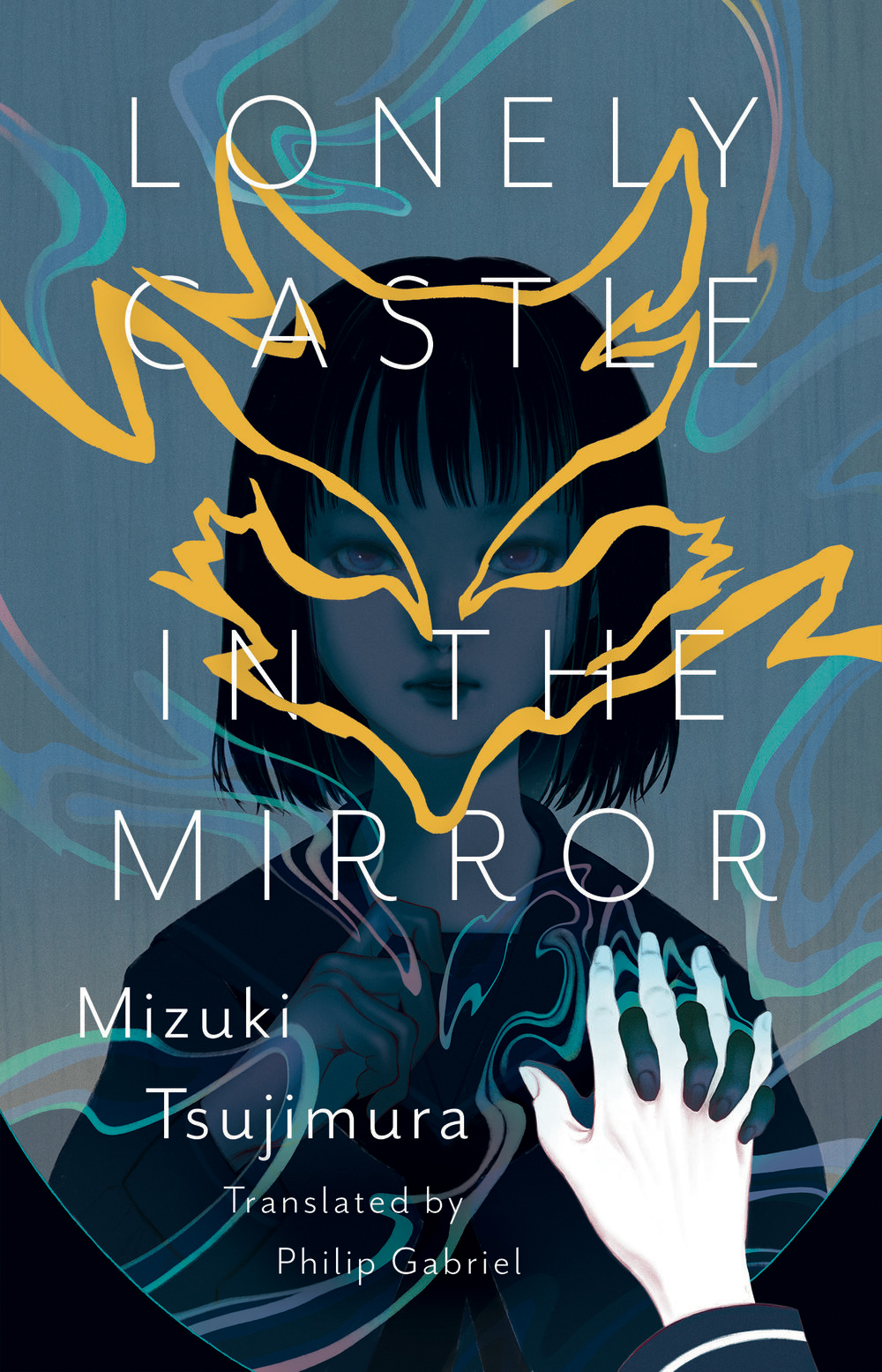
LONELY CASTLE IN THE MIRROR, #WITMonth Japanese YA fantasy page-turner


LONELY CASTLE IN THE MIRROR
MIZUKI TSUJIMURA
(tr. Philip Gabriel)
Erewhon Books
$27.95 hardcover, available now

Rating: 4.5* of five

The Publisher Says: In a tranquil neighborhood of Tokyo seven students are avoiding going to school—hiding in their darkened bedrooms, unable to face their family and friends—until the moment they find the mirrors in their bedrooms are shining.

At a single touch, they are pulled from their lonely lives into to a wondrous castle straight out of a Grimm’s fairy tale. This whimsical place, oddly lacking in food and running water but full of electrical sockets, is home to a petulant girl in a mask, named Wolf Queen and becomes their playground and refuge during school hours. Hidden within the walls they’re told is a key that will grant one wish, and a set of clues with which to find it. But there's a catch: the key must be found by the end of the school year and they must leave the premises by five o'clock each day or else suffer a fatal end.

As time passes, a devastating truth emerges: only those brave enough to share their stories will be saved. And so they begin to unlock each other's stories: how a boy is showered with more gadgets than love; how another suffers a painful and unexplained rejection and how a girl lives in fear of her predatory stepfather. As they struggle to abide by the rules of the game, a moving story unfolds, of seven characters trapped in a cycle of misunderstanding and loneliness, who are ultimately set free by the power of friendship, empathy, and sacrifice.

Exploring vivid human stories with a twisty and puzzle-like plot, this heart-warming novel is full of joy and hope for anyone touched by sadness and vulnerability. At the heart of this tender, playful tale is a powerful message about the importance of reaching out which shows how with one kind act you can change your life for the better, and more importantly, you can change the lives of others.

I RECEIVED A DRC FROM THE PUBLISHER VIA EDELWEISS+. THANK YOU.

My Review
: A story about coming out, though not the kind that phrase currently evokes. These socially maladroit and thus ostracized middle-schoolers are magically transported away from the bullying horrors of that age...the characterization of reincarnation as an endless round of middle-school lifetimes makes me so very glad I'm not A Believer...but, of course, there's a price to pay for this act of rescue. The seven of them must open up, honestly share their experiences, and only then will they be truly safe.

Well. That sounds like something I'd be sharpening my flensing knife with a ghoulish grin on my face, doesn't it? More adolescent exceptionalism! And with an added splodge of fantasy goo! "Oh he's gonna go to town on this one!"

Not this time.

Any story in which adolescent readers are encouraged, without bludgeoning, to share, and to respect the gift of sharing from another, gets my vote. Then to put it in a fantasy world that protects the wounded ones? Bonus points! To go on with the worldbuilding in a way that connects their safe escape spot back to the world they're rescued from, yet without the toxicity they need rescuing from flooding in after them? Rare and delicate flower, let me inhale you! The most usual problems are here, the bullying and the losses of safety and love. Each person's also shown to be made aware from the response to the issue that led the sufferer to this magical safe space of how much different the same stimulus can feel to different people.

Literally the point of this entire book is to learn the art of perspective in dealings with others.

I would like to experience no surprise, no extra frisson of happiness at this. The world would be a better place if I didn't. But I did, and I encourage all y'all with grands, niblings, kids of twelve or more, to grab this story up thence to present it ever-so-casually to them. It's a message, one of kindness and the presumption of goodwill on the part of all who are not genuinely rotten-souled, that I'd strongly urge getting into their heads.

Their dads and uncles, older brothers, and so on, as well.

Wednesday, May 8, 2024

THE KOTARO ISAKA PAGE: The Assassins series, THREE ASSASSINS & BULLET TRAIN, as they're best experienced


THREE ASSASSINS
KOTARO ISAKA
(tr. Sam Malissa)
Abrams (non-affiliate Amazon link)
$9.99 Kindle edition, available now

Rating: 3.5* of five

The Publisher Says: “Three Assassins feels like a fever dream that makes sense when you’re in it, but whose strange contours linger long after you wake up.” —New York Times

Three Assassins is the high-stakes, high-style, and utterly propulsive follow-up to Kotaro Isaka’s international bestseller, Bullet Train, a Crime Reads “Most Anticipated Book of 2021.”


Suzuki is an ordinary man until his wife is murdered. To get answers and his revenge, Suzuki abandons his law-abiding lifestyle and takes a low-level job with a front company operated by the crime gang Maiden, who are responsible for his wife’s death. Before long, Suzuki finds himself caught up in a network of quirky and highly effective assassins:

The Cicada is a knife expert.
The Pusher nudges people into oncoming traffic.
The Whale whispers bleak aphorisms to his victims until they take their own lives.

Intense and electrifying, Three Assassins delivers a wild ride through the criminal underworld of Tokyo, populated by contract killers who are almost superhumanly good at their jobs.

I RECEIVED A DRC FROM THE PUBLISHER VIA EDELWEISS+. THANK YOU.

My Review
: I read these books out of order; the fact is I didn't realize at the time I read them that there *was* an order! I strongly recommend reading this book before reading Bullet Train, because many details will make a lot better sense in the latter if you do.

A truly trippy, peculiarly anime-inflected story about...about...umm...Life, The Universe, and Everything, maybe? How easy it is to come unmoored from societal norms when they stop serving you? When an ordinary teacher's wife is assassinated, he doesn't grieve and get on with life. He turns his entire existence into a revenge-dealing machine. (Okay, okay, it's totally fridging and it's not a little icky in 2024, but the book was written in Japan in 2004; your 2020s US sensibilities are a liability in this read.)

What kept me reading in spite of feeling, quite often in fact, that I wanted to give Suzuki a hard shake and a two-cheek slap, was the inventiveness and gonzo pace of the exercise. Read it in chunks, not driblets. You'll think too much about how incredibly implausible the entire enterprise is unless you build a solid head of steam. The first ~30 pages at the least should be taken at a gulp.

A big part of the universe created here is the awful, cruel nature of modern society. The assassins who commit mayhem for money are no more horrible than corporate lobbyists who pay to pass laws that get their masters out of having to pay taxes, or damages, or take responsibilty for any awful thing that their (in)actions cause.

And that really os the heart of the book: Who are the clients for the terrible deeds that Suzuki and his co-workers are performing? Who has the money to make these terrible things happen, untraceably, repeatably, repeatedly?

Those in Control.

I'm not going to belabor this point. If you get it, you got it already. This, however, very important in the events that you're reading about in this book, and the next. The cruelty of the universe isn't personal. There isn't some vengeful gawd looking down on you and pointing an accusatory digit, using that to hurl thunderbolts and maledictions upon you more precisely. It would be, I suppose, comforting if there were.

Instead it's those in control looking at a population-level situation and moving the pieces of the solution into place. The motives, the results, the consequences...never vouchsafed to any of the victims inevitably suffering from those impersonal moves. Give someone a target for their misery and that target takes the heat and bears the blows. That's gawd's purpose in religion: the heat for the awfulness of the world is justified because gawd is mad at you, or your neighbors, or The Gays, or...the list is endless, changes with (often generational) fashions, and never includes the real culprits. If one depersonalizes, takes the face away from, the abuser, there's no outrage to build into rage, then erupt into violence.

Suzuki learns this horrible truth in the first thirty pages. No one murdered his wife. She was killed by a person, but not for a reason. Now what? Knowledge is power. Power over what you do next. Suzuki has to decide what will replace his desire for personal revenge.

And that, mes amis, is this novel's point. I'm not particularly edified by it, I'm not too happy about the violence herein so lovingly described. I was entertained by the full-throttle pace of the storytelling. I was abosrbed by this Everyman's decisions, the thoughtfulness of them, and the resultant mayhem. If you saw the westernized adaptation of Bullet Train, you have a grasp on the pace and style of events. But, and this is CRUCIAL!, you have no smallest idea of what the story is about. Read the books.

++++++++++++++++++++++++++++++++++++++++++++++++++++++++++++++++


BULLET TRAIN
KOTARO ISAKA
(tr. Sam Malissa)
Abrams
$9.99 Kindle edition, available now (non-affiliate Amazon link)

Rating: 3.5* of five

The Publisher Says: Five assassins on a fast-moving bullet train find out their missions have something in common in this witty and electrifying thriller

Satoshi—The Prince—looks like an innocent schoolboy but is really a stylish and devious assassin. Risk fuels him as does a good philosophical debate, such as . . . is killing really wrong? Kimura’s young son is in a coma thanks to The Prince, and Kimura has tracked him onto the bullet train heading from Tokyo to Morioka to exact his revenge. But Kimura soon discovers that they are not the only dangerous passengers onboard.

Nanao, nicknamed Ladybug, the self-proclaimed “unluckiest assassin in the world,” is put on the train by his boss, a mysterious young woman called Maria Beetle, to steal a suitcase full of money and get off at the first stop. And the lethal duo of Tangerine and Lemon are also traveling to Morioka. The suitcase leads others to show their hands. Why are they all on the same train, and who will make it off alive?

A bestseller in Japan, and soon to be a major film from Sony starring Brad Pitt and Joey King, Bullet Train is an original and propulsive thriller which fizzes with an incredible energy as its complex net of double-crosses and twists unwinds to the last station.

I RECEIVED A DRC FROM THE PUBLISHER VIA EDELWEISS+. THANK YOU.

My Review
: Not the movie. The movie is fast and loud, American and violent. The book is slower, more nuanced, and very Japanese. It also has a universal message for its readers: Nothing, but nothing!, can be allowed to get in the way of Revenge. Call it Retribution: It is the eternal weighing of deeds for the pinpoint-accurate design of their equal and opposite results.

Revenge alone is sacred.

If you haven't read Three Assassins, a lot of the why of this story is not going to make a blind bit of sense. I strongly recommend getting into the universe of the assassins before embarking on this exciting outing into their world. Don't spend a lot of time asking "why" of this book only to get the unsatisfying answer a) because, 2) read Three Assassins, that's why.

A must for initiates, though. The increased famailiarity the book assumes you have is license for it to really ramp up the use of multiple, intersecting though definitely not parallel, PoV chapters...and that narrative technique requires practice to get used to when decoding tangentially connected story lines. This weird story of five assassins doing similar but not causally related things on one speeding train that's going nowhere special or significant to no unusual purpose. It's just moving at speed, and it's not going to stop for a predetermined period of time; perfect for a murder or two. The assassins, like in the first book, are very highly skilled at very weird specialties of killing. They operate at a superhuman level of concentration. They are, in short, very fictional. Since this is unabashedly fiction, that's okay by me. Big fun, nothing deep; the original story had more of the Message, this one merely plays the videogame for you.

Now, about that film: Like 3 Body Problem, it shifts things to a safely western, US-white-male footing so as not to run afoul of the clucking hens of the right wing who glare with their beady little eyes and three functioning neurons at any and all things queer (let alone Queer!) because...well, here I sit with my teeth in my mouth, unable to come up with any reason for their hostility except "they's stupid." Anyway, whatever the source of their rage, the entertainment studios won't take risks that will unquestionably, positively not pay off as increased profits in short, medium, or long runs, so here we are with a pallid, denatured action flick of what was a more subtle, subversive idea once in its life.