Showing posts with label Open Letter Books. Show all posts

Sunday, July 19, 2026

FORTRESS OF THE FORGOTTEN ONES, don't delay learning about them


FORTRESS OF THE FORGOTTEN ONES
FAHMIDA RIAZ
(tr. Sana R. Chaudhry)
Open Letter Books (non-affiliate Bookshop.org link)
$15.95 paperback, available now

Rating: 4* of five

The Publisher Says: Winner of the Armory Square Prize for South Asian Literature in Translation

In Fortress of the Forgotten Ones, Fahmida Riaz transports readers to fifth-century Ctesiphon, the zenith of the Sassanian Empire, in a brilliant historical novel that blends rich cultural memory with striking political relevance. Set against the backdrop of fire worshippers, Parsi kings, and the ancient Avesta, this ambitious tale follows Mazdak, the first socialist revolutionary in history, as he challenges the power structures of his time.

With vivid depictions of the Great Palace of King Qobad, the lands of the White Huns, and the impoverished masses, Riaz delves deep into the forces of history that shaped Mazdak’s quest for social justice. A masterpiece of historical fiction, Fortress of the Forgotten Ones is a powerful meditation on erasure, cultural identity, and the fight for justice that resonates with our contemporary world.

I RECEIVED A DRC FROM THE PUBLISHER VIA EDELWEISS+. THANK YOU.

My Review
: What a fascinating read! I was constantly intrigued by the strangeness of the settings, and eager to get the next interesting tidbit of knowledge.

And that's where my problem lies. I genuinely could not wait for my lessons in history to commence but I was never empathetically crushed when the history was dark. I am still not sure who the characters are, but I am very clear on what happened to them. Ctesiphon is no longer a name on a map of archaeological sites, it's a place. It vibrates with events so huge their echoing claps of collapse, of rupture, their crackling roars of inflammation, reverberate (I now see) in 2026's tragedies.

That's heady stuff. It's why there are four stars up top. There'd be six if I could remember anyone's name. Events occur...curiously impersonally. Power vanishes...but no one lost it. It's a narrative choice that other authors have made over time, and more particularly when telling sweeping historical stories. If one isn't willing to create a doorstopper like War & Peace, Jean-Cristophe, or their ilk, a narrower focus on facts and events will keep pages turning.

It worked on me. It would most likely have worked on me with many more pages, too. As things stand I'm a happy reader, sated in my desire to be presented with a very interesting story about places and events completely new to me in a landscape foreign to my eyes.

I missed the portraits that could've showed me the people is all.

Monday, June 9, 2025

VZ: Volodymyr Zelenskyy and the Making of a Nation, urgent topic and sterling example of resisting fascists


VZ: Volodymyr Zelenskyy and the Making of a Nation
DMITRY BYKOV
(tr. John Freedman )
Open Letter Books (non-affiliate Bookshop.org link)
$18.95 trade paper, available now

Rating: 4* of five

The Publisher Says: How does a comedian become the face of a nation's fight for survival?

In VZ, celebrated Russian author Dmitry Bykov unpacks the extraordinary rise of Vladimir Zelenskyi—from a TV star to a wartime leader defying a global superpower. With wit and razor-sharp insight, Bykov dives into the moments that shaped Zelenskyi's improbable journey, revealing the man behind the headlines.

This is not just a story of one leader but of a nation on the edge, and the power of resilience in the face of overwhelming odds. Bykov offers a fresh, compelling take on Zelenskyi’s leadership, Ukraine’s struggle for sovereignty, and what it truly means to fight for democracy in the modern world.

For anyone eager to understand the making of a modern hero and the fierce will of a nation under siege, VZ is essential reading.

I RECEIVED A DRC FROM THE PUBLISHER VIA EDELWEISS+. THANK YOU.

My Review
: Ukraine's president, a former performer who took on a mantle of identity formation for the ancient land of Ukraine, gets a hagiography. Bykov is a prolific writer, twelve novels and a slew of other biographies in his pocket, but until Open Letter brought this book out, nothing in English either in the UK or US markets. As translated by John Freedman, a prolific translator into English, the Bykov touch seems to serve a need to balance uncritical praise and honest assessment.

Everything starts for the Anglophone with the competing systems of Romanizing Russian and Ukrainian. They are as different as English and American, or Portuguese and Brazilian. This means they need to be transliterated differently. It will strike US readers as weird, and feel "wrong" to many who, like me, lived our entire lives accepting "USSR" and "Russia" as synonyms, "The Ukraine" being uncritically assumed to be part of both.

Volodymyr Zelenskyi (a usage common in the text; I'll use it here as I prefer it to double-y which breaks my brain) is the president of Ukraine's name. Learn it. We're not dictating anymore, old white guys, we're learning what to call people, how to spell it, when to say it. The fascism our fathers, their grandfathers, fought a war to defeat is cultural as well as political. We need to shed our old assumptions.

Accustoming myself to Author Bykov's code-switching between transliterations was as challenging as learning when to use "tu" versus the formal third person. It got to be automatic, and served as effective signposting of a source's sympathies. It's going to take effort from the deeply acculturated to the Cold War's polarities. In a multipolar world, people like Zelenskyi are the feared and/or anticipated breezes from outside certainty. There's a lot in Zelenskyi's past that makes him a good stand-in for global changes to get the old certainties to unclench: he's charismatic, he's deeply convinced of his cause's rightness not simply clinging to his power; his government, unsurprisingly, faces a lot of bad press with accusations of corruption and self-dealing that ring false and hollow, so don't stick. Reading this rather-too-long book demonstrates why: This is a man of integrity and convictions accusing by his existence those who embody other "values."

What you gain by reading this biography is a clear sense of *WHY* Ukraine unites behind the figure of Zelenskyi: He represents them, he says the words they want to hear, he makes the sacrifices they make. This is Leadership 101, folks, it's either the best stage-managed con job in political history (in which case the world's leaders would unite to kill him as fast as possible) or he's sure he's Right.

Guess which one the invaders' ruler, too scared of his people to allow them elections that are free of thumbscaling determinism, wants us all to believe. I think I'm finally understanding the Slavic concept of "the holy fool" (bozhevilyi in Ukrainian) the longer I stew over the facts of Zelenskyi's choice to stand in Putin's way. It's that real belief that the way will be made for that soul who simply does not accept the world's verdict about reality. Any sane person would've taken the ride offered to evacuate him, not demanded the weapons to fight, the invaders of a major army with a dictator at its head who needn't fear election losses or civil unrest unseating him. (It says here...watch this space.)

I will say I can't offer all five stars because, absence of footnotes and all, there's simply an overwhelming amount of detail to absorb and not a lot of framing to do it within. It's not possible to give that without a lot more history; that's not what this book's about; so it's a little unfair but I'm a reader-response reviewer not a literary critic. I'm resolutely anti-christian and find a lot of the apocalypticism around the battles of this war framed in Holy War terms unpleasantly alien, when I think the humanity on each side is more than capable of doing their worst of their own volition.

I could simply be not "getting" these references inside the proper framework. I acknowledge this...and still slice off the remaining bits of a fifth star. So four thoroughly impressed, urgently motivated "buy me now" stars.

Friday, May 9, 2025

BAD HANDWRITING: Stories, angry, bitter, truthtelling stories without any need to coddle you


BAD HANDWRITING: Stories
SARA MESA
(tr. Katie Whittemore & Frances Riddle)
Open Letter Books (non-affiliate Amazon link)
$9.95 ebook, available now

August 2025: 40% discount on all Open Letter titles written or translated by female-identifying artists. (Discount is applied automatically at checkout on publisher's website and applies to all hardcover, paperback, and ebook editions.)

Rating: 4.5* of five

The Publisher Says: From the author of the highly acclaimed Four by Four and Among the Hedges comes a collection of unsettling, captivating stories.

The eleven stories in this collection approach themes of childhood and adolescence, guilt and redemption, power and freedom. There are children who resist authority and experience the process of growing up with shock, and loneliness; alienated young girls whose rebellion lies under the surface—subterranean, furious and impotent; people who are tormented—or not—by regret and doubt, addicted to feelings of culpability; men who take advantage of women and adults who exercise power over children with a disturbing degree of control; kids abandoned by their parents; the suicide of the elderly and the young; lives that hide crimes—both real and imagined. Eschewing cosmopolitanism in favor of the micro-world of her characters, Mesa depicts a reality that is messy and disturbing, on even the smallest scale of an individual life, a single family.

I RECEIVED A DRC FROM THE PUBLISHER VIA EDELWEISS+. THANK YOU.

My Review
: Sara Mesa's collection does something exciting to me: It presents a woman's unexpurgated thoughts on her role, her world's extent, and why it is (not could or should be) that way. The women in question aren't always adults, or the PoV characters. They are always, though, the heart of the tale told.

Where men should know to go, they are clueless, or narcissistic, enough not to. All the stories together make a dark and compelling vision of our cruel world. Little hope is offered here that there is light at the end of the tunnel, even that of an oncoming freight train's headlight.

In accordance with the Prophecy, the use of the Bryce Method hereinafter applies.

The Screech Owl might refer to the bird, or the unkind and minatory older woman in charge of this forest picnic:
The snap of the pine needles breaking beneath her feet grew quieter as she drew near, strangled by the voice of the aunt, a voice from the depths of an earthen jar, deep, strong, stony. ... The aunt always knew exactly what had to be done and the proper steps to do it. ...allowing no one to disturb her ritual. She performed it deliberately, unhurried, as if time itself was obliged to mold to her pace.

Nothing good comes of wondering and wandering when your real purpose is escape. From so very much, it turns out; the screech owl least of all. Darkly suggestive of bitter secrets and unspoken unhappiness, redolent of the matriarchal control by guilt and shame, a very, very sad and betrayed start to the collection. 4*

Mármol finds us in the memories of a writer whose class is jolted by the suicide of the freckle-faced titular character at the sad age of fourteen. She recalls for us the way she felt before the event, the childish concerns and hatreds that consume all schoolkids in that passage of life; her older sister bonding with her over a particularly weird and awful teacher; the way she held her pencil, apparently so odd and unpleasant to others that they recall it decades later. Nothing much about the boy himself, unsurprisingly, since this isn't his story only one of the life that goes on after tragedy. The writer narrating the story is formed by the event and her observations set in stone because of it. Reads differently in the age of ever-increasing rate of youth suicide than it would've when written. 3.5*

Just a Few Millimeters limns some uneasy cultural attitudes towards disability as a young teacher copes awkwardly with a severely disabled teenaged boy with all his thoughts and feelings but who is trapped in his head. She is in his room to administer a school exam, as he communicates (like Hawking) via tiny eye movements.

Told in a headlong rush of listening in on her private thoughts, the story hurts in its voyeuristic honesty of prejudice, of Othering, of silent but vocalized rejection. The cruelty we all possess, express inside our heads, and so reject community, communication, simple communing with The Other. Hard subject, but when did that stop Mesa from tackling it? 4.5*

"Creamy Milk and Crunchy Chocolate" explores the shadow side of accepting responsibility for one's actions: Guilt. Not "I did this thing that hurt you, I'm sorry" guilt; the kind that, in its intensity, recenters the causer of harm, focuses all the attention on the committer of the harm thus re-robbing the harmed of centrality in their life. In other words, toxic narcissism wrapped in saintly clothes.

A man and woman come together in a guilt-issues therapy group. Their self-centeredness keeps on reinforcing their narcissism. They continue to cope, not by reaching for healing, rather with extravagant sex accompanied by religiosity and toxic outward focus to avoid the learning guilt, remorse, and regret can offer.

Subtle language point: The title of the story is in English in the original Spanish text. It carries an extra weight that way, that the quotes around it in translation approximates. 5 stars, a story that lives with me

Stonewords takes place in the past of "The Screech Owl" above. The origin story, so to speak, of the unhappiness and bitter resentment in that tale of horrors committed with "Love" in the mouth of a woman for whom it is only a word, devoid of any interiority.

A childhood, then adolescence, lived with a harpy whose grudges and jealousy masquerade as concern for her reputation (though not her feelings), leaves the narrator used to insults, belittlement, cruelty she labels "stonewords." She describes them in the same terms one would rain: as sliding down her arms, her legs, unsurprising and ordinary. The day comes to her, as it does to all of us, that all the exciting fumbling around has an end, a purpose, that does not follow rules.

Accidentally matured, she explains to her aunt the sight that brought this loss of innocence to her. The line she (which she?) never understood is finally crossed, and...offscreen, as it were...the full weight of all the stonewords lands on her (which her?). 4.25*

Nothing New foretells the death of the old, useless, addicted men who supported a system now in its rigor mortis and wrapping tightly around the few remaining pleasures of life: hatred, booze, and pointless cruelty, all horribly addictive.

The grandson recounting, sort of, the story of the old man's last hours on Earth, wasn't there wasn't even interested in it except as a story told to an anonymous audience. A bleak picture of an end that will come to so many. I hope it comes exactly this way to the old bastards in charge in 2025. 4*

White People portrays the unconsidered use of power associated with gender, as well as skin color. A young woman turns down an invitation to see her parents at Christmas so she can visit her sister, While she is there, her sister decides not to have an abortion or put her unborn baby up for adoption in spite of the pressure to do so after she is sent to prison for murder. Unmemorable, if nicely written. 3.5*

Papa is Made of Rubber tells us of three young brothers, one an infant, struggling to survive in an apartment that their parents have, for unknown reasons, abandoned. Mesa has writes about children in crisis, or simply in hard-to-fathom difficulty, and it is a strength of hers. It is a moving, unnerving piece of storytelling, but there's a missing heart of meaning. 4*

What is Going On with Us is the ugly aftermath of rape. It's told in Sara Mesa's most usual stream-of-consciousness prose.

Nothing graphic happens. I wish it had. I'd feel less...dirty...compromised...maybe revulsion for the act is cathartic. I've been this woman, and this is exactly what it felt like, still feels like, and can never be expunged from any part of you. 5*

Cattle Tyrants Short and sharp. Vivid vignette of being assaulted, being brutalized, just because They can. It's in the aftermath the tragedy unfolds. A bit like "The Screech Owl," it's more about what They will think than about what happened to you. 4*

Mustelids...those weird little critters that combine mammalian fur, reptilian sinuosity, and add a hefty dash of playful destructiveness...are her favorite animals. He's left trying to put that into the puzzle he has some pieces to, though not the ones he supposes he does. The corner piece is her published collection of violent, dark stories; then his picture's blown into new configurations as she explains how otters and incest coexist in her head, before "falling asleep" on his shoulder as they go back to their home city.

He will never know if she listened to any of the interesting facts he shared. He waits for her while she creates all kinds of embarrassing fuss and ruction looking for her left-behind otter plushie.

Clueless to the end. 4*

FOUR BY FOUR, Sara Mesa's odd, claustrophobic, upsetting challenge to smugness


FOUR BY FOUR
SARA MESA
(tr. Katie Whittemore)
Open Letter Books
$15.95 trade paper, available now

August 2025: 40% discount on all Open Letter titles written or translated by female-identifying artists. (Discount is applied automatically at checkout on publisher's website and applies to all hardcover, paperback, and ebook editions.)

Rating: 4.25* of five

The Publisher Says: Set entirely at Wybrany College—a school where the wealthy keep their kids safe from the chaos erupting in the cities—Four by Four is a novel of insinuation and gossip, in which the truth about Wybrany’s “program” is always palpable, but never explicit. The mysteries populating the novel open with the disappearance of one of the “special,” scholarship students. As the first part unfolds, it becomes clear that all is not well in Wybrany, and that something more sordid lurks beneath the surface.

In the second part—a self-indulgent, wry diary written by an impostor who has infiltrated the school as a substitute teacher—the eerie sense of what’s happening in this space removed from society, becomes more acute and potentially sinister.

An exploration of the relationship between the powerful and powerless—and the repetition of these patterns—Mesa’s "sophisticated nightmare" calls to mind great works of gothic literature (think Shirley Jackson) and social thrillers to create a unique, unsettling view of freedom and how a fear of the outside world can create monsters.

I RECEIVED A DRC FROM THE PUBLISHER VIA EDELWEISS+. THANK YOU.

My Review
: There's enough animal cruelty in here for me to warn the sensitive to cross the story off their radar for good. It was a very close-run thing for me to finish the book, in fact.

What moved me forward was the nature of the story. It's a closed society, a hierarchy run on the tacit rules of conduct that never get enumerated and therefore are that much harder to fight against, to resist inside and out. The "colich" (as everyone refers to it) was established to keep the children within safe from...honestly, at this point, I can't help myself: from what, given that what happens in the "colich" is so utterly unspeakably awful...the Outside, the terrors of the unknown-but-known. (Like all "security states" the unknown being protected from must be known to someone or else how would one know it was worse than the security state?) Sexual assaults, class enmities, all the sins of the world are routine within the "colich" and the outside world's worse? Hm.

Anyway, Mesa's tight and tiny little microcosm of all authoritarian states is limned in hot acid on living flesh, her story unfolds as a fever dream had by a starving political prisoner might with all its abuses and horrors. Her singular talent for controlling the reader's attention...leaving the basic reality of the world outside the "colich" unexplored, undescribed, but making the contrast to the well-fed and privileged comforts of staff and students plain...creates the slightly seasick sense of knowing someone is being abused, but not quite knowing how. Still less realizing that it is also happening to you. Author Mesa's narrative, then, is finely balanced between the states of revulsion and empathy, between understanding and comprehending viscerally, always shifting the reader's attention away when clarity threatens to lift that so-necessary fog.

A lot like life in the world, then.

What makes this a four-star read, not a five-star one, is the nature of the animal cruelty (it's the reason not solely the fact that's so upsetting to me) and the strange, third-act summing-up bit written by a teacher who's no longer at the "colich" but which was presumably written while there and is now, suddenly, here in our face. The framing device wasn't as effective as it seemed to want to be in this case, and rather fractured the eerie, claustrophobic darkness that's prevailed in the novel until now.

As a reading experience, it's definitely one I can recommend to you. As an extended metaphor for the nature of wealth-measured success in Society, I can even urge it on you. As Spanish Gothic, it excels. As a gestalt, it falls only slightly—but perceptibly—short.

Monday, September 16, 2024

A MUZZLE FOR WITCHES, probably the last time we'll get to hear from a feminist ikon


A MUZZLE FOR WITCHES
DUBRAVKA UGRESIĆ
(tr. Ellen Elias-Bursać)
Open Letter Books
$14.95 trade paper, available tomorrow

August 2025: 40% discount on all Open Letter titles written or translated by female-identifying artists. (Discount is applied automatically at checkout on publisher's website and applies to all hardcover, paperback, and ebook editions.)

Rating: 4.5* of five

The Publisher Says: Winner of the Neustadt International Prize for Literature As with the rest of her literary career, Dubravka Ugresić's final work, A Muzzle for Witches, is uncategorizable. On its surface, the book is an conversation with the literary critic Merima Omeragić, covering topics such as "Women and the Male Perspective," "The Culture of (Self)Harm," and "The Melancholy of Vanishing."

But the book is more than a simple interview: It's a roadmap of the literary world, exploring the past century and all of its violence and turmoil—especially in Yugoslavia, Ugresić's birth country—and providing a direction for the future of feminist writing.

One of the greatest thinkers of the past hundred years, Ugresić was one-of-a-kind, whose novels and literary essays pushed the bounds of form and content, and A Muzzle for Witches offers the chance to see her at her most raw, and most playful.

I RECEIVED A DRC FROM THE PUBLISHER VIA EDELWEISS+. THANK YOU.

My Review
: "Raw and playful" are not frequently paired in a publisher's synopsis. In this outraged, affronted growl, they're two of the best words for Ugresić's œuvre as a whole, and this last distilled, refined-to-purity last work in particular. Her métier was the essay, I've even said before the screed, and this one-sitting book is a great way to get one's eye in to the tenor of her work.

It's quite an achievement to call out, I'd venture to say even to take down, the sexist, fascist Establishment that's controlled...notionally, in her case...the course of both life and career, while being amusing. Mordantly so, but amusing nonetheless. Author Dubravka does this trick regularly. I'm very impressed by this because it means her focus is not on her topic of outrage. The outrage is there, but unlike the literature of grievance that grows so stale so very quickly. Jeremiads are so deeply tedious as anything except a light seasoning on top of one's regular reading.

The title of these collected interviews with a literary critic from Croatia, Merima Omeragić, is a call-out to the (male-dominated) Croatian establishment's characterization of her as a "witch" when her anti-war attitudes got her hounded into exile in 1993. "Muzzle me, you dickheads?" one can hear her thinking in this title. I do not know if she chose it, but it certainly captures her acerbic, flensing-knife wit.

What we, as a literary society, lost on her 2023 death, was an acute observer...better to say "witness" of the Ship of Fools we're riding on. Dubravka Ugrešić saw it from her berth in Second Class, where she was assigned, but never, ever stayed. Her head was the Imperial Suite's sole occupant. She saw right through the oppressive systems designed to reduce her to a compliant drone, a life support system for a uterus.

We need this voice as a society. The women who vote in the 2024 US elections should read this, and other feminists of an earlier generation, because their privileges are not secure when their very rights to bodily autonomy are being rolled back at a great rate of speed.

Friday, August 9, 2024

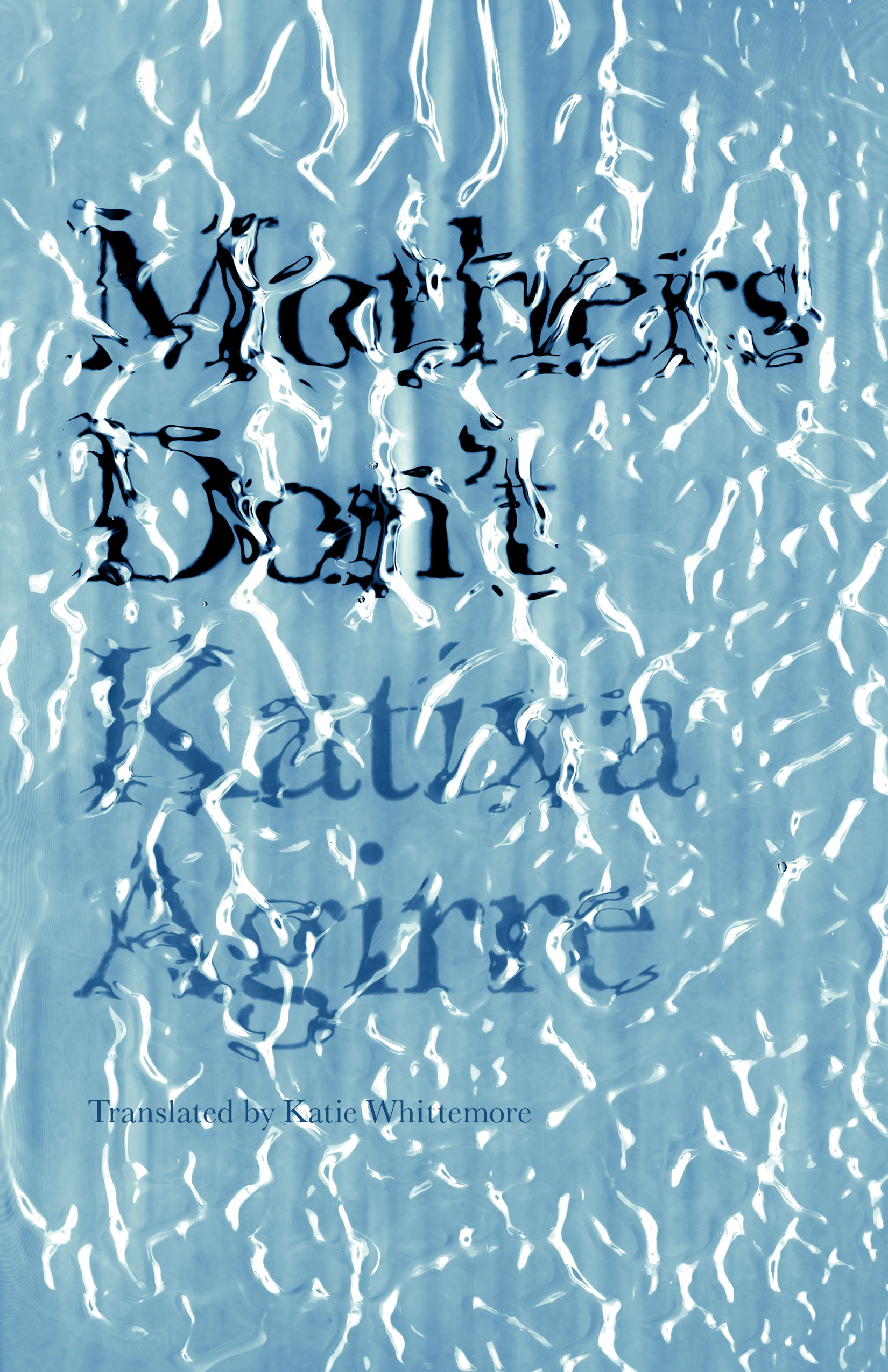
MOTHERS DON'T, Basque-language translation of very difficult subject


MOTHERS DON'T
KATIXA AGIRRE
(tr. Katie Whittemore)
Open Letter Books
$15.95 trade paper, available now

August 2025: 40% discount on all Open Letter titles written or translated by female-identifying artists. (Discount is applied automatically at checkout on publisher's website and applies to all hardcover, paperback, and ebook editions.)

Rating: 4* of five

The Publisher Says: A mother kills her twins. Another woman, the narrator of this story, is about to give birth. She is a writer, and she realizes that she knows the woman who committed the infanticide. An obsession is born. She takes an extended leave, not for child-rearing, but to write. To research and write about the hidden truth behind the crime.

Mothers don't write. Mothers give life. How could a woman be capable of neglecting her children? How could she kill them? Is motherhood a prison? Complete with elements of a traditional thriller, this a groundbreaking novel in which the chronicle and the essay converge. Katixa Agirre reflects on the relationship between motherhood and creativity, in dialogue with writers such as Sylvia Plath and Doris Lessing. Mothers Don't plumbs the depths of childhood and the lack of protection children face before the law. The result is a disturbing, original novel in which the author does not offer answers, but plants contradictions and discoveries.

I RECEIVED A DRC FROM THE PUBLISHER VIA EDELWEISS+. THANK YOU.

My Review
: Seeing Motherhood, that uncriticizable cult, as a prison exclusively populated by and designed for women, is very culturally risky. Think I'm exaggerating? Call Motherhood a "sacred cow" in public.

Crowds will gather. Trouble will brew. The speaker will be set upon from every point of the cultural compass. Like saying "religion is evil, a force for the worst people to do the most intentional damage to the greatest number of others" it results in much, much shouting about it from those alleging they most value the freedom to express ideas freely. Feminists will decry the insult perceived in comparing a woman to an animal, a Hindu will shout about colonialist appropriation of a cultural symbol, a mother will complain she is misunderstood....

I know this from experience.

That reality told me Author Agirre was on to a winner in this journalistic investigative thriller of a wealthy woman's "inexplicable" infanticide. I'm going to have to contextualize all of that: by definition, all things pertaining to mothers and motherhood are domestic; a story that centers a journalist investigating a crime in front of us is journalistic; a story involving the uncovering of the "why" of a violent crime no one wants investigated is a thriller. That exactly none of these things are present in their essential forms makes this literary fiction; that the center of the story is absolutely, essentially, irreducibly about femaleness's exclusive biological function, unshared and unshareable with men makes it feminist.

The entanglements do not stop there. This is a web, and it is meant to be. Meanings are massively interwoven: Do these women have a relationship, or is it a case of scraping a connection? Does our journo using an extended leave, not to care for her own child but to write about the infanticide as it travels through the legal system, suggest her fascination might be rooted in some envy? Her old connection is an artist, married to a wealthy man, possessed of an au pair...her own Swedish man isn't wealthy but she has resources many would envy just by giving birth there. Her story is of a difficult birth, a lot of time away from her child, permaybehaps escaping the overwhelming, extinguishing identity Mother, instead of drowning her child in a bathtub.

The story, in pop culture and true crime, is as old as the state of Motherhood. Sometimes it's just too much. Some people aren't interested in doing this lifelong job. Some aren't suited to it. And the less we talk about it, the more women fall into a life they do not want to lead because they had no external guidance to consequences, alternatives, solutions. Tragedies come when people, all of us, refuse to talk through the realities of life. That leaves us all at the mercy of myths. Myths arise to address needs; myths also get crafted, honed to serve as weapons. One thing is certain: The Cult of Mother is incredibly old and powerfully supported, and only a brave soul says, "No."

These kinds of stories tell us about a tragedy arising from the myth remaining unchallenged. That ought to be enough to send all y'all scurrying out to get a copy. I hope it will. For me, this was an above-average reading experience that didn't quite reach the pinnacles I always hope for a read to reach. As a translation of a translation, I wonder if that might be it. Translator Whittemore does a creditable job but I'm...unthrilled. Pleased. Contented. Unthrilled, though, and I am absolutely the audience for this tale. My own mother should never have had me, or any other child, because I can tell you her laziness was the only reason she never killed me. It was easier not to vaccinate me and to ignore my physical problems.

Not kidding. Being female does not mean a person is automatically suited to motherhood.

So, well, do I recommend the read? Yes. It is stylistically interesting, it tells a story I think many will find very involving and will invest their energy into while receiving ample rewards.

It will entertain, it will inform, it will offer rewards. The sale price, had I paid it, would feel very well worth the investment.

Monday, May 13, 2024

VLADIVOSTOK CIRCUS, lovely tale of self-discovery through running away and joining the circus


VLADIVOSTOK CIRCUS
ÉLISA SHUA DUSAPIN
(tr. Aneesa Abbas Higgins)
Open Letter Books (non-affiliate Amazon link)
$15.95 trade paper, available now

August 2025: 40% discount on all Open Letter titles written or translated by female-identifying artists. (Discount is applied automatically at checkout on publisher's website and applies to all hardcover, paperback, and ebook editions.)

Rating: 4* of five

The Publisher Says: Tonight is the opening night. There are birds perched everywhere, on the power lines, the guy ropes, the strings of light that festoon the tent . . . when I think of all those little bodies suspended between earth and sky, it makes me smile to remind myself that for some of them, their first flight begins with a fall.

Nathalie arrives at the circus in Vladivostok, Russia, fresh out of fashion school in Geneva. She is there to design the costumes for a trio of artists who are due to perform one of the most dangerous acts of all: the Russian Bar.

As winter approaches, the season at Vladivostok is winding down, leaving the windy port city empty as the performers rush off to catch trains, boats and buses home; all except the Russian bar trio and their manager. They are scheduled to perform at a festival in Ulan Ude, just before Christmas.

What ensues is an intimate and beguiling account of four people learning to work with and trust one another. This is a book about the delicate balance that must be achieved when flirting with death in such spectacular fashion, set against the backdrop of a cloudy ocean and immersing the reader into Dusapin’s trademark dreamlike prose.

I RECEIVED A DRC FROM THE PUBLISHER VIA EDELWEISS+. THANK YOU.

My Review
: In less time than it takes Houellebecq to clear his throat in The Possibility of an Island, a book which goes on a similar trip, Dusapin starts and finishes this story. Nathalie is a woman who leaves, finds, and abandons in a country that, unluckily for the author, is an international pariah at the time her novel appears in English. Even more unluckily, it features a Ukrainian acrobat performing in a Russian circus troupe. So, through no fault of her own, Dusapin has created an artifact of a bygone time in this story.

Swiss-educated Nathalie has a fashion degree, which she is using in Vladivostok, Siberia, to work with a troupe of acrobats as they pursue a very difficult performance piece. So, already the theme of leaving is prominent: She left tidy, bourgeois Switzerland for the extreme edge of the wildest place in a wild country, Siberia, at the edge of Russia. The country is itself at the edge of the Asian continent; something I think a lot of people forget is that Korea, Dusapin's previously centered culture, is very close to Siberia. Nathalie is now, temporarily, in a port city, working with a troupe of performers who tour with a circus, and who are practicing an extremely difficult maneuver called "the Russian Bar," a name that carries a whole different cultural freight of metaphor in 2024 than it did when she wrote the book in 2020.

This is, one would expect, the McGuffin, the thing that motivates the action but, in itself is fungible. I thought it sounded like a great McGuffin for a young woman abandoning the bourgeois life that a Swiss fashion design degree virtually condemns one to, by literally running away from home to join the bloody circus.

Only partially true.

We do indeed have the young woman (instead of Daniel, the narrator of The Possibility of an Island and my idea of "the Houellebecqian man") on a voyage of self-discovery among the acrobats. Their extremes of hard, dangerous work, their deeply set bonds of trust built from many, many painful falls and much incredibly focused work on balance and dexterity, aren't exactly subtle metaphors for the young woman who abandons an entire life in Switzerland to start afresh to encounter. The work that Nathalie does, the external and honestly almost extraneous work of dressing these finely honed athletic bodies pales beside their training. Her choreography likewise is just a way of getting them out of one position in time to enact another athletic feat, while telling a story.

So she is only a part of the externals, the appearances of the actual group...the men and women whose work and commitment to each other, to building their trust in each other, makes the act...verb and noun...possible in the first place. But this semi-outsider is the one needed to refine and design the public face, the pretty dress that they need to sell the act...verb and noun...to a group of judges.

Okay? You with me on the meaning, and the stakes?

But the McGuffin is decidedly not just the moitvator here. Author Dusapin, deft of phrase, makes this McGuffin into a deeply explored reality:
Backstage, a pungent animal smell hits me. Straw scattered on the ground. Streaks of dirt on the walls. Like a stable but with velvet lining—hoops instead of horses, waist-high wooden balls, metal poles, tangles of cables, drones in the shape of planes, straw hats hanging on hooks. Leon tugs a cord and the curtains part.
–and–
She places a chair on the bar, balances it on two legs. They hold it in place for as long as they can, barely moving a muscle. Sometimes Leon is there with me. He explains to me why exercises of this kind are so important: the flyer has to rely entirely on the bases for balance and not try to stabilise herself at all. Think of Anna as the chair, he says, that’s how passive she has to be. It’s one of the hardest things about the Russian bar discipline.

There's a lot more detail about the specifics of the Russian Bar, and while I applaud Author Dusapin for making the physicality of the act...verb and noun...so starkly plain to us, and drawing our attention to the extreme discipline it takes a woman to perform as expected under the constant pressure of a hypercritical, unseen audience, its details are rather more prominent in the story than my interest in them required. It gave me rather less pleasure, then, than Author Dusapin's previous novels did.

But let's be clear about this: I enjoyed this novel a good deal more than most. I enjoyed the lovely translation. I enjoyed the thought-provoking metaphor of acrobatic performance for a young woman's acquired presentation of self; I enjoyed the Asian setting's evocative potentials. This is a compact, intense dose of good storytelling.

Wednesday, September 28, 2022

THE PACHINKO PARLOR, 2nd novel from Korean French author about Japanese colonialism ***SPOILERS***


THE PACHINKO PARLOR
ÉLISA SHUA DUSAPIN
(tr. Aneesa Abbas Higgins)
Open Letter (non-affiliate Amazon link)
$16.95 trade paper, available now

Rating: 4.5* of five

The Publisher Says: The days are beginning to draw in. The sky is dark by seven in the evening. I lie on the floor and gaze out of the window. Women’s calves, men’s shoes, heels trodden down by the weight of bodies borne for too long.

It is summer in Tokyo. Claire finds herself dividing her time between tutoring twelve-year-old Mieko, in an apartment in an abandoned hotel, and lying on the floor at her grandparents: daydreaming, playing Tetris and listening to the sounds from the street above. The heat rises; the days slip by.

The plan is for Claire to visit Korea with her grandparents. They fled the civil war there over fifty years ago, along with thousands of others, and haven’t been back since. When they first arrived in Japan, they opened Shiny, a pachinko parlor. Shiny is still open, drawing people in with its bright, flashing lights and promises of good fortune. And as Mieko and Claire gradually bond, a tender relationship growing, Mieko’s determination to visit the pachinko parlor builds.

The Pachinko Parlor is a nuanced and beguiling exploration of identity and otherness, unspoken histories, and the loneliness you can feel amongst family. Crisp and enigmatic, Shua Dusapin’s writing glows with intelligence.

I RECEIVED A DRC FROM THE PUBLISHER VIA EDELWEISS+. THANK YOU.

My Review
: I'm aware of two things about this read, two very strong responses that wouldn't be elicited by any other read I've encountered this year: 1) Food looms very, very large in my experience of a story. This book, it's Claire and her inability to enjoy any food she encounters in Japan. 2) Author Shua Dusapin builds very intricate clockworks of interdependent imagery to support her stories of women without pleasure in the worlds they're in. The recurring fish-object images in this book join Winter in Sokcho's cold, echoing spaces. I mean, when a child's desire to act on the world is performed in explicit imitation of a cleaner fish, and a train pulling into a station summons from its immensity and speed the idea of a fish in Claire, our main character, then the author's going about her business with a degree of bravura that demands to be noted. As to whether it worked, I cannot say. I noticed it...I never thought of not noticing it...but derived nothing but the most facile conclusions from its obviousness. Me, or the choice? A case is readily made for either.

Claire's visit to her Korean grandparents, whose lives have taken them to batten on the economic lifeblood of their erstwhile colonizers, is always...off. Claire has little knowledge of Korean to offer in her attempts to connect with them. None of them deign to speak Japanese among themselves. So, to skirt around the grandparental reticence with their native language (a reticence they did not demonstrate with Claire's Swiss boyfriend, she notes) and still manage to communicate, they use English. Another colonial tongue...one associated in Korea with the US...another occupying power, though perhaps more palatable (!) because it's used by the Japanese's modern overlords.

Pachinko earns profits for her Korean grandparents...the only legal way for Japanese to gamble, or Koreans to earn...Japan making an apology for its colonial past? Or simply making it obvious who the vampires sucking the country's vice income into themselves are. Both...either...not for nothing is Japan's food disagreeable to Claire. Its artifice (a description of a raspberry atop a dessert was so revolting I had to put the book down:
I look down at my tart. A single raspberry glistens atop a lump of whipped cream. Compact and rubbery-looking. I pick up my knife, cut the tart into sections and start eating. It tastes fatty. I spit it out into my napkin. The raspberry stares up at me, still intact, coated in a film of jelly.

...it made something lush and luscious sound so unheathily slimy!) is removed from nature, is devoid of dirt or even signs of human hands in its preparation...something very Japanese about that. And Claire's not having it inside her, not willingly anyway.

Mieko serves as Claire's out, her means of contributing something to this life she's temporarily trapped in (it's a visit, not an emigration!) and unhappily isolated within. Mieko is a young Japanese girl whose mother hires Claire to teach French. (Which is odd, given the mother's fluency...permaybehaps seeking a genuinely French accent? from a Swiss Korean?) Mieko's, um, a little odd. Her ordinary-kid desires, eg going to theme parks or eating, are all as not-Japanese as is Claire's role in her life of teaching her a European language. Mieko is for Claire, unsurprisingly, the friend whose strangeness meets one's own in silent weirdo communion.

Claire's main failing as a character is simply that she is so passive. She drifts, she causes nothing to happen...teaching Mieko French and acting as her escort to theme parks aren't things Claire causes or even proposes...and, in the end, her presence changes nothing. The grandparents she's there to visit aren't communicative, make no demands and accept no role in the granddaughter who came around the world to enable a much-mooted visit to Korea for them's life while she's there. The visit itself, a "return" to a country that the grandparents left before there was a North or a South or an American- or Chinese-backed state, is...inconclusive. Did it happen? We aren't vouchsafed that information...Claire's climbing a gangway, thinking her grandparents are behind her...and they aren't.

What makes me not-best-pleased about that ending, that tunnel Claire's climbing to visit a place she's not been to, she's there to allow others to experience before they die...is the fact that it does nothing like an ending to resolve the family's generational hurts. It's a story about a disintegrating family's stop at a roadside attraction on its way somewhere and suddenly the stop's over but not everyone's in the car.

It is, in other words, a bit too much like Winter in Sokcho to be ignored. That tale's very French-feeling plot of plotlessness as families unite around the goal of making everyone feel as miserable as possible worked because it was the author's introduction to the Anglophone reading world. It's no less beautifully wrapped in sentences here, the imagery is lovely, but...it's not my first trip to the well.

I am glad I read this story. I am eager to see what else the author has in mind for me to read in future. I hope it will ring more than a change of scenery on the story next time. Once was enough; twice a bit troublesome; no more now, if you please.

Wednesday, November 17, 2021

WINTER IN SOKCHO, Impressionism in Korean-inflected words


WINTER IN SOKCHO
ÉLISA SHUA DUSAPIN
(tr. Aneesa Abbas Higgins)
Open Letter Books (non-affiliate Amazon link)
$9.95 Kindle edition, available now

August 2025: 40% discount on all Open Letter titles written or translated by female-identifying artists. (Discount is applied automatically at checkout on publisher's website and applies to all hardcover, paperback, and ebook editions.)

WINNER OF THE 2021 NATIONAL BOOK AWARD FOR TRANSLATION! Watch the ceremony here.

Rating: 4.75* of five

The Publisher Says: It’s winter in Sokcho, a tourist town on the border between South and North Korea. The cold slows everything down. Bodies are red and raw, the fish turn venomous, beyond the beach guns point out from the North’s watchtowers.

A young French Korean woman works as a receptionist in a run-down guesthouse. One evening, an unexpected guest arrives: a French graphic novelist determined to find inspiration in this desolate landscape.

The two form an uneasy relationship. When she agrees to accompany him on his trips to discover an ‘authentic’ Korea, they visit snowy mountaintops and dramatic waterfalls. But he takes no interest in the Sokcho she knows: the gaudy neon lights, the scars of war, the fish market where her mother works. She is pulled into his drawings but troubled by his vision of her – until she strikes upon a way to finally be seen.

I CHECKED THIS BOOK OUT OF MY LOCAL LIBRARY. USE THOSE LIBRARIES! THEY NEED US, AND WE NEED THEM.

My Review
: I can't say too much, because there isn't one helluva lot of book here.
He’d never understand what Sokcho was like. You had to be born here, live through the winters. The smells, the octopus. The isolation.
–and–
A rubber-gloved hand pointed us in the right direction.

Too much of everything. Too big, too cold, too empty. The clatter of our shoes on the marble slabs rang out.
–and–
Oozing winter and fish, Sokcho waited. That was Sokcho, always waiting, for tourists, boats, men, spring.

This is the most Duras thing I've read that wasn't set in France. This is what Impressionism looks like in words. This is the way you take a simple, even banal, story of a young woman whose life is in neutral and chunk it into first gear without using the clutch.

You can feel a good, faithful translation. It fits and it means something you won't ever find anywhere else. This is a good, faitful translation by that metric. I haven't read the French but, should it ever swim across my bow, I will grab it and gobble it down to see how the flavor of fugu feels in French.

Mother and daughter at daggers drawn, sisters locked in battle, no one is getting a leg up on anyone else in this bitter little pill. It's always the family that makes you feel the worst when they could choose to give you their best. It's certainly true that South Korean culture is the epicenter of the plastic surgery world. The pressure to "look perfect" whatever that means there is powerful, and it's astonishing to me how high the percentage of South Koreans who've had serious work done is. It's no surprise that Jun-Oh, the narrator's boyfriend, is caught up in it...it makes sense, in that world, and her categorical refusal to give in to the not-subtle pressures he puts on her, her mother puts on her, and her mother's sister puts on her to "fix her flaws" is proof to me that this is someone I'd like to spend more time with.

Food is a huge part of this read...you'll read words in Korean that aren't translated, eg tteok, and it's on you to go figure out what the heck they are, or not if you don't care. I like that in a book. I will figure out what a tteok is (a rice cake made with steamed flour made of various grains, including glutinous or non-glutinous rice) and why it would smell of cold oil (some meal-base versions, not desserts, are fried) if I decide it means something to me. In a nutshell, the plot is nothing; in reality, it is Everything...how we mistreat our intimates without really giving it a thought; how we form alliances and attachments that never ever get to the surface of our lives (poor old Park!); how completely we fail to find our world's gifts until they make the gravity double and the body sink into a slough of despond with their absence.

Most of all, though, reading this beautiful book is an exercise in allowing words to do their work in you. You are not there, you more than likely have never been there, but through the magic of fiction here you are:
All night long the town was entombed in frost. The temperature fell to minus twenty-seven degrees, the first time it had happened in years. Curled up under the covers, I blew on my hands and rubbed them between my thighs. Outside, against the onslaught of ice, the waves struggled to resist, moving ever more slowly and heavily, cracking as they collapsed in defeat on the shoreline. I bundled myself up in my overcoat, the only way I could find sleep.
–and–
The rain hammered down, the sea rising beneath it in spikes like the spines of a sea urchin.
–and–
‘What I mean is you may have had your wars, I’m sure there are scars on your beaches, but that’s all in the past. Our beaches are still waiting for the end of a war that’s been going on for so long people have stopped believing it’s real. They build hotels, put up neon signs, but it’s all fake, we’re on a knife-edge, it could all give way any moment. We’re living in limbo. In a winter that never ends.’

Don't miss the chance to read this book. It is a FINALIST for the 2021 Best Translated Literature category at the National Book Awards! The winner will be announced this evening.

Thursday, June 17, 2021

Interrupting #PrideMonth posting for some poetry translated from the Danish


the easiness and the loneliness
Asta Olivia Nordenhof
(tr. Susanna Nied)
Open Letter Books
$13.95 trade paper, available now

August 2025: 40% discount on all Open Letter titles written or translated by female-identifying artists. (Discount is applied automatically at checkout on publisher's website and applies to all hardcover, paperback, and ebook editions.)

Rating: 3.5* of five

The Publisher Says: One of the best-selling poetry collections of the past decade, Asta Olivia Nordenhof’s the easiness and the loneliness took Denmark by storm with its refreshing honesty and directness about growing up in a challenging family situation. Nordenhof eschews traditional ideas of poetic beauty in favor of poems that double as social critiques, addressing the inequalities in Denmark, the difficulties of living under great financial strain, various forms of abuse, and working in a brothel.

My Review: I've said multiple times in various places that I continue to challenge my reading preferences to prevent them from becoming insurmountable prejudices. I keep trying different, sometimes well-known and other times unknown, YA novels, comic books graphic novels, and even *shudder* poetry *retch*.

I got this PDF from Open Letter, for which I thank them very kindly; until last week, I had no way to read it because I was solely in the Kindleverse. Then I got...hosanna in the highest!...a Galaxy Tab so I could spread the wear on my laptop out a bit. (GREAT for streaming!) It made reading this slim, bilingual edition of Danish poet Asta Olivia Nordenhof's very, very weird poems a breeze.

What was not a breeze was trying to figure out what the hell the poet's talking about:
on the way to the ocean, we pick elderberries

all the love i have can fit in an elderberry

someone should have taken away her meekness

my mother

i should have said:

no one has the right to destroy you

all those fuckheads

youre meticulous with your makeup before we leave for the school program

forget it

just forget it

theres no reason to be kind to anyone unkind

forget it

no one has the right to demand that you be kind to the unkind

No, I didn't remove or forget punctuation; no, I didn't deliberately add spaces or line-breaks; this is how the PDF presented itself to me. I swear to you that, in my quest not to die above the neck before I do below it, I am not looking for examples to confirm my biases...I accepted this offer of a PDF because I'd never heard of the poet in any capacity and knew absolutely nothing about her.

What the actual fuck is she talking about there?! Her abused mother? Okay, I get that; but unless I'm utterly insensible to poetry, that is far from all she's talking about...is it? isn't it? gawd I want an elderberry, where's the jam.

So far, so bad.

But then I hit something that made me squirm, flinch, and regard the page with new and increasing respect:
thomas, his room is small, he has to sit on the edge of the bed

hes just home from iraq

he asks us to smell the sweater he was wearing when he was shot

id rather not have to look at him. id rather not have to look at you

when we head home dulled by menthol-licorice vodka

tomorrow too we will wake up and be witnesses. helpful. silent


on the way down to the drugstore to buy hair dye.

It's excerpted from a longer poem. I was ready to just write off my reading experience, despite the fact that I'm quite fond of several poets and would never, ever go out of my way to hurt them (hi Sven!), as just another dreary exercise in obfuscatory self-gratification before my befuddled old-man eyes. That poem, especially that fragment of it, in such simple and direct language (kudos to you, Translator Nied), bashes the snot out of complacent and dismissive attitudes towards the lived experiences of others. The poet's choice of her tenuous connection's demand for sharing a reality no one else in his life, confined to a narrow and solitary space, would ever once think of requesting. I don't think anyone accepted it, either. But the urgency of the demand...it is like being slapped backhand by a bigger, stronger person, and done with real rage...outrage, is there a superlative I don't know about? I need it.

Moseying on through the Danishness of the alternating pages, I was utterly and finally transfixed:
so we sit at home seeing dead women

maybe hanged in the attic with barbed wire, maybe drenched in honey

then people have to hurry and find the creep who did it before he kills

another woman

and drenches her in honey and has sex with her post-mortem

what the fucks going on

better for people who grew up with violence and sex to turn themselves

into saints and be killed


that way, than for all of us jointly to take on the deeply entrenched

hatred of women

crime shows get off too easy
everyone gets off too easy

So. Yeah. This is why I don't watch TV. I binge on shows via streaming services when I'm already sure they don't use women/queers/children/Black folks as victims, or if they do, it's reparatively handled (revenge stories satisfy me). This is why most "thrillers" are off my list. I really, really don't want that imagery in my head...and here's a poet, of all people (sorry Jean), boiling my angry disgust into two viciously stabby lines:
crime shows get off too easy
everyone gets off too easy

Exactly. And this, my olds, is why I continue to challenge myself to read genres I dislike. There is, not always but often, something to take away the curse of isolation from solitude.