Showing posts with label Plume Books. Show all posts

Sunday, November 26, 2023

FOR DUNEheads: Two 2023 titles about Dune & its impact


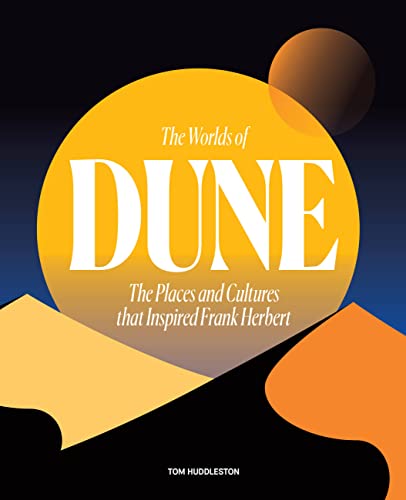
THE WORLDS OF DUNE: The Places and Cultures that Inspired Frank Herbert
TOM HUDDLESTON
Frances Lincoln Ltd
$35.00 hardcover, available now

Rating: 4* of five

The Publisher Says: Some writers build worlds. Others birth entire universes.

In the decades since its publication, Frank Herbert’s Dune has become arguably the best-selling and certainly the best-known science fiction novel ever written. So how did an ex-Navy newspaperman from Washington State come to write such a world-conquering novel? And how was he able to pack it with so many layers of myth and meaning?

Herbert’s boundless imagination was sparked by a dizzying array of ideas, from classical history to cutting-edge science, from environmentalism to Zen philosophy, and from Arabic texts to Shakespeare’s tragedies.

Beginning on Arrakis and going planet by planet, The Worlds of Dune offers a supremely deep dive into Herbert's universe—detailing along the way the many diverse strands that he wove into his epic creation to offer a visually rich accompaniment to this sci-fi legend.

I RECEIVED A DRC FROM THE PUBLISHER VIA EDELWEISS+. THANK YOU.

My Review
: Glorious illustrated companion to the Duneiverse was published in October 2023 to coincide with the pre-WGA/SAG strikes release of Dune Part Two. Now scheduled for release on 1 March 2024 in the US (per IMDb), the companion film to 2021's gorgeous Dune means we can finally show the marketing case for a beautiful, informative arty book about how Frank Herbert came up with the ideas, and examined the cultures, that he based his utterly engrossing work on.

Take a gander at this table of contents...the design's beautiful to my eye, the clarity of information presentation is usable, and the synopsis is amply supported by the part and chapter titles:

Part One: ARRAKIS
  • Chapter One Desert Planet
  • Chapter Two The Fremen
  • Chapter Three The Spice
  • Part Two: CALADAN
  • Chapter Four House Atreides
  • Chapter Five Paul Muad'dib
  • Chapter Six Lady Jessica and the Bene Gesserit
  • Part Three: GIEDI PRIME
  • Chapter Seven House Harkonnen
  • Chapter Eight Piter De Vries and the Mentats
  • Chapter Nine The CHOAM Corporation
  • Part Four: KAITAN
  • Chapter Ten House Corrino and the Padishah Emperor
  • Chapter Eleven The Landsraad
  • Chapter Twelve The Spacing Guild
  • An introduction to Herbert's life whizzes along in just over ten pages, and there are the usual things in the back matter: An Epilogue, notes, credits, sources, etc.

    This is not a long book, nor is it a scholarly evaluation of Dune in all its genre glory. This is a book for the aficionado of the world of to have for their display and their aesthetic pleasure. It will not elucidate matters of great debate within the Duneiverse, nor will it enlighten most long-time fans about most matters around the creation of the Duneiverse in print or on screens. The point of it is to make the reality of the great work beautiful and ready to seduce the eyes:


    br />


    A gift to give that shows you listened, a gift to yourself if you're a genre fan, a beautiful object to have and enjoy.

    ++++++++++++++++++++++++++++++++++++++++++++++++++++++++++++++++


    THE SPICE MUST FLOW: The Story of Dune, from Cult Novels to Visionary Sci-Fi Movies
    RYAN BRITT

    Plume Books
    $18.00 trade paper, available now

    Rating: 4* of five

    The Publisher Says: Geek-culture expert Ryan Britt takes us behind the pages and scenes of the science-fiction phenomenon Dune, charting the series' life from cult sci-fi novels to some of the most visionary movies of all time.

    Using original, deep-access reporting, extensive research, and insightful commentary, The Spice Must Flow brings the true popularity of Dune out into the light for the very first time. With original interviews with the beloved actors and directors behind the films—including Timothée Chalamet, Kyle Maclachlan, Denis Villeneuve, Patrick Stewart, Rebecca Ferguson, Alec Newman, and many more—The Spice Must Flow also examines the far-reaching influence of Dune on art, music, politics, and, most notably, its status as the first ecological science-fiction story specifically concerned with climate change.

    Britt skillfully and entertainingly guides readers through the history of how the Dune universe has unfolded, including the novel’s unlikely evolution from a failed piece of journalism about Oregon sand dunes into an epic science-fiction story, the way Herbert’s work inspired George Lucas, untold stories from the 1984 David Lynch film, the knife-edge balance between blockbuster hit and indie film Timothée Chalamet brings to the 2021 movie, and the exciting future of the franchise. Through a blend of narrative, oral history elements, and fascinating trivia, The Spice Must Flow is the new essential guide to the behind-the-scenes story of Dune. The fiction of Dune is deadly serious, but the real-life story of how it came into existence is full of wonder, surprises, and spice.

    I RECEIVED A DRC FROM THE PUBLISHER VIA NETGALLEY. THANK YOU.

    My Review
    : What I said the book above wasn't this book is. It's by archgeek Ryan Britt of LUKE SKYWALKER CAN'T READ fame, so he's got the chops and knows both the beat and the drill. Plume's published three of his books now, so clearly he commands the geek-culture street cred to make it profitable. Plus he's got a witty way with words that makes his deep familiarity with the subject less...creepy, more fun and funny.

    This fictional universe has a lot of hot-button topics in it: Religion, climate change, religion, anti-technological bias, religion, and sheer unsurpassed-in-SF canon-guarding/gatekeeping/incel-friendly detail. Britt doesn't exactly dwell on the toxic parts of the fandom but neither does he ignore them. There are lots of worldbuilding details that he discusses and there are lots of ideas pinned under them, set in stories that are brimful of unapologetically partisan points of view. This is guaranteed to make some people go into full-on rages when their preferred interpretation of some detail is argued against.

    This makes me sad, and reminds me of Kit Connor (of Heartstopper fame) feeling forced to reveal his private sexuality to stop muttered accusations of queerbaiting. As he said at the time this was occurring:
    "I'm bi. Congrats for forcing an 18-year-old to out himself. I think some of you missed the point of the show. Bye."
    (emphasis added to point up the disconnect between messages in the original and fannish gatekeeping)
    That's the downside of passionate fandom. Anyone who has been in the Geek Culture world for more than A Minute has seen/been caught up in a pile-on when someone dares to be/say/assert an opinion or a take or even present a closely-reasoned analysis of that fandom's shared object that somehow rubs (some of) the fans the wrong way.

    Quite a lot of people, myself included, stay away from fandoms for this reason. This book is a gentle, explanatory rebuke of our skittishness in the form of a reasonable geek-culture maven's informed, excited (almost besotted) exlainer of just why this fandom came to be. Also a gentle chiding of the obsessive gatekeeping by some groups of fans. The book makes the point that Frank Herbert, and his son Brian after him, have created and are curating an immense, expansive Duneiverse of fiction, films, comics, and cosplay that contains literal multitudes. There is such astonishingly varied information in this fiction! Letting new players into the sandbox is Author Britt's aim in much of what he's doing...yet he never loses sight of the established fan's desire to see the whole Duneiverse from a wide-angled view...at least as far as the 2021 film...the 2024 one was filming as he wrote, so details and gossip were all embargoed.

    I need to be reminded from time to time that fandom can be fun, and fascinating, and an all-around good experience. I hope this book will do the same for you, as a gift to yourself, and your other giftees.

    Tuesday, August 18, 2020

    BANANA, a good-enough book about an increasingly urgent global problem of food security

    BANANA: The Fate of the Fruit That Changed the World
    DAN KOEPPEL

    Plume Books
    $5.99 ebook platforms, available now

    Rating: 3.5* of five

    2019 UPDATE Climate change bids fair to deprive us of a childhood icon, says this book.
    One step closer to reality.

    The Publisher Says: A gripping biological detective story that uncovers the myth, mystery, and endangered fate of the world’s most humble fruit

    To most people, a banana is a banana: a simple yellow fruit. Americans eat more bananas than apples and oranges combined. In others parts of the world, bananas are what keep millions of people alive. But for all its ubiquity, the banana is surprisingly mysterious; nobody knows how bananas evolved or exactly where they originated. Rich cultural lore surrounds the fruit: In ancient translations of the Bible, the “apple” consumed by Eve is actually a banana (it makes sense, doesn’t it?). Entire Central American nations have been said to rise and fall over the banana.

    But the biggest mystery about the banana today is whether it will survive. A seedless fruit with a unique reproductive system, every banana is a genetic duplicate of the next, and therefore susceptible to the same blights. Today’s yellow banana, the Cavendish, is increasingly threatened by such a blight—and there’s no cure in sight.

    Banana combines a pop-science journey around the globe, a fascinating tale of an iconic American business enterprise, and a look into the alternately tragic and hilarious banana subculture (one does exist)—ultimately taking us to the high-tech labs where new bananas are literally being built in test tubes, in a race to save the world’s most beloved fruit.

    My Review: This is yet another entry in the single-subject world of non-fiction. The narrowness of focus in books such as Salt and Cod and The Book on the Bookshelf and The Pencil and Longitude seems to be an increasingly prevalent trend in publishing. I am all for it on one level, since I like delving into the abstruse and wallowing in details that leave most people I know colder than a penguin's butt in the middle of the Antarctic winter; but on another level, I want to stop these publishers before they bore again with books inadequately edited and organized.

    There are three pieces to the banana...the history of humanity's first cultivated plant (modern archaeological evidence (albeit disputed because perish forbid someone should change The Story white folks tell!) from New Guinea shows human cultivation from 9000 years ago was of bananas, but for their corms not the fingers we eat today); the politics of the modern cultivation of the banana (the term "banana republic", which I have used without thinking for 30+ years, has a very literal beginning and a scarily modern {2020 version} ring); and the future of humankind's most basic and widely distributed food crop (essential to survival in several parts of the world, the banana is also under threat from several pests that defy modern chemistry to abate, still less conquer, and squeamish food-o-phobes in wealthy countries oppose all modern genetic engineering that could save the survival crop of many parts of the world). These three strands are awkwardly interwoven, with no obvious guiding editorial hand to make sense of their interrelation.

    It's a shame, too, because this is a huge, important topic, and the author's not inconsiderable talents are well-used in bringing the facts to light. The loss of our American favorite banana, the Cavendish, from grocery shelves will be an inconvenience at most; the fact that two major American corporations are, double-handedly (is that a word?), responsible for the spread of the blights that threaten the world crop with the complicity of the American government, should mean that we as a country are liable to find solutions to the pressing problems of food security in the places we've so screwed over. Free. But with 45 attacking US food security, that won't happen. You can bet the balance in your 401(k) on that.

    Back to the book...too much narrative drive is lost in the author's back-and-forth cross-cutting of the basic story. I wish someone had said, "Yo Dan...first third of the book is the banana as a plant; second third is the politics of the banana; last is the science of the plant." I wonder if that was what they tried, and the interconnections of all the information prevented its success? I somehow don't think so.

    It's a good-enough book on an important topic that SHOULD cause each person who reads it some discomfort at our societal callousness and myopia. I recommend it to those most likely to be irritated by progressive politics and social liberalism. Isolationists particularly encouraged to apply!

    Monday, January 18, 2016

    Essays, only not boring: LUKE SKYWALKER CAN'T READ is a dessert case of deliciousness


    LUKE SKYWALKER CAN'T READ AND OTHER GEEKY TRUTHS
    RYAN BRITT
    Plume Books
    $17.00 trade paper, available now

    Rating: 3.5* of five

    The Publisher Says: “Ryan Britt is . . . the Virgil you want to guide you through the inferno of geekery.” —Lev Grossman, author of the bestselling Magician's trilogy

    Pop Culture and sci-fi guru Ryan Britt has never met a monster, alien, wizard, or superhero that didn’t need further analysis.

    Essayist Ryan Britt got a sex education from dirty pictures of dinosaurs, made out with Jar-Jar Binks at midnight, and figured out how to kick depression with a Doctor Who Netflix-binge. Alternating between personal anecdote, hilarious insight, and smart analysis, Luke Skywalker Can’t Read contends that Barbarella is good for you, that monster movies are just romantic comedies with commitment issues, that Dracula and Sherlock Holmes are total hipsters, and, most shockingly, shows how virtually everyone in the Star Wars universe is functionally illiterate.

    Romp through time and space, from the circus sideshows of 100 years ago to the Comic Cons of today, from darkest corners of the Galaxy to the comfort of your couch. For anyone who pretended their flashlight was a lightsaber, stood in line for a movie at midnight, or dreamed they were abducted by aliens, Luke Skywalker Can't Read is full of answers to questions you haven't thought to ask, and perfect for readers of Chuck Klosterman, Rob Sheffield, and Ernest Cline.

    My Review: Well, that was fun. I live in a place where I am both the youngest and toothiest resident, so you can imagine what a pleasure it was to have someone to geek out with, even if his side of the conversation is on dead tree remains and my side (often shouted) scared the Wink Martindale out of the older and less dentally endowed residents.

    Points where I agreed with Mr. Britt outnumbered the annoying points where he was so clearly *wrong* that my blood pressure spiked to most unsafe levels. On the sternly delivered advice of a medical professional, I will limit myself to mentioning the merest and mildest of these latter: STOP WITH THE FOOTNOTES ALREADY! WHEN YOU HAVE TO USE THE DOUBLE DAGGER AND THE BOOK IS NOT A LAW BOOK, YOU'VE GONE TOO FAR!!! *ahem* For the typographically challenged, look on p128 in the Doctor Who essay at the third footnote. Seriously now, Mr. Britt, The Mezzanine was published by Nicholson Baker in 1988. That was the last time heavily footnoted light reading was fun.

    Oh well, I'm already purple, might as well: Back to the Future?! What the hell?! There are people with such, such, polite words fail me, bland tastes that they're fans of these extremely boring cinematic nap-fests? Assuming you're now nodding, Mr. Britt, brings me to the question, "SO WHAT?? Why waste 15pp on such, such, polite words fail me again, white-bread mouth-breathers' silly addiction?"

    *ahem* So, with my ranting, I've proven the market for this book exists and is most broad indeed, if it includes my superannuated self. And as mentioned above, I mostly liked and agreed with his essays, especially "I Know It's Only Science Fiction, but I Like It." The mixed pleasure and pain of an adult idol making time for a personal private conversation...and then whipping out a life-lesson...is unforgettable. That's a lesson that will stick.

    Essays on Dracula-as-hipster, a metric fuck-ton of Star Wars chatter, not one single word about Firefly because he straight up admits (in one of those pernicious footnotes) that he doesn't like Firefly, encomia of a weird sort piled on the already overpowering piles of plaudits about Sherlock Holmes, Star Trek and Tolkien and comic-book superheroes...it's dizzying how many oars this one, uncloned man has in the waters of geekdom. (I'm certain he's not cloned because if he was the street cred it would give him would necessitate discussing it.) That he makes a living while wending his way through the thickets of prickly fandoms is amazing to me. I'm thrilled and delighted that it's possible to be an essayist whose topic is the entertainments of the hoi polloi. Way too much derivative, repetitive thinking, writing, and publishing has taken place on ever-smaller slices of Highbrow Kultur, and I cheer and clap for all the intelligent analysis finally being applied and celebrated these past two or so decades.

    With any kind of justice, Professor Britt's class on the Skywalker clan and its deeper meanings will outpace the registration numbers of Philosophy 201: The Stoics five-to-one. Now all we need to do is get him that university job so he can publish while the moldy oldies perish.

    Saturday, August 30, 2014

    WHY ARE YOU SO SAD?, or Updike's Rabbit in the 21st century

    WHY ARE YOU SO SAD?
    JASON PORTER

    Plume Books
    $4.99 ebook platforms, available now

    Rating: 3.5* of five

    The Publisher Says: Have we all sunken into a species-wide bout of clinical depression?

    Porter’s uproarious, intelligent debut centers on Raymond Champs, an illustrator of assembly manuals for a home furnishings corporation, who is charged with a huge task: To determine whether or not the world needs saving. It comes to him in the midst of a losing battle with insomnia — everybody he knows, and maybe everybody on the planet, is suffering from severe clinical depression. He’s nearly certain something has gone wrong. A virus perhaps. It’s in the water, or it’s in the mosquitoes, or maybe in the ranch flavored snack foods. And what if we are all too sad and dispirited to do anything about it? Obsessed as he becomes, Raymond composes an anonymous survey to submit to his unsuspecting coworkers — “Are you who you want to be?”, “Do you believe in life after death?”, “Is today better than yesterday?” — because what Raymond needs is data. He needs to know if it can be proven. It’s a big responsibility. People might not believe him. People, like his wife and his boss, might think he is losing his mind. But only because they are also losing their minds. Or are they?

    Reminiscent of Gary Shteyngart, George Saunders, Douglas Coupland and Jennifer Egan, Porter’s debut is an acutely perceptive and sharply funny meditation on what makes people tick.

    I RECEIVED THIS BOOK FROM LIBRARY THING'S EARLY REVIEWERS PROGRAM

    My Review
    : Reading this book is like watching Jim Carrey play Rabbit Angstrom in a shelved TV pilot of Rabbit, Run. It's like reading John Updike's hitherto-unknown draft of a spec script called Eternal Sunshine of the Spotless Mind. It's quite similar to a lost Seinfeld episode in which George and Kramer get drunk and fool around...or was that an ayahuasca-fueled nightmare...?

    I'm not quite sure why the publisher labeled this satire. It's black comedy, and quite dryly amusing in many spots. It's satirizing...what? Modern Society? Permaybehaps I'm no longer With It and don't get the satire. That's more than a little possible.

    Porter has an MFA (ruh-roh, Raggy) from Hunter College and is blurbed by my dote Colum McCann. I entered these portals an eager acolyte in the making. I exited the service entrance wondering just how the hell I got onto the loading dock. The not-really-an-ending felt like I was here at the business end of the edifice but there wasn't a delivery truck in sight.

    But two things have stuck with me, two contributions to my ever-smaller stock of Stuff I Want to Remember:
    1) The image of happiness, complete and sincere and freshly made happiness, as like the feeling of putting new socks on clean feet. Can't pull the quote without spoilers. But the image is instantly relatable and also fresh (pun optional).
    2) The Fearless and Searching Moral Inventory (how twelve-steppy I'm feeling today!) that Ray passes around in questionnaire form. I love it!
    Why are you so sad?
    Are you single?
    Are you having an affair?
    Are you who you want to be?
    Would you prefer to be someone else?
    Are you similar to the "you" you thought you would become when as a child you imagined your future self?
    When was the last time you felt happy?
    Was it a true, pure happy or a relative happy?
    What does it feel like to get out of bed in the morning?
    Do you realize you have an average of 11,000 to 18,250 mornings of looking in the mirror and wondering if people will find you attractive?
    Do you think people will remember you after you die?
    For how long after you die?
    Do you believe in life after death?
    Do you believe in life after God?
    Are you for the chemical elimination of all things painful?
    Do you think we need more sports?
    Have you ever fallen in love?
    If yes, were you surprised that it, like all other things, faded over time?
    Do you hear voices?
    It's like a sociology class exercise designed by someone who's drunk and lonely. I was bemused that this questionnaire was a central organizing device of the sort novel. It took up a lot of space that would have been more satisfactorily used in traditional means of character development, either of Ray himself, or the people answering his trippy survey. But it made me smile, of itself and as a shortcut to the purpose of making readers invest in the lovable loon that is Ray.

    My life may not be changed by the book, but my smile muscles are exercised and my chuckle-box got wound up a time or three. I call that a win.