Showing posts with label Science & Nature. Show all posts

Wednesday, May 27, 2026

A BIRD'S IQ: Innovation, Intelligence, and Problem Solving in the Avian World


A BIRD'S IQ: Innovation, Intelligence, and Problem Solving in the Avian World
LOUIS LEFEBVRE
(tr. Pablo Strauss)
Greystone Books (non-affiliate Bookshop.org link)
$28.00 all editions, available now

Rating: 4.5* of five

The Publisher Says: For readers of Jennifer Ackerman comes a captivating exploration of avian intelligence that challenges traditional wisdom about animal cognition.

Surveying a wide variety of birds, including crows, finches, tits, and parrots, Louis Lefebvre, a world-renowned expert in animal behaviour, describes the remarkable innovations and problem-solving abilities of species often dismissed as ‘featherbrains’. From crows using cars as nutcrackers to cockatoos crafting tools, Lefebvre reveals how birds exhibit creativity, social learning, and even cultural transmission — traits once thought to be exclusive to humans and other primates.

Blending his decades of scientific research with engaging anecdotes, Lefebvre examines the evolutionary forces that have shaped avian intelligence. He explores how birds adapt to urban environments, innovate in response to challenges, and pass down knowledge across generations. This goldmine of bird behaviour yields an ‘innovation quotient’ widely used by researchers to measure and rank how innovative a bird species is. Using his encyclopaedic knowledge, Lefebvre answers questions such as:
  • When a bird species learns a new technique, how do their innovations spread?
  • Why is research on bird cognition being used to train AI models and even robots?
  • What makes certain birds endlessly innovative while others stubbornly repeat the same behaviors?
  • When a bird species learns a new technique, how do their innovations spread? Why is research on bird cognition being used to train AI models and even robots? What makes certain birds endlessly innovative while others stubbornly repeat the same behaviours? With vivid storytelling and groundbreaking insights, A A Bird’s IQ invites readers to reconsider their perceptions, celebrating the ingenuity of birds and highlighting the interconnectedness of all intelligent life.

    I RECEIVED A DRC FROM THE PUBLISHER VIA EDELWEISS+. THANK YOU.

    My Review
    : I loved this read. I am, as I think those familiar with my writing over the years will know, a corvidophile...crows particularly but ravens and magpies as well...as I find their intelligence palpable. It is obvious to me that I am in the presence of a sentient being when I'm around corvids, there's that recognition of fellowship that really can't be denied. Or I can't deny it anyway.

    Author Lefebvre seems to have had a similar experience though not specifically with corvids. His research into the intelligence of birds is built on a much longer tradition of inquiry into the subject than I ever suspected. It's a big part of my pleasure in reading this book to learn as much as I did about the history of research into avian intelligence. It felt as though I was sitting in an armchair next to him, having a wide-ranging conversation about science and its history wherein he answered my questions without my actually vocalizing them. It sounds fanciful, I know, but it was my emotional experience of this kind of intimacy that made the read so different from other popularizations of important scientific study.

    It really isn't a bit surprising that I'd have this experience while reading A Bird’s IQ when you learn that Author Lefebvre is also a novelist...one nominated twice for Canada's Governor General's Award for French-language fiction, so clearly possessed of solid narrative-creation chops. I liked the experience I had learning about the intelligence of dinosaurs which is where I'm clearly going to go since I'm still an eight-year-old when it comes to dinosaurs. (And yes, birds are unquestionably dinosaurs.) It can, however, lead to a bit of prolixity about what the kids (ie anyone under fifty) seem to like calling "side quests" into matters like a scientist's name-change, or the challenges of gathering usable data from birding-centered magazines published in England between the World Wars. Fascinating, but better left in the source notes.

    If I have a moment of...hesitation, let's call it, about some of Author Lefebvre's contentious assertions about cultural transmission of knowledge in bird populations, it's one that Author Lefebvre foresaw and forestalled by couching his contention of this fact in careful terms. The anecdotal evidence for this method of learning in bird populations is voluminous. It's not rigorous scientific data, and Author Lefebvre, to his credit, never tries to present it as such. He also very specifically states he does not share Rupert Sheldrake's more controversial ideas about how that kind of knowledge transmission could take place. As I am a bit uncomfortable with presenting that body of knowledge as scientific myownself, I am in harmony with Author Lefebvre on this point.

    As I am very much a satisfied reader of this book, I want to assure all who read this review that it's not perfect in my eyes, or in the author's. It is an interim progress report on a career's-worth of experience, knowledge-gathering, and synthesis. It's well presented. It's well sourced. It's mae to bring fundamentals of the topic to broad attention, and couched in language that does this unintimidatingly well. It also affords the author's scientific peers access to his resources and his thinking leadiing to the conclusions presented...all in the same sentences and style. And, of the greatest value to both audiences, Author Lefebvre does not present his case as closed, does not claim a unique and conversation-ending breakthrough is in the text.

    He is too sensible of work needing to be done and too respectful of the contributors to the overall field of research into intelligence. I was never more surprised in the read than when I learned how much two-way influence into robotics and "AI" there was. A story of how we got to where we are, and how much where we are has resonances beyond the obvious, in using our own intelligence to understand intelligence, expand its impact, and...I hope...gain humility about ourselves by learning about and from those unlike us.

    Sunday, December 14, 2025

    TINY NATURE: Discovering Nature's Hidden World Through the Lens of Macrophotography


    TINY NATURE: Discovering Nature's Hidden World Through the Lens of Macrophotography
    JAMIE ROSECRANS

    Wellfleet Press (non-affiliate Bookshop.org link)
    $35.00 all editions, available now

    Rating: 5* of five

    The Publisher Says: Tiny Nature is a journey into the hidden world of the forest floor through the captivating lens of macrophotography. Marvel at the mysterious organisms of the forest floor, revealed in breathtaking macrophotography.

    The beauty of the forest goes far beyond trees and wildlife. If you look closely—even closer!—the world beneath your feet holds tiny ecosystems that play a vital role in nature. To see them in all their glory, Tiny Nature harnesses the power of macrophotography. The term “macro” means large, but in photography, it refers to creating large reproductions of small subjects. It is the art of taking extreme close-up photos where the size of the subject on the camera sensor is life-size or greater. With this lens, take a closer look to see the wonders you’ve been missing.

    Tiny Nature is a stunning display of the beauty and complexity of the natural world. More than just a photography book, every incredible photo offers insightful narratives that delve into the ecological significance of these miniature landscapes. With a keen eye for detail and an artistic vision, talented macrophotographer Jamie Rosencrans showcases a captivating collection of photographs along with guidance to gain a deeper appreciation for the forest floor. Unveil a mesmerizing microcosm teeming with life, including:
  • Enigmatic slime molds straddling the boundary between the world of fungi and animals through unique lifecycles and behaviors
  • Poetically sculptural fungi with a wide diversity and present year-round wherever rain and fungal spores coexist
  • Romantic, brightly colored lichens, from deep greens to radiant reds, that cling to fences and tree branches
  • Friendly gastropods such as snails, slugs, and more!
  • Every leaf, pebble, and tiny inhabitant has a story of resilience, beauty, and the timeless dance of life. Be inspired as you enter the heart of the forest floor and see the sheer wonder of nature’s design.

    I RECEIVED A DRC FROM THE PUBLISHER VIA EDELWEISS+. THANK YOU.

    My Review
    : Not interacting with Meta/Facebook properties does mean I miss Instagram phenoms like @this_forest_floor, aka the author. Too bad...I'd like to see her work on the regular, but will not give fuel to that traitorous fuck Zuck.

    I'm glad the publisher made the DRC available. I like interesting takes on Nature. This look at the reality of the tiny stuff we largely ignore is fascinating. A lot of y'all won't enjoy the creepy-crawlies or the moistness of it all. Me, I'm more curious about the weirdos than the cute fluffy boring ones.
    contents...no, she doesn't say "icky little moist things" anywhere

    What this book will do for the giftee is to discuss the realms of life we don't see much, with someone who knows a good deal about it. The focus is on the weird stuff, the way she takes their picture, the challenges of life at a scale we simply don't experience.

    Look at these...really look, see them as the miraculous little survivors they are:
    the slime molds

    Not for everyone, but I'm not including the soil animals, or the fungi, because they're so very moist. I promise your science nerd giftee that they look great, though.

    THE MATHEMATICIANS' LIBRARY: The Books That Unlocked The Power Of Numbers, illustrated to a fare-thee-well


    THE MATHEMATICIANS' LIBRARY: The Books That Unlocked The Power Of Numbers
    THOMAS K. BRIGGS

    Ivy Press (non-affiliate Bookshop.org link)
    $40.00 all editions, available now

    Rating: 5* of five

    The Publisher Says: A lavishly illustrated compendium of the most significant publications that have informed mathematical knowledge throughout history.

    Discover the story of mathematics like never before with The Mathematicians’ Library, an extraordinary collection that chronicles the evolution of mathematical thought and its profound impact on the world. This expertly curated anthology brings together the most influential works and authors from across history, showcasing the journey of mathematical discovery from ancient tablets to contemporary volumes.

    The Mathematicians’ Library takes you through the pages of history, featuring groundbreaking works like Euclid’s Elements, Fibonacci’s Liber Abaci, Hilbert’s Foundations of Geometry, and Mandelbrot’s The Fractal Geometry of Nature. Each book offers a unique glimpse into how mathematics has shaped human civilization, guiding everything from transportation and commerce to art, science, and beyond.

    Mathematics is the invisible force that governs our daily lives, influencing everything from the weather forecasts we trust to the technology we depend on. It has been a cornerstone of human progress, evolving through centuries of research, discovery, and collaboration across cultures. This book reveals that legacy by presenting works that have changed the way we understand our world, from ancient knowledge inscribed on clay tablets, the contributions of Babylonian, Greek, Roman, Chinese, Islamic, and Maya scholars, The Mathematicians’ Library offers unparalleled access to the greatest minds in mathematics—Plato, Pythagoras, Euclid, Hypatia, Galileo, Einstein, and more.

    The Mathematicians’ Libraryis more than just a collection; it's a journey through the intellectual milestones that have defined our understanding of the world. Whether you're a scholar, a history enthusiast, or simply curious about the forces that shape our lives, this collection will captivate and inspire. Unlock the secrets of mathematics and discover the brilliance behind the numbers that rule our world.

    Table of contents:
    Introduction
    The Origins of Mathematics
    Prehistoric
    The Global Evolution of Mathematics (Babylon, Egypt, Greece, Rome, China, India, Islam, Maya, Medieval Europe)
    The Scientific Revolution
    Modern Mathematics
    The Future
    Bibliography
    Index

    I RECEIVED A DRC FROM THE PUBLISHER VIA EDELWEISS+. THANK YOU.

    My Review
    : I got mathphobia from my mother very early. I've used the established systematic desensitization technique of slowly increasing my exposure to it as a means of getting away from the extreme societal hazard of innumeracy. Goddesses please bless Author Paulos for writing that book I've linked to! It truly changed my life for the better.

    That's one reason I asked for the DRC of this book. It's a seemingly unending process, this systematic desensitization, as ignoring it for very long will see my results evaporate...though they come back more and more quickly each time. This beautifully illustrated compendium of materials related to concepts I think most of us are noddingly acquainted with was a top-up.

    If you're not a mathphobe like me, you might know one. You might also know a mathphile...I'm told they exist. Curious creatures I'm sure I do not know myownself. No matter, I think your science nerd bestie deserves a gorgeous work like this. It celebrates the tool they use the most.

    These are the publicity samples the publisher provides. I think you'll agree that a non-fiction gift book about math is best illustrated in this demonstrative-of-concepts way. I found myself more focused on images than text...but remember I'm phobic about math. I would be.

    A gift item for the biggest nerd you know and love! I'd get them the tree book, the design rendered onto the ebook looks...clunky. It's an option but not an ideal one.

    Yuletide glory will be yours when gifting this one to the right giftee.

    THE FANTASICAL SAFARI: Wander through 5 of the most remote habitats to meet more than 80 amazing animals


    THE FANTASICAL SAFARI: Wander through 5 of the most remote habitats to meet more than 80 amazing animals
    LUCY BROWNRIDGE
    (illus. Kristjana S Williams)
    Wide Eyed Editions (non-affiliate Bookshop.org link)
    $30.00 hardcover, available now

    Rating: 5* of five

    The Publisher Says: Step into a world where reality and myth collide. From powerful elephants and cunning foxes to towering giants and legendary dragons, The Fantastical Safari is a vibrant, beautifully illustrated book that brings science, storytelling, and adventure together. From the bestselling author of The Wonder Garden comes the incredible The Fantastical Safari!

    Step into some of the hardest to reach landscapes on earth and meet the extraordinary creatures who live there. Discover how they survive and thrive in some of the strangest, most remote and unusual places in the world.

    This book uncovers the science and stories behind some of the world’s most fascinating animals - from the tree kangaroo in the highlands of Papua New Guinea to the vampire ground finch in the Galapagos Islands. Alongside breath-taking illustrations, readers will explore different destinations where every day consists of endurance, perseverance and survival for the animals and plants that live there.

    With its stunning design, engaging storytelling and fascinating facts, this book encourages young readers to see the world in a whole new way. Whether exploring solo or sharing the adventure with family, this book is a gateway to curiosity, discovery and endless imagination.

    Locations include:
  • The Mariana Trench
  • The Greenland Ice Shelf
  • The Galapagos Islands
  • The Highlands of Papua New Guinea
  • The Sahara Desert
  • I RECEIVED A DRC FROM THE PUBLISHER VIA EDELWEISS+. THANK YOU.

    My Review
    : I'm deeply interested in the natural world (as long as I don't have to sleep in it). I found this interesting book about the extreme environments on our planet left me enrapt for hours after reading it...and the artwork...!

    The mere existence of bioluminescence should evoke wonder in everyone who learns of it. There are many wonders in the world and this book makes them feel immediate, new, even to someone to whom their existence is not news. What must that say about the effect the package of art, text, and science will have on its six-year-old intended audience? I'd reserve it for the brightest of them, less worry about an eight-year-old or older needing significant assistance with reading it.

    No one of any age needs assistance appreciating the artwork:
    the most amazing place in all the world

    It really amazes me that anyone can claim to be bored in a world where animals produce their own light:

    And the other bits of Planet Earth are just as amazing. Frozen "wastes" or roasting deserts or humid jungles...the way life burgeons should give any thinking person a frisson of delight, a fillip of excitement at learning of it.

    The artwork is packed with the sort of details that kids batten on detecting (and pointing out to you ad infinitum). It's a bargain at the price, for the pleasure and the sneaky education it will give a kid.

    Saturday, December 13, 2025

    COMEBACK CREATURES: Discover the Wild Things Once Thought Extinct?


    COMEBACK CREATURES: Discover the Wild Things Once Thought Extinct?
    LEISA STEWART-SHARPE
    (Illus. Lucy Rose)
    Wide Eyed Editions (non-affiliate Bookshop.org link)
    $30.00 all editions, available now

    Rating: 5* of five

    The Publisher Says: Every so often animals we thought were extinct come back! Comeback Creatures is a fascinating look at Lazarus species; animals once thought to be extinct that have been discovered in the natural world. This is a book that delivers much-needed positivity in our ever-changing world, with the message that nature always finds a way…

    Discover animals thought to be extinct that have been found alive in the wild!

    Earth is a world of land and sea, of light and dark, of life and death, with thousands of species vanishing each year. They’re gone, presumed extinct, lost for good . . . Or are they?

    In some special cases, certain creatures, thought to have died out, have been found alive and thriving by scientists and local people. They are known as Lazarus species. From the black-footed ferret, which was thought to have died out from disease but was discovered on a porch in Wyoming, USA, to the Pinocchio lizard, a long-nosed reptile found in the cloud forests of Ecuador, examples can be found all over the globe. Comeback Creatures is packed with inspirational stories of animals that have come back from the brink.

    Read all about a habitat and the animals and plant life within it, then turn the page to reveal a Lazarus creature that has been found there and the fascinating story behind its discovery. Compendium spreads dotted throughout the book give a snapshot into even more of these creatures that have defied the odds to survive.

    At the back of the book there’s information on how to become a wildlife detective to protect nature where you live, along with a map to show each habitat and a helpful glossary.

    The thoroughly researched yet lyrical text by children’s author Leisa Stewart-Sharpe brings the story of each creature to life, alongside richly detailed artwork by illustrator Lucy Rose.

    A captivating look at our world, Comeback Creatures is a hopeful exploration of wildlife conservation.

    I RECEIVED A DRC FROM THE PUBLISHER VIA EDELWEISS+. THANK YOU.

    My Review
    : It's important to tell kids that, even if it doesn't feel like it all the time, good stuff still happens in the natural world. Sometimes really cool good stuff, like creatures we thought were gone forever...really aren't! It's happened, and here are examples:

    It is a reason to think positively. I'm more and more sure that's a skill we're really failing our kids by not instilling it in them. Growing up with all your adult models walking around talking doom and gloom does nothing for a kid's growth into an active, engaged adult.

    But...be honest...if you found out something called the "terror skink" had been re-discovered, wouldn't your inner ten-year-old be hollering "COOL!" at the top of their lungs?

    It happened:

    I think this book, with its gorgeous artwork...I want the terror skink one for my wall!...its challenging vocabulary, and its glossary for instilling the habit of research is ideally suited to making that positive attitude honestly, demonstrably supported by facts, available to the vulnerable.

    Plus it's all just So COOL!

    Monday, December 1, 2025

    WILD WONDERS: The Untamed and Enigmatic Animals that Inhabit Yellowstone National Park, gorgeous photo essay


    WILD WONDERS: The Untamed and Enigmatic Animals that Inhabit Yellowstone National Park
    JULIA COOK

    Epic Ink (non-affiliate Bookshop.org link)
    $35.00 all editions, available now

    Rating: 5* of five

    The Publisher Says: Wild Wonders is an awe-inspiring, photographic tour of the wildlife of Yellowstone National Park, featuring fascinating facts about the creatures and details about where they can be found in the park.

    Embark on a captivating journey through the lens of a young and talented woman photographer as she unveils the untamed creatures of Yellowstone National Park.

    This stunning collection of wildlife photography is not just a visual feast but an informative guide to the 67 incredible creatures that call Yellowstone home. From the awe-inspiring battles of bighorn sheep to the social dynamics of a wolf pack, Wild Wonders provides you with a comprehensive understanding of, and deeper appreciation for, the wildlife you encounter.

    Planning a visit to Yellowstone? This book is your ultimate companion, providing insights into where and when to find these animals within the park. Whether it’s the Lamar Valley, Hayden Valley, or the shores of Yellowstone Lake, you’ll be equipped to witness these incredible moments.

    In addition to having a diversity of small animals, Yellowstone is notable for its predator–prey complex of large mammals, including eight ungulate species and seven large predators. Immerse yourself in the the world of Yellowstone with breathtaking photographs of animals like:
  • Bighorn sheep
  • Bison
  • Elk
  • Moose
  • Mountain goats
  • Mule deer
  • Black and grizzly bears
  • Red foxes
  • Coyotes
  • Pika
  • Beavers
  • And more!
  • Take in the stunning images any time you need to reconnect with nature and experience the beauty of the great outdoors. Or, share the magic of Yellowstone’s wildlife with friends and family—Wild Wonders is a perfect gift for nature lovers, adventure seekers, and national parks enthusiasts.

    I RECEIVED A DRC FROM THE PUBLISHER VIA EDELWEISS+. THANK YOU.

    My Review
    : It's astounding to me this book is not topping the sales charts as we get to the Yule gift-giving orgy. It is beautiful; it is timely, being about nature's glories that climate change has out under threat; it is by a talented young woman on a mission. Here is her bio, as provided by the publisher:
    Julia Cook is a wildlife photographer and conservationist based in the Greater Yellowstone Ecosystem of Wyoming. Growing up in Cody, Wyoming, less than an hour from Yellowstone National Park, Julia developed a love for nature at an early age, eventually leading her to pick up wildlife photography as a creative outlet. Julia graduated from the University of Wyoming in 2023 with a B.S. in Environment and Natural Resources and a B.A. in History, with human wildlife conflicts and the history of conservation practices in Yellowstone being a particular area of focus throughout her studies. Now working full-time as a wildlife photographer, Julia spends most of her free time in the field photographing various species of wildlife, though grizzly bears are a favorite. Other hobbies include drawing, hiking, fishing, and camping. Julia’s overall goal in photography is to capture impactful images of native wildlife to promote wildlife conservation while inspiring others to spend meaningful time in nature. Julia is also dedicated to ethical wildlife photography to keep wildlife wild and allow them to behave naturally without interference.
    What are you waiting for? Go get one! Put it on your coffee table, gift it to your camping/outdoorsy giftee, give it to the grandkid/nibling/teen girl looking for a way to get into STEM fields...nothing like seeing what someone like you has already done to get you moving yourownself.

    You want to see some pretty pictures?
    grizzly bears are a.maz.ing animals

    wolves, otters, beaver, and moose are as well

    That's just *one* of Yellowstone's biomes she's put in this book. I'm eager for everyone to go look at this beautiful object, and put it in the hands of someone who will love and delight in it. Like I do, and I think you will.

    This image is the one I fell hardest for:

    Bison, majestic, gloriously hardy animals we almost exterminated; bringing them back has made me proud to be human, again.

    Monday, October 13, 2025

    THE GENIUS BAT: The Secret Life of the Only Flying Mammal, one of the most fascinating creatures gets its literary due


    THE GENIUS BAT: The Secret Life of the Only Flying Mammal
    YOSSI YOVEL

    St. Martin's Press (non-affiliate Bookshop.org link)
    $16.99 ebook, available now

    Rating: 4.5* of five

    The Publisher Says: An awe-inspiring tour of bat world by the world’s leading expert

    With nearly 1500 species, bats account for more than twenty percent of mammalian species. The most successful and most diverse group of mammals, bats come in different sizes, shapes, and colors, from the tiny bumblebee bat to the giant golden-crowned flying fox. Some bats eat fruit and nectar; others eat frogs, scorpions or fish. Vampire bats feed on blood. Bats are the only mammals that can fly; their fingers have elongated through evolution to become wings with a unique super-flexible skin membrane stretched between them. Their robust immune system is one of the reasons for their extreme longevity. A tiny bat can live for forty years.

    Yossi Yovel, an ecologist and a neurobiologist, is passionate about deciphering the secrets of bats, including using AI to decipher their communication. In The Genius Bat he brings to vivid life these amazing creatures as well as the obsessive and sometime eccentric people who study them–bat scientists. From muddy rainforests, to star-covered night deserts, from guest houses in Thailand, to museum drawers full of fossils in New York, this is an eye-opening and entertaining account of a mighty mammal.

    I RECEIVED A DRC FROM THE PUBLISHER VIA NETGALLEY. THANK YOU.

    My Review
    : My homeplace of Austin, Texas, has a huge population of Mexican free-tailed bats that live in the Congress Avenue Bridge; that's the way I've thought of bats as a result. Cultural icons, things to put up special habitats for, little mosquito-munching guano factories...there are caves in and around my old part of Central Texas that house colonies of the skeeter-eaters and welcome to 'em, y'all.

    One of the main strands in this read was about the intense social nature of the bat as a genus. I am fascinated by their lives, so similar to ours as humans packed in together, so full of care and altruism to balance out the conflict and crowding. A neurobiologist is very much able to bring the reality of bat sociality to its most advantageous light. Author Yossi's clear fascination with and sympathy for the bat makes me feel some hope for these persecuted, threatened members of our world.

    Habitat loss is a main threat to bats worldwide. These are beings with simple enough needs that humans, with our tremendous cognitive abilities, ought to be able to come up with better solutions than "watch and hope" to the issues of their protection. The book's structure, starting chapters with Author Yossi's personable, warm voice telling his own tales of events and incidents, then moving as seamlessly as I could hope for to the researches and results of others, kept me in the flow of this read.

    While it is non-fiction with an advocate for the subject's point-of-view, it does not read as a hectoring or pleading or accusatory polemic. It felt to me as though a charming guest came to my living room to enjoy himself, and to express that pleasure by sharing his own experiences. It is a welcome feeling, a relaxed and...to my bat-friendly self...relaxing way to learn some really surprising new-to-me information.

    I took a half-star off for some of the author's possibly-meant-as-humor slaps at people not like him.

    Wednesday, July 2, 2025

    THE PLACE OF TIDES, privileged man has mid-life crisis in the Arctic


    THE PLACE OF TIDES
    JAMES REBANKS

    Mariner Books (non-affiliate Bookshop.org link)
    $14.99 ebook, available now

    Rating: 3.5* of five

    The Publisher Says: We are all in need of lights to follow.

    One afternoon many years ago, James Rebanks met an old woman on a remote Norwegian island. She lived and worked alone on a tiny rocky outcrop, caring for wild Eider ducks and gathering their down. Hers was a centuries-old trade that had once made men and women rich, but had long been in decline. Still, somehow, she seemed to be hanging on.

    Back at home, Rebanks couldn’t stop thinking about the woman on the rocks. She was fierce and otherworldly—and yet strangely familiar. Years passed. Then, one day, he wrote her a letter, asking if he could return. Bring work clothes, she replied, and good boots, and come her health was failing. And so he travelled to the edge of the Arctic to witness her last season on the island.

    This is the story of that season. It is the story of a unique and ancient landscape, and of the woman who brought it back to life. It traces the pattern of her work from the rough, isolated toil of bitter winter, building little wooden huts that will protect the ducks come spring; to the elation of the endless summer light, when the birds leave behind their precious down for the woman to gather, like feathered gold.

    Slowly, Rebanks begins to understand that this woman and her world are not at all what he had previously thought. As the weeks pass, what began as a journey of escape becomes an extraordinary lesson in self-knowledge and forgiveness.

    I RECEIVED A DRC FROM THE PUBLISHER VIA NETGALLEY. THANK YOU.

    My Review
    : Author Rebanks, "an expert advisor to UNESCO on sustainable tourism", tells us an amazingly convenient story of going to learn the old folk ways of Anna, an elder who has made her life as far away from others as she can get; has devoted herself to maintaining a lifeway that, should any significant number of just this book's readers attempt to emulate would result in environmental devastation; but which fuels the itchy sense the world is enshittifying everything worthwhile without offering any remotely practicable solution to that real and accurate feeling.

    I admit I'm a grouch, an also am in existential crisis about the world's horrifying trajectory. This book's pretty, nicely turned and selected sentences, all supporting a beautiful fantasy of life utterly in harmony with nature, are NOT A HELPFUL HOW-TO. They should not be read as anything inspiring you to reproduce the actions the author took. Inspiring you to look into ways to work with local nature-preserving groups? Absolutely. Don't think it's going to be like the author's time with Anna.

    There are not a lot of ways to experience the thrill of being able to immerse yourself in unmediated nature. The author does it as long as it suits him, and his emotional needs. Then he returns to his 21st-century life. That's a whole huge pile of unexamined privilege there, sir. The majority of us can't find an Anna, still less go spend a lot of time not doing what people with lives and families must. After all, that was what drove you to seek Anna out.
    “Anna’s example was simple: if we are to save the world, we have to start somewhere. We just have to do one damn thing after another. Hers was a small kind of heroism, but it was the most powerful kind. The kind that saves us. We all have to go to work in our own communities, in our own landscapes. We have to show up day in, day out, for years and years, doing the work. There will be no brass band, no parade. And we have to accept and keep the faith in each other, and somehow work together. It is the only way we can make our own tiny deeds add up to become the change we all need.”
    As lessons go, this one is hard to fault. It applies to all people everywhere. If your pretty sentences do good for the world, this is the good they do. It was, however, a lot more like a very good Longreads piece instead of a resource-heavy printed book; hence my mingy rating.

    Just don't think it's going to look like an isolated life in a beautiful Arctic setting. See the message not the movie, and set out to make a small, undramatic difference wherever you are, however you can.

    Thursday, May 29, 2025

    FOREST EUPHORIA: The Abounding Queerness of Nature offers a bracing dose of Reality to "gender essentialists"


    FOREST EUPHORIA: The Abounding Queerness of Nature
    PATRICIA ONONIWU KAISHIAN

    Spiegel & Grau (non-affiliate Amazon link)
    $14.99 ebook, available now

    The Independent Press Top 40 Bestsellers: Non-Fiction For the week ending September 16, 2026

    Time's The 100 Must-Read Books of 2025 selection

    Rating: 4.75* of five

    The Publisher Says: A thrilling book about the abounding queerness of the natural world that challenges our expectations of what is normal, beautiful, and possible.

    Growing up, Patricia Ononiwu Kaishian felt most at home in the swamps and culverts near her house in the Hudson Valley. A child who frequently felt out of place, too much of one thing or not enough of another, she found acceptance in these settings, among other amphibious beings. In snakes, snails, and, above all, fungi, she saw her own developing identities as a queer, neurodivergent person reflected back at her—and in them, too, she found a personal path to a life of science.

    In Forest Euphoria, Kaishian shows us this making of a scientist and introduces readers to the queerness of all the life around us. Fungal species, we learn, commonly encompass more than two biological sexes—and some as many as twenty-three thousand. Some intersex slugs mutually fire calcium carbonate “love darts” at each other during courtship. Glass eels are sexually undetermined until their last year of life, a mystery that scientists once dubbed “the eel question.” Nature, Kaishian shows us, is filled with the unusual, the overlooked, and the marginalized—and they have lessons for us all.
    Wide-ranging, richly observant, and full of surprises, Forest Euphoria will open your eyes and change how you look at the world.

    I RECEIVED A DRC FROM THE PUBLISHER VIA EDELWEISS+. THANK YOU.

    My Review
    : Honestly, our very much elder siblings the fungi, part of a family we do not share but the most distant connection with, have more to teach us about Life than I expected. Author Kaishian is a very well qualified guide into their world, having several degrees in mycological subjects and being the New York State museum's curator of mycology. An unimpeachable fount of expert knowledge, then.

    I've never really thought about the gender realities of fungi before now. I knew they were ubiquitous...the wood-wide web...and enormous (that several-square-mile honey fungus in Oregon), for two memorable examples...but how they got it on was hazy, limited to fruiting bodies producing spores in my infobase. I am of greatly expanded consciousness now.

    Fungus is just the beginning of queerness, of "gender non-conformity" that culture-specific ungeneralizable concept, in Nature. The examples are weird...eels? what the hell my dudes?...slugs *shudder* doing unspeakable things to each other after sex...and the list isn't even fairly begun. Vertebrates, our fellow spine-havers, get themselves up to some wild shenanigans, like the fish harems where the physically largest female becomes male when the old one dies. How do they know? Who thought this was a good idea?
    But, overall, the thing I loved about this read was not the fount of factfulness but the fountain of meditative, calm reflection that Author Patty (she refers to herself as such on her website so I'm presuming to do so too) uses to soothe away the hurts being queer in a hostile world has wrought. Her Irish-Armenian heritages, her neurodivergent presentation of self, her life experiences, all give her the invaluable, painful gift of Otherhood. It is a thing I've been grateful for in my older years of life. It takes Otherhood to see the absurdity of the prejudices most people use in place of learning, thinking, meditating. Author Patty gets this on such a core level that as she lets us in on her uncoverings it feels organic (!) instead of calculated as is so often the case. Even her coinage of "eco-spirituality" to describe this manner of being in the world feels uncondescending. It could easily have read brummagem and insulting. Instead it's all of a piece with her shared factual information as viewed through her lens of personal reflection. Like this:
    I like blurring the line between human and nature because I believe we, as a species, have become profoundly lonely in our self-enforced isolation. And it’s because of this that the planet is spinning through a devastating loss in biodiversity. The species that have brought me the most companionship, assurance, and inspiration are those furthest banished from human society, those least associated with the “desirable” traits of being human—upright and logical, two-legged and binary-sexed. My personal connections to these organisms have brought me a sense of queer belonging and comfort in the heaviest of times. In exchange, I hope to do my small part by sharing their stories. And I hope that in sharing these stories, you too will feel the closeness of the earth, the lack of space between our cells, and the memory of each other.
    I think the last word has been had. I'm just that hair away from five stars because I still find slugs utterly repugnant and with a gardener's eye of loathing.

    Saturday, December 14, 2024

    THE BOTANISTS' LIBRARY: The Most Important Botanical Books in History is one gorgeous book...even on a tablet!


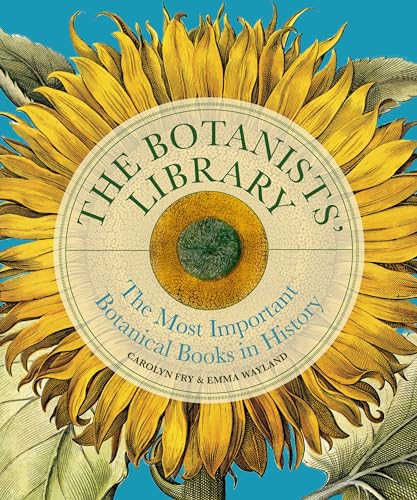
    THE BOTANISTS' LIBRARY: The Most Important Botanical Books in History
    CAROLYN FRY & EMMA WAYLAND

    Ivy Press (non-affiliate Amazon link)
    $40.00 hardcover,available now

    Rating: 4.5* of five

    The Publisher Says: Discover a vast treasure trove of botanical knowledge in The Botanist’s Library, a superbly illustrated collection of 300+ seminal books and illustrations from throughout history.

    From the earliest manuscripts penned by visionary naturalists, to the modern tomes that continue to shape our understanding of the plant kingdom, this book is a testament to the tireless dedication of the world's greatest botanists. Its compelling narrative and visual journey make it a must-have addition to the library of anyone fascinated by the beauty and complexity of the plant kingdom.

    This complete guide traces the development of botanical science through era-defining publications, covering:
  • Historia Plantarum, the first history of botany, written between c. 350 BC and c. 287 BC, in which Theophrastus described plants by their uses, and attempted a biological classification, based on how plants reproduced, to the authors of the herbals of the 16th century
  • Brunfels, Fuchs, Bock and Mattioli, who regarded plants as the vehicles of medicinal virtues
  • The golden age of the 18th- and 19th-century flower hunters, who travelled to every corner of the world in search of new and exotic plants
  • Today’s most significant works of botanical reference
  • Each chapter delves into the pages of a seminal work, unveiling the insights, controversies, and stories behind the books that have shaped our understanding of the plant world. Whether you are a seasoned botanist, a budding enthusiast, or simply someone with an insatiable curiosity about the natural world, The Botanist's Library offers a comprehensive reference that will enrich your understanding of botany and its evolution.

    I RECEIVED A DRC FROM THE PUBLISHER VIA EDELWEISS+. THANK YOU.

    My Review
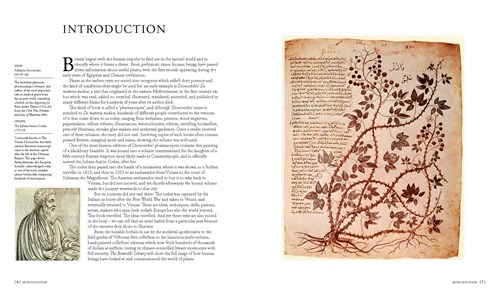
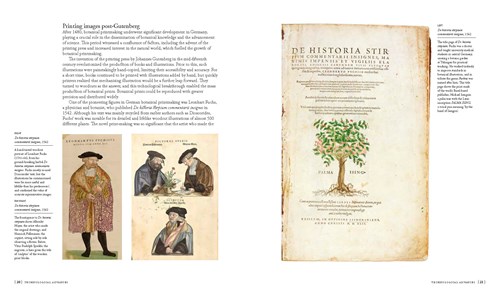
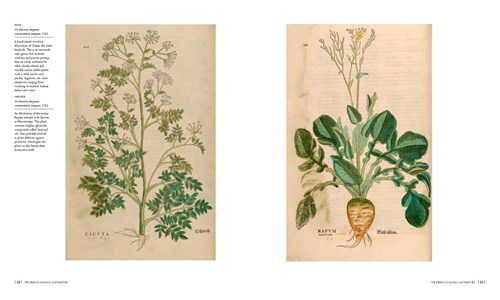
    : Looking at beautiful books is only made more satisfying when they are books about books. Here we have a book about the reasons for, the history and contributions of, and the need to preserve, ancient books of botany. The topics of botany's history, its centrality to the development of science and the scientific method, and...surprisingly to me...the art of printing get a pretty thorough overview here. Centuries of work by many talented people including women (at a time when that was not normal) are laid before what I expect will be your admiring gaze.

    These sample spreads will show you just how well the authors and the publishers understood what the assignment was:

    Why did I, after saying only laudatory things, knock a half-star off this beautifully illustrated, well-written book's score? I have a quibble with a thorough book promised and a truncated one delivered. The subject is huge, this book shouldn't be called a "comprehensive reference." An entire physical library can be, and has been more than once, dedicated to even just the scientific edges of the topic. It's not possible to do a comprehensive anything on a subject of this age and magnitude.

    That doesn't mean this utterly gorgeous object should not find its way to your coffee table for Yule. It should. I viewed it on my Galaxy tablet and it looked spectacular, so assuming you're not looking at it on an ereader, a digital version for yourself if you're gifting a hardcover to someone you love like sixty will give you value for dollar spent.

    Tuesday, December 3, 2024

    SO COLD!: “Call me Freezeman!”


    SO COLD!
    JOHN COY (illus. Chris Park)

    Minnesota Historical Society Press (bookshop.org link)
    $17.95 hardcover, available now

    Rating: 5* of five

    The Publisher Says: Embrace the cold with this engaging children's book about a father and son who practice science experiments using household objects outside on a snowy day!

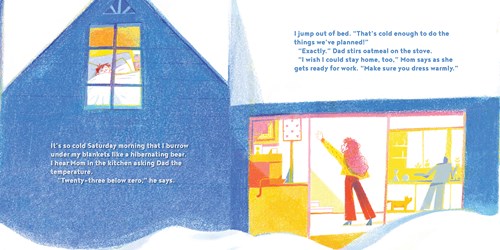
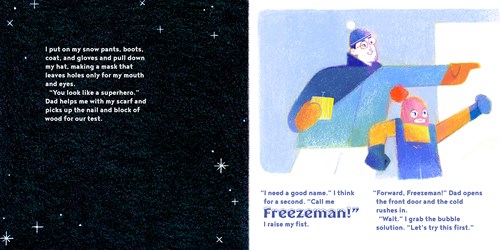
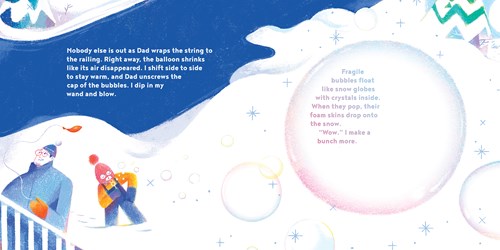
    When the temperature drops far below freezing, many people plan to stay warm and cozy inside. But when it’s “so cold” that everyday things behave in unusual ways, it is worth the effort to get outside and play! In this vibrantly illustrated children's story, a boy and his father dress in layer after layer before braving the cold, and the youngster declares: “Call me Freezeman!”

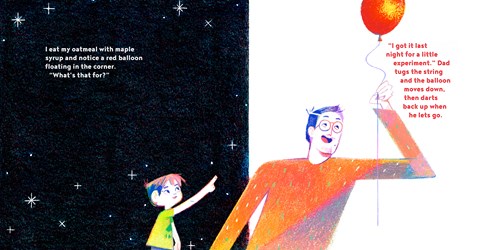
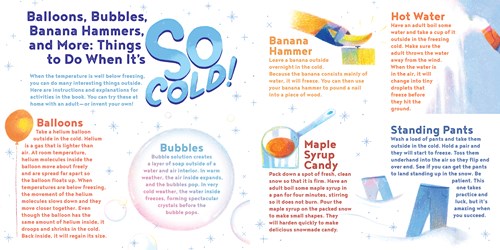
    Together the two experiment: What happens when boiling water is flung into the air? Or when maple syrup is poured on clean snow? The night before they left a banana outside: now it’s frozen solid. Can they can use it like a hammer? A helium balloon that floats inside the house changes dramatically in the freezing air.

    These and other discoveries await explorers bold enough to venture out on a bright and chilly day. Back inside at the end of the day, no wonder Freezeman declares: “so cold is so fun!” This playful narrative by John Coy celebrates curiosity and exploration, while Chris Park’s brilliant artwork illuminates a winter landscape that is anything but bleak. An author’s note explains the science behind the various experiments, leaving just one question: with all these amazing activities to undertake with your favorite adult when it’s “so cold,” why would anyone prefer to stay inside?

    I RECEIVED A DRC FROM THE PUBLISHER VIA EDELWEISS+. THANK YOU.

    My Review
    : Cold! Glorious cold! Delicious, delightful absence of humidity, sweat, blasting battering sunshine that inescapably sears your skin in a human version of the Maillard Reaction. I'm pink like a pig, it's true, but I don't want to be treated like articulated chops! Heat rots, literally; cold preserves. You don't go to the stove to get last week's groceries...unless you're a fly larva, anyway.

    So when your kidlet, nibling, or grand shows signs of hibernation to escape winter's gorgeous gift of escape from the horror that is heat, present them with this adorable little exploration of the reason for, and fun of, the cold.
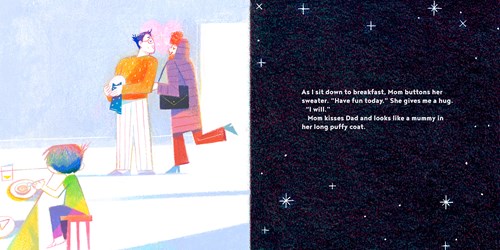
    Particularly pleased props for the story featuring Dad, not Mom, doing stuff with the kidlet. Text is suitable for independent reading, fine for lap-reading as well. I found the art suitably cold of pallette and suitably kinetic of image. It conveyed, to my eyes anyway, the desired image of activity enhanced by the cold.
    I don't know how much longer this will be relevant but it is now. I recommend it.

    Friday, November 29, 2024

    My First Books of Nature: DO SHEEP COUNT SHEEP?: How Animals Sleep & DO FISH GO FISHING?: How Animals Eat, lap-reads for curious kidlets


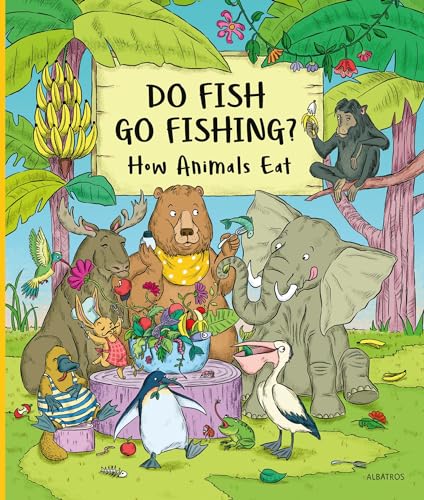
    DO FISH GO FISHING?: How Animals Eat
    PETRA BARTIKOVÁ
    (My First Books of Nature series; illus. Katarina Macurova)
    Albatros Media
    $15.95 hardcover, available now

    Rating: 4* of five

    The Publisher Says: Explore the fascinating world of animal eating habits and other fun facts in this illustrated non-fiction book, featuring diverse creatures and whimsical illustrations.

    This non-fiction gem introduces eleven fascinating animals, from the peculiar platypus to the voracious elephant. Readers will discover the unique habitats of these animals and explore the whimsical ways they consume their meals. Dive into the underwater realm of the platypus, witness the colossal appetite of the elephant, and marvel at the varied dining techniques of creatures like fleas, chimpanzees, and hummingbirds.

    Through vibrant visuals and engaging storytelling, this book offers an immersive and educational exploration of the captivating world of animal eaters. It also ensures a delightful reading experience that sparks curiosity, making it an ideal addition to any young reader's collection.

    I RECEIVED A DRC FROM THE PUBLISHER VIA EDELWEISS+. THANK YOU.

    My Review
    : Aimed at the young lap-reader, this 28-page delight has busy, detailed illustrations that should keep your audience busy finding new things to focus on, and give you a chance to engage them in learning the well-selected, carefully calibrated information about the feeding habits of the charismatic critters Author Bartíková has chosen to introduce kidlets to the world of science.


    Your kid/grand/nibling might just get the spark of science love from this sort of fun and informative presentation, and it's a great hour's down-for-a-nap laptime read.

    ++++++++++++++++++++++++++++++++++++++++++++++++++++++++++++++++


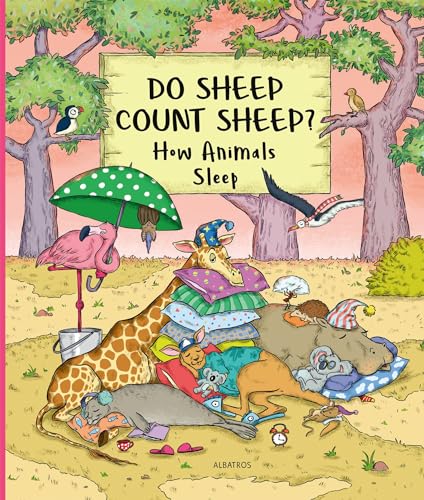
    DO SHEEP COUNT SHEEP?: How Animals Sleep
    PETRA BARTIKOVÁ
    (My First Books of Nature series; illus. Katarina Macurova)
    Albatros Media
    $15.95 hardcover, available now

    Rating: 4* of five

    The Publisher Says: Explore the fascinating world of animal sleeping habits and other fun facts in this illustrated non-fiction book, featuring diverse creatures and whimsical illustrations.

    Discover the captivating world of animal sleep in Do Sheep Count Sheep?: How Animals Sleep, the next installment in the My First Books of Nature series, tailored for children aged 3-6. Illustrated by award-winning artist Katarina Macurova, this non-fiction gem introduces eleven diverse animals, from the industrious ant to the serene koala, each showcasing unique sleeping habits and habitats. Through vibrant illustrations, young readers explore how animals rest in burrows, treetops, underwater, and even in-flight, offering an enchanting journey into the animal kingdom's slumber realms. Delve into the peculiar sleeping patterns of the giraffe, the nocturnal bat, and the laid-back albatross, discovering fascinating details about positions and durations that set animal sleep apart from our human routines.

    This book stands as a delightful addition to the My First Books of Nature series, offering an educational and entertaining exploration of the intriguing world of animal slumber. With vibrant showcases of diverse sleeping habitats and positions, this book engages young minds, making learning about sleep variations both fun and informative. It ensures an immersive experience that sparks curiosity and fosters an early appreciation for the wonders of nature. A must-have for parents, caregivers, and educators seeking to introduce young readers to the fascinating realm of animal sleep, blending the magic of storytelling with educational value.

    I RECEIVED A DRC FROM THE PUBLISHER VIA EDELWEISS+. THANK YOU.

    My Review
    : *I* learned stuff from this adorable little book! It had never once, in almost seventy years of living among them, occurred to me to wonder if, still less how, ants slept! I might use this little overview as a naptime not bedtime read...too many questions and ideas to get the mind working on for that longer downtime transition to work smoothly.


    Inexpensive enough for both together to make a terrific holiday gift to parents, enough fun to withstand multiple readings when the small mind latches on to the facts and starts to want more.