Pages
- Home
- Mystery Series
- Bizarro, Fantasy & SF
- QUILTBAG...all genres
- Kindle Originals...all genres
- Politics & Social Issues
- Thrillers & True Crime
- Young Adult Books
- Poetry, Classics, Essays, Non-Fiction
- Science, Dinosaurs & Environmental Issues
- Literary Fiction & Short Story Collections
- Sookie Stackhouse/Southern Vampire Books & True Blood
- Books About Books, Authors & Biblioholism
Showing posts with label 18th century setting. Show all posts
Wednesday, November 26, 2025
THE PORCELAIN MENAGERIE, fiction about the world's most important object of industrial espionage
THE PORCELAIN MENAGERIE
JILLIAN FORSBERG
History Through Fiction LLC (non-affiliate Bookshop.org link)
$9.99 ebook, available now
Rating: 4* of five
The Publisher Says: In a world where ambition is as fragile as porcelain, two lives are shaped by a king's dangerous obsessions.
In 18th-century Dresden, the dangerous whims of King Augustus the Strong shape the court and the lives of those held captive, both people and animals. Johann Kändler, a talented young artist, is drawn into the world of King Augustus the Strong. The king's relentless desire for a lifelike porcelain menagerie could make or break Johann's future. As Johann works to meet the king's impossible demands, he finds unexpected allies in former royal mistress Maria and her daughter Katharina. Johann's art might secure his future-or ruin it if he fails to satisfy the king.
Decades earlier, another story unfolds. Fatima, a Turkish handmaiden, is chosen to replace Augustus's discarded mistress. As she tries to create a menagerie of exotic animals and navigate the intrigues of an unpredictable court, Fatima must learn to survive in a world that values beauty and power above all. She must fight to keep her identity and unlock her own cage in the king's dangerous realm.
Two timelines, bound by a king's art and survival intertwine as Johann and Fatima navigate the king's unpredictable demands and the deadly allure of court life, where ambition can be as fragile as porcelain.
I RECEIVED A DRC FROM THE PUBLISHER VIA NETGALLEY. THANK YOU.
My Review: Royalty has never had much reason to behave pleasantly to the lower orders...what, after all, can they do to a royal personage?
1789 still scares tyrants. But that's decades away from Augustus the "Strong"'s reign in Saxony. The story of Fatima, a beautiful young servant who catches the King's eye and is traduced by him, and how she manages life as Maria the lowly mistress of the King, exemplifies this.
Before I go on: Animal cruelty in this book turned my stomach. It's well known as a real activity in this royal court. Do not look it up. Trust me. If you read the book for other reasons, do not read chapter 30. At all.
If porcelain had never made it to Europe, the *astonishing* wealth transfer beginning in the 1400s into China, and later into Japan, would never have drained the economy dangerously. It is immensely superior to pottery in strength and durability. It is beautifully translucent, it takes colored glazes readily...being by nature soft white when fired properly...and can be made into very fine, very small shapes, like miniature marble. You most likely don't give much thought to the porcelain in your kitchen cabinets, and only a little more to Granny's stuff in the breakfront, or the figurines Mom used to make you dust.
Augustus the Strong gets credit for that. His decades-long search for the secret to making porcelain...in English we mostly call it "china" nowadays...was a quest to stem the treasure hemorrhage to the country of East Asia where they made whichever of the tens of thousands of pieces he coveted. It's bloody incredible to read about his collection.
Those facts are related in a rather tedious history book called The Arcanum by Janet Gleeson, which has the virtue of being well-researched so worth reading if you really enjoy your china. This novel, being fiction, isn't limited to the history. It delves into a story, based on real people's real lives. Of course it's necessary to burnish up the bones of fact, to pad in some likely-sounding dialogue, to speculate on unrecorded emotional factors that all lives possess.
The resultant novel is a very emotionally affecting read. Maria/Fatima-that-was and her bastard royal daughter Katharina come to life, though not modern life (a good thing), making the very best of the choices open to women in 18th-century Saxony. Johann's efforts as an artist, his careful treading as a man beholden for both living and life to a capricious, moody obsessive of a king, and his relationship to the women of the story all coalesces in a satisfying, if not truly happy, ending.
If not for (factually accurate) chapter 30, I'd rate it higher. Just can not dismiss, diminish, or relativize this one.
Saturday, July 5, 2025
THE BETRAYAL OF THOMAS TRUE, good plot, better idea, decent execution
THE BETRAYAL OF THOMAS TRUE
A.J. WEST
Orenda Books (non-affiliate Bookshop.org link)
$26.99 hardcover, available now
Rating: 4* of five
The Publisher Says: It is the year 1710, and Thomas True has arrived on old London Bridge with a dangerous secret. One night, lost amongst the squalor of London's hidden back streets, he finds himself drawn into the outrageous underworld of the molly houses.
Meanwhile, carpenter Gabriel Griffin struggles to hide his double life as Lotty, the molly's silent guard. When the queen of all 'he-harlots', Mother Clap, confides in him about a deadly threat, he realises his friends are facing imminent execution.
To the horror of all mollies, there is a rat amongst them, betraying their secrets to a pair of murderous Justices, hell-bent on punishing sinners with the noose.
Can Gabriel unmask the traitor before it's too late? Can he save hapless Thomas from peril, and their own impossible love?
Set amidst the hidden world of Georgian London’s gay scene, The Betrayal of Thomas True is a brutal and devastating thriller, where love must overcome evil, and the only true sin is betrayal…
I RECEIVED A DRC FROM THE PUBLISHER VIA EDELWEISS+. THANK YOU.
My Review: I came out of my seat when I read "...love must overcome evil, and the only true sin is betrayal..." in the book's synopsis. It could not have been more directly aimed at my sweet spot, and timed more exactly as needed.
I still think that. I'm not one bit taking away from the author's acumen or clarity of vision. I only wish I'd had more...fun. It's a good plot, it's executed competently, but there is a lack of that indefinable *something* in the characterizations that gets me to invest in them and their plight.
After thinking and thinking about this issue, after probing my experience of the read for a solid while, I've come to the only logical conclusion. I was introduced to the stakes before I'd invested in the people. I knew what was going on but did not yet care that it was going to happen to these men. This same issue arose for me in the Shardlake historical mysteries.
I'm delighted by the evocative insults...discover them yourselves, they are priceless nuggets of invective...and engrossed in the setting of London's "molly houses" as reconstructed here. Honestly, having been immersed in this story's world, I think I'd know how to comport myself unobtrusively in this arcane, hidden world's manners and speech.
Because the stakes, the heinous betrayal of men like me by one of our own to the vile, revolting scum enforcing their distorted "morality" on pain of death, were instantly relatable to me, I found myself unwilling to put the book down. I think it was a single five-hour session that finished it off for me. That's pretty good going for three-hundred-ish pages! And blessings on the publisher for opening the proceedings with a Dramatis Personae list of real and molly-names!
I hope that makes clear the real pleasure of the story for me. I did not just slog through the pages. I finished the book because it was not one I could imagine leaving unfinished. That's praise indeed from a seasoned old campaigner like me. I think anyone who would like to see just what it costs to live your own truth in a way that satisfies your human need to give and receive love, amid a world full of messages threatening you with harm up to and including death for doing it, would like it.
History buffs eagerly flagged down to come into this authorial spiderweb of facts and research gems. Gay men over fifty sought especially vigorously...you'll see why. Believe me...learning the dreadful fate of our kind in a time only slightly less hateful than now will energize your resistance.
Wednesday, April 23, 2025
THE REBEL ROMANOV: Julie of Saxe-Coburg, the Empress Russia Never Had, not *quite* as advertised but enjoyable

THE REBEL ROMANOV: Julie of Saxe-Coburg, the Empress Russia Never Had
HELEN RAPPAPORT
St. Martin's Press (non-affiliate Amazon link)
$15.99 ebook, available now
Rating: 4* of five
The Publisher Says: From the New York Times bestselling author of The Romanov Sisters comes the story of a courageous young Imperial Grand Duchess who scandalized Europe in search of freedom.
In 1795, Catherine the Great of Russia was in search of a bride for her grandson Constantine, who stood third in line to her throne. In an eerie echo of her own story, Catherine selected an innocent young German princess, Julie of Saxe-Coburg, aunt of the future Queen Victoria. Though Julie had everything a young bride could wish for, she was alone in a court dominated by an aging empress and riven with rivalries, plotting, and gossip―not to mention her brute of a husband, who was tender one moment and violent the next. She longed to leave Russia and her disastrous marriage, but her family in Germany refused to allow her to do so.
Desperate for love, Julie allegedly sought consolation in the arms of others. Finally, Tsar Alexander granted her permission to leave in 1801, even though her husband was now heir to the throne. Rootless in Europe, Julie gave birth to two―possibly three―illegitimate children, all of whom she was forced to give up for adoption. Despite entreaties from Constantine to return and provide an heir, she refused, eventually finding love with her own married physician.
At a time when many royal brides meekly submitted to disastrous marriages, Julie proved to be a woman ahead of her time, sacrificing her reputation and a life of luxury in exchange for the freedom to live as she wished. The Rebel Romanov is the inspiring tale of a bold woman who, until now, has been ignored by history.
I RECEIVED A DRC FROM THE PUBLISHER VIA NETGALLEY. THANK YOU.
My Review: Why on Earth does Rappaport need the figleaf of "allegedly" in the book description? A very minor figure in Russian history, and invisible outside it...this is barely non-fiction, there's so much reading between the lines...who's going to troll her for "disrespecting" this nonentity?
One big reason she's been ignored by history is she didn't make any. All she did was leave a husband she detested, run off and have adventures all across Europe, and do exactly nothing for anyone not herself. Pretty much the picture-perfect spoiled princess, sort of like "Sissi" only without the heir-bearing.
Why I liked it is it gave me a fascinating glance into a family that ought to be much netter studied: The Saxe-Coburg ducal dynasty, a branch of the Bavarian royals, the Wettins. Shake a royal family tree and a bunch of 'em will fall out. I mean, a branch of 'em is still on the throne of the United Kingdom and another of that of Belgium. Their close cousins used to be rulers of Portugal and Bulgaria. They were the mothers of Romanov tsars, and countless other royals, from the early 18th century onwards.
It's thrown into stark relief that, when reading this book, the long shadow of Napoleon and more generally the upheavals in France from 1789 forward have made a heavy screen against the study and awareness of the rest of Europe's eventful history at this time. Julie's peripatetic life, though little enough noted, did leave some personal traces. These are presented in their context so I got a good grounding in events seen from the not-Napoleon side. Dynastic marriages, border disputes resolved thereby, things about the power politics of the time I hadn't really been aware enough of to know I didn't know about them, all form this story's backdrop.
What this wasn't, however, was a spicy, entertaining, gossipy book about an interesting woman who had the principles to abandon a luxe life. That's what the title suggested I was going to get; it's a good, illuminating history of a time from an angle new to me. It's not juicy or gossipy. Much about this poor woman and her life was simply not worth risking the ire of Imperial Russia to preserve. I suspect this absence of source material is a calculated act by agents of the Romanovs, to disguise the extremely awful way this poor thing was treated by all and sundry in their court, and by her own family to disguise their sale of one of their own into what amounted to slavery (albeit gilded by trappings of wealth) to save their own hold on political power.
A survivor, this lady was; a rebel, not so much based on this story as told here.
Friday, December 13, 2024
ROBINSON CRUSOE, specifically Restless Books' gloriously illustrated Three-Hundredth Anniversary Edition of it
ROBINSON CRUSOE
DANIEL DEFOE (illus. Eko; introduction by Jamaica Kincaid)
Restless Books (non-affiliate Amazon link)
$19.99 trade paper, available now
Rating: 5* of five
The Publisher Says: Restless Classics presents the Three-Hundredth Anniversary Edition of Robinson Crusoe, the classic Caribbean adventure story and foundational English novel, with new illustrations by Eko and an introduction by Jamaica Kincaid that contextualizes the book for our globalized, postcolonial era.
Three centuries after Daniel Defoe published Robinson Crusoe, this gripping tale of a castaway who spends thirty years on a remote tropical island near Trinidad, encountering cannibals, captives, and mutineers before being ultimately rescued, remains a classic of the adventure genre and is widely considered the first great English novel.
But the book also has much to teach us, in retrospect, about entrenched attitudes of colonizers toward the colonized that still resound today. As celebrated Caribbean writer Jamaica Kincaid writes in her bold new introduction, “The vivid, vibrant, subtle, important role of the tale of Robinson Crusoe, with his triumph of individual resilience and ingenuity wrapped up in his European, which is to say white, identity, has played in the long, uninterrupted literature of European conquest of the rest of the world must not be dismissed or ignored or silenced.”
I RECEIVED A DRC FROM THE PUBLISHER VIA EDELWEISS+. THANK YOU.
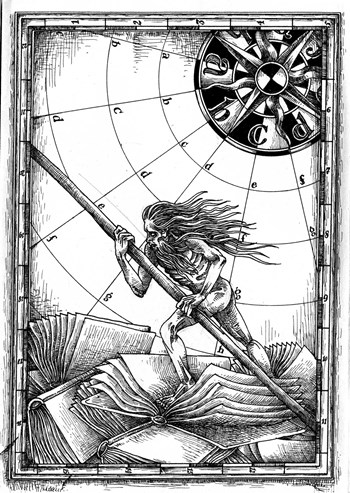
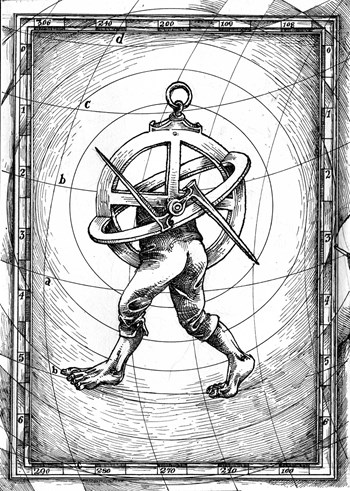
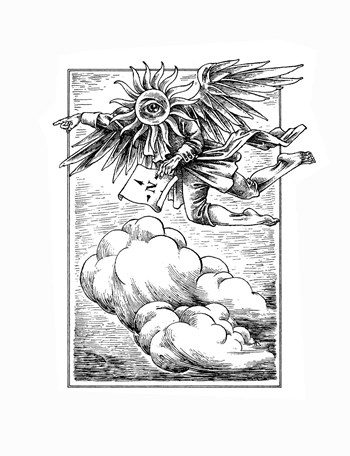
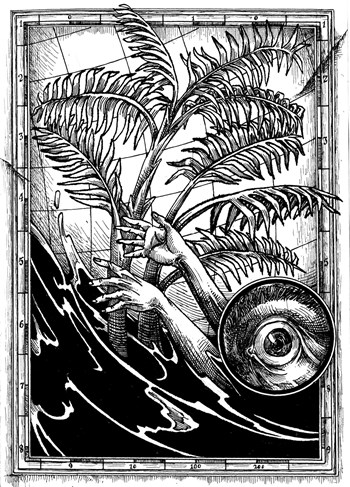
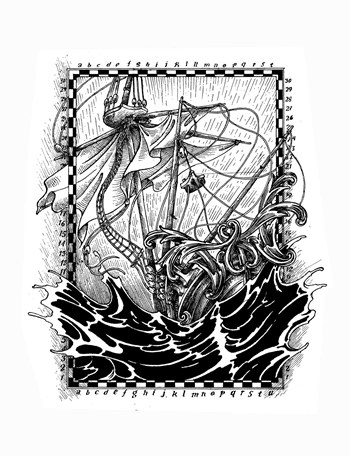
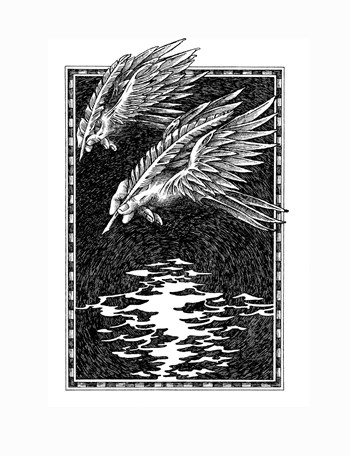
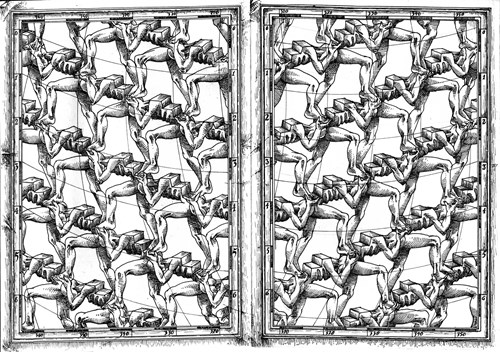
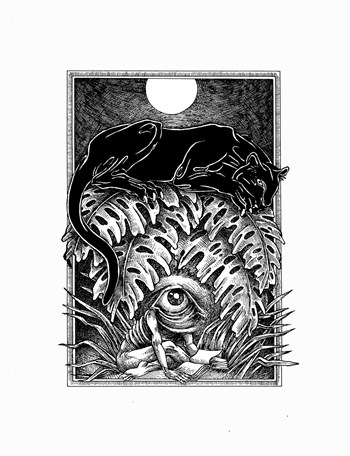
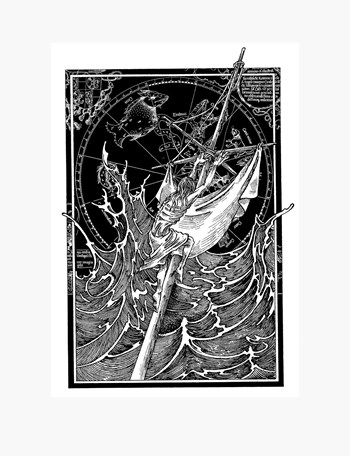
My Review: You really don't need me to mention anything about Defoe or his writing. Or, if you do, go to gutenberg dot org and download a free ebook of the text. You need to read it. Go on! Scoot! Come back when you've downloaded the ugly version. Or, if you're really lazy, go read the Wikipedia article to find out what it's about, so you can look at these illos with a properly appreciative eye.
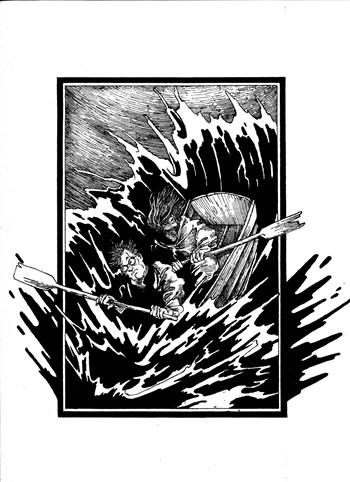
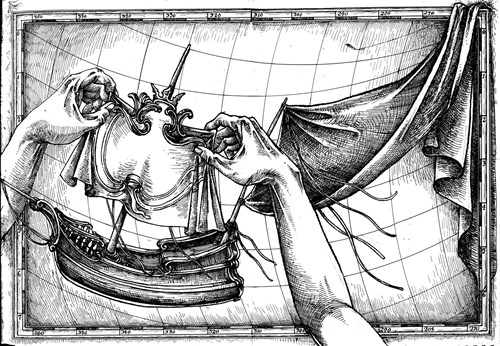
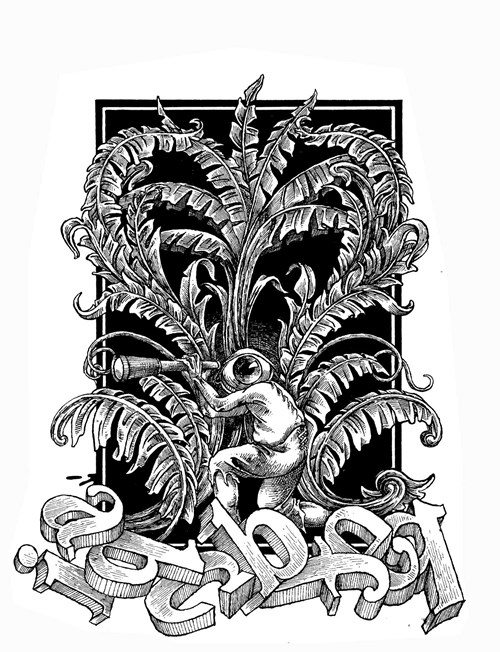
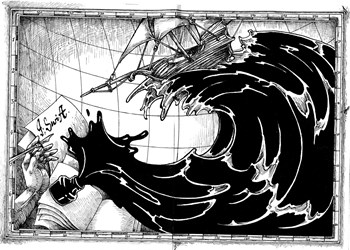
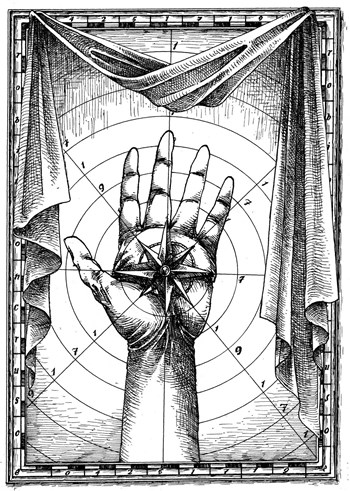
This gorgeously illustrated tricentennial edition is entirely meant to be celebratory not introductory. I mean, look!

What stunning artwork, no? Any of them, but most especially #2 and #4 above, would work as wall art for me.
This is an elegant, easily-shelvable edition that will give you an æsthetic thrill every time you look at it. Anyone who already loves this fantastical story would enjoy the look and feel of it. Anyone who enjoys pretty editions of books as shelf decor would like it too, though I admit I frown on buying books that sit in one spot their whole lives by design. SOMEONE ought to read it. That's what a book is for!
Still and all I do not run the world (terrible oversight on the goddesses' part) so you enjoy things your own way. O.o
As Yule comes screaming in blazing hot like the ball of destruction it is on one's budget, reasonably priced beautiful things like this are welcome gifts. Especially to yourself.
Saturday, December 11, 2021
RECKLESS, first Exley & Dyer gay transvestite pirate romp
RECKLESS
JESS WHITECROFT (Exley & Dyer #1)
Self-published (non-affiliate Amazon link)
$3.99 Kindle edition, available now
Rating: 4* of five
The Publisher Says: When pirate Henry Dyer’s ship captures the French frigate Sans Souci, nobody seems to know why Captain Buckler has been chasing such a neglected and unprepossessing prize ship. The puzzle only gets more perplexing when they take the ship and find an English girl in leg irons.
It’s an old and popular love story—the pirate and the virgin who steals his heart away, only this time the pirate is the virgin and the girl isn’t a girl at all. She is James ‘Jem’ Exley, thief, molly, occasional actor and full time transvestite. Jettisoned to the New World in order to spare his aristocratic family any further disgrace, Jem is glamorous, flamboyant and fascinating.
At only nineteen, Henry is determined to prove himself a man one way or the other, and is astonished to find that nothing makes him feel like more of a man than his increasingly reckless passion for Jem. As their love leads them into trouble, the mysterious circumstances of Jem’s capture lead Henry deeper into a mystery that not only upends his whole world, but sees them running for their lives across the Caribbean.
Stolen jewels, scheming Captains and devious drag artists–Black Sails meets Blackadder in this steamy eighteenth century romp from the author of These Violent Delights and Going Sasquatch.
THIS WAS A GIVEAWAY ON AMAZON. THANK YOU.
My Review: Among the many possible variants of “surprised by love” that exist, this one is a less-than-ordinary choice to use. Henry Dyer, pirate, is not the usual hero; Jem Exley, “damsel” in very deep distress, is not the usual heroine. I’m not sure that a pirate in eighteenth-century Caribbean waters would’ve known the word “transvestite” but it’s clearly a concept any moderately immoral character would’ve encountered long ago, so I’ll go with its being used in this context without crabbing too much. The response to it in the flesh was as reasoned and reasonable as I’d’ve expected it to be.
But the molly herself? That backstory! What a way to make a character fly off the page and into my heart! The stakes couldn’t possibly be higher than “being myself would cost me my life but there is no one else I could be so, so be it.” There’s a huge softness in my readerly heart for characters who take agency and act with decision to make their Otherness into a way of being in the world that wants them to fail.
While making myself comfortable in this world, I was often thinking, “what is it here that Author Whitecroft is trying to tell me in the choices?” Usually that means I’m insufficiently wrapped in the story; here, I was reasonably sure I was being led somewhere but not sure enough of where to simply sit back and enjoy the ride. But, as the story unfolds, there is simply nothing for it but to…simply sit back and enjoy the ride. I was all up in this story from chapter two forwards. The action, my dears, simply does not let up. Whee!
The reason that elicits a "Whee!" from my ever-darkening heat-pump (can't rightly call it a heart anymore) is that I am all about quests, mysteries, puzzles in my fiction. I am also an avid follower of Ma'at, I like order. Just not the order most of y'all like...conformity ≠ order. Sameness is not safety. Look at the burgeoning problems presented by monoculture: Cavendish bananas, the ones in your grocery store, are going extinct because they're clones, identical plants, and they've been targeted by a rot that is unfixable. The precise same thing happened to the Gros Michel bananas of my childhood. (BTW the reason artificial banana flavor tastes like it does is that they were aiming for the more powerful taste of the Gros Michel variant.)
Bananas? What the hell...oh right, sameness. Anyway, this book demonstrates a strong affinity for Ma'at in her "spirit in which justice was applied rather than the detailed legalistic exposition of rules" sense. The spirit of Justice demands that Jem get his Henry into bed, into the strange and ever-shifting constellation of acts and demands and solutions that make up a transvestite prostitute thief's life in a time where the mere determination that those things constitute an identity not a pathology was inconceivable. Since this story represents a modern take on the topic, they *do* end up constituting an identity. And do you know what? I am just fine with that. As a gay man of a certain age, whose own family contains other gay men even older than I, it's not in the least inconceivable (and I do know what that word means) that people very like Henry and Jem existed and throve despite their absence of trace evidence in the historical record.
The resolution of this story's plot leaves me disposed to seek out the sequel in hopes that the author's wells have not run dry regarding the Life Piratical of Jem and Henry.
Subscribe to:
Posts (Atom)