Pages
- Home
- Mystery Series
- Bizarro, Fantasy & SF
- QUILTBAG...all genres
- Kindle Originals...all genres
- Politics & Social Issues
- Thrillers & True Crime
- Young Adult Books
- Poetry, Classics, Essays, Non-Fiction
- Science, Dinosaurs & Environmental Issues
- Literary Fiction & Short Story Collections
- Sookie Stackhouse/Southern Vampire Books & True Blood
- Books About Books, Authors & Biblioholism
Showing posts with label humorous sci fi. Show all posts
Wednesday, May 20, 2026
VILLAIN (Hench #2) is Author NATALIE ZINA WALSCHOTS long-awaited and worth the wait sequel
VILLAIN (Hench #2)
NATALIE ZINA WALSCHOTS
Watch the inimitable Nancy Pearl interview Author Walschots here!
William Morrow (non-affiliate Bookshop.org link)
$14.99 ebook, available now
Rating: 4.75* of five
The Publisher Says: The Boys meets Starter Villain and Assistant to the Villain in Natalie Zina Walschots’s electrifying, sharp, violent, and hilarious sequel to the highly acclaimed novel, Hench, in which the Auditor must confront the near-impossible in order to right the many wrongs in the superhuman industry…or cause more of them. She’s not picky.
Anna, better known to superheroes as the Auditor, has carved out a name for herself. Any hero unlucky enough to cross her path knows her potential and powers. Surely, success should taste she has an incredible job with lots of perks, and her boss will literally annihilate anyone who crosses her, and her greatest enemy, the former hero Supercollider, has been utterly defeated and literally ground to a pulp.
But Anna still has her sights set on a greater destroying the Draft, the organization that makes, trains, and manages the world’s most powerful superheroes. These “heroes” have shown time and time again that they do more harm than good, and now is the time to stop the damage at its source.
Yet all is not well for the Auditor and her fellow evildoers. Her employer, Leviathan—the world’s most feared supervillain—is not coping well with Supercollider’s defeat at someone else’s hands. Moreover, her unlikely ally and unexpected friend, Quantum Entanglement, has vanished without a trace, leaving Anna to examine all the ways they deceived each other. Tension and uncertainty fill the air, and fear that this moment of triumph is about to crumble looms over all of them.
Anna soon finds herself facing down an opponent unlike any she’s taken on before—not another superhero, but someone like her…someone much more the Draft’s Chief Marketing Officer. This isn’t a test of physical prowess, but ideas, and as the fight spirals deeper and deeper, with new foes popping up every day—she’ll need more than just her superpower—data research—to keep ascending through the supervillain ranks.
It’s guerrilla ad warfare, and the Auditor might have finally met her match.
I RECEIVED A DRC FROM THE PUBLISHER VIA NETGALLEY. THANK YOU.
My Review: It took five years, but the sequel I've quietly pined for has arrived. I downloaded the DRC in February, started reading it in late March, and finished a final pre-review skim last night. I treated this read as a reward, an experience to be savored, because Hench was such a completely fresh experience that it made me rethink the messaging of superhero crap, made me consider how subversion can in fact look like participation or even celebration. I liked The Boys because it's taken that idea to its logical end-point; but it came after Hench had prepared me psychologically for its storytelling mode.
The Department of Superheroic Affairs, aka "the Draft," is the organization that's responsible for everything involving superheroes. They do the recruiting, training, and funding...who ever stops to think about the accounting and expenditures that enable superheroes to blow apart entire city blocks? can you even imagine the insurance bills?!...and they create the most compelling backstories for them that they can. It means only certain tropes survive time-testing as superheroes wreak havoc in order to "save" people from supervillains.
Who also have an organizational structure centered around Leviathan, for whom our dear Anna...formerly Electric Eel's hench, now known as the supervillain "The Auditor" (if that yclepture doesn't provoke horripilation you've never filled out an accounting reimbursement justification)...serves as right-hand person. Leviathan, after the end of Hench sees the biggest rival he has (Supercollider) fall to richly deserved intimate betrayal orchestrated by Anna/The Auditor, is too depressed by the newly unchallenging world he lives in to be effective in supervillainy. Anna/The Auditor needs to snap him out of it but, in a truly tropey twist, The Draft hires a new marketing manager. One who is Anna/The Auditor's equal or possibly superior in data analytics and statistical modeling...the secret superpowers that brought Supercollider down. Now Supercollider is permanently damaged, and dies as the Draft's medics are trying to "untangle him from himself," and the Draft's new marketer finds enough dirt to plausibly, if inaccurately, pin responsibility for his death on Leviathan.
Hijinks ensue.
To look into this only-slightly-distorted mirror world is to see 2026 explained without didactic shouting, blaming, and finger-pointing. It's all here, all the guilty parties are lined up for our scorn and contumely to be unloaded on them, and exactly like real life they are everywhere not just on one side. False dichotomies like hero-v-villain aren't allowed to stand; the acts perpetrated are equally awful, are not discernably different in their results. They're not different in their motivations, either; each "side" is only out to do down the other side and then justify the carnage for everyone else later.
It is here that I come fully into my love of Author Natalie's storytelling. The battling sides are not contesting opposing ideas, arguing through competing society-wide organizational plans, they're solely and entirely focused on hurting each other in increasingly horrifying ways. What that means for non-combatants is (yet again) not part of the calculus except insofar as the optics can be used against the other side.
As Leviathan re-awakens to his supervillainous purpose, Anna/The Auditor and her scoobygroup are stretched on practical and emotional levels to achieve Leviathan's purpose and counteract the Draft's new, high-powered team that uses Anna/The Auditor's innovative techniques against them. As in Hench, the emotional costs of violence, loss, betrayal, and fanaticism are personalized while the impersonal systems grind on propelled by the suffering people behind the major players.
I think Author Natalie took her time...I understand she re-wrote this book four times...to very good effect. I got invested again immediately despite the long interval between reads. I was deftly reminded of things necessary to remember instead of infodumped on; I was also shown how time has passed in the storyverse and the changes that has wrought on significant relationships. It's a fine achievement in storytelling craft. The ending is not A Conclusion. There is openness in its action to either another sequel (yes please!) or simply room for you-the-reader to headcanon something you'd like for the characters. It works for soap operas and comic book series, why not for a supervillain's difficult choices and incomplete emotional development?
I recommend the read; it's not utterly necessary to read Hench first, but why wouldn't you want to? It's a series with a lot to say about the world we live in, and what it says I agree with, so I'm recommending it to all y'all, even the superhero/comic book averse.
After all, that described me before this series came my way.
Wednesday, April 22, 2026
DOUBLE SHADOW, second Splinter Effect series time-traveling archaeologist story
DOUBLE SHADOW (Splinter Effect #2)
ANDREW LUDINGTON
Minotaur Books (non-affiliate Bookshop.org link)
$14.99 ebook, available now
Rating: 4.5* of five
The Publisher Says: In this thrilling installment of the Splinter Effect series, time-traveling archaeologist Rabbit Ward returns to the past to help save his former adversary and track down a murderous thief in first century Jerusalem.
ROME, 2019. Time-traveling, Smithsonian archaeologist Rabbit Ward is back in the present, but not for long. Helen, his former adversary and growing ally, is in trouble with the law after being framed for a murder she didn’t commit. Stuck in hiding and running out of other options, she turns to Rabbit for help. "Help" in this case involves a trip to first century Jerusalem to track down a mysterious man named Einar Eshek.
But Rabbit won't have to do this mission alone; as soon as he arrives in 68 CE, he meets a younger version of Helen, one who has never met him before. Together, they work to track down Eshek, who turns out to be not only a time-traveling thief, but a murderous psychopath.
As they pursue Eshek through time, Rabbit and Helen feel something even bigger pulling them together. Torn between the two versions of the woman he knows, and with the clock ticking down on Helen’s fate in 2019, Rabbit might have no choice but to betray her past self to secure Helen’s safety in the future. Tensions rise as Jerusalem prepares to go to war with Rome, and Rabbit races to capture Eshek, clear Helen’s name, and make it back to 2019 in one piece—a feat that’s proving to be easier said than done—before everything falls apart.
I RECEIVED A DRC FROM THE PUBLISHER VIA NETGALLEY. THANK YOU.
My Review: Author Ludington...are you stark staring mad?! In this absolutely bonkers passage in world history, which no matter how long the editing process on this story took you were writing while the US political landscape's ablaze with AIPAC news, you release a book set in a rebellious Judea! It's a choice....
So, aside from the geopolitical timing seeming to my eyes a bit on the nose, I was verschmeckeled at the twist of Rabbit...I really wish his nickname wasn't evocative of Rabbit bloody Angstrom, that pusillanimous milquetoast...encountering a younger version of his frenemy Helen from the first book. I know a lot of people who find time travel stories not to their taste for this very trope, to the point of not watching Doctor Who despite the glorious beauty of Alex Kingston as River Song, if you can imagine such masochism, because she meets the Doctor at asymmetric moments in each of their lives. "It can't happen! It's never happened!" Maybe...but don't you crave a Jake-and-Sadie moment from 11/22/63? I, clearly, do not share this cavil. In this particular iteration of the trope, I found a real aha! moment for some things in the first book. I really like that in a series story. I want to feel there are webs of interconnection that I sense but don't yet see because that happens in life as well.
So all that to say I found this story as much to my liking as it's ever gonna get when there are straight people centering it. Rabbit and Helen's dynamic in particular feels richly textured with powerful emotions clashing and shifting in each of them every time they meet. In this story, as Helen does not know Rabbit yet, we get the unedited version of her responses to him. If the fact she's trying to kill him says anything, it's something *good* about her character...she is a professional with clear goals. I admit that, as the story began, I was a bit surprised that Helen reached out to Rabbit for this specific kind of help, but it made perfect sense as I was swept along in the tides of developments. Einar Eshek, our villain, was villainous. Rabbit, our hero, was resourceful, determined, and required always to think on his feet; that's a feat any author who's using this character trait gets kudos from me the more successfully they pull it off. I didn't notice Rabbit navigating his altered relationship to Helen as awkward or forced into convenient resolutions to knotty conflicts. That is a rare compliment from someone like me, very experienced in reading series stories.
I found the resolution to the central conundrum...chasing Einar, exonerating *2018-Helen...fit the facts, satisfied the overarching plot, and resolved the immediate story tensions with a very clear intent to publish more of these characters' stories in the future.
Bring it. Soon, please and thank you.
Monday, December 15, 2025
THE SUPERSONIC PHALLUS, gay historical romantic story
THE SUPERSONIC PHALLUS
STEVEN KEY MEYERS
The Smash-And-Grab Press (non-affiliate Bookshop.org link)
$2.99 ebook, available now
Rating: 4* of five
The Publisher Says: When cub reporters Dean and Sam of the Sinai, Colorado Sentinel investigate UFOs seen over Two-Mile Mesa, they have no idea of what they’re about to face—or of what they’ll end up doing. The time is July 1947—the great flying-saucer scare, when thousands of Americans suddenly report seeing UFOs over every part of the country.
Dean is gay, but Sam (our narrator) is decidedly not! But as they interview witnesses and maintain high-altitude stakeouts, Sam begins to fall in love with Dean. Are the UFOs to blame? Is Dean merely the handsomest man Sam’s ever seen, or a space alien? And are the UFOs actually Russian aircraft out to steal U.S. atomic secrets?
The Air Force sends P-51 Mustang fighters to shoot down Sinai’s aerial invaders, even as the Government insists people are just seeing weather balloons. But one night, after a veritable supersonic phallus streaks overhead, Dean and Sam risk everything to let the world know the truth.
I RECEIVED A DRC FROM THE PUBLISHER VIA NETGALLEY. THANK YOU.
My Review: Sam...married, kid, wife pregnant...wakes up to man sex when Dean enters his life. It's the Cold War, the Lavender Scare, and they're chasing the newly-named UFOs as sightings make the world news...are they Soviet spies, are they really aliens, is this some secret intelligence project we lifted from the recently-defeated Nazis? No one knows but Sam and Dean mean to find out.
It's all told from Sam's PoV and in his voice, which honestly feels light and humorous. I was surprised by that, as he is a man with some deeply unsettling issues to deal with. Not least really lusting after Dean; though that one's tough for anyone anytime. You want someone you're not married to, that's trouble; but they're same sex and the world, the Army, the government in general are all having fits because queers = bad, queers = spies...humor might not be everyone's first option of tone.
It's not comedy, it's not tragedy, it's a dramedy. I smiled more than I laughed, first when I found out out heroes are Sam and Dean and we're in a paranormal hunt for facts and truth. I wondered if it would be fanfic for Supernatural, but that was not my impression as I read along. I'd wondered also if we were to be treated to sex scene(s) but this too was not wher Author Meyers was headed. Sam's awakening was enough of a stretch, in that day and time. Plus when you live in a small town (Roswell is clearly the model) and are pursuing the armed forces to give you information they do not want you to have...well, first rule of surviving in the news biz is "never hand your enemy the gun."
It's a short read. I'm really glad I read it to keep my mind occupied with troubles not immediate to me or real but really grounded and relatable. What it did for me was make me aware that I live a deeply fortunate life as a gay man in the twenty-first century, and how very under threat that is.
Gratitude, meet vigilance, y'all're gonna be roommates in my skull.
Fun, light of tone and serious of purpose. Serves both masters very well indeed, and for three bucks as an ebook, you won't go wrong.
Thursday, December 4, 2025
AN ORAL HISTORY OF ATLANTIS, Ed Park's story collection spanning 25 years-plus
AN ORAL HISTORY OF ATLANTIS
ED PARK
Random House
$13.99 ebook, available now
Time's The 100 Must-Read Books of 2025 selection
Rating: 4.5* of five
The Publisher Says: A deadpan, wildly imaginative collection of stories that slices clean through the mundanity and absurdity of modern life, from the author of the Los Angeles Times Book Prize–winner and Pulitzer Prize finalist Same Bed Different Dreams
In “Machine City,” a college student’s role in a friend’s movie causes lines to blur between his character and his true self. In “Slide to Unlock,” a man comes to terms with his life, via the passwords he struggles to remember in a moment of extremis. And in “Weird Menace,” a director and faded movie star discuss science fiction, memory, and lost loves on a commentary track for a film from the ’80s that neither seems to remember all that well.
In Ed Park’s utterly original collection, An Oral History of Atlantis, characters question the fleetingness of youth and art, reckon with the consequences of the everyday, and find solace in the absurd, the beautiful, and the sublime. Throughout, Park deploys his trademark wit to create a world both strikingly recognizable and delightfully other. All together, these sixteen stories have much to say about the meaning—and transitory nature—of our lives. And they are proof positive that Ed Park is one of the most insightful and imaginative writers working today.
I RECEIVED A DRC FROM NETGALLEY. THANK YOU.
My Review: What I have not highlighted that could make a difference to your pleasure...or not...is something I didn't notice until after I read the whole collection: There seems to be interconnection of settings and/or characters in many of the stories. As these stories have appeared over the course of years, this must reflect Author Park's real interests. It does indeed show. A collection sure to please Park fans and anyone who likes a laugh with their "hmm" sci fi. I mean, who among us does not love "His thoughts were shrouded in rumor, perfumed with adventure and abstruse interlinear controversy" as a quotable quote? One knows one's own.
Comme d'habitude, these sixteen stories will be dealt with by the Bryce Method of general remarks followed by brief responses to each one below.
A Note to My Translator is the funniest takedown of the Culture Industry℠'s bizarre effort to translate the work of an author into a local cultural property, thus causing huge misunderstanding and much ill-will:
Page eight, a little lower down: The doctrine of transubstantiation has nothing to do with pinball.Honestly, I've read translations that felt as though they must've been the subject of a correspondence much like this.
Page nine: Solomon Eveready reappears, smoking cut-grade reefer and imitating a trout. Explain this to me. Explain also the presence of scuba gear that "reeks of melon."
It was hilarious to me, and sets an irreverent, mischievous tone I batten on. 5*
Bring on the Dancing Horses's unnamed narrator hit me with "Penumbra College in Vermont" and made me cackle, then his girlfriend's name "Tabitha Grammaticus"...and that housecoat...! Seriously, I'm still trying to sketch it to understand the topology.
The story itself, well, what a sad little incel this guy is, if I didn't know better I'd say he was fever-dreaming it all. You know what...maybe he is. 3.5*
The Wife on Ambien sketches anomie in cold relief as "the wife on Ambien" does things our Prufrockian putz of a narrator would never dare to do, I half expected her to eat a peach for gods' sake. I wished the refrain wasn't quite so Lucy-Ellmanly.
The wife on Ambien recites the poetry of T. S. Eliot, sings the music of the Jesus and Mary Chain, calculates how much we need to save to retire. Her figures vary. The wife on Ambien also tells me it doesn’t matter, that the sun will swallow the earth exactly eight billion years, or thirteen weeks, or twenty-four hours from now. The wife on Ambien hails Uber after Uber. The cars stream toward us like a series of sharks. It’s four a.m. Drivers from many countries gather on the corner, fling curses at our window, break out the booze, and promise each other their children in marriage. The wife on Ambien hacks into my Facebook account and leaves slurs on the pages of my enemies. Get a life, you’re a joke. She joins political causes directly opposed to her own. I spend an hour every morning cleaning up the digital trail.3.5*
Machine City makes that film-student friend into a last gasp of the end-of-adolescence pretentiousness. Bethany Blanket...sounds like a manic pixie girl, right?...puts "Ed" in her student film requiring him to be honest and natural with the girl he just got broken up with by her also-Korean parents objecting to his ancestry. Now, of course, he's a lawyer with a fancy life thinking about les jadis. Not fascinating but oddly...compelling...familiar maybe. 4*
An Accurate Account proves that drama is easy, comedy is *hard*. A stand-up routine that, for me, was a real misfire...like a less-offensive Matt Rife set. 3*
The Air as Air is elegiac in tone, is the air's testator, is clearly about the processing of profound sadness, grief, loneliness: "The jukebox kicked in. Some song I used to hate, but at the moment it made me sad. It pinned me down."
It pinned down the entire mechanism of gaining, painfully and slowly, perspective. The narrator (PTSD and all) and his father, whom he calls "The Big Man" at the man's insistence:
"So you know about Uncle Buck," he said. "The movie?" "What movie? I’m talking about your Uncle Buck. He went on that show where they give you a makeover. It was Lindy’s idea, the whole stupid TV thing. She has connections. You know Buck. He dresses worse than I do. He dresses like he smeared rubber cement on his chest and rolled around in a pile of undershirts. So they show the episode and it went a little too well, if you get my gist."Sad, funny, unfortunately very relatable...they're not communicating or connecting even a little bit. 4.5*
Seven Women has a therapist elucidating the long and grueling self-confrontation of therapy from her point of view, the way she thinks about the deep-dives into other people's emotions. "Sometimes people tell stories and they leave out the feelings—My job is to show them where the feelings are." 5* for that insight alone...Hannah the patient's a really crappy human being.
The Gift offers me a course I really want to take: "Advanced Aphorism" though not with Dublinski necessarily. The letter to the alumni magazine being written says it was never offered again. I demand a retake on all my school years so I can take this course! Fun wordplay, slight idea. 4*
Watch Your Step is a log-line for a technothriller that feels like it was being fleshed out; as the story progresses, I was trying to think of reasons Author Park left it here, when there's enough, to my story-ear, to support a novella. What gives? 3.5* because it's marooned without coming into port.
Two Laptops does nothing for me because the "man loses family through no fault of his own" trope bugs me. The wife and son he's misplaced live close but...never mind, no point really, as he is reduced to a skype face to the son, I realized he deserved it. 3* for choice of subject matter.
Weird Menace stresses the role memory can't help but play in our relationships to our past, to the people in our lives, and to this weird idea we think is a reality called the self. It's all dialogue, all the time, and all the more fun for that, since I like "Toner Low" as the director's name. DVD commentary was never like this when I was watching horror movies! 4*
Thought and Memory centers transness, but managed to make me wince by leaving in "transgendered" which ain't a good thing. I wish it had not been there like a turd in the punchbowl. Still, a decent and overall surprisingly good effort for someone not trans. 3.5*
Well-Moistened with Cheap Wine, the Sailor and the Wayfarer Sing of Their Absent Sweethearts didn't really excite me much...Tabby doesn't inspire sympathy as she is presented here...and her career is very amusing indeed, but doesn't make up for the sour note of the narrator's overall dissatisfaction, his dislike and disdain for so many around him. "My girlfriend, Tabby, reviews science fiction for a living, which just goes to show you that America is still the greatest, most useless country in the world," sums it up on the tone front; not my fave but very well-written, with some humor that broke through my dissatisfaction. 4*
Eat Pray Click might hit you differently than it did me...my boyfriend is in Chat psychosis so the way the machine comes alive, sort of, and what it does, just did not feel fictional, while feeling mentally disturbing. No rating.
Slide to Unlock might be the most unnerving story in here...almost horror...memory problems scare me leaky. It's a modern problem, trying to keep clear in one's mind the very complicated ways we're required to interface with a world gone digital...in fact, it's not much more complicated than the past, only the medium's changed from speaking to a fallible human to fallibly humanly speaking to a system made by fallible humans. I got the wry humor in here in my bones. 5*
An Oral History of Atlantis isn't so much a story as a proof of concept...every emotional register, every techno-detail, every beat in this collection gets its bones into this stew. What I couldn't find was a through-line to make me invest in it the way MtPR was meant to. 3.25*
Monday, May 12, 2025
METALLIC REALMS, "elegiac, sweet-talking mourning raga" for a world that dared to disappoint Himself
METALLIC REALMS
LINCOLN MICHEL
Atria Books (non-affiliate Amazon link)
$14.99 ebook, available tomorrow
Rating: 4.5* of five
The Publisher Says: A wildly inventive and entertaining novel about a sci-fi writing group whose fictional universe and personal dramas begin to collide and collapse from the critically acclaimed author of the “timeless and original” (The New York Times) The Body Scout.
Perennially single, socially awkward, and drowning in debt, Michael Lincoln’s life has turned out nothing like the intergalactic pulp heroes of his youth. But these are pedestrian concerns—he has a greater calling, and that is to preserve for all posterity the greatest series in the history of the written The Star Rot Chronicles. Written collectively by Michael’s best (and perhaps only) friend Taras K. Castle and his misfit sci-fi writing group, the Orb 4, the stories follow Captain Baldwin and his fearless crew on their mind-bending adventures across the Metallic Realms, from solar whales swallowing suns at the edge of spacetime to interstellar love triangles. These masterpieces have gone tragically unpublished—until now.
But the most urgent story Michael must tell takes place in the more intimate (if no less dramatic) confines of literary Brooklyn. Behind the greatest multiverse ever created, there are the all-too-mortal people who wrote it. As Michael chronicles the personal melodramas of the Orb 4 as well as the funhouse reflections in their fiction, the line between real and unreal becomes dangerously thin, and the true reasons for the group’s fallout begin to emerge. As he labors away in hiding, Michael has just one to bring the Metallic Realms to the world. No matter the cost.
Metallic Realms is a genre-breaking ode to golden-age science fiction, friendship, creativity, and the power and perils of storytelling.
I RECEIVED A DRC FROM THE PUBLISHER VIA NETGALLEY. THANK YOU.
My Review: Michael Lincoln is NOT Lincoln Michel. He tells you so. Orb 4, to a writer, agrees. It's about all they agree on.
Are you at all involved in geekdom, fandom, nerdery online? Are you vaguely aware of the idea roman à clef? Do you need something to make you laugh before it makes your ego say, "hey! wait a minute!", and rub its thumped nose?
Here's you a book.
Since reading Upright Beasts some years ago, then falling under the sway of what I called "{w}hat would happen if Gattaca and Moneyball had a bastard love-child" aka The Body Scout a while back, I've quite fancied my trips into Author Michel's head. He's facetious, rowdy, and disrespectful. I'd spank him if I met him in person, or maybe not since I think he'd like it, but on the page this is really fun stuff.
I'll assume you've read the synopsis. It's accurate as far as it goes. Lincoln Michel's a caustic and sarcastic soul, so it's not one bit of a surprise that Michael Lincoln is, as well. You think *I* say hurtful things? I'm the Canadian Ambassador to the Court of St. James's by comparison to this guy! No quarter is offered, no opportunity for a well-phrased dig is passed up. Think Dorothy Parker without the waspish edge, replaced by a cruel condescension.
Why, given all that, did I rate this 4.5 stars? Because he's unkind but he's not wrong. The beady eye in the scope is gonna shoot a vital part but he won't miss because he's seen the anatomy too close-up to mistake his aim by so much as a millimeter. And by Grabthar's Hammer, he really is funny.
Will you like it? Are you a Trekkie? A Tolkien/"high fantasy" fan? Then no. Are you exasperated by clever-clever satirical stuff? Avoid like it gots the cooties. A deeply-dyed AO3 lover? This way plagueships lie.
I had moments of stiffened-spine outrage (Ca'Raan? Really? That's where you're expending firepower?), but all's fair etc etc and being a whiny li'l bitch would only make the Big Bad Bully glow with satisfaction. So not gonna make some PC case with less than half my heart. Laugh at yourself, look at how your detractors portray you, because it's how they see you. No one knows they need a comb until they're told. He's telling us.
But get it from the library, no sense handing him your money to get insulted.
Sunday, April 6, 2025
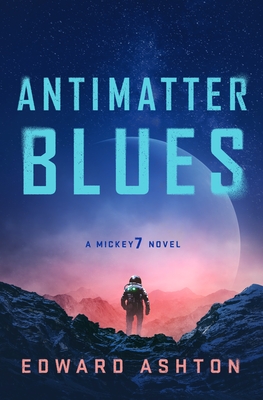
ANTIMATTER BLUES, Edward Ashton's second Mickey7 novel

ANTIMATTER BLUES (Mickey7 #2)
EDWARD ASHTON
St. Martin's Press (non-affiliate Amazon link)
$11.99 ebook, available now
Rating: 4* of five
The Publisher Says: Summer has come to Niflheim. The lichens are growing, the six-winged bat-things are chirping, and much to his own surprise, Mickey Barnes is still alive―that last part thanks almost entirely to the fact that Commander Marshall believes that the colony’s creeper neighbors are holding an antimatter bomb, and that Mickey is the only one who’s keeping them from using it. Mickey’s just another colonist now. Instead of cleaning out the reactor core, he spends his time these days cleaning out the rabbit hutches. It’s not a bad life.
It’s not going to last.
It may be sunny now, but winter is coming. The antimatter that fuels the colony is running low, and Marshall wants his bomb back. If Mickey agrees to retrieve it, he’ll be giving up the only thing that’s kept his head off of the chopping block. If he refuses, he might doom the entire colony. Meanwhile, the creepers have their own worries, and they’re not going to surrender the bomb without getting something in return. Once again, Mickey finds the fate of two species resting in his hands. If something goes wrong this time, though, he won’t be coming back.
I RECEIVED A DRC FROM THE PUBLISHER VIA NETGALLEY. THANK YOU.
My Review: I AM A VERY BAD MAN. I read this book in November 2022, made some notes on a document last computer, and...brain being its usual saboteur self...filed it as "done and dusted" thus forgetting to write an actual review.
Thank all those useless gods I never delete documents.
This is textbook idiotry. Guard against this carelessness, all y'all, and you will maintain your good standing with the review aggregators. Perfectionism is Public Enemy #1 for book reviewers, that is if they want to have their pick of the goodest of the good stuff to read. I am super lucky in that I do get a lot of excellent reads, but a chunk of disappointing turndowns too.
But enough about me, let's discuss Author Ashton's second Mickey7 novel. Well...this is Blogger so no one can talk to me here so I'm more or less soliloquizing. Still.
I hope you've read Mickey7 and seen Mickey 17 by now. If not I strongly urge you to do so; the latter in a theater. I'll say that the film deserves a sequel mostly because Niflheim is such a great visual experience, and seeing that cast (as necessarily amended) perform this story would be a major hoot. Robert Pattinson's endearing turn as an Expendable reformed many many times...eighteen to be precise...was pitch-perfect. This idea of slave labor made palatable to bourgeois sensibilities by being done by not-quite humans is one I've enjoyed since encountering it in Doctor Who's Eleventh Doctor episode "The Almost People" in 2011. I'm quite sure the earlier written versions, eg Cordwainer Smith's Scanners or the opposite end of the social scale of Richard K. Morgan's "Meths,", provided some inspiration for the Expendables and are due a lot of credit, but for me seeing the embodiment of the slave class as people-but-not-quite created by technology was a key a-ha moment.
Mickey7, now back to being Mickey Barnes after the events of the first book, is no longer considered an Expendable. He is also now the only person on Niflheim who can communicate with the planet's aboriginal inhabitants, the creepers. Interspecies harmony is, as always seems to be the case when equals share territory, conditional and intermittent. As this story opens, things are about to bust into open conflict because the creepers have The Bomb, just as the colonists need to use it for the fuel they'll need to survive a Niflheim winter. (Funny how it's always okay for the colonizers to have The Bomb but never the aboriginals.)
Hijinks of the bloodiest, most lethal sort seem destined to ensue. Of course the whole plot hinges on whether and how they ensue, or don't, and whether poor schlemiel Mickey7 (no more intellectually gifted now he's no longer considered an Expendable) can get The Bomb's urgently needed fissile material back from the very anxious creepers.
As he can communicate with them after a fashion, he's privy to a fact...the creepers seem to have another enemy besides the colonists...that could bring about a more secure peace as well as get The Bomb's fissile material back before winter comes to freeze the colonists into personcicles. Nothing like ganging up on a common enemy to create a warm glow of camaraderie, is there.
Shorter and lighter than Mickey7, this read was from the off one I'd hold to a lower standard. It's truly as fun a read as the first was, it's a solidly executed plot, and it has the great good fortune of lifting a lighter psychic load than its older sibling. Most of the hardest to explain stuff is already explained. We're more about learning Mickey7's mannerisms and exploring his human limitations. I think it was a lot less substantive (not always a bad thing), and as stated above, would greatly enjoy a film of it. Not very likely as Director Bong's not a maven for sequels.
The ethical considerations of colonialism are less weighty than those of slavery to my mind. That makes this story a very easy-to-enjoy diversion.
Saturday, April 5, 2025
THE FOURTH CONSORT, latest sci-fi funfest with a serious well-made point from Edward Ashton

THE FOURTH CONSORT
EDWARD ASHTON
St. Martin's Press (non-affiliate Amazon link)
$14.99 ebook, available now
Rating: 4* of five
The Publisher Says: A new standalone sci-fi novel from Edward Ashton, author of Mickey7 (the inspiration for the major motion picture Mickey 17).
Dalton Greaves is a hero. He’s one of humankind’s first representatives to Unity, a pan-species confederation working to bring all sentient life into a single benevolent brotherhood. That’s what they told him, anyway. The only actual members of Unity that he’s ever met are Boreau, a giant snail who seems more interested in plunder than spreading love and harmony, and Boreau’s human sidekick, Neera, who Dalton strongly suspects roped him into this gig so that she wouldn’t become the next one of Boreau’s crew to get eaten by locals while prospecting.
Funny thing, though—turns out there actually is a benevolent confederation out there, working for the good of all life. They call themselves the Assembly, and they really don’t like Unity. More to the point, they really, really don’t like Unity’s new human minions.
When an encounter between Boreau’s scout ship and an Assembly cruiser over a newly discovered world ends badly for both parties, Dalton finds himself marooned, caught between a stickman, one of the Assembly’s nightmarish shock troops, the planet’s natives, who aren’t winning any congeniality prizes themselves, and Neera, who might actually be the most dangerous of the three. To survive, he’ll need to navigate palace intrigue, alien morality, and a proposal that he literally cannot refuse, all while making sure Neera doesn’t come to the conclusion that he’s worth more to her dead than alive.
Part first contact story, part dark comedy, and part bizarre love triangle, The Fourth Consort asks an important how far would you go to survive? And more importantly, how many drinks would you need to go there?
I RECEIVED A DRC FROM THE PUBLISHER VIA NETGALLEY. THANK YOU.
My Review: My god, what a place Author Ashton's head is. A ruthless, greedy giant snail, a human diplomat of murky ethics, a race of only vaguely comprehensible planetary natives so protocol-obsessed that it can be lethal to say "hello" in the wrong way...who also just so happen to have murderously invaded Earth in Dalton's lifetime. Oh, and Dalton's kinda coerced as a condition of not being killed to become the consort of their ruler. The fourth consort...and let's not get into why he's fourth.
Dalton's a Swiss-Army knife of a guy. He studied engineering...most practical people in the world, engineers...he was a soldier/POW in the invasion, a tech bro, and now works for a Galaxy-wide org that needs him as a first-contact specialist. You can see how this trajectory launched. Now that he's out doing the stuff he was hired by the Unity for, it's kind of a rude awakening. It always is when your principles and your training all get engaged with the messy, disorganzed systemless world. (That engineering background becoming even more valuable in these circs.)
What happens when the Great Awakening comes? When you are forced by events to re-evaluate everything that underpins your view of the world? You question yourself first, but assuming you're pretty well-educated, that answers only a fraction of your new questions. Permaybehaps you're not on the side of Right and Reason after all?
Poor Dalton's doing this questioning among people who will eat his flesh...his spirit's probably not very nourishing just at that moment locked as it is in crisis. His situation is rife with possibilities for own goals, and unsurprisingly there are a few. The thrust of the story, though, is the act of questioning the reality of your assumptions in the face of countervailing evidence. Dalton, using copious amounts of sarcasm and not a little facetiousness, has the courage to do this. It helps him, and us, that he's worked his whole adulthood troubleshooting systems. Better training for analysis I can't conjure.
The role of honor and duty is large in the story. Largely, it must be said, in its absence when most required. Dalton's got trouble on every side because of this absence among those meant to have his back. It resembles our own hypercapitalist world in this way. Dalton's troubles, I will say, are external; the struggling he does is, too, so I never felt I was with him in his sea of woe. I'm an observer of the results, not a participant in the process.
This is not a knock. The fact is I'm not here for that story, I'm here for a fun action-romp that takes me over some very interesting terrain. I thoroughly enjoyed seeing Dalton navigate the choppy waters of Reality in a skiff formed of principles (his) and held together by pressures (the Unity's). The story does this job very well indeed, though with rather less characterization of side characters than I prefer (hence a missing half-star) Getting us through this plot, however, militated against the time needed being spent that way. That said, I was aware of wanting to spend more time with the second and third consorts and less with his fellow Unity operative. The other missing half-star comes from Dalton's attitude of..."kindness and acceptance" sounds better than "craven lickspittle sycophancy" doesn't it...for a character who does NOT deserve it. I get why Author Ashton made that choice but I do not agree with it to the point of getting frothingly furious at the way it plays out. I shouted at my Kindle from 97% on.
On balance, which I confess I lost along the way, I was amused and entertained by our hypercapitalist snail (as a former veggie gardener I'm here to tell you a better metaphor for the kind of greedy shit who runs an economy solely for personal gain there has never been), by the second and third consorts, and the rest of the cast...telling that I can't remember their names, eh what? (Wait, "Breaker" was one, I think.)
I devoutly hope Author Ashton's name is familiar to you by now from the film of his book Mickey7 (link to my review of it above). I thought that story was terrific. I think this story is, too, with minor reservations that do not vitiate the pleasures I found in the read.
Sunday, March 23, 2025
SPLINTER EFFECT, watch out St Mary's! New kid is in town

SPLINTER EFFECT (Splinter Effect #1)
ANDREW LUDINGTON
Minotaur Books (non-affiliate Amazon link)
$14.99 ebook, available now
Rating: 4* of five
The Publisher Says: In this action-packed debut, time traveling archaeologist Rabbit Ward maneuvers through the past to recover a long-lost, precious menorah hiding out in ancient Rome.
Smithsonian archaeologist Rabbit Ward travels through time on sponsored expeditions to the past to secure precious artifacts moments before they are lost to history. Although exceptional at his job, Rabbit is not without faults. In a spectacular failure twenty years ago, he lost both the menorah of the second temple and his hot-headed mentee, Aaron. So, when new evidence reveals the menorah’s reappearance in 6th century Constantinople, Rabbit seizes the chance for redemption.
But from the moment he arrives in the past, things start to go wrong. Rabbit quickly finds out that his prime competition, an unlicensed and annoyingly appealing “stringer” named Helen, is also in Constantinople hunting the menorah. And that’s only the beginning. The oppressed Jewish population of the city is primed for revolution, Constantinople’s leading gang seems to have it out for Rabbit personally, and someone local is interested enough in the menorah to kill for it.
As the past closes in on him and his previous failures compound, will Rabbit be able to recover the menorah before it's once again lost in time?
With new and old dangers alike hiding behind every corner, time might just be up for Rabbit’s redemption—and possibly his life.
I RECEIVED A DRC FROM THE PUBLISHER VIA NETGALLEY. THANK YOU.
My Review: Jodi Taylor's St Mary's series might need to smarten up their extremely British...let's be honest, English...monomania if Rabbit of the Smithsonian catches on. Much as I love Max, Peterson, and Markham, they need some competition, and here they've got it.
Opening at (one of the several events leading to) the burning of the Library of Alexandria was a genius bait-and-switch. By itself that is an event I would, and have, eagerly read a book about, but here it's only a teaser for Rabbit and his relationship to the Smithsonian. Time travel, inherently threatening to powerful people, is here presented as a tech tightly wrapped in rules. Of course these favor the status quo, and the very, very rich. But I repeat myself...Rabbit's a nepo baby with some time-travel failures behind him including a search for the maguffin in this book, the menorah stolen by Rome from the Jews. It's a real white-whale tale, and not just for Rabbit.
Helen, his antagonist, is also hot for this (solid-gold) candelabra of god's. She's not at all as well-developed as Rabbit is, and frankly I hope they drop her in any future iterations of the book...I didn't like Clive Ronan either (IYKYK). Their reasons aren't explored. I don't think they matter. After all, it's made of gold so greed's more than enough. Here's probably a good place to note that the world as we know it is part of a multiverse. In this splinter (note resemblance to title), there's legal-but-restricted time travel. In others, there's none whether legal or not. You see how immense this storyverse is? Imagine for a moment the things a writer can do in this sandbox!
Earlier versions of this idea have mostly centered around the Time Patrol (Poul Anderson) or The Paratime Police (H. Beam Piper) tasked with preventing anyone from causing time loops or retrocausal gubbins or generally being dickish to our hominin ancestors. (I think it's telling that intertemporal stories about Homo sapiens interacting with any earlier species, or even earlier time in history, all contain some fraud or slavery elements.)
Here the only thing remotely criminal is, arguably, the richest benefiting from Rabbit and his ilk going into the past to retrieve things that're lost to history by idiotic violence, sheer human stupidity, or Earth's natural processes (eg, earthquakes or fires). I'm not squeamish enough about this to give the book a black mark. I *am* squeamish about young, hot Helen being Rabbit's nemesis and Doctor PJ being his girlfriend, because absolutely nothing can be left un-romance-ified and of course that means heterosexual. Ugh. There went a half-star. (Though, to be fair, there are hints that Rabbit himself might be, um, heteroflexible.)
The other half-star disappeared because, though I liked the richly detailed world of 536 Constantinople a lot, I'd've liked more people instead of labels talking. It feels more like infidumping when I have no idea who "the customs official" or any of the other so-yclept faceless ones are. Still, four stars is the absolute minimum a book with this ending could possibly receive. Even moreso because, if this isn't a series-starter, I'll eat my hat for breakfast without ketchup.
I'll be right here waiting for more Rabbit. Without a ketchup bottle.
Thursday, September 26, 2024
Dungeon Crawler World: DUNGEON CRAWLER CARL & CARL'S DOOMSDAY SCENARIO

DUNGEON CRAWLER CARL (Dungeon Crawler Carl #1)
MATT DINNIMAN
Ace Books
$30.00 hardcover, available now
Rating: 3.25* of five
The Publisher Says: The apocalypse will be televised! Welcome to the first book in the wildly popular and addictive Dungeon Crawler Carl series by Matt Dinniman—now with bonus material exclusive to this print edition.
You know what’s worse than breaking up with your girlfriend? Being stuck with her prize-winning show cat. And you know what’s worse than that? An alien invasion, the destruction of all man-made structures on Earth, and the systematic exploitation of all the survivors for a sadistic intergalactic game show. That’s what.
Join Coast Guard vet Carl and his ex-girlfriend’s cat, Princess Donut, as they try to survive the end of the world—or just get to the next level—in a video game–like, trap-filled fantasy dungeon. A dungeon that’s actually the set of a reality television show with countless viewers across the galaxy. Exploding goblins. Magical potions. Deadly, drug-dealing llamas. This ain’t your ordinary game show.
Welcome, Crawler. Welcome to the Dungeon. Survival is optional. Keeping the viewers entertained is not.
I RECEIVED A DRC FROM THE PUBLISHER VIA NETGALLEY. THANK YOU.
My Review: Samuel Beckett's absurdist humor meets The Truman Show by way of Cat Valente's Space Opera, but streamed on Twitch.
If any of that didn't make sense, this might not be the read for you. Wait for the TV show. They'll dumb that down.
Humor is the most difficult thing to review, since you are guaranteed not to think what makes me laugh is funny. Likewise, I'm sure. Princess Donut the cat was a sarcastic, clueless hoot. And I hate cats!
This is a video game, so you know. It didn't originate as one, but it really hit the same cultural nerve.

Boy howdy, did Dinniman hit an artery! A TV deal with Seth MacFarlane's company is the latest...before that the book's self-published editions sold well, his Kickstarter for deluxe hardcovers went past goal. There's something here that spoke to those under forty in stentorian tones.
I think you already know if you'll like this one, and I'm here to assure you you're right.
++++++++++++++++++++++++++++++++++++++++++++++++++++++++++++++++

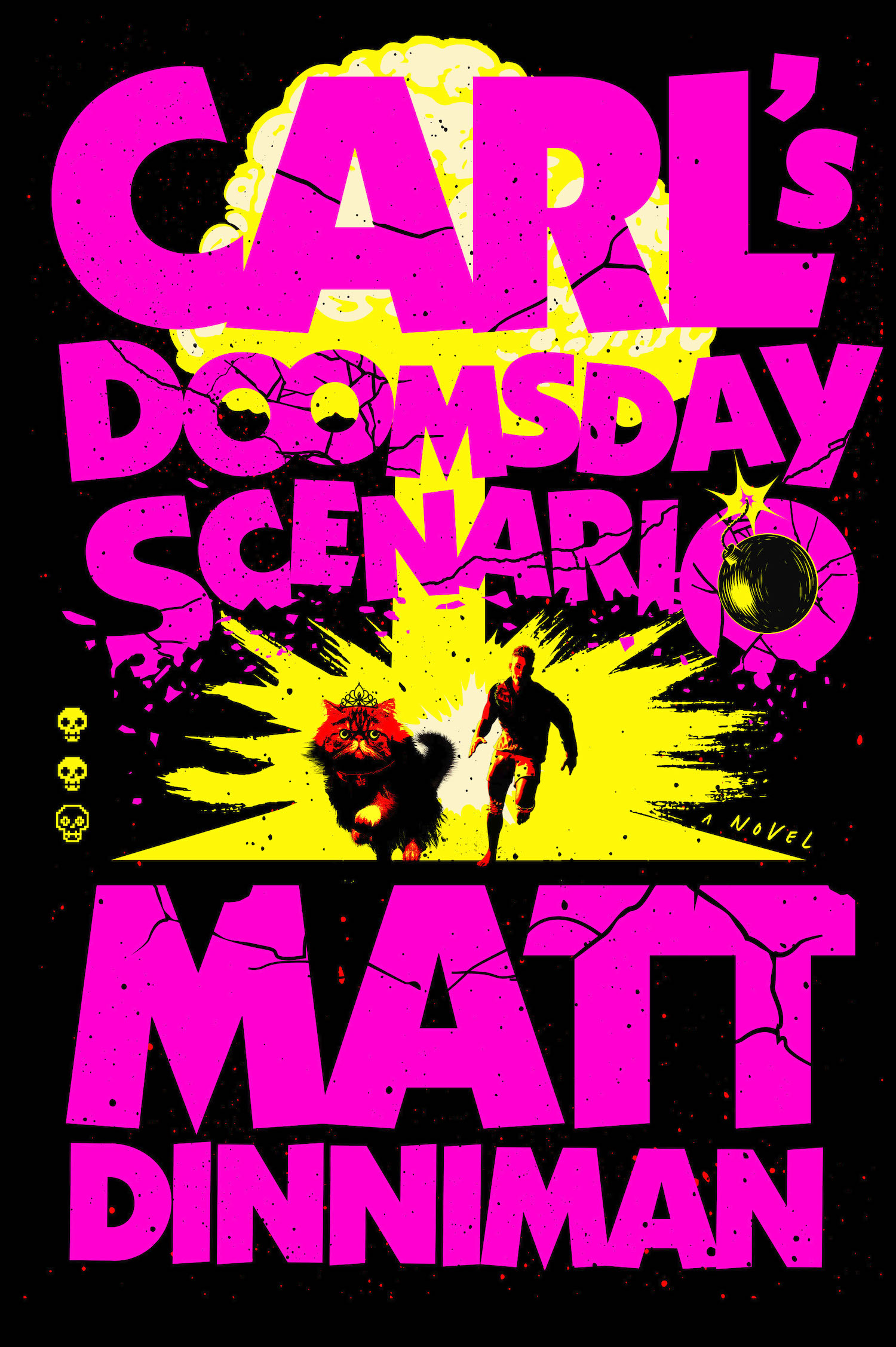
CARL'S DOOMSDAY SCENARIO (Dungeon Crawler Carl #2)
MATT DINNIMAN
Ace Books
$30.00 hardcover, available now
Rating: 3* of five
The Publisher Says: "The training levels have concluded. Now the games may truly begin."
The ratings and views are off the chart. The fans just can't get enough. The dungeon gets more dangerous each day. But in a grinder designed to chew up and spit out crawlers by the millions, Carl and Princess Donut need to work harder than ever just to survive.
They call it the Over City. A sprawling, once-thriving metropolis devastated by a mysterious calamity. But these streets are far from abandoned. An undead circus trawls the ruins. Murdered prostitutes rain from the sky. An ancient spell is finally ready to reveal its dark purpose.
Carl still has no pants.
They call it Dungeon Crawler World. For Carl and Donut, it's anything but a game.
I RECEIVED A DRC FROM THE PUBLISHER VIA NETGALLEY. THANK YOU.
My Review: Reading something I liked, but didn't love, then its sequel, in less than a week was a bad decision. Princess Donut really worked my nerve this time, and not because she's a cat.
I'm not a gaymer. I've never kept my focus long enough to care about these games on screen, but the way they deliver the human addiction to story is pure and uncut. Is this a good exemplar of the text version of it? Since I read them both, and never even finished Ready Player One, I'm goin' with yes. The grace notes in this story are the basic reason I kept my eyes on the Kindle. Small things, deliberately planted, all through both books...this made me want to keep reading past the annoyance of the absurdities Carl and Princess Donut get up to, into, and yak on about.
I said it above: "I think you already know if you'll like this one, and I'm here to assure you you're right."
Friday, May 7, 2021
HENCH, or let's take "What the HELL Happened Here?!" to the next level
HENCH
NATALIE ZINA WALSCHOTS
Watch the inimitable Nancy Pearl interview Author Walschots here!
William Morrow
$27.99 hardcover, available now
Rating: 4.5* of five
The Publisher Says: A smart, imaginative, and evocative novel of love, betrayal, revenge, and redemption, told with razor-sharp wit and affection, in which a young woman discovers the greatest superpower—for good or ill—is a properly executed spreadsheet.
Anna does boring things for terrible people because even criminals need office help and she needs a job. Working for a monster lurking beneath the surface of the world isn’t glamorous. But is it really worse than working for an oil conglomerate or an insurance company? In this economy?
As a temp, she’s just a cog in the machine. But when she finally gets a promising assignment, everything goes very wrong, and an encounter with the so-called “hero” leaves her badly injured. And, to her horror, compared to the other bodies strewn about, she’s the lucky one.
So, of course, then she gets laid off.
With no money and no mobility, with only her anger and internet research acumen, she discovers her suffering at the hands of a hero is far from unique. When people start listening to the story that her data tells, she realizes she might not be as powerless as she thinks.
Because the key to everything is data: knowing how to collate it, how to manipulate it, and how to weaponize it. By tallying up the human cost these caped forces of nature wreak upon the world, she discovers that the line between good and evil is mostly marketing. And with social media and viral videos, she can control that appearance.
It’s not too long before she’s employed once more, this time by one of the worst villains on earth. As she becomes an increasingly valuable lieutenant, she might just save the world.
A sharp, witty, modern debut, Hench explores the individual cost of justice through a fascinating mix of Millennial office politics, heroism measured through data science, body horror, and a profound misunderstanding of quantum mechanics.
I CHECKED THIS BOOK OUT OF MY LOCAL LIBRARY. SUPPORT YOUR LIBRARY, FOLKS! USE THEM OFTEN!
My Review: Several book ideas later, Author Walschots realized they all fit into one if she used a different frame...
I will make no bones about or apologies for my complete disdain for superhero crap. It's a bad social message. It's worse storytelling. The violence it does to physics and reality is incalculable.
Hey wait! I found *another* level of this book!
That this is a first novel is astonishing. That it is an assured and deft flensing of Western fascism and capitalism is a joy. That I am finding it now, nine months after William Morrow unleashed it on the US, is shocking. This should've flown at me, beating my head with its hard covers, demanding that it enter my consciousness long before now. Alas, the library wait-list was deep. I'm both glad and irked, because that means a lot more people have read it than might otherwise have been able to.
So, two reads in two weeks, and what I take away from it is: Love sucks.
Superhero stories are about loving someone who doesn't, can't, love you back. Part of the joke in Hench is that they cause such horrendous collateral damage because they're unmoored by love, unable to imagine the reality of other people that love demands of us. Superheros, by anyone's definition, are psychopaths. Supervillains, on the other hand, are sociopaths. The definitions aren't hard to grasp, and the conclusions are inescapable. Here we are in the world, the gig economy, that supports the supervillains...the henches, not the Meat, the bastards whose bodies are ripped and torn in the myriad of comic pages, bits flung here and there as X battles Y:
Amusing, no? The Meat willingly serves the purpose, offers their flesh to the mills of the gods. Make jokes about how they're a better grade of Meat.
But think about that. Really, for once, think about that: this is what it costs to be alive but average, or less, in this world. To have unlucky parentage. To be lower than the lowest edge of the 1%:
This is the thing I've always known but never articulated: The reason I loathe comic books and superhero movies is that I am bitterly opposed to the presumptious and wrongheaded notion that one asshole in a stupid outfit knows better than centuries of legal checks and balances. Yes, indeed, the Law fails; "The law often allows what honor forbids" said Bernard-Joseph Saurin, and his Ancien Régime ass knew what he was talkin' about. But someone needs to explain to me why vigilantism is in any way superior to letting the law do its slow, imperfect, maddeningly unjust work.
Apologizing to corpses is pointless.
But I digress. Hench gave me many moments such as this, the ones that led me down well-worn mental paths of outrage and indignation at the Way Things Are because it's manifestly rigged against ordinary people. The Henches and the Kicks (superheroes's sidekicks) aren't ever going to come out whole and will never entirely accept that they are not part of any future the supers concoct.
Women reading this screed: Yes, I know this is the lived experience of almost all of you.
And there it is. The simplest reduction of male privilege there can be. She's better, smarter, more capable? Get her on the team and make sure she knows she's a girl, a second-class version of a Man. I have always known women were stronger than men; birth proves it. Watch a woman in labor for twelve, fourteen endless, hard-working, rest-less hours. Then tell me she's weak. Watch a woman whose body is hemorrhaging do her job anyway, despite the painful contractions and loss of blood. Roll your eyes, puny man, accuse her of being lesser; but you damn sure couldn't do what she does.
So that said, Hench's women are all about moving around the obstacles that Male Ego presents them; and doing it with purpose, and focus, and dogged determination. (Make a woman hate you at your peril.) The battles are quite revoltingly realistic in their description. There is very significant body horror. There is a lot of screaming, from all concerned, and there is a deeply felt accusation underpinning it all:
A bit on-the-nose, but valid. The Superheroes are diamonds, tacky brummagem things, capable of being synthesized in labs by the gross but sold to the hoi polloi as the Greatest! Thing!! EVER!!! and they accept it.
We accept it.
It isn't in us to refuse. The System has wound itself tightly about our every single neuron:
Fighting free involves losing one's sense of purpose, as The Auditor (our PoV character, Anna) discovers:
The problem this fucked-up system we all acquiesce to is best at producing in bulk is just this, a misery so porfound that it's actually soul-destroying. This sense that we are all being cheated, denied, made fools of by the things we're told to value and given no way to engage with from a place of wholeness.
There was a lovely call-out to Mae West's famous line about diamonds that made me laugh out loud; there was a very sly reference to the MCU in all its acronymic glory; and there was, at the end of the read, a sense in this particularly old reader that there is indeed a reason to hope the future will not happen without witnesses to its glorious excesses.
I'll now take a brief personal moment to screech in revulsion about the two w-bombs dropped by Author Walschots at 9% and 50%. Only cost her half a star, though, because so much else was so delicious.
NATALIE ZINA WALSCHOTS
Watch the inimitable Nancy Pearl interview Author Walschots here!
William Morrow
$27.99 hardcover, available now
Rating: 4.5* of five
The Publisher Says: A smart, imaginative, and evocative novel of love, betrayal, revenge, and redemption, told with razor-sharp wit and affection, in which a young woman discovers the greatest superpower—for good or ill—is a properly executed spreadsheet.
Anna does boring things for terrible people because even criminals need office help and she needs a job. Working for a monster lurking beneath the surface of the world isn’t glamorous. But is it really worse than working for an oil conglomerate or an insurance company? In this economy?
As a temp, she’s just a cog in the machine. But when she finally gets a promising assignment, everything goes very wrong, and an encounter with the so-called “hero” leaves her badly injured. And, to her horror, compared to the other bodies strewn about, she’s the lucky one.
So, of course, then she gets laid off.
With no money and no mobility, with only her anger and internet research acumen, she discovers her suffering at the hands of a hero is far from unique. When people start listening to the story that her data tells, she realizes she might not be as powerless as she thinks.
Because the key to everything is data: knowing how to collate it, how to manipulate it, and how to weaponize it. By tallying up the human cost these caped forces of nature wreak upon the world, she discovers that the line between good and evil is mostly marketing. And with social media and viral videos, she can control that appearance.
It’s not too long before she’s employed once more, this time by one of the worst villains on earth. As she becomes an increasingly valuable lieutenant, she might just save the world.
A sharp, witty, modern debut, Hench explores the individual cost of justice through a fascinating mix of Millennial office politics, heroism measured through data science, body horror, and a profound misunderstanding of quantum mechanics.
I CHECKED THIS BOOK OUT OF MY LOCAL LIBRARY. SUPPORT YOUR LIBRARY, FOLKS! USE THEM OFTEN!
My Review: Several book ideas later, Author Walschots realized they all fit into one if she used a different frame...
I will make no bones about or apologies for my complete disdain for superhero crap. It's a bad social message. It's worse storytelling. The violence it does to physics and reality is incalculable.
Hey wait! I found *another* level of this book!
That this is a first novel is astonishing. That it is an assured and deft flensing of Western fascism and capitalism is a joy. That I am finding it now, nine months after William Morrow unleashed it on the US, is shocking. This should've flown at me, beating my head with its hard covers, demanding that it enter my consciousness long before now. Alas, the library wait-list was deep. I'm both glad and irked, because that means a lot more people have read it than might otherwise have been able to.
So, two reads in two weeks, and what I take away from it is: Love sucks.
Superhero stories are about loving someone who doesn't, can't, love you back. Part of the joke in Hench is that they cause such horrendous collateral damage because they're unmoored by love, unable to imagine the reality of other people that love demands of us. Superheros, by anyone's definition, are psychopaths. Supervillains, on the other hand, are sociopaths. The definitions aren't hard to grasp, and the conclusions are inescapable. Here we are in the world, the gig economy, that supports the supervillains...the henches, not the Meat, the bastards whose bodies are ripped and torn in the myriad of comic pages, bits flung here and there as X battles Y:
Our own tactical team members, Leviathan’s grade-A Meat (they tended to refer to themselves as Filet Mignon)...
Amusing, no? The Meat willingly serves the purpose, offers their flesh to the mills of the gods. Make jokes about how they're a better grade of Meat.
But think about that. Really, for once, think about that: this is what it costs to be alive but average, or less, in this world. To have unlucky parentage. To be lower than the lowest edge of the 1%:
I was beginning to nurse a feeble hope that maybe, just maybe, that gratitude he was feeling might blossom into a full-time position. Maybe one day I would be able to visit a dentist again.
–and–
Every day, the cost added up. Every day I couldn’t work, or move; every day that passed in a haze of pain and obsessive misery-making added to the total.
–and–
Maybe a lot of those years wouldn’t have been terribly good, and would have involved a lot of busting heads and driving recklessly and working for villains. But they were our shitty years, and they’d been taken from us by an asshole in a cape playing judge and executioner.
This is the thing I've always known but never articulated: The reason I loathe comic books and superhero movies is that I am bitterly opposed to the presumptious and wrongheaded notion that one asshole in a stupid outfit knows better than centuries of legal checks and balances. Yes, indeed, the Law fails; "The law often allows what honor forbids" said Bernard-Joseph Saurin, and his Ancien Régime ass knew what he was talkin' about. But someone needs to explain to me why vigilantism is in any way superior to letting the law do its slow, imperfect, maddeningly unjust work.
Apologizing to corpses is pointless.
But I digress. Hench gave me many moments such as this, the ones that led me down well-worn mental paths of outrage and indignation at the Way Things Are because it's manifestly rigged against ordinary people. The Henches and the Kicks (superheroes's sidekicks) aren't ever going to come out whole and will never entirely accept that they are not part of any future the supers concoct.
Women reading this screed: Yes, I know this is the lived experience of almost all of you.
“You know what’s more criminal than anything I have ever done? That you’ve been overshadowed by that lantern-jawed cock-wit when you’re obviously better than him in every imaginable way.”
Pain crossed her face. “Well. No one is willing to make some bitch the head of the greatest superhero team in the world.”
–and–
Her face was extraordinary. She was Grendel’s mother; she was vengeance incarnate. If she’d had any doubt about what she was doing haunting the edges of her actions, all of that was burned up now.
And there it is. The simplest reduction of male privilege there can be. She's better, smarter, more capable? Get her on the team and make sure she knows she's a girl, a second-class version of a Man. I have always known women were stronger than men; birth proves it. Watch a woman in labor for twelve, fourteen endless, hard-working, rest-less hours. Then tell me she's weak. Watch a woman whose body is hemorrhaging do her job anyway, despite the painful contractions and loss of blood. Roll your eyes, puny man, accuse her of being lesser; but you damn sure couldn't do what she does.
So that said, Hench's women are all about moving around the obstacles that Male Ego presents them; and doing it with purpose, and focus, and dogged determination. (Make a woman hate you at your peril.) The battles are quite revoltingly realistic in their description. There is very significant body horror. There is a lot of screaming, from all concerned, and there is a deeply felt accusation underpinning it all:
Supercollider had a great deal in common with a diamond: aesthetically tacky; value artificially ascribed by corporate greed; cultural significance vastly overinflated; and incredibly hard to damage. I’d theorized that the only thing really capable of hurting him would be himself, the way that diamond was used to cut diamond.
A bit on-the-nose, but valid. The Superheroes are diamonds, tacky brummagem things, capable of being synthesized in labs by the gross but sold to the hoi polloi as the Greatest! Thing!! EVER!!! and they accept it.
We accept it.
It isn't in us to refuse. The System has wound itself tightly about our every single neuron:
Not only were heroes responsible for all of the damage and injury they caused, they were even responsible for creating the villains they fought.
Fighting free involves losing one's sense of purpose, as The Auditor (our PoV character, Anna) discovers:
I wondered if I was jealous. I wished suddenly that I could see my own feelings with as much clarity as I now saw the ultraviolet spectrum.
–and–
"...My husband didn’t give a damn whether the work I was doing was noble as long as it appeared to be. When I killed someone then—something I did a lot more than I do now—it was for the greater good. It was such bullshit. So the second the pretense was gone, so was he. I didn’t need that.”
–and–
“He didn’t try and hide it.” He closed his eyes when he spoke this line, grabbed the podium for support.
“He didn’t care enough.”
This was the clip they played, over and over, the force of his misery making him sway.
The problem this fucked-up system we all acquiesce to is best at producing in bulk is just this, a misery so porfound that it's actually soul-destroying. This sense that we are all being cheated, denied, made fools of by the things we're told to value and given no way to engage with from a place of wholeness.
There was a lovely call-out to Mae West's famous line about diamonds that made me laugh out loud; there was a very sly reference to the MCU in all its acronymic glory; and there was, at the end of the read, a sense in this particularly old reader that there is indeed a reason to hope the future will not happen without witnesses to its glorious excesses.
I'll now take a brief personal moment to screech in revulsion about the two w-bombs dropped by Author Walschots at 9% and 50%. Only cost her half a star, though, because so much else was so delicious.
Subscribe to:
Posts (Atom)