Thursday, March 20, 2025

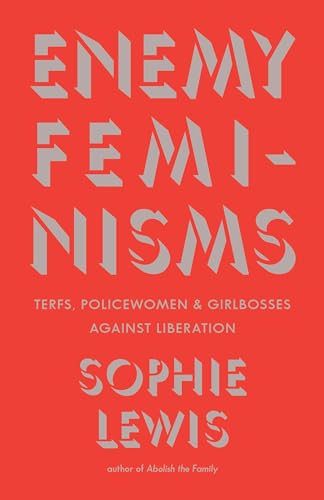
ENEMY FEMINISMS: TERFs, Policewomen, and Girlbosses Against Liberation, challenging and emotionally difficult read...necessary, too


ENEMY FEMINISMS: TERFs, Policewomen, and Girlbosses Against Liberation
SOPHIE LEWIS

Haymarket Books (non-affiliate Amazon link)
$9.99 ebook, available now

Rating: 4* of five

The Publisher Says: From the author of Abolish the Family, a provocative compendium of the feminisms we love to dismiss and making the case for the bold, liberatory feminist politics we’ll need to stand against fascism, nationalism, femmephobia, and cisness.

In recent years, “white feminism” and girlboss feminism have taken a justified beating. We know that leaning in won’t make our jobs any more tolerable and that white women have proven to be, at best, unreliable allies. But in a time of rising fascism, ceaseless attacks on reproductive justice, and violent transphobia, we need to reckon with what Western feminism has wrought if we have any hope of building the feminist world we need.

Sophie Lewis offers an unflinching tour of enemy feminisms, from 19th century imperial feminists and police officers to 20th century KKK feminists and pornophobes to today’s anti-abortion and TERF feminists. Enemy feminisms exist. Feminism is not an inherent political good. Only when we acknowledge that can we finally reckon with the ways these feminisms have pushed us toward counterproductive and even violent ends. And only then can we finally engage in feminist strategizing that is truly antifascist.

At once a left transfeminist battlecry against cisness, a decolonial takedown of nationalist womanhoods, and a sex-radical retort to femmephobia in all its guises, Enemy Feminisms is above all a fierce, brilliant love letter to feminism.

I RECEIVED A DRC FROM THE PUBLISHER VIA EDELWEISS+. THANK YOU.

My Review
: Oh dear. Another excellent, necessary message to everyone in the US lost to a wide audience. I'm in the choir and I still felt hectored, lectured at, and blamed personally by the author's tone.

I did not enjoy the experience.

I can't fault Author Lewis's collection of facts or her citations. Capitalist feminism is indeed a huge existential threat to women's rights. I'd say, however, that the Cult of Mother needed a much, much more savage pounding than capitalism receives. Apparently not one of the author's targets, though, in spite of being so ready to condemn the woman-controlling bodily autonomy denial of abortion restriction.

I question how effective the chapter against "girl-boss" glamorization really is. It's gendered, but is this not a case where celebrating the still-rare sight of women in control of their economic future, and the economy in general, not worth it? I don't think this is the threat to female equality it's presented as, but it's certainly made me consider the issue in a new light. Which, come down to it, is the great strength of this book and books like it, as well as the reason I give it four stars.

So it's style, not substance, that I find unwelcoming and unpleasant. That does not mean I didn't take a lot of positive information, and a hefty amount of psychic homework, away from the read. I found her challenging the hidden enemy in us all bracing and grounds for a lot of self-reflection. Ironic given my whinging about her tone, I know, but in a review for readers I'm not aiming for critical standards of an essay but information, and I hope a shove to get it and read it, for the laity.

Tuesday, March 18, 2025

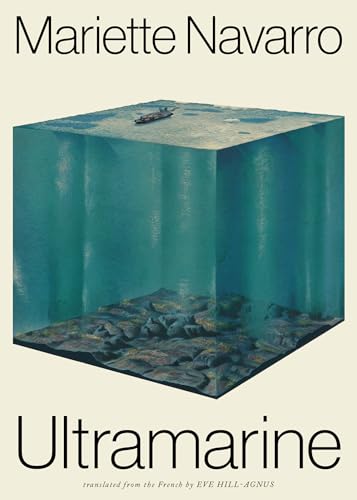
ULTRAMARINE, translated novella that punches way above its weight in impact


ULTRAMARINE
MARIETTE NAVARRO
(tr. Eve Hill-Agnus)
Deep Vellum (non-affiliate Bookshop.org link)
$17.95 all editions, available now

One of Lit Hub’s 43 Favorite Books of 2025!

One of Ancillary Review of Books' 2025 Notable Books!

Rating: 4.5* of five

The Publisher Says: A female captain in a male-dominated field, the unnamed narrator of Ultramarine has secured her success through strict adherence to protocol; she now manages a crew of twenty men and helms her own vessel. Uncharacteristically, one day, she allows her crew to cut the engines and swim in the deep open water. Returning from this moment of leisure, the crew of mariners no longer totals twenty men: now, they are twenty-one.

Sparse and psychological, Ultramarine grips the reader in a tussle with reality, its rhythmic language mimicking the rocking of the boat. As instruments fail, weather reports contradict the senses, and the ship’s navigation mechanisms break down, Navarro “lulls her readers into accepting the unacceptable” (Asymptote) through deft, lyrical prose and pared-down dialogue. In Eve Hill-Agnus's poetic translation, Mariette Navarro emerges as an exciting, mature voice in French literature.

I RECEIVED A DRC FROM THE PUBLISHER VIA EDELWEISS+. THANK YOU.

My Review
: Men led by a woman...really, that right there is subversive enough for one book, isn't it...get an unexpected, uncharacteristic concession to play from Authority. This is odd, but it's nothing compared to what's on the way in this novella.

I'm calling it psychological horror, not suspense, because the point isn't to solve some riddle before A Bad Thing happens; it's about what unsettling things happening around, and to, you as a group, can elicit from the members of the group. I've labeled it "magical realism" as well because the odd things that happen aren't explained, aren't the point, and are very much not of this consensus reality.

The title is a real pleasure. "Ultramarin" in French means the shade of blue, as well as the French colonial possessions that the ship's heading out over the bright blue tropical sea to. It's the role of a cargo ship to serve capitalism's need to get people things to buy. In her sudden subversion of the great Goddess Capitalism's need for Things to arrive so Commerce may eventuate, what is the captain thinking? The market is not being centered in her actions! The men are, wisely, unsettled and even unnerved despite their request for the halt being honored. They have their swim in the blueness of the sea, turning slightly blue with the heat-leaching nature of oceans.

Then, as is usual when unsanctioned fun is had, the price comes due...the extra crewman who just...appears, the end of some perfectly calm weather that enabled their swim, the unraveling of their social order as they contend with the mounting pressures...there is a serious amonut of unease traveling among all the ship's company. In a very odd way they become a "company" in the non-commercial sense only when they are guilty of not serving the company they're employed by; and the captain, a true seafarer in her very bones, for the first time feels herself of the ship's company as the weirdness unfolds.

Fantastical, unsettling, and very very beautiful. Subversively reminds the characters and the reader that. as powerful a religion as Capitalism may be, it is less than nothing set against the power of the sea.

I recommend this very short read to all y'all. It would've gotten the full five had we not, in under 150pp, still had too many points of view and not all of them resolved.

Monday, March 17, 2025

THE LATINA ANTI-DIET: A Dietitian's Guide to Authentic Health that Celebrates Culture and Full-Flavor Living, good, supportive guide to eating


THE LATINA ANTI-DIET: A Dietitian's Guide to Authentic Health that Celebrates Culture and Full-Flavor Living
DALINA SOTO

Ballantine Books (non-affiliate Amazon link)
$14.99 ebook, available now

Rating: 5* of five

The Publisher Says: Break away from diet culture while still honoring your body and incorporating cultural foods in this fresh, expansive guide from the registered dietitian and creator of Your Latina Nutritionist.

Diet culture is facing a reckoning, and intuitive eating has been leading the charge. The movement has taken the internet by storm, encouraging us to stop dieting and make food choices that feel good for our bodies rather than follow influencers and their shakes.

But intuitive eating is missing a key ingredient: culture. Like many movements, intuitive eating has become co-opted by a select few—placing the focus on “mainstream” food while discounting cultural cuisines. But how can we gain a healthy attitude towards food when our foods—our arroz, habichuelas, and plátanos—are left out of the conversation?

Dalina Soto is here to add them back to our plates.

As a registered dietitian, Soto understands the pros and cons of intuitive eating. As a first-generation Dominican American, she’s also seen firsthand how this movement has only catered to a certain demographic. With her easy-to-follow CHULA method, Soto teaches us how to:
  • Challenge negative thoughts
  • Honor our bodies and health
  • Understand our needs
  • Listen to our hunger
  • Acknowledge our emotions
  • She gives us tools to confront diet culture and the whitewashing of food so we can go back to eating what we love while managing our health.

    Engaging and incisive, The Latina Anti-Diet is for everyone who’s been told to lay off the tortillas and swap their white rice for brown. Soto shows us that food is so much more than calories; it’s about celebrating our culture and living a life full of flavor.

    I RECEIVED A DRC FROM THE PUBLISHER VIA NETGALLEY. THANK YOU.

    My Review
    : Food, fat, and flavor start with the same letter for a reason. I'm deeply anti-diet. This book crystalizes my objections to the diet industry's be-afraid-of-your-food message, its relentless focus on women and the concomitant relentless bombardment of negativity about appearance, or more stealthily but with the same objective, relentless "health" messaging that is anything but healthy.

    The author is a social-media Force. She's got followers in droves...legions...and she's been giving this very practical method to get yourself into a healthy, sustainable pattern of eating the food you enjoy for a while now. I hadn't heard of her because I'm not all that interested in diets except to belittle and insult the anti-food goblins that perpetrate and perpetuate the anti-food messaging that damages so many people.

    What else can I say? If you think you need a diet book, you really need this book. Skip the "one weird trick" fads, spend your time and your treasure here. Author Soto is Cicero to the Br'er Rabbits that abound in this space. She spends a deal of her page-count telling stories about those who've used her method...CHULA, explained above...to mend their fractured relationship to food. There's a lot of informative and explanatory text, so it's not just a paper version of an infomercial; the aim was to recreate her social-media presence's warm, approachable presentation of self. I found it effective, and agreeable, where I expected to feel it was kinda cringe.

    *I*, a certifiable curmudgeon with a long-standing hatred of the dietmongers, am rating this book 5 stars and recommending it to people who think they need to diet. Push a pin in that idea until you've read this book.

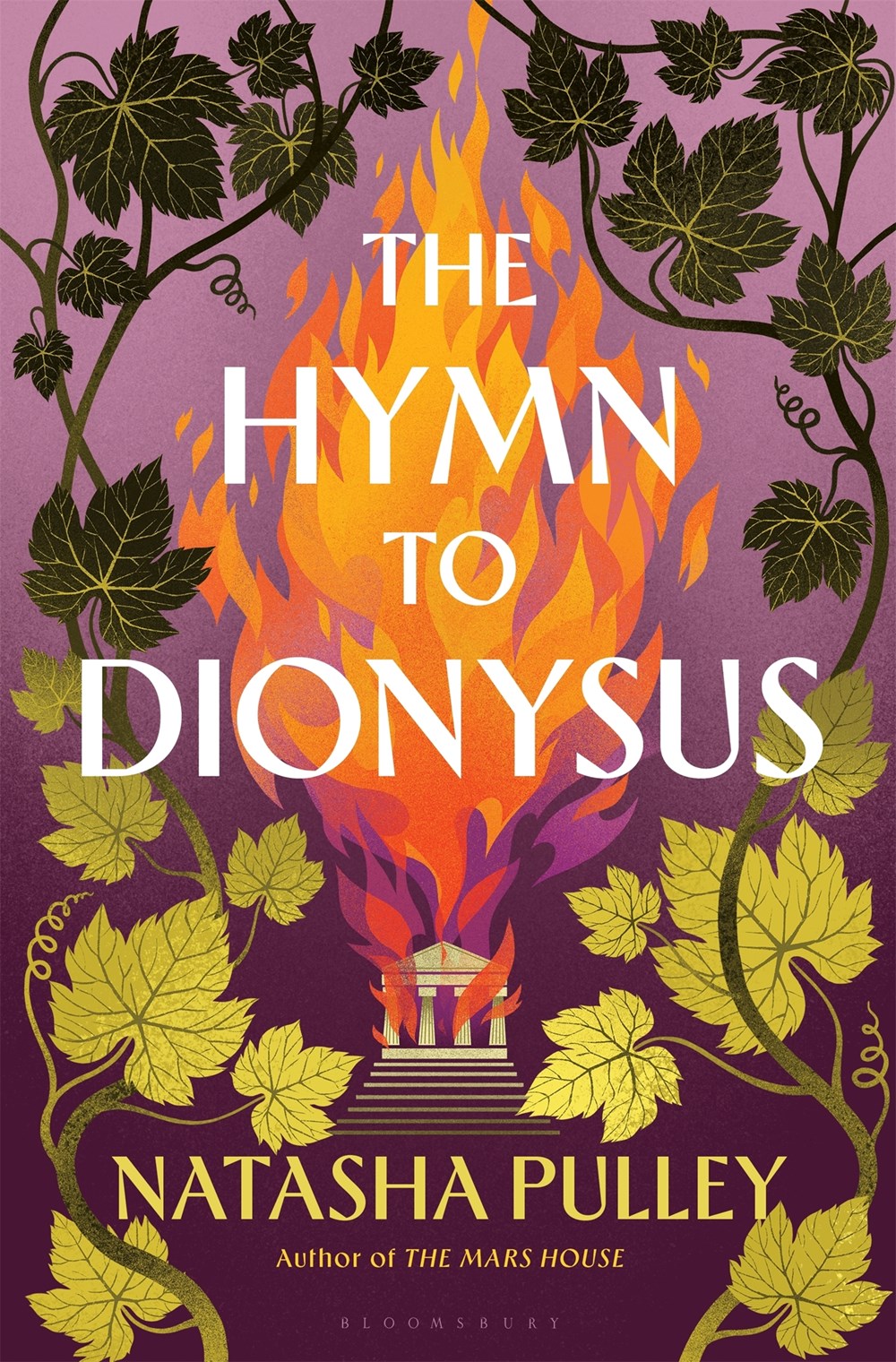
    THE HYMN TO DIONYSUS, Natasha Pulley does the Greek thang...very well, too


    THE HYMN TO DIONYSUS
    NATASHA PULLEY

    Bloomsbury USA (non-affiliate Amazon link)
    $9.99 ebook, available now

    Rating: 4.5* of five

    The Publisher Says: A timely and timeless reimagining of the story of Dionysus, Greek God of ecstasy and madness, revelry and ruin, for readers of The Song of Achilles and Elektra.

    Raised in a Greek legion, Phaidros has been taught to fight for the homeland he’s never seen and to follow his commander’s orders at all costs. But when he rescues a baby from a fire at Thebes’s palace, his commander’s orders cease to make sense: Phaidros is forced to abandon the blue-eyed boy at a temple, and to keep the baby’s existence a secret.

    Years later, after a strange encounter that led to the death of his battalion, Phaidros has become a training master for young soldiers. He struggles with panic attacks and flashbacks, and he is not the only one: all around him, his fellow veterans are losing their minds.

    Phaidros’s risk of madness is not his only problem: his life has become entangled with Thebes’s young crown prince, who wishes to escape the marriage his mother, the Queen, has chosen for him. When the prince vanishes, Phaidros is drawn into the search for him—a search that leads him to a blue-eyed witch named Dionysus, whose guidance is as wise as the events that surround him are strange. In Dionysus’s company, Phaidros witnesses sudden outbursts of riots and unrest, and everywhere Dionysus goes, rumors follow about a new god, one sired by Zeus but lost in a fire.

    In The Hymn to Dionysus, bestselling author Natasha Pulley transports us to an ancient empire on the edge of ruin to tell an utterly captivating story about a man needing a god to remind him how to be a human.

    I RECEIVED A DRC FROM THE PUBLISHER VIA NETGALLEY. THANK YOU.

    My Review
    : Phaidros saves an infant god, fights in an unjust war, gets PTSD from it, and...in later years...gives his skills thus acquired to saving his home city of Thebes (the one in Greece, not the one the Egyptians now call Luxor) and calls in his massive debt from Dionysus the god to...address things.

    Now go buy one. Seriously...you've heard the good bits. It's Natasha Pulley's latest book (notably and annoyingly not the apparently-written sequel to The Half-Life of Valery K.)! What more do you need to know?

    Plot? Already told you. Action? Read the blurb!

    Fine. Spoiled brats. This is not a myth retelling. It's the story of two men a generation apart who truly fall in love, after the whole "he's so dreamy phase ends, and embark on that scariest of things to do, a mature relationship. One's a badly fucked up veteran, the other's...um...maybe divine, certainly an old soul. It bears a solid resemblance to Phaedrus, in that it is a solid and thorough examination of love in its guises, morality, and the intersection of emotion and morality that is Greek spirituality's idea of reincarnation. (Their word for it freaks people in the US right out, so I'm skipping it.) Phaidros is not partcularly like the historical Phaedrus, an Athenian aristocrat who did naughty things against the Mysteries...y'all don't much care, I get it, so the important part of using his name for our Theban hero is his name: It means "Shining" or "Brightening" as in to shine light on or brighten a room.

    Greek names are so cool. They MEAN stuff. Like Plato..."flatface" or, as the Mexicans I knew in childhood used the same idea, "Chato." No big arching nose on you, sir, so you must be lower class! Yet that put-down is the most famous name in Greek philosophy. And Phaidros! Well, no one loves the one who rips the wizard's curtain down, do they? Dionysus the...god? demigod?...beautiful wild creature does, because he is also a force of opposing chaos. Nature is all shadows and shades and spectra. Dionysus is the perfect foil to light-shining Phaidros.

    As a reimagining of Bacchae by Euripides, it's a loose one. It's also, tonally, a bit off. Why do these men speak to each other as modern middle-class Brits? The spark that illuminated Glorious Exploits as it used Dublin-Irish English for ancient Syracusan Greek came from its sly, side-eye commentary on the role of Ireland-v-England as replicated in the colonial war waged by Athens on Syracuse. The characters in this book do not have any comment to make on Thebes by their use of British vernacular, at least not one I can suss out. (That was deliberate.) So off came that half-star.

    Still and all, as a fantastical meditation on Love, love, and their intersection points with morality, responsibility, and the eternal human desire to connect to others, I liked the story a lot. Pulley's trademark men-who-love subplot is again, and expectedly, rendered with all the grace a writer can bring, and deepened by the careful and unobtrusive use of the reincarnation-like connective tissue.

    I hope, though, that this will remain her foray into Classical mundane-meets-magical worlds. It's better left in The Watchmaker of Filigree Street stories. This iteration is just that indefinable bit...off.

    Friday, March 14, 2025

    LUMINOUS, excellent, assured debut near-future SF set in reunified Korea


    LUMINOUS
    SILVIA PARK

    Simon & Schuster (non-affiliate Amazon link)
    $14.99 ebook, available now

    FINALIST for the 2026 Locus Award for FIRST NOVEL!

    NOMINATED for the 2026 Dublin Literary Award...a longlist of twenty will be announced in February 2026, the shortlist of six in April 2026, the winner(s) in May's festival.

    Finalist for the 2025 Los Angeles Times Book Prize for Science Fiction!

    Rating: 4.5* of five

    The Publisher Says: A highly anticipated, sweeping debut set in a unified Korea that tells the story of three estranged siblings—two human, one robot—as they collide against the backdrop of a murder investigation to settle old scores and make sense of their shattered childhood, perfect for fans of Klara and the Sun and We Are All Completely Beside Ourselves.

    In a reunified Korea of the future, robots have been integrated into society as surrogates, servants, children, and even lovers. Though boundaries between bionic and organic frequently blur, these robots are decidedly second-class citizens. Jun and Morgan, two siblings estranged for many years, are haunted by the memory of their lost brother, Yoyo, who was warm, sensitive, and very nearly human.

    Jun, a war veteran turned detective of the lowly Robot Crimes Unit in Seoul, becomes consumed by an investigation that reconnects him with his sister Morgan, now a prominent robot designer working for a top firm, who is, embarrassingly, dating one of her creations in secret.

    On the other side of Seoul in a junkyard filled with abandoned robots, eleven-year-old Ruijie sifts through scraps looking for robotic parts that might support her failing body. When she discovers a robot boy named Yoyo among the piles of trash, an unlikely bond is formed since Yoyo is so lifelike, he’s unlike anything she’s seen before.

    While Morgan prepares to launch the most advanced robot-boy of her career, Jun’s investigation sparks a journey through the underbelly of Seoul, unearthing deeper mysteries about the history of their country and their family. The three siblings must find their way back to each other to reckon with their pasts and the future ahead of them in this poignant and remarkable exploration of what it really means to be human.

    I RECEIVED A DRC FROM THE PUBLISHER VIA NETGALLEY. THANK YOU.

    My Review
    : The world of Luminous is one that *will* come to pass. A lot of it has its early precursors in today's headlines. We've got Roombas scooting around sucking our rugs, we're fighting culture wars over trans folk, there are astonishing advancements in mobility devices, AGI is causing collywobbles across many cultural divides...none of what leads us into Jun, Ruijie, and most of all Yoyo's world is in any way remotely classifiable as more that a few tech refinements away. Absent, of course, the deliberate enshittification of the present-day culture and political consensus.

    This is the storyverse the book works within, the one that arises from the success of today's trends and travails. Limitations put in place to soothe human fears, but not enough to stifle the march of profits...I mean progress...and the remaking of our daily lives to suit realities arising from technology's boons. There are always costs when there are boons. One cost of so many of us living past infancy is feeding (most of) us; one cost of women being educated is there are fewer of us at all. That last is scaring the tech Aynholes of the world as it means fewer slaves to do the stuff they don't want to, and buy the stuff they dream up. It really is an existential fight for them. The answer in this book is to create robots powered by AGI to do most stuff people can't do or don't fancy doing. Make the "fake" humans into more perfect versions of regular men and women, so you can sell more; but then that gets complicated because who will knowingly accept the second-best real human?

    So the problem of slavery is shoved down the food chain. Robots have only the agency we give them. Problem solved, happy/limited scope slaves by the factoryload.

    Nothing is ever that easy.

    Author Park offers us a very well-made look at this not-distant reality's possible fracture lines. I'll paraphrase "Haraway’s Cyborg Manifesto" by saying we take pleasure in creating boundaries, but seldom feel the weight of responsibility in creating them where we do. Does anyone in the culture we have now really think about the treatment of human beings they do not, for whatever absurd reason, like as the setting pf a moral or ethical boundary? It very much is, but unlike a world with AGI robots in it, there's much more of a push to treat these created humans "fairly" even when the details of that simply do not rise to the best we're capable of. Now put it onto a machine-v-human conflict....

    Everything is up for redefinition in this world. That means humans are massively cruel, unfair, and unkind to those they fear. (It's not like this has ever not been true.) When the edge cases like Jun and Siejie, part machine or machine-dependent as they are, are part of the new moral calculus...?

    We'd do well to start these mental gymnastics now. The time to do the thinking is before you need the answers. Luminous is a painless way to get the outlines of a fight we're going to have into your head. Plus I really enjoyed its family-saga roots as expanded here. The way we grieve our losses and estrangements is not dependent solely...primarily?...on biology. Happen I agree with Author Park on this. I'm giving it a half star off perfect because Yoyo and Ruijie's connection, and all the implications of this kind of blended family, were far and away the most interesting parts. I was less interested in the reunified-Korea setting so for my taste there was way more about that than I wanted to read.

    Thursday, March 13, 2025

    2024 NEBULA FINALISTS: COUNTESS, lesbian Count of Monte Cristo revenge story set in space!


    COUNTESS
    SUZAN PALUMBO

    ECW Press (non-affiliate Amazon link)
    $4.99 ebook, available now. Well worth it!

    FINALIST for the 2024 Nebula Award! Winner announced at the 2025 Nebula Conference, 5 through 8 June 2025.

    Rating: 3.5* of five

    The Publisher Says: A queer, Caribbean, anti-colonial sci-fi novella, inspired by the Count of Monte Cristo, in which a betrayed captain seeks revenge on the interplanetary empire that subjugated her people for generations.

    Virika Sameroo lives in colonized space under the Æerbot Empire, much like her ancestors before her in the British West Indies. After years of working hard to rise through the ranks of the empire’s merchant marine, she’s finally become first lieutenant on an interstellar cargo vessel.

    When her captain dies under suspicious circumstances, Virika is arrested for murder and charged with treason despite her lifelong loyalty to the empire. Her conviction and subsequent imprisonment set her on a path to justice, determined to take down the evil empire that wronged her, all while the fate of her people hangs in the balance.

    I RECEIVED A DRC FROM THE PUBLISHER VIA NETGALLEY. THANK YOU.

    My Review
    : I wouldn't call it a "romp" but it was a lot of fun to read a lesbian space opera/revenge fantasy with a very prominent anti-colonial slant that does not slacken its pace for a moment. The long, lingering sadomasochistic bit about The Count of Monte Cristo's imprisonment is entirely absent; these things are causally linked. Very enjoyable, Caribbean-inflected setting was probably my very favorite difference from most all the other SFF I've read.

    Revolutionary fun! Strongly recommended for young firebrand lesbians! Old white people like me might feel a bit attacked...we are...but, well, is that really a surprise?

    Originally published in my September 2024 round-up..

    THE MAN NOBODY KILLED: Life, Death, and Art in Michael Stewart's New York, forty-two years and it's still fresh as tonight's news


    THE MAN NOBODY KILLED: Life, Death, and Art in Michael Stewart's New York
    ELON GREEN

    Celadon Books (non-affiliate Amazon link)
    $14.99 ebook, available now

    Rating: 4.5* of five

    The Publisher Says: The first comprehensive book about Michael Stewart, the young Black artist and model who died after an altercation with the police in 1983, from Elon Green, the Edgar Award-winning author of Last Call.

    At twenty-five years old, Michael Stewart was a young Black aspiring artist, deejay, and model, looking to make a name for himself in the vibrant downtown art scene of the early 1980’s New York City. On September 15, 1983, he was brutally beaten by New York City Transit Authority police for allegedly tagging a 14th Street subway station wall.

    Witnesses reported officers beating him with billy clubs and choking him with a nightstick. Stewart arrived at Bellevue Hospital hog-tied with no heartbeat and died after thirteen days in a coma. This was, at that point, the most widely noticed act of police brutality in the city's history. The Man Nobody Killed recounts the cultural impact of Michael Stewart’s life and death.

    The Stewart case quickly catalyzed movements across multiple communities. It became a rallying cry, taken up by artists and singers including Madonna, Keith Haring, Spike Lee, and Jean-Michel Basquiat, tabloid legends such as Jimmy Breslin and Murray Kempton, and the pioneering local news reporter, Gabe Pressman. The Stewart family and the downtown arts community of 1980s New York demanded justice for Michael, leading to multiple investigations into the circumstances of his wrongful death.

    Elon Green, the Edgar Award–winning author of Last Call, presents the first comprehensive narrative account of Michael Stewart's life and killing, the subsequent court proceedings, and the artistic aftermath. In the vein of The Short and Tragic Life of Robert Peace and His Name is George Floyd, Green brings us the story of a promising life cut short and a vivid snapshot of the world surrounding this loss. A tragedy set in stark contrast against the hope, activism, and creativity of the 1980’s New York City art scene, The Man Nobody Killed serves as a poignant reminder of recurring horrors in American history and explores how, and for whom, the justice system fails.

    I RECEIVED A DRC FROM THE PUBLISHER VIA NETGALLEY. THANK YOU.

    My Review
    : Elon Green's followup to Last Call, again centering the life and murder of someone very much not like his cishet Jewish self, gets the tones of his subject's life and murder spot-on.

    It's a gift not all have. I think his evident curiosity about people, the whys that drive them to the wheres that force us to hear about them, shines through in this exploration of all parties to this crime. Stewart, a young man of borning fame for a talent still developing, does not have much of a documentary footprint outside his still-early recognition from the downtown Manhattan art scene. He is of necesity flattened in affect thereby; he had little time and no special reason to leave behind a trove of thinking, essays, manifestoes; he is known only because his death interrupted his rise to Basquiat-levels of celebrity. It doesn't change the outrage vented by the white establishment liberals on the MTA-cop murderers, it doesn't alter by a jot the klieg-lights-and-klaxons that the murder of young Black men by white men set off, only to subside as the relentless slopping of the media trough with more acceptable outrages that refocus attention away from systemic racism accomplishes its task.

    Michael Stewart died in vain. His death did not stop cops from killing other young Black men on the regular, nor dissuade the occasional white amateur from trying it...getting tried...getting off.

    Elon Green doesn't shy away from the ugliness inherent in this story. He uses the limited materials about the victim to flesh him out as much as possible. It's just that the system itself, the perps it's enabled, the horrors of living in a world that views your existence as a provocation deserving of death, has a much larger footprint. It's thus that the system and its publicity becomes the focus of the book (hence my docked half-star). That might leave the reader wondering why Stewart got such prominent billing on the cover. Because we are accustomed to centering the white person(s) over the victims of color, we're accustomed to the perps (eg Derek Chauvin) getting media attention. It was his fate to be the killer cop who ignited, finally, #BlackLivesMatter and #SayHisName...could as easily have happened with one of Ahmaud Arbery's murderers, or Michael Stewart's. Follow those links, white people. Look at the titles of each article. Think about what you are seeing. Really THINK.

    I assume you're sentient and I don't need to spell it out for you.

    It's an infuriating read. I wanted the results not to be the results. It is history so of course I was disappointed. But, and all y'all who "just can't, too hard," with these books on difficult topics, think about how supremely spoiled and privileged a stance that is. Michael Stewart and his mother couldn't just ignore it. They had to live it, she lived it until she died.

    Does it still feel too hard? Or can you use that rage, outrage, sympathy for a mother who outlived her child, to power some practical resistance? The US is sliding into a new era of sanctioned violence against those They hate. Does that not seem important enough to do actual work to oppose?