Showing posts with label Little Brown. Show all posts

Tuesday, June 14, 2022

BORN TO BE POSTHUMOUS, as mordantly amusing as it sounds


BORN TO BE POSTHUMOUS: The Eccentric Life and Mysterious Genius of Edward Gorey
MARK DERY

Little, Brown
$35.00 hardcover, available now

Rating: 4* of five

The Publisher Says: From The Gashlycrumb Tinies to The Doubtful Guest, Edward Gorey's wickedly funny and deliciously sinister little books have influenced our culture in innumerable ways, from the works of Tim Burton and Neil Gaiman to Lemony Snicket. Some even call him the Grandfather of Goth.

But who was this man, who lived with over twenty thousand books and six cats, who roomed with Frank O'Hara at Harvard, and was known—in the late 1940s, no less—to traipse around in full-length fur coats, clanking bracelets, and an Edwardian beard? An eccentric, a gregarious recluse, an enigmatic auteur of whimsically morbid masterpieces, yes but who was the real Edward Gorey behind the Oscar Wildean pose?

He published over a hundred books and illustrated works by Samuel Beckett, T.S. Eliot, Edward Lear, John Updike, Charles Dickens, Hilaire Belloc, Muriel Spark, Bram Stoker, Gilbert & Sullivan, and others. At the same time, he was a deeply complicated and conflicted individual, a man whose art reflected his obsessions with the disquieting and the darkly hilarious.

Based on newly uncovered correspondence and interviews with personalities as diverse as John Ashbery, Donald Hall, Lemony Snicket, Neil Gaiman, and Anna Sui, Born to be Posthumous draws back the curtain on the eccentric genius and mysterious life of Edward Gorey.

I CHECKED THIS BOOK OUT OF THE LIBRARY. SIX TIMES. ULTIMATELY A LIBRARIAN BOUGHT ME A SALE KINDLEBOOK. (True story!)

My Review
: There are few things my elder sister and I agree on. One of them is that Edward Gorey's a bloody genius, and about as hilarious as it's possible to be. (We also both love Jo Walton, so it's not as though she's a waste of space. Entirely, anyway.)

That's what Edward Gorey's superpower is, though. He speaks to a certain inner weirdo in some people, a rebellious streak that demands the sheer nonsensical pointlessness of Life be acknowledged and celebrated. Poor Xerxes...a Gashlycrumb Tiny I truly felt for.

Now that Gorey's safely dead, what's the skinny on his narrow gay ass? Welllll...not that fascinating, if I'm honest. He was exactly as you'd expect someone who could think up a child called "Xerxes" would be. Strange, a misfit, completely and utterly himself because he *designed* himself with great care. His artwork was justly celebrated for its technical merit...by three or four people. Weirdness exacts costs from the weirdo. Gorey was famous...if you know who he is. I'm never sad or sorry that I know who he is, unlike many famous people. But Gorey's talent as an artist was never the subject of major retrospectives at the Museum of Snooty Stuff or the Obscene Wealth Collection.

Unlike most of the art you'll see in those cultural institutions, you've seen a Gorey image. (If you're reading this blog, you have.) The Mystery! series opening sequence? Gorey. The 1950s Anchor Books images? Gorey. Over 100 of his own books, popular culture objects. He was a niche force, but a force nonetheless.

However, Dery's exhaustively researched biography goes into some detail about the skinny on Gorey's sexual nature. I think, like Greta Garbo, he wanted to be left alone. He never, ever once said he was gay. He lived through Stonewall...long after it was entirely okay with most people to come out as gay, he didn't.

Because he wasn't.

He said, in an interview collected in Ascending Peculiarity, "I'm neither one thing nor the other particularly. I am fortunate in that I am apparently reasonably undersexed or something ... I've never said that I was gay and I've never said that I wasn't ... what I'm trying to say is that I am a person before I am anything else ... " That, mes amis, is a clear statement of being. He was what we, in 2022, call "asexual." That doesn't prevent him from presenting himself in a striking and deeply queer-coded manner. But if the twenty-first century has taught me anything, it's that people are who and what they say they are. Gorey? Asexual, and presenting himself as a strange misfit. And that is all there is to it.

I wasn't pleased by Author Dery's claiming of him for the gay men of the world solely because we have his own words on the subject and they are not, despite the fact they could easily and safely have been, "I am gay." So. He wasn't. Yes, let's claim him as an ikon of the QUILTBAG spectrum! Yes, let's celebrate his Otherness, his determined design of his Otherness, and the glorious art that came out of it..."There's so little heartless work around," said Gorey. "So I feel I am filling a small but necessary gap."

But let's not posthumously (!) reassign his stripe on the flag for our own need to possess him. Let's celebrate the way he said he was with the gratitude and laughter and little frisson of unnerved nerves that he designed it to evoke in his viewers.

Wednesday, June 8, 2022

DID YE HEAR MAMMY DIED?: A Memoir, or "How to Laugh Your Way Through Grief"


DID YE HEAR MAMMY DIED?: A Memoir
SÉAMAS O'REILLY

Little, Brown
$28.00 hardcover, available now

One of NPR's Best Books of 2022!

A 2022 New York Public Library Best Adult book!

Rating: 4.75* of five

The Publisher Says: A heart-warming and hilarious family memoir of growing up as one of eleven siblings raised by a single dad in Northern Ireland at the end of the Troubles.

After the untimely death of his mother, five-year old Seamas and his ten (TEN!) siblings were left to the care of their loving but understandably beleaguered father. In this thoroughly delightful memoir, we follow Seamas and the rest of his rowdy clan as they learn to cook, clean, do the laundry, and struggle (often hilariously) to keep the household running smoothly and turn into adults in the absence of the woman who had held them together.

Along the way, we see Seamas through various adventures: There's the time the family's windows were blown out by an IRA bomb; the time a priest blessed their thirteen-seater caravan before they took off for a holiday on which they narrowly escaped death; the time Seamas worked as a guide in a leprechaun museum during the recession; and of course, the time he inadvertently found himself on ketamine while serving drinks to the President of Ireland.

Through it all, the lovable, ginger-haired Seamas regales us with his combination of wit, absurdity, and tenderness, creating a charming and unforgettable portrait of an oddly gigantic family's search for some semblance of normalcy.

I RECEIVED A DRC FROM THE PUBLISHER VIA NETGALLEY. THANK YOU.

My Review
: First, read this:
Thankfully, he laughs heartily throughout, and his main objections are less of taste or decency and more points of fact he felt I needed hearing. Besides telling me, several more times, to slow down, most of his input cleaves close to the pedantic. Such is the case with my description of the priest who came to bless our 26-foot-long caravan before the 3,200 mile round trip we took to Spain, the year after my mother died. I describe the oddness of the scene, the priest swinging incense around our giant caravan, in full vestments, conducting himself with the stately grace of an altogether more solemn occasion. “He wasn’t in full vestments” Daddy interjects, a hint of mocking laughter in his voice. “He was wearing a sotan” he says, with an incredulity that suggests I’d committed a faux pas equivalent to forgetting my own name.

The fact that I’d misidentified this sotan—an only marginally less formal, long cassock type affair—is sufficient for my father to consider me very badly caught out. He denies outright that he ever killed a mouse with a tiny plastic bottle of holy water in the shape of the virgin Mary, and seems particularly aggrieved that I keep saying he knows every priest in Ireland. This he decries as emblematic of my addiction to overstatement—“Séamas, there should be a disclaimer on every page”—before suggesting a figure like 70-80% would be more realistic.

That's from the LitHub piece about Author Séamas reading parts of his memoir to his blinded-by-diabetes Daddy. Because, in the end, you're not going to thank me for ruining the fun of this read by quoting some parts I highlighted to you. I think you're best going into this read, and I really, really hope you *will* go into this read, without too much explicit information.

You already know the bones, the author's one of eleven children...I need a lie-down every time I think about that...raised by a man alone. Modern sensibilities have it that men can't raise children, and that there's such a thing as overpopulation, and dear goddesses below us why the hell didn't she just kick him out of bed?! But to the devil with all that, dive into the absolutely astonishing O'Reilly family's beautifully bizarre world as remembered by the ninth of the eleven souls born to two people whose love was, I am shocked to say, well attested by all and sundry. Especially their children.

The author being gainfully employed, and even a success at his career, and none of his siblings having gone to prison, well I'd say they did very well, those delightfully out-of-step parents. I'd also say, given Séamas's astonishing capacity for reading, that the whole ecosystem of family was a healthy, if really weird, one. Who else had a Daddy whose response to an IRA bombing that shattered some of their remote house's windows was to be, in a word, unconcerned? Larger implications, political ideas, the safety of his family, all came down to "if I panic and go to pieces there is no hope of ever making all of them feel safe again." And he chose their sense of serenity, of faith that the world would be right, over his probable fears and sleeplessness...but he held no brief with hate, or with unkindness of any sort.

What stands out for me, reading this memoir of a man so much younger than myself and from such a widely divergent background, is how included I felt as I read the anecdotes. I was a guest being given the lay of the land. I was the stranger who, accidentally wandering into the ambit of the family, was welcomed with the greatest possible camaraderie and bonhomie. My drink glass was never empty and the snacks were endless, so my new friends were set to make me one of the neighbors and friends whose bemused orbits are noted and needed without breaking the harmony within.

I am so happy I read this memoir of a five-year-old "half-orphan" and his trip through this one wild and precious life (bless you, Mary Oliver, for that perfect locution) among a family he clearly loves and likes. If I were just slightly more evil, I'd be so jealous of him I'd spoiler all his jokes and tread on his every punchline. But I know when I've been offered a beautiful gift. This is one.

So, Joe O'Reilly...I know you're not going to read my words about your lad Séamas...but you should know that your work, the hard slogging work of being alive when your mate is dead...is the reason we all have a very fine gift in your son. In his gifts, so many that owe their existence and their potency to you.

A glass of cheer to you, sir.

Wednesday, March 24, 2021

THE QUEENS OF ANIMATION, very much a factual and tendentious read

THE QUEENS OF ANIMATION: The Untold Story of the Women Who Transformed the World of Disney and Made Cinematic History
NATHALIA HOLT

Little, Brown
$29.00 hardcover, available now

Rating: 4* of five

The Publisher Says: In The Queens of Animation, bestselling author Nathalia Holt recounts the dramatic stories of an incredibly influential group of women who have slipped under the radar for decades but have touched all our lives. These women infiltrated the all-male domain of Disney Studios and used early technologies to create the rich artwork and iconic storylines that would reach millions of viewers across generations. Over the decades—while battling sexism, domestic abuse, and workplace harassment—these women also fought to influence the way female characters are depicted to young audiences.

Based on extensive interviews and exclusive access to archival and personal documents, The Queens of Animation tells the story of their vital contribution to Disney's golden age and their continued impact on animated filmmaking, culminating in the record-shattering Frozen, Disney's first female-directed full-length feature film.

I RECEIVED THIS LOVELY HARDCOVER AS A GIFT FROM A LADY OF MY ACQUAINTANCE. THANKS, NORA!

My Review
: I didn't start this book as a Walt Disney cultist. In fact, quite the opposite...I know about his obnoxious labor practices and frankly was unsurprised at his appalling gender politics, both generationally as well as personally...but WOW. The details of what happened to Bianca Majolie are, in a word, repugnant. (And it's really played to the hilt for nastiness in the book...there's no certainty that it happened as written because it's not from the horse's mouth, as it were.)

And yet he hired Mary Blair, an extraordinarily gifted artist; he hired Majolie (though apparently fired her so fast she figures in the bulk of the narrative not at all), and Grace Huntington, Retta Scott, Sylvia Holland...all of them who were guilty of Working While Woman in the Disney snakepit of the 1930s and 1940s, at least were working. Most wouldn't have been considered in other animation studios, and all needed the paychecks. Quite a lot of deadbeat dads through the generations. Single moms will work for less because "this is beneath me and you're not paying me enough" means nothing to a hungry kid.

One area where Author Holt did her subjects proud was the mind-bendingly complicated process of animating a feature-length film. She stints not in the telling and retelling, through memories of the women she's interviewed, the pre-computer days and the zillions of tiny steps required for the simplest movements to come to life; the brain-meltingly detail-oriented task of creating and assuring continuity of backgrounds; compositing, editing, oh my Muse of Painting, and Dance, and Epic Poetry, the lists and lists and it really is all necessary for you to know! It is! And not paying attention isn't gonna work because you will be so lost without it, this detailed information....

What the women who worked on Fantasia and Pinocchio and Bambi all did is quite incredible. These classics are what they are, and have the impact they all have, because all or most of the women Author Holt tells us of were doing the work of many men. The men who, when tasked with creating fairies or flowery bowers, whined that this was girls' work so give it to the girls. The upside to their childish idiocy is that the scenes are stunningly beautiful and now, at long last, we know who really did the hard, tedious, and ultimately gorgeous work of bringing sensitivity and glorious beauty to the screen.

There are moments when this "at last we know" technique gets used against one of the women. Mary Blair, a white lady, comes in for some finger-wagging because she failed to stop The Song of the South from being the appallingly racist and stereotype-churning horror that it is. Um...Author Holt...one lone woman, already fighting at home and at work to survive and get to the next paycheck, is kinda sorta gettin' a pass for not adding Civil Rights Campaigner to her resume. At least from me she is.

And what was the reward for this work, absent the credit they merited? A fat paycheck? Oh hell no, Disney was a cheap bastard (which is one big reason his labor force wanted to unionize and even forced a studio shutdown!) with everyone except himself. And the women were underpaid accordingly. Yeah, they had jobs; no, they had no respect or credit; and then, on payday, they got less than the men around them did. It's enough to make you into a wold-eyed revolutionary with a taste for capitalist-bastard blood!

It did me, anyway.

Author Holt has a Ph. D. You've read one of her other best-selling books, most likely: Cured: The People who Defeated HIV and Rise of the Rocket Girls: The Women Who Propelled Us from Missiles to the Moon to Mars. She's written for every major outlet for science news and popularizations of complicated non-fictional topics: The New York Times, The Atlantic, Time, Slate, Popular Science. This is one helluva resume to bring to the topic of women's lives and work. You'd be excused for expecting the organization of the material in this book to be faultless. But it isn't.

Bianca Majolie, mentioned above, gets one (possibly sensationalized) passage; some passing mentions for her music selections and their, um, responses; and a closing anecdote about how she found out she was fired. None of those things were close to each other, none were made much of, and now I'm left wondering who the lady was. I know the most about Mary Blair, because she had serious horsepower and a steely inner something that made it impossible for her to go unheard forever. She is, however, the character...the others are a collection of one-off stories and the occasional halftone photo. (There is a modest glossy photo insert. Given what these women did, surely there had to be some not-copyrighted-by-Disney something to show other than personal photos and an ID card issued by Disney! I think there were three artistic-ish photos. This is, however, pretty minor hence the parenthesis.)

I alluded above to the details Author Holt included about animation and its labor-intensive nature; the role of technology in creating animated films is astounding as a story of development. The 1930s labor movement wasn't wrong, in this case, to holler about machines taking people's jobs. And Author Holt, science popularizer that she is, does not downplay the personal consequences of automation in animation. Nor does she neglect the beauty that the animation freed artists to create, or the benefits to production schedules and thus to our childhoods' aesthetic development. You might not think of it, unless prompted, but a large part of what seems beautiful to you is probably down to one or more Disney films seen in childhood.

Honestly, I find that chilling...but Mary Blair and her fellow animators, while not paragons of socialist virtue, were at least fine artists and possessed of enough soul to make the worst of Disney's early excesses less awful than they could have been. Author Holt is a fair and reasonable guide to the ins and outs, the ups and downs, and the sheer astounding virtuosity and verve that Disney, at its height, gifted the world with. That the people involved in creating it were flawed is undeniable, despite decades of denial.

One of the most tendentious passages in the book is also one with which I am in complete agreement:
The rise of women in the workplace, no matter what side of the world it occurred on, was frightening to some men, and they approached the perceived threat much as toddlers would a monster under the bed—by crying about it.

It's a bitter, nasty sentence. It's uttered with the unattributed authority of A Truism. And it is, by all that's unholy, inarguable on any evidence I am aware of.

Monday, August 12, 2019

MAGGIE BROWN & OTHERS: Stories from the height-of-his-powers observer of Jewishness, Peter Orner


MAGGIE BROWN & OTHERS: Stories
PETER ORNER

Little, Brown
$27.00 hardcover, available now

Rating: 4.5* of five

The Publisher Says: In this powerful and virtuosic collection of interlocking stories, a National Book Critics Circle Award finalist takes the form to new heights.

In his orchestral and moving new book, Peter Orner, a writer who "doesn't simply bring his characters to life, he gives them souls" (New York Times Book Review), chronicles people whose lives are at inflection points. In forty-four compressed gems, he grips us with a series of defining moments. Whether it's a first date that turns into a late-night road trip to a séance in an abandoned airplane hangar, or a family's memories of the painful mystery surrounding a forgotten uncle's demise, Orner reveals how our fleeting decisions between kindness and abandonment chase us across time. These stories are anchored by a poignant novella that delivers not only the joys and travails of a forty-year marriage, but an entire era in small-town New England. Bristling with the crackling energy of life itself, Maggie Brown & Others marks the most sustained achievement to date for "a master of his form" (New York Times).

I RECEIVED AN ARC FROM THE PUBLISHER. THANK YOU.

My Review: This collection of short takes on life is by the brother of gay comic artist/storyteller Eric Orner (The Mostly Unfabulous Social Life of Ethan Green and its 2006 movie), with whom he collaborated on Love and Shame and Love (2011). He's received Lannan and Guggenheim Fellowships; he's received the Rome Prize; both his résumé and his family tree glitter. Then it is no surprise that this mid-career offering shines...no, better to say gleams...with the soft, sterling glow of authentically and beautifully told fiction. I'll consider them via the Bryce Method, one story at a time, a few thoughts and a rating.

All the shining stars, all the bright stripes, all the band fanfares for Walt Kaplan is Broke: A Novella! It's a beautiful and precise tale of Jewishness on the unexpected margins of US urban blight. It is all of Walt's marriage, a union quite perfect; it is complete and entire and I wouldn't change a single word. The Chicago stuff, Lighted Windows, not so much; the thematic unity there was love, looking for love, running into it without meaning to, and that's pretty much why short stories get a bad rap from most folks because, in the end, who friggin' cares. Nothing stands out, no adultery is that interesting and no first love is at all interesting.

Renters: A Sequence was affecting as a group of minor stories, cohesive in their central theme of exploring the disaster and misery of a marriage foundering under the skyscraper-tall waves of mental illness; the issue for me, the reason it wasn't as rock-me-back beautiful as Walt Kaplan was, was that the characters were sketched in thin, spidery lines instead of bold, dark strokes.

The Cali stuff, Come Back to California, was okay, I guess; deft enough and well-observed but not excellent the way the Fall River, Mass, Jews in Castaways were. Startlingly rich and layered characterizations in quite compact stories, so compact as to be fleeting in some cases. The best single story in the book, and unsurprisingly it's a longer one, is in this section: "Bernard: A Character Study" was a peak read for me, a simple and direct evocation of a simple and direct person's time on this Earth.

The micro-ness of the fictions, however, works best in the Walt Kaplan novella. The tesserae forming its mosaic make a picture of perfect tapas, served to present a dozen views of the drosh; they each have a flavor impact outsized to their physical page presence, but contribute their unique qualities to a whole and satisfying conclusion to one's story hunger:
And think of the '60s, when the whole country got a little wilder and we joined in and did it twice a night? You remember, Sar? Now twice a night would be like rising from the dead, but history is history, and if not set down on paper it should at least be ruminated upon. Sarah and Walt Kaplan, one night, more than once, two entirely separate fornications.
Now, for a philosophical as well as a practical question: Why didn't we just push the beds together and leave them there? Ah, because that would be a lie, no? The nature of the reaching, the nature of the whispered entreaties, a thousand variations on the same invitation, is that both reaching of the hands and the question in question invariably lead to moments of complete incompleteness. Because the upshot of coupling is uncoupling. The essence of association is disassociation. Because you can fuck till you're blue, but at a certain point the inevitable nightly drawing apart happens for good, am I right or am I right? Spell it out again: the retreat once again to separate beds attains a cementation that precludes any further you wannas. After a certain point you wanna? is no longer an invitation for rumpus; it's a cry from oblivion.
It's to your taste, or it isn't; but it *is* beautiful.

Friday, December 28, 2018

CIRCE, my annual six-stars-of-five read, the delight and demand of a peak reading experience


CIRCE
MADELINE MILLER

Lee Boudreaux Books
$14.99 ebook platforms, available now

Rating: 6 stars of five (not a typo)

The Publisher Says: In the house of Helios, god of the sun and mightiest of the Titans, a daughter is born. But Circe is a strange child—not powerful, like her father, nor viciously alluring like her mother. Turning to the world of mortals for companionship, she discovers that she does possess power—the power of witchcraft, which can transform rivals into monsters and menace the gods themselves.

Threatened, Zeus banishes her to a deserted island, where she hones her occult craft, tames wild beasts and crosses paths with many of the most famous figures in all of mythology, including the Minotaur, Daedalus and his doomed son Icarus, the murderous Medea, and, of course, wily Odysseus.

But there is danger, too, for a woman who stands alone, and Circe unwittingly draws the wrath of both men and gods, ultimately finding herself pitted against one of the most terrifying and vengeful of the Olympians. To protect what she loves most, Circe must summon all her strength and choose, once and for all, whether she belongs with the gods she is born from, or the mortals she has come to love.

THE PUBLISHER PROVIDED ME WITH A REVIEW COPY. THANK YOU.
SPOILERS AHEAD FOR PLOT POINTS OF GREATEST POSSIBLE SIGNIFICANCE!
A NON-PHILOSOPHER NOW PHILOSOPHIZES. YOU'VE BEEN FOREWARNED.

My Review
: What does it mean to be a god?

I thought once that gods are the opposite of death, but I see now they are more dead than anything, for they are unchanging, and can hold nothing in their hands.
******
You cannot know how frightened gods are of pain. There is nothing more foreign to them, and so nothing they ache more deeply to see.
******
But gods are born of ichor and nectar, their excellences already bursting from their fingertips. So they find their fame by proving what they can mar: destroying cities, starting wars, breeding plagues and monsters. All that smoke and savor rising so delicately from our altars. It leaves only ash behind.
Circe learns in this novel that gods aren't much more than vessels crafted to serve a purpose. The gods exist relative to us humans so that they may be filled and emptied; all the roots and seeds of the universe's awareness reside in them. The gods woke, they were not born, they did not (as humans, created solely in acts of personal union, always do) represent the culmination of anything. The gods were not, then they were.

Where we struggle to find purpose in, a frame for, our human existence, the gods in the myths and tales struggle to find individual, personal meaning. Athena, born of her male parent's really bad headache, has shape and purpose from the instant she arrives in the world. She's got to spend human lives by the scores in a cataclysm like the Trojan War to perceive the dimmest outline of personal meaning. Her existence is framing the story of this war; her fighting for one side and against the other is what her identity, her meaning, derives from. She's defining herself through this war. Her purpose, Goddess Athena the Personification of Wisdom, was with her always.

Down here on Earth, meaning is an inevitable precondition of human life. Priam, Helen, Agamemnon represent the culmination of generations of royal births. Their meaning in life is to lead large groups of Greeks to their glorious deaths, reduced to simplest terms and presented only in the purpose or frame of the goddesses's desired war. We complete patterns we cannot ever see because we are always amid them, albeit without a sense of our orientation within them. Odysseus, our stand-in in Circe, exemplifies humankind's multivarious searches for a purpose to plop our meanings into. These searches go by many names, religion and art and philosophy and sex. Odysseus returning from the Trojan War experiences all of them. The Odyssey leads its reader a merry chase as one of us humans dashes offstage, leaving Troy to its goddess-war driven fate. Circe, non-combatant, is placed in Odysseus's path as her godlike purpose forms a deepening meaning from Odysseus's yearning to return to his most meaningful role, husband of Penelope and father of Telemachus. Circe, the gods's local presence, sees (and therefore creates) a new pattern of meaning for Odysseus. Like all humans he weaves what he has before him in new searches for "Personal Purpose" in the world.

The only place to see the pattern, that image created by the interaction, interweaving, interdependence of the many meanings human lives have, is from the outside looking in. This means that the gods can offer their clear and purposeful selves as guides, guideposts, guiding lights. Changeable as meaning is, purpose is not; when new purposes are required, new gods arise (eg, a world like Late Imperial Rome that's without security creates an omniscient, omnipotent god). The gods endure an essential lovelessness in their assigned purposes. Love, I contend, is a culmination of human striving to wrest a purpose from existence. Therefore, of necessity, love in this context is confined to the plane of meaningful, pattern-creating existence. The gods crave us as creators of their meaning; our respective positions demand it. A being defined by Otherness, an existence that demands separation from the masses, experiences fascination with the Others. Thus their endless pursuit of human love, carnal or spiritual or intellectual, can never result in satisfaction for them or us.

Circe has to contend with the eternal human wellspring of meaning: Falling in love. What does it mean to be in love?
I wake sometimes in the dark terrified by my life's precariousness, its thready breath. Beside me, my husband's pulse beats at his throat; in their beds, my children's skin shows every faintest scratch. A breeze would blow them over, and the world is filled with more than breezes: diseases and disasters, monsters and pain in a thousand variations. I do not forget either my father and his kind hanging over us, bright and sharp as swords, aimed at our tearing flesh. If they do not fall on us in spite and malice, then they will fall by accident or whim. My breath fights in my throat. How can I live on beneath such a burden of doom?
I rise then and go to my herbs. I create something, I transform something. My witchcraft is as strong as ever, stronger. This too is good fortune. How many have such power and leisure and defense as I do? Telemachus comes from our bed to find me. He sits with me in the greensmelling darkness, holding my hand. Our faces are both lined now, marked with our years.
Circe, he says, it will be all right.
It is not the saying of an oracle or a prophet. They are words you might speak to a child. I have heard him say them to our daughters, when he rocked them back to sleep from a nightmare, when he dressed their small cuts, soothed whatever stung. His skin is familiar as my own beneath my fingers. I listen to his breath, warm upon the night air, and somehow I am comforted. He does not mean it does not hurt. He does not mean we are not frightened. Only that: we are here. This is what it means to swim in the tide, to walk the earth and feel it touch your feet. This is what it means to be alive.
To be fully alive, all the way woke, is a gift denied to a god and granted to all mortals (as Circe must become to atone for her crimes as well as create her purpose) because, in the end, it is sin and atonement, pleasure and punishment, in one long drink from the River Lethe. All things end. Mortals end sooner than gods, of course, but all things end, and in ending become meaningful and beautiful. Poems have endings (despite the interminable versification of Milton, even Paradise Lost stops...after 10,000 lines) and songs do, so must lives; the life of a being is art, ask Atropos or Urd. The weavers of worlds see our little lives as threads in a grand tapestry. The comfort of ages is to imagine that Norns or Fates see a beautiful representational tapestry, say The Hunt of the Unicorn

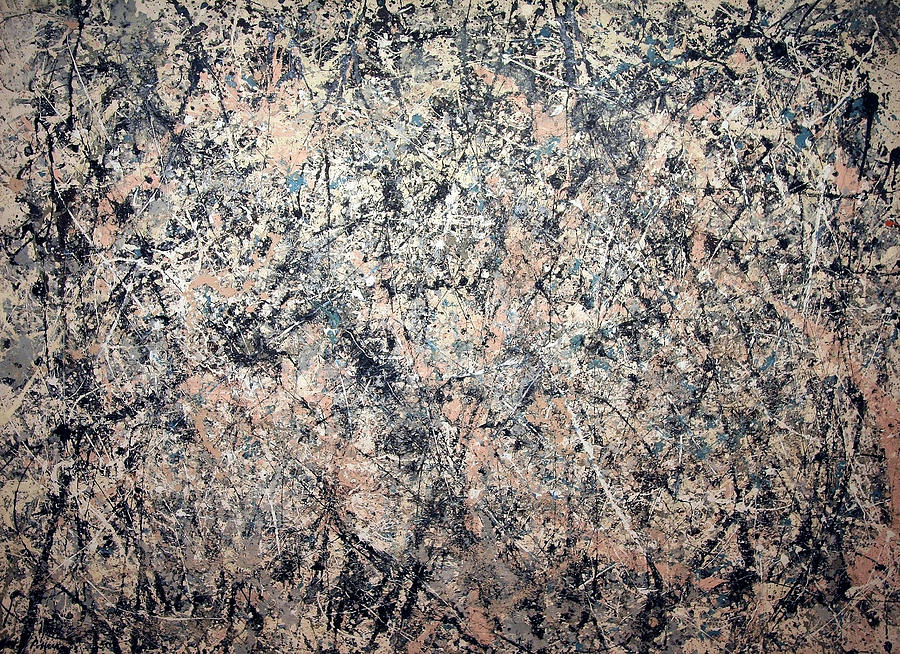
when actually it seems likely to me that the various gods see that and also see Jackson Pollock's Lavender Mist

in its unedited...uneditable...complexity and structural uniqueness, and they derive all the pleasures of life from both.

Author Miller, a divinely inspired bard, has her own divine creation to design and execute, to wrest from the blankness of Chaos; her apotheosis hasn't occurred yet so let us be sure to grab each thing she makes. Do this so we can experience in our fleeting passage through life the reflected glory of the Divine walking among us. You won't get closer than this while wearing a body.

Saturday, November 5, 2016

TO THE BRIGHT EDGE OF THE WORLD, my vote for Historical Fiction in Goodreads Choice Awards


TO THE BRIGHT EDGE OF THE WORLD
EOWYN IVEY

Little, Brown
$11.99 trade paper, available now

Rating: 4* of five

The Publisher Says: Set again in the Alaskan landscape that she bought to stunningly vivid life in THE SNOW CHILD, Eowyn Ivey's new novel is a breathtaking story of discovery and adventure, set at the end of the nineteenth century, and of a marriage tested by a closely held secret.

Colonel Allen Forrester receives the commission of a lifetime when he is charged to navigate Alaska's hitherto impassable Wolverine River, with only a small group of men. The Wolverine is the key to opening up Alaska and its huge reserves of gold to the outside world, but previous attempts have ended in tragedy.

For Forrester, the decision to accept this mission is even more difficult, as he is only recently married to Sophie, the wife he had perhaps never expected to find. Sophie is pregnant with their first child, and does not relish the prospect of a year in a military barracks while her husband embarks upon the journey of a lifetime. She has genuine cause to worry about her pregnancy, and it is with deep uncertainty about what their future holds that she and her husband part.

A story shot through with a darker but potent strand of the magic that illuminated THE SNOW CHILD, and with the sweep and insight that characterised Rose Tremain's The Colour, this new novel from Pulitzer Prize finalist Eowyn Ivey singles her out as a major literary talent.

My Review: I voted for this book in the 2016 Goodreads Choice Awards. A more heartfelt vote I've yet to cast.

Eowyn Ivey's modern Alaskan fairy tale THE SNOW CHILD was excellent. This epistolary novel is a step farther along the road to literary fame. I was totally captivated by Sophie and Allen's letters to each other; I enjoyed the use of other documents, like the young couples' journals and the paperwork that always attends anything to do with a government job and newspaper clippings recounting the excitement of the day for exploration. (How sad that this national trait is lost.)

The adventures the two nineteenth-century characters have are rip-snortin' bull-ridin' full-bore dangerous scary things. Sophie, in a small restricted life, busts out of her corset and strait-jacket to grab her some living while hubby is away having Manly Dangerous Feats thrown at him, and each enjoys their own hugely while supporting the other's excitement in letters from afar. It's a good marriage, it seemed to me. I think Ivey deserves a chunk of Alaska's petrodollars for making the place sound so incredibly, magically appealing. Her couples make getting married and being in Alaska sound like the road to happiness and concord.

The modern-day component to the story isn't the most involving. Joshua and Walt don't weave that old magic, perhaps because they don't make a couple. (Now that would've been interesting.) I am not willing to do much damage to my rating of the overall impact of the story, though, because the third leg of the stool is just a bit shorter than the others. Ivey has just vaulted onto the "buy her stuff right now" list with this outing.