Monday, December 19, 2016

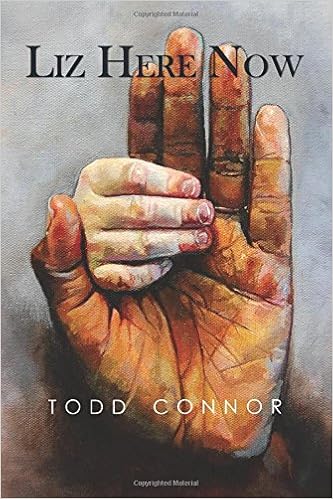
LIZ HERE NOW, an extremely moving and well-written indie book about child abuse


LIZ HERE NOW
TODD CONNOR

Self-published
$19.95 trade paper, available now

Rating: I have no idea

The Publisher Says: A privileged child’s life is forever changed by the bravery of the family’s Black maid when Elizabeth Baxter refuses to silently witness the abuse Todd Connor and his siblings receive at the hands of their wealthy, prominent parents. Overcoming fear for her own safety, Liz endures both prejudice and police brutality in an attempt to protect her “little white babies,” until a lone white police captain believes the truth and becomes her ally. An autobiographical novel set during the tensions of the 1960s civil rights movement, Liz Here Now proves the healing power of love and determination. Only decades later does anyone learn of Liz’s bravery and the horror that had taken place within the Connor’s wealthy home. At Liz’s packed funeral, Todd, the sole white person in the church, is there to give honor to the heroine who loved and saved him, his sister, and brother from the psychotic woman who was a mother in name only, and the complicity of their father, a renowned physician more concerned about protecting his prestige than his own children. Unable to speak through his sorrow, Todd is reminded by Elizabeth’s grieving husband, “Yo’ dark story gonna show off her light. They gonna hear a truth about her fo’ the first time ever.” Those words spur Todd to fulfill Liz’s dying request: “She took my family’s secret to her grave,” he says, “but she asked me to break that silence now.” Liz Here Now is set in the past, but delivers compelling lessons for today: that we all must become aware of the insidious effects of, and speak out against, abuse in any form, whether physical or the humiliating treatment many African-Americans are still subjected to daily.

My Review: I suspect the middle child of my "family" is going to be sorry she sent me this book with a request to review it.

My sisters were teenagers before I knew them at all. I was, in effect, an only child with live-in aunts, and not even that after I was eight. I had an insane, emotionally and sexually abusive mother, a weak and selfish absent father, and no one to turn to. My stepmother (and how it angers my sisters when I call her that!) lived in California, which might as well have been the Moon for all the good it did me. She was, however, the only...ONLY...person who understood me. Her ex-husband had fucked their oldest daughter. Her mother was an insane, abusive religious nut just like mine...and oh so holy that no one inquired why her daughters were so rebellious, so disrespectful. No one wondered why I was so taciturn, so sharp-tongued when I could be bothered to talk to them. No one wondered why I didn't go to school for most of eighth grade, or why my GPA fell from the low 90s to the high 60s (out of 100, okay eldest sister dear, you love to make sure I've given all the relevant facts so much) in the 10th. My stepmother knew, called me, tried to help long-distance...until Mama caught me talking to her and moved us to a different neighborhood, changed our phone number, put out paranoid insane bullshit to all the people we knew that my dad was coming to steal me away...no one ever asked, no one checked, no action was ever taken by anyone except the non-marital partner of a weakling who tried, with no standing at all, to help the best way she could. Even *directly*telling* my father, in so many words, "your ex is fucking that boy" made no dent in his selfishness. His response? "Old Vicious will make my life a living hell if I try to keep the kid."

How do I know? I heard him. They were talking in their bedroom, I was in the room below, and the windows were open.

So "Todd" and I have different details, but the same story. We were both invisible in our agony. "Todd" had Liz, I had my stepmother; neither was related to us and both were motivated by deep and abiding love to do something, anything, to rescue innocents from torture.

His succeeded. Mine failed.

There are no different kinds of abuse. Abuse is abuse. Perpetrators (like my mother, like her mother and her father before her, my weak and useless father, my nasty-tempered and unsympathetic sisters) are controlling the abused and making them as near to invisible as possible, perpetuating their power by the most horrible means imaginable: Robbing a person of personhood. Whoever I might have been absent the rage-storm I lived through either died or was never born. The twisted, miserable man I have always been was the direct creation of my loving family, all of them, all with sharp tongues, no empathy, and not a shred of kindness among them.

So "thanks" sister mine for picking this scab off an unhealable wound. I hated reading this book, I hated "Todd" for surviving so handily, and I sure as hell hate my past and everything that was in it more than ever. Merry fucking christmas.

EUROPE IN WINTER, a rare series novel that exceeds its predecessors


EUROPE IN WINTER
DAVE HUTCHINSON
(The Fractured Europe Sequence, #3)
Solaris Books (non-affiliate Amazon link)
$6.99 Kindle edition, available now

Rating: 5* of five

The Publisher Says: Rudi, the former chef-turned-spy, returns on a mission to uncover the truth—in a fractured Europe utterly changed by the public unveiling of the Community.

Union has been forged and the Community is now the largest nation in Europe; trains run there from as far afield as London and Prague. It is an era of unprecedented peace and prosperity. So what is the reason for a huge terrorist outrage? Why do the Community and Europe meet in secret, exchanging hostages? And who are Les Coureurs des Bois? Along with a motley crew of strays and mafiosi and sleeper agents, Rudi sets out to answer these questions—only to discover that the truth lies both closer to home and farther away than anyone could imagine.

***AT THE AUTHOR'S BEHEST, REBELLION SENT ME A TREE BOOK OF THIS TITLE FOR REVIEW***THANKS GUYS***

My Review: The rarest read in a series-heavy publishing landscape is the sequel that improves on the previous books. This books is one of those rare birds. It might just be unique, I'd have to really dig deep in the wetware to be positive, because it's better than the previous books *because of* the previous books. My reviews of EUROPE IN AUTUMN and EUROPE AT MIDNIGHT tell part of the story.The twists and turns of the lives the characters are asked to lead are definitely in the best Cold-War-spy tradition. The patches of somewhat puzzling prose that seem to indicate that a different book has dropped into the one you were reading are exactly that...and this is what finally makes the series so deeply engrossing, twisty, and unputdownable.

Now then. The entire focus of my reviews is always why. Why did I read this book, why do I think you should (or shouldn't) read this book, why do I rate it the way I do...and here I'm going to make my "why" extremely explicit: This book, this series, this concept of reality, is much more than escapist entertainment. The author has done a good deal of deep thinking about the world, how it got where it is, why it's not some other way than it is. He's taken that thinking, those long dark tea-times of the soul, and rendered them into sophisticated, witty (Putingrad! HA!) tales of great subtlety. The interconnections among the volumes are, for those with good memory mapping, sometimes physically jolting. For the run-of-the-mill reader there's no loss of forward momentum, no sense of being at sea; for the more savvy reader, there's an added frisson of pleasure and often amusement. Make no mistake, there is not one non-sequitur in the series. Sometimes you'll need a minute to see if that's an echo or a whisper. Whichever you decide it is, you're right. Much like reality, these books won't dictate your perception of them; the author has laid many a trail through this forest. His mapping skills are, well, hard to equal. We're not talking Rand McNally here, and even the USGS topologists' skills are tested.

And that is at the heart of my pleasure in reading these books. I don't often have the opportunity to engross myself in the unfolding of a narrative across multiple volumes. The last time I can remember was the outstandingly complex world of Barsetshire, begun by Anthony Trollope and continued by Angela Thirkell. It makes me very sad that, since Mrs. Thirkell's death in 1961, no English author has seen the enormous potential of exploring social change through the lens of Barsetshire. Science fiction has multiple universes, some shared by authors with fans and others not; I was most recently bitterly disappointed in James S.A. Corey's The Expanse, which didn't live up to its deeply twisty promise until it made the leap to television. With the Fractured Europe Sequence, I am not left with the painful sense of failure to launch. The ideas are immense, the execution equals their scale, the scope does not show any signs of running out of Lebensraum.

In this entry, a few details need to be remarked on. One is aging. Our loosely conceived narrative universe contains time, and some of the main characters are experiencing its indignities and outrages. Some are quite remarkably not in sync with the world's idea of time. This is enough in itself for a dissertation. Rudi's life trajectory, set off for us in Poland at Max's restaurant in Europe in Autumn, has taken a timely twist that will repay the re-reader of the whole sequence. Another is the prominence of food: don't start this read if you're hungry or there will be near-obsessive levels of snacking. I speak from experience. In fact, I need to make groceries today because of this. Lastly, I bring up the nature of relationships in this world. Nothing is, or realistically can be, permanent; friends wander off, lovers leave, family? What's that when it's at home? Nations expand, contract, vanish, alter out of recognition, and all of it is the natural evolution of the fluid system we call culture. Like all evolution it can be speeded up or altered entirely by hybridization, selective breeding, or habitat destruction. A bleak thought. A hopeful fact. Both, and neither.

Much like life.

A final note: Today, the 19th of December, is Author Hutchinson's birthday. I planned this review to appear yesterday, a week before Yule, and held off a day to celebrate the day. This review will have to do in place of buying you a pint down at the Wolf & Bird, kind sir, as my thanks for creating and continuing to create such delightful entertainment out of the cloth reality hands you.

Monday, December 12, 2016

A GUIDE TO THE BIRDS OF EAST AFRICA, sentimental and charming and moving


A GUIDE TO THE BIRDS OF EAST AFRICA
NICHOLAS DRAYSON
(Mr. Malik #1)
HMH
$14.95 trade paper, available now

Rating: 4* of five

The Publisher Says: For the past three years, Mr. Malik has been secretly in love with Rose Mbikwa, a woman who leads the weekly bird walks sponsored by the East African Ornithological Society. Just as Malik is getting up the nerve to invite Rose to the Nairobi Hunt Club Ball (the premier social occasion of the Kenyan calendar), Harry Khan, a nemesis from his school days, arrives in town. Khan has also become enraptured with Rose and announces his intent to invite her to the Ball. Rather than force Rose to choose between the two men, a clever solution is proposed. Whoever can identify the most species of birds in one week’s time gets the privilege of asking Ms. Mbikwa to the ball.

Drayson's charming descriptions of the Kenyan wildlife and his sharp take on the foibles and follies of the people and politics sketch a rich picture of contemporary life in Nairobi. Fans of Alexander McCall Smith will delight in this transporting and witty novel.

My Review: Actuarially, I am past middle age. In fact, more than 90% of the world's population is younger than I am. And that shows in the things I care about, read, and buy. Advertisers, take note: Old folks in America are *not lying down to die*! Pay attention to us!

Like the author of this book did. Mr. Malik, a widower and Mrs. Mbikwa, a widow, both of a certain vintage, are the focus of the love story in this book. Each has lost a well-loved spouse, each is living a full, interesting life and each is aware of a...space, an unfilled spot, in life. So what do they do? They go watch birds.
It's happened to me, and it's probably happened to you. From the first exchange of good mornings they had recognized in each other a kindred soul. Though neither spoke much to start with, they felt an immediate ease in each other's company that was both surprising and yet the most natural thing in the world.
God, doesn't that sound dull? It's not. It's just the starting point for a deft, elegantly made meditation on what love means and how love is transmitted, received, and propagated in ever-larger and more complete circles. Drayson creates Rose Mbikwa, nee Macdonald, as that hardest to portray character: the lively, sad, solitary widow of a charismatic man. Her loss and her life are completely, and concisely, and elegantly drawn in less time than lesser prose stylists take to make minor characters. Mr. Malik, a complex and private man, isn't so much drawn as peeled, layer by later, until the things we think we know about him become...well...iceberg-tips of the cold, sad, lonely sea inside him.

But...and this is the biggest but I can imagine...he's *never* whiny, self-pitying, self-obsessed, nothing like that oh nay nay! He's a force in his own life and he's working on making it, and as much of the world as he touches, a better place.

The spirals Drayson spins as Mr. Malik and Mrs. Mbikwa orbit each other are always tightening and yet never constricting or confining our perceptions...this is good stuff, ladies and gentlemen! Good, good craftsmanship and an excellent storytelling eye.

I'd say do yourself a favor and read this book. It's short, only about 200pp, and it's fun, and it's got great substance. Most highly recommended.

BAKING CAKES IN KIGALI, a pleasure to read about Rwanda in a fun and engrossing vein

BAKING CAKES IN KIGALI
GAILE PARKIN

Delacorte Press
$17.00 trade paper, $12.99 ebook editions, available now

Rating: 3.5* of five

2016 Comment: I can't figure people out...this book is a pleasure to read, offers revealing and touching and amusing comments on the reality of growing older in an era of chaotic change that I can't imagine NOT being of interest to a very wide readership and yet..nothing! It's a lovely story. Seek one out, give it a try, this is good stuff here.

The Publisher Says: Once in a great while a debut novelist comes along who dazzles us with rare eloquence and humanity, who takes us to bold new places and into previously unimaginable lives. Gaile Parkin is just such a talent—and Baking Cakes in Kigali is just such a novel. This gloriously written tale—set in modern-day Rwanda—introduces one of the most singular and engaging characters in recent fiction: Angel Tungaraza—mother, cake baker, keeper of secrets—a woman living on the edge of chaos, finding ways to transform lives, weave magic, and create hope amid the madness swirling all around her.

In Kigali, Angel runs a bustling business: baking cakes for all occasions—cakes filled with vibrant color, buttery richness, and, most of all, a sense of hope only Angel can deliver.…A CIA agent’s wife seeks the perfect holiday cake but walks away with something far sweeter…a former boy-soldier orders an engagement cake, then, between sips of tea, shares an enthralling story…weary human rights workers…lovesick limo drivers. Amid this cacophony of native tongues, love affairs, and confessions, Angel’s kitchen is an oasis where people tell their secrets, where hope abounds and help awaits.

In this unlikely place, in the heart of Rwanda, unexpected things are beginning to happen: A most unusual wedding is planned…a heartbreaking mystery—involving Angel’s own family—unravels…and extraordinary connections are being made among the men and women who have tasted Angel’s beautiful cakes…as a chain of events unfolds that will change Angel’s life—and the lives of those around her—in the most astonishing ways.

My Review: This book should have been a shoo-in for the bestseller lists. If the popularity of Alexander McCall Smith's Precious Ramotswe books is any index to American willingness to embrace African women as heroes, I can think of no earthly reason this tome won't light up the charts.

I found Angel and her husband Pius to be entertaining companions. The five grandchildren they are raising in post-genocide Rwanda reflect the realities of life in Africa...orphans everywhere, no matter where you look, and only the very lucky have a place to go where they are loved and nurtured.

Angel and Pius should, by the lights of their Tanzanian upbringing, be preparing for their ascent into elderhood, being looked after by the children they carefully raised. The children are dead, and the elders are thrown back into parenthood. This central tragedy is the spine of the book.

It's not a tragedy to Angel, in the sense that she revels in the life of a society cake-supplier, something she began as a home-based business to support the grandkids and has become a passionate addiction. Angel is famous in Kigali for the creative splendor of her cakes, ordered by the best and the brightest of the city to commemorate the milestones of life. Angel gets to hear all the gossip worth hearing and involve herself in all the doings of her world.

The book is a sure-fire pleasure read for many, if not most, fans of domestic fiction. It's something that readers should make a point of browsing in the local bookery.

Tuesday, November 29, 2016

JOIN, debut SF philosophical thriller from Steve Toutonghi, gets big props from me

JOIN
STEVE TOUTONGHI

Soho Press
$13.25 paperback, $9.99 ebook platforms, available now

Rating: 4.5* of five

The Publisher Says: What if you could live multiple lives simultaneously, have constant, perfect companionship, and never die? That’s the promise of Join, a revolutionary technology that allows small groups of minds to unite, forming a single consciousness that experiences the world through multiple bodies. But as two best friends discover, the light of that miracle may be blinding the world to its horrors.

Chance and Leap are jolted out of their professional routines by a terrifying stranger—a remorseless killer who freely manipulates the networks that regulate life in the post-Join world. Their quest for answers—and survival—brings them from the networks and spire communities they’ve known to the scarred heart of an environmentally ravaged North American continent and an underground community of the “ferals” left behind by the rush of technology.

In the storytelling tradition of classic speculative fiction from writers like David Mitchell and Michael Chabon, Join offers a pulse-pounding story that poses the largest possible questions: How long can human life be sustained on our planet in the face of environmental catastrophe? What does it mean to be human, and what happens when humanity takes the next step in its evolution? If the individual mind becomes obsolete, what have we lost and gained, and what is still worth fighting for?

***SOHO PRESS PROVIDED ME WITH AN ARC OF THIS BOOK AT MY REQUEST***

My Review: Well, this is extremely disheartening. My review vanished. I do not know how or why, and this has never happened before on Blogger. I'm going to cry for a while then retype it as best I can. DAMN.

This review appears to be cursed. Two more attempts to re-create it got eaten! I am at a loss to comprehend why. No other review ever has had such a run of bad luck. Annoyingly, this is a book I very much liked and particularly want others to read. So here it goes again:

The premise of this near-future thriller is chilling: Climate change has wrought havoc on the earth, creating a US landscape dominated by megastorms in what was once the world's breadbasket, the Great Plains. Sea levels are enough higher that the West Coast has an Olympic Archipelago in place of Seattle/Tacoma/Olympia. Into this Brave New World steps a Brave New Human, the "join." A discovery in the now-emerging field of quantum networking enables us, the millennia-old single consciousness humans, to share our mental resources with many others in a complete and overwhelming way. The quantum networking of our brains creates a new form of internal reality, a new creature, a different way of being human.

Now think about this: Our brains have trillions, yes 1,000,000,000,000s!, of neurons in each skull. We haven't come *close* to figuring out what is, and how they do, their work. Here comes a quantum means of interconnecting these trillions...trillions!...of neurons and making this titanic expansion of humanity's potential available to the planet and its people.

Boggling.

But au fond we're still human, and that means venal and evil and selfish as well as noble and good and selfless, at the same time and in each private skull. Imagine the magnification of the qualities that make us unique that joining presents.

Boggling.

Chance and Leap are each five-drive joins (a drive is what a joined person becomes) and are friends with a peculiar and, to me, underexplored degree of closeness that solos (single-consciousness people like thee and me, or so I assume since I'm not a join but hey you might be n which case I'd like to be a drive please) simply can't grok. Each has some very serious problems with the drives in the join. Chance Five is a beautiful young man who has terminal cancer, to everyone's surprise. Leap has a very weird join-specific condition that is at the heart of the book. Both run across a join called Rope, a seriously insane entity that joins then murders its own drives. This is, unsurprisingly, a supreme no-no. Even more horrific is Rope's complete willingness to murder other joins' drives, and Chance Three becomes its victim. And this is the warm-up to the real action!

Leap is in a terminal downward spiral that Rope, an illicitly immense join, might know how to fix or know someone who can fix it. Chance agrees to help Leap get to the entity that can make the horror awaiting it either cease or slow down. That is simply amazing to me: A segment of Chance's own join dies in helping Leap and there is nothing like recrimination or anger directed at Leap! I was so impressed that Author Toutonghi made absolutely nothing of this, allowing the reader to come to the realization of the astounding alteration of consciousness that this *one* fact illuminates unaided. That's authorial confidence, well justified by the results.

This story takes place in the world of forty years after the first join. That's not at all a long time to have created so many new and join-specific institutions that Author Toutonghi presents without fanfare or comment. His story simply requires that the reader be exposed to the ideas and actions that make joins different on a quantum level (ha) and the reader is then left to work it all out, make a context for it, build a matrix in which this is simply How It Is. In most SFnal literature there is a degree of explicit world-building that can, and often is, characterized by the dread insult "infodump." Not here. Nothing is dumped out of anything. If information is needed for the reader to move in this world, it is provided in-story. It is not a scaffold erected then bedizened with shiny pretty baubles. It is a skeleton covered with strong flexible muscles.

That's very very high praise indeed, coming from a grouchy jaded old curmudgeon like me.

I will not spoiler the resolution of this tale. I will say that it's breathtaking in its scope and still, in hindsight, inevitable from the story being told. It's not where I *thought* we were going at the outset. How fun is that?

Okay, that all sounds like a five-star warble of rapture. Why didn't I give JOIN five stars? Because of something that's going to be invisible to most of y'all: There is nothing at all in here about the existence of gay and lesbian people, no hint of any serious consideration of sexuality in the joins and the strange but wonderful reorientation (!) of sexual consciousness that was available to Author Toutonghi to explore. It's his novel, I know that so please don't yip at me about it. He gets to tell his own story his own way. But this central fact of human existence, sex and sexuality, is bog-standard straight people stuff and that is a glaring failure of imagination in an otherwise breathtakingly thorough reimagining of all the parameters of humanness. We even touch on the deeply troubling issue of incest in an oblique but still unsettling way. So I feel justified in saying "what the heck, dude," and tsk-tsking at this lacuna.

At any rate, I don't want to put you off reading the book, and so let me say this again: JOIN is a toweringly original and massively creative novel about identity and agency and cannot be overpraised for its fearlessness in addressing the central conundrum any species faces at any juncture in its history: So, what's next?

Buy it, read it, think about it.

Sunday, November 27, 2016

FIRST GREY, THEN WHITE, THEN BLUE, first novel from Dutch artist Margriet de Moor, excellent


FIRST GREY, THEN WHITE, THEN BLUE
MARGRIET DeMOOR
(tr. Ina Rilke)
Out of print
Various prices via Amazon and other sellers

Rating: 4* of five

The Publisher Says: Magda in life—no less than Magda in death—was an enigma. A free spirit, alluring but private, loving yet remote. Where did she go during the years of her disappearance? Was it truly to the world of the stars? For her husband Robert, who wanted to possess her, body and soul, what Magda gave him was never enough. He murdered her, leaving her lover to discover her body.

Now, as friends gather for her funeral, the mystery of Magda's life is slowly, tantalizingly, revealed. Who really knew Magda, and what truths has her death revealed? First Grey, Then White, Then Blue, Margriet de Moor's first novel, is a story of perception, love, and mortality, told with a bewitching power. Margriet de Moor's novels and stories have been garnering high praise on both sides of the Atlantic, and her feel for physical detail, psychological nuance, and the quiet power of her storytelling have made her one of the most interesting and provocative contemporary writers. First Grey, Then White, Then Blue will be sure to captivate lovers of last year's The Virtuoso, while finding new fans for a writer endowed with the gift for mapping emotional worlds with unerring accuracy.

My Review: When eye specialist Erik drives down the dune where his house occupies the topmost bit on his way to work, he is surprised to see his childhood friend Robert's wife's dog standing outside the gate to Robert's family home. How odd, out of character for the animal to be unaccompanied in such a place and with no obvious signs of activity to explain the mystery. Erik stops the car, curious, and sets in motion the end of several worlds.

Magda, blonde Czech-German Jewish refugee child of WWII, lies dead in her bed. Robert has stabbed her with his father's Tibetan dagger. Erik is unable to process Robert's part in killing his own wife, who was also Erik's lover. Twenty years before, Robert had brought Magda home with him from a trip to Canada. The couple were passing through Robert's home town to cock a snook at Noort family on their way to live a delightfully Bohemian life in France's Cévennes mountains. Historically these Southern French gorges and peaks have sheltered those not in good odor with the central authorities. The population is largely Protestant in Catholic France. A renegade runaway Dutchman and his blonde Canadian wife raise not a hair on the locals' eyebrows. Robert paints. Magda tries to become pregnant. Erik, his wife Nellie, and their autistic son Gaby visit the Noorts for the first time in the late 1960s:
Only now does he remember that that triumphant voice provoked a vague feeling of revulsion in him. Did he perhaps begrudge Robert his exalted ideas? Robert told him that he forced things to have an affair with him.

"A love affair, don't laugh. If I had to I would force to make them communicate, yield up their confidences. What do you think of this stuff? Has quite a kick, hasn't it? Here they see the mouse as the symbol of the loyal Joseph."

Erik did not reply. He looked at the canvas in front of him on an easel, a life-sized woman's portrait. Although it was not apparently like her, Magda had undoubtedly sat for it. The portrait was painted in crude areas of paint, not with a brush but with the palette knife, and it seemed to him, much more than the landscapes and the still-lifes, first and foremost an account of work in progress, a fever, a battle with light and color.

He asked, "Can't you love the landscape, objects, a woman, without wanting to turn everything into something that belongs to you?"
It's a cogent question, one that Erik doesn't make sense of until a decade or more after he's asked it. Walking into the murder scene, he finds Robert unwilling to offer more than the minimum of interaction. He isn't raging. He isn't much of anything, really. Murdering his wife of twenty years has hollowed him out, leaving only a Robert-shaped shell, unable or unwilling to offer any explanations or resistance to his arrest by police Erik has summoned.

The narration now shifts to Robert's point of view, examining the roots of his obsession with Magda. He's a bourgeois boy in rebellion against his father. He's gone to New York City to join the burgeoning art world's ranks. His ambition to be a painter is nothing his industrialist father understands. Not the newest, freshest idea? Well no but then again there is a good reason that evergreens become evergreen. The conflict between fathers and sons is eternal and bitter; the sons no less than the fathers carry scars that don't make for attractive viewing. Robert responds to Magda's departure, unannounced and unexpected, with his father's wounds being laid bare again:
He opens the French windows, leaves off all the lights, slips off his shoes, his tie, finds a box of black cigarillos—lights one, pours himself a whisky—which he has not drunk for years—lies full length on the sofa and puts the bottle within reach. Her absence annoys him beyond words.
Evening sounds penetrate from the street. Footsteps of people out walking, a stifled laugh, a cry of surprise and then suddenly a passing bus: how dare you disappear just like that, tell me at once where you've got to and what time you're coming home. He shivers. This cold draught has nothing to do with you and me, with our lives, with our evenings by the fire. But when he gets up he leaves the French windows as they are, open, he simply fetches a heavy overcoat which he puts over his legs when he lies down again. There is no love at all in you!
"Why don't you love me?" The lament of each generation to the one before, a source of eternal anger and stress, and the genesis of much trouble between intimate partners.

Robert and Magda spend many years in each others' space. I don't know if I'd say they form a family unit so much as they have the same center of gravity and revolve around it, grinding grooves into each other, wearing channels in the other's bedrock along which their shared rages can flow:
His embraces are rough. Through a curtain of tears he immediately pushes his tongue deep in her mouth, although he knows that she really hates it. He grips her hips with his knees. He presses his fingers into her shoulders and then in hasty panic removes them in order to fiddle with the zip of his trousers. He pays no attention to her face, he does not listen to the sounds she makes, there is too much to do. At this blinding hour, in this cell of heat and fury where he has lost all patience and is as abrupt as the blade of a kinfe, Robert Noort, idealist, artist, utterly exhausted man, thinks his wife has been gone too long, that he has permission to rescue her from the underworld and at the same time to look back, that he can even grab her, that he can bury his head in the sweaty scent of her armpit, that he can drag her back by her hair to her warm beating heart, her skin, her hair, her eyes—your body is what you are, return to it, come on! so that we can learn everything about each other that is worth knowing—and bathed in sweat, his trousers around his ankles, he tries with actions that are essentially simple and, moreover, as old as the world, to restore order.
The confusion you are born with.
The confusions of love and hate, desire and domination, mastery and stewardship are all played out in de Moor's creations.

Robert's rage to possess meets Magda's Teflon emotional surfaces. Her own father, a Czech Jew, was betrayed to the Nazis in 1944 when she was perhaps six; her mother spent the rest of the war on into the postwar period looking for her one love's fate. Unable to find him or any news of him, Magda's mother took them as far away from Europe as she was able to do. Wide-open Canada, umbilically connected to mother England, takes in refugees from the titanic convulsion that wracked Europe for six long years. Magda's mother gets them onto a Swedish ship that will land them, ultimately, in Gaspé on Quebec's shores of the St. Lawrence Seaway. The crossing gives Magda some of her most coherent childhood memories:
Passengers, officers, a row of sailors at attention with the baby in a white cardboard box on a table. When I got close, I looked carefully. It was a sturdy, pretty baby, with a face that looked calm and even a little proud. Under its long-lashed eyelids it succeeded very well in hiding what it is like to be dead. Contentedly I noticed the dark pink roses laid around the body.

They had been made from sanitary towels. I had seen the women at work, the previous afternoon. They had carefully pulled apart the sanitary towels, which consisted of a pink and a white layer, they could use only the pink layer to fold wonderfully ingenious roses, twist them round and secure them with a tacked stitch. Tell me, I asked the baby softly, is it true that everything first goes grey, then white, then blue, and then you fly to the stars? By the way, what do you think of those roses? I think they are the most beautiful thing I have ever seen.
How exactly like a child. I was fully convinced that the murdered Magda, even so far in time from her unnatural demise, would note so carefully the ultimate end of all life's journeys, short or long. It made complete sense to me. Magda's trajectory was not showy. It was longer, perhaps, than it might have been, or shorter than it should have been, but it was a low one and left few signs of its transit.

Or did it? Magda was a presence, if not a star, in the spaces she chose to inhabit. She made an impression on people she met and she did this without any visible effort on her part. It might be as simple as her inner emotional landscape's silence, its immensity:
The spinning space. The night sky. A rising piece of land, blue as the ocean and equally impassable. I had not known such solitude since my childhood. I hunted cautiously for a cigarette, I wanted to let the others sleep, I wanted to smoke by myself and stay awake looking at the clouds obscuring the moon. I was exceptionally calm. I remember my calm, my emptiness deep inside. Trees...fields...a farmhouse like a boat under the stars...suddenly it occurred to me that my life with Robert had been a poem. Everything that mattered to me personally had taken a new twist in the light of that chance meeting. My eyes and skin: designed for other use. My past and my mother's: captured in words. My future—look: a sun-drenched plain that we were going to populate with mountains, trees and rivers that belonged to both of us. ... What I want to know is this. Would it also be possible to take that poem in my hands and drop it onto a stone floor? So that it smashed into fragments, into crude slivers... What I want to know is this. Among all those things it must surely be possible to find something which could not be swallowed up?
These thoughts are the ones de Moor gives to a fleeing wife. A woman who, after close to twenty years with a man she selects on a whim as a teenager, leaves him with no more forethought or preparation than she chose to go with him earlier. Magda can't fill up the space she contains; Robert can't make a dent in her surfaces, let alone her interiority; and even an affair with his childhood friend, placing herself between Erik and his wife, Erik and his son, doesn't dent her formidable vastness. Most people stay inside the coloring book's lines because daring to go outside them means losing sight of boundaries. Magda is nothing but boundaries. She translates between languages as naturally as she adapts to living in new places. Leaving Czechoslovakia for the defeated Berlin of her mother's family; leaving Europe for Canada; leaving Gaspé and her solitary mother for a French life as a Dutch artist's wife; leaving France as her increasingly visually impaired husband reinvents himself as the savior of the business his father left behind. Nothing proves too great a challenge for Magda to adapt to, and that in the end was her demise. She had no solid, immutable core for her husband to break, satisfying his rage and hatred. So he had to kill her.

Chilling.

I read this book twenty or so years ago, and fancied it as a film. (A project unlaunched, alas.) I liked its spareness, and was completely unsurprised to learn that Margriet de Moor was trained first in music. I can imagine this tale as a song-cycle; a suite of voices telling the ordinary life of a group of ordinary people whose paths intertwine around war and tragedy. How simple, how baroque, how complete it is to make the fullness of a life into fiction. And how satisfying to experience that fiction. The Overlook Press edition of this book came out after I read the Picador UK translation; in fact, the editor at Overlook who acquired The Virtuouso and this novel for the US market was in my office once while I was an agent, and was deeply surprised that I had read the book. I've always thought that de Moor would have enjoyed that moment of mutual surprise each of us experienced, one that someone knew of her discovery and one that someone finally paid attention to his.

But first novels have flaws. The voices of Nellie, horned wife of Erik and betrayed best friend of Magda, is given short and unsatisfying shrift in the last 20-30 pages of the book. Gaby, the autistic son of Erik and Nellie, features in the book at too short a length for his presence to feel like more than a vase of flowers on the stage of this opera. If you take my advice and read this book, you'll stop at the end of part three and ignore part four entirely.

But I do hope you'll spend some time with Margriet de Moor and her quotidian drama. I still think of Magda fondly, a friend bobbing away from me in time's eddies.
Friday, November 25, 2016

THE VENUSIAN GAMBIT, third Royal-Navy-in-Space meets Flash Gordon's granddaughter on Mars novel


THE VENUSIAN GAMBIT
MICHAEL J. MARTINEZ
(The Daedalus Series #3)
Night Shade Books
$7.99 mass market, available now

Rating: 4.5* of five

The Publisher Says: The last chapter of the dimension-spanning Daedalus series brings the 19th and 22nd centuries together for an explosive finale in the jungles of Venus!

In the year 2135, dangerous alien life forms freed in the destruction of Saturn's moon Enceladus are making their way towards Earth. A task force spearheaded by Lt. Cmdr. Shaila Jain is scrambling to beat them there while simultaneously trying to save crewmember Stephane Durand, who was infected during the mission to Saturn and is now controlled by a form of life intent on reopening a transdimensional rift and destroying the human race. But Jain doesn’t realize that the possessed Stephane has bigger plans, beaming critical data to other conspirators suspiciously heading not for Earth, but for Venus.

In 1809—a Napoleonic era far different from our own—the French have occupied England with their Corps Eternélle, undead soldiers risen through the darkest Alchemy. Only the actions of Lord Admiral Thomas Weatherby and the Royal Navy have kept the French contained to Earth. But the machinations of old enemies point to a bold and daring gambit: an ancient weapon, presumed lost in the jungles of Venus.

Now, Weatherby must choose whether to stay and fight to retake his homeland or pursue the French to the green planet. And Shaila must decide if it’s possible to save the man she loves, or if he must be sacrificed for the good of two dimensions. In the dark, alien jungles of Venus, humanity's fate in both dimensions hangs in the balance—forcing past and present to once again join forces against an ancient terror.

Review links: THE GRAVITY OF THE AFFAIR — THE DAEDALUS INCIDENT — THE ENCELADUS CRISIS

My Review: This man is batshit crazy. There are zombies—sorry, revenants—fighting for Napoleon, there are Eldritch Horrors from Beyond using Mars (and possessing sexy Earthmen) to get their claws on the 22nd-century Earth, and the sailpunk feature of sailing in the stars isn't metaphorical.

I am in my happy place.

What happens? Why on Venus does that matter?! It's the Napoleonic Wars, only without the Americas...simply don't exist...and with Magjicqk! Alchemy keeps the ships of the Royal Navy safe as they navigate among the all-habitable all the time planets of the solar system. And you know what, I like that a lot better than I like our somewhat confining set-up. Since it's time for Napoleon to finish England and Russia off with an undead Corps Éternel (love that wordplay!), the stakes couldn't be higher!

Then there's the shockingly interpenetrating 22nd century with its physics like our own dismal (in comparison) version, under equally existential attack from a...being, a thing called "Althotas" that is attempting to gain dominion over the entire Multiverse from the outside...I think it's the outside...I really don't think it matters, the stakes in the 22nd century aren't lower and the battling's even harder because good goddle mitey there's a being from another...from a...and the technocratic brain shorts because there simply isn't a label in the General Relativity bin that fits this weirdness.

There are good people fighting for their survival; there are selfish people remaking Reality to suit themselves; there are losses that can't be understated and there are victories that can't be celebrated because there simply isn't time yet. It's the third volume of three, so you know that there are resolutions on the way but there are more than three hundred pages so the author has plenty of space to make your squirm. He lets no opportunity to do so pass.

The fact is that, having spent two books in this world, I was sure it would be intense and exciting to spend a third one there. It was. But I was not entirely ready for the sense of loss it caused me to feel to know this series is over, Anne and Weatherby and Shaila and Dr. Finch and María Díaz aren't going to be resting under my Yule tree ever again. I won't watch with fascination as they develop their lives, having been through an amazing experience and being alive at the most interesting of times for their respective civilizations. That's the benefit of a series that's complete: you know that it's not going to make you wait for more. That's also the painful part: no amount of waiting and sighing will bring the characters you've invested in back.

But this series is such a pleasure, such a surprise of a worlds-in-collision tale, that I feel so much richer for having been in it for so much of this year. Go on the journey for yourself and get to know the delights and despairs of convincingly real characters living through peaks and valleys you can but envy and repine over.