Showing posts with label archaeology. Show all posts

Monday, March 30, 2026

DAUGHTER OF EGYPT from the reigning Rani of women in historical fiction


DAUGHTER OF EGYPT
MARIE BENEDICT

St. Martin's Press (non-affiliate Bookshop.org link)
$14.99 ebook, available now

Rating: 4* of five

The Publisher Says: New York Times bestselling author Marie Benedict, returns with a sweeping tale of a young woman who unearths the truth about a forgotten Pharaoh—rewriting both of their legacies forever.

In the 1920s, archeologist Howard Carter and Lord Carnarvon of Highclere Castle made headlines around the world with the discovery of the treasure-filled tomb of the boy Pharaoh Tutankhamun. But behind it all stood Lady Evelyn Herbert—daughter of Lord Carnarvon—whose daring spirit and relentless curiosity made the momentous find possible.

Nearly 3,000 years earlier, another woman defied the expectations of her time: Hatshepsut, Egypt’s lost pharaoh. Her reign was bold, visionary—and nearly erased from history.

When Evelyn becomes obsessed with finding Hatshepsut’s secret tomb, she risks everything to uncover the truth about her reign and keep valued artifacts in Egypt, their rightful home. But as danger closes in and political tensions rise, she must make an impossible choice: protect her father’s legacy—or forge her own.

Propelled by high adventure and deadly intrigue, Daughter of Egypt is the story of two ambitious women who lived centuries apart. Both were forced to hide who they were during their lifetimes, yet ultimately changed history forever.

I RECEIVED A DRC FROM THE PUBLISHER VIA NETGALLEY. THANK YOU.

My Review
: I like this sentence as a statement of purpose for this story:
I've been a student of Hatshepsut since the day Mr.Carter entered my world. The narrative of her existence is one I've been constructing as long as I can remember. The nature of her life and the manner in which her successors were positively determined to erase her from history is a puzzle I'm determined to solve myself.
Based on the few extant facts of two erased women's lives, intertwined in a way I found very compelling, this novel of erasure is so infuriating I want to chew nails to relieve my frustration. How many women, strong, intelligent, and capable, have suffered this fate without the unique concatenation of societal circumstances that preserved the barest bits and patches of their life like these two?

It doesn't do to dwell on it. I'm prone to rumination as it is.

I found the story of these two flinty women very involving. Their shared unwillingness to make themselves small enough to be unthreatening to the men around them truly inspired me to look more deeply into their factual lives. Historical fiction often does the opposite for me, leaving me more or less as informed as I ever want to be; these lives were sufficiently powerfully rendered that I wanted still more. There is not any evidence of Lady Evelyn doing any discovering, but she was clearly deeply intrigued and passionately invested in her father's and Howard Carter's discoveries in Egypt.

I was not entirely delighted by the, to my way of thinking, cursory nods at the deeply contentious subject of Empire and imperialism more generally. After all, Hatshepsut's own imperial project draws a distinct parallel to England's commercially motivated one. I know asking for more is asking for Author Benedict to choose to write *my* preferred story not her own, so I'm not holding that against the rating.

I felt this was a four-star read mostly because I found the ending a bit contrived for my taste. I do not think it is an ending that flows naturally from the two intertwined stories preceding it; more it was the set-piece everything on the way was going to support. It didn't ruin my pleasure in the read, but it did tarnish that pleasure just a bit to feel I was being pandered to when, until then, I was being lured along with strong storytelling.

Liking for ancient Egypt as a storytelling venue will go a long way towards wrapping you into the tale. It's not perfect but nothing is, and it's far more perfected than the lives these women were left with by the patriarchy of their times. Our times ain't great, but things have been worse.

Saturday, January 31, 2026

ISLAND AT THE EDGE OF THE WORLD: The Forgotten History of Easter Island, new data and modern analysis change the game


ISLAND AT THE EDGE OF THE WORLD: The Forgotten History of Easter Island
MIKE PITTS

Mariner Books (non-affiliate Bookshop.org link)
$15.99 ebook, available now

Rating: 4* of five

The Publisher Says: A vital and timely work of historical adventure and reclamation by British archaeological scholar Mike Pitts—a book that rewrites the popular yet flawed history of Rapa Nui (Easter Island) and uses newly unearthed findings and documents to challenge the long-standing historical assumptions about the manmade ecological disaster that caused the island’s collapse.

Rapa Nui, known to Western cultures as Easter Island for centuries, has long been a source of mystery. While the massive stone statues that populate the island’s landscape have loomed in the popular Western imagination since Europeans first set foot there in 1722, in recent years, the island has gained infamy as a cautionary tale of eco-destruction. The island’s history as it’s been written tells of Polynesians who carelessly farmed, plundered their natural resources, and battled each other, dooming their delicate ecosystem and becoming a warning to us all about the frailty of our natural world.

For too long, people have imposed their own theories on this extraordinary place and its inhabitants. Thor Heyerdahl, after his famous Kon-Tiki expedition, claimed the island had been discovered by light-skinned people from South America, believing only they could have been capable of travelling there and building the statues. Erich von Däniken took it to greater extremes, saying the statues had been carved by aliens. More recently, Jared Diamond's theory of ecocide—that Islanders destroyed their world by cutting down all the trees—has become popular as a vital message about the need to conserve our planet's resources.

But what if that history is wrong?

In The Island at the Edge of the World, archaeological writer and scholar Mike Pitts offers a direct challenge to the orthodoxy of Rapa Nui, bringing to light new research and documents that tell a dramatic and surprising story about what really led to the island’s downfall. Relying on the latest archaeological findings, he paints a vastly different portrait of what life was like on the island before the first Europeans arrived, investigating why a Polynesian people who succeeded for centuries throughout the South Pacific supposedly failed to thrive in Rapa Nui. Pitts also unearths the vital story of one of the first anthropologists to study Rapa Nui, an Oxford-trained iconoclast named Katherine Routledge, who was instrumental in collecting firsthand accounts from the Polynesians living on Rapa Nui in the late nineteenth and early twentieth centuries. But though Routledge’s impressive scholarship captured the oral traditions of what life had been like pre-1722, her work was widely dismissed because of her gender, her reliance on indigenous perspectives, and her conclusions which contradicted her historical peers.

A stunning work of revisionism, this book raises critical questions about who gets to write history and the stakes of ignoring that history’s true authors. Provocative and illuminating, The Island at the Edge of the World will change the way people think about Easter Island, its colonial legacy, and where the blame for its devastation truly lies.

I RECEIVED A DRC FROM THE PUBLISHER VIA NETGALLEY. THANK YOU.

My Review
: An archaeologist with access to twenty-first century morals and mores and technology is not going to write with kindness towards the previous generations' conclusions. They're rooted in outdated assumptions, using techniques that feel shockingly cursory to modern sensibilities; most shocking is the unquestioning racism of so very much of the analysis made by earlier generations.

A third, the first third, of the book relays those earlier analyses with what felt to me as condign levels of condemnation or disagreement, couched in evocative language. If you're offering a different light on past data with newer data and previously unavailable technology, casting shade is inevitable. Why not begin with tendentious tones? Many cavil at this. I do not.

After bringing attention to, in the second third, an underknown and too-little celebrated Katherine Routledge and her astute observations and contextualizations of the society and culture of the island, Pitts goes into the modern archaeology and emerging understanding of Rapa Nui. It's a paradigm shift, and we're seeing it in its earliest days.

I found the book as a whole fascinating, creating a gestalt of scholarly opinion's mechanisms of change as evidence...and society's changing mores...demand. It is not a simple bowing to the winds of fashion as the reactionaries and recidivists with political axes to grind insist. It is the scientific method at work, correcting its data to account for developments across all fronts of scholarship. No "Truth" is immutable, scary as many people find that fact. Fixing thoughts into cages of ideology is never permanent. Examining data, analyzing orthodoxy's tenets, is how Einstein blew open the ideas of physics...out came cell phones, computers, the entire internet.

I won't pretend I was completely fascinated during the whole read. It was a slog to read the archaeology jargon but it yielded a really fascinating new understanding of a place most of us are intrigued by. More than that, though, this is a perfect example of how science works: take a data set, examine it, add to it, and analyze both the before and after data sets. Present conclusions as "this new data refutes/supports previous data; the current, amended data set supports/refutes the following conclusions."

It's a message I like, I support, and I choose to amplify.

Thursday, May 22, 2025

WHACK JOB: A History of Axe Murder, does more than just titillate with true-crime gore


WHACK JOB: A History of Axe Murder
RACHEL McCARTHY JAMES

St. Martin's Press (non-affiliate Amazon link)
$14.99 ebook, available now

Rating: 4.5* of five

The Publisher Says: A brilliant and bloody examination of the axe's foundational role in human history, from prehistoric violence, to war and executions, to newspaper headlines and popular culture.

For as long as the axe has been in our hands, we have used it to kill.

Much like the wheel, the boat, and the telephone, the axe is a transformative piece of technology—one that has been with us since prehistory. And just as early humans used the axe to chop down trees, hunt for food, and whittle tools, they also used it to murder. Over time, this particular use has as the axe evolved over centuries to fit the needs of new agricultural, architectural, and social development, so have our lethal uses for it.

Whack Job is the story of the axe, first as a convenient danger and then an anachronism, as told through the murders it has been employed in throughout from the first axe murder nearly half a million years ago, to the brutal harnessing of the axe in warfare, to its use in King Henry VIII's favorite method of execution, to Lizzie Borden and the birth of modern pop culture. Whack Job sheds brilliant light on this familiar implement, this most human of weapons. This is a critical examination of violence, an exploration of how technology shapes human conflict, the cruel and sacred rituals of execution and battle, and the ways humanity fits even the most savage impulses into narratives of the past and present.

I RECEIVED A DRC FROM THE PUBLISHER VIA NETGALLEY. THANK YOU.

My Review
: End-noted to a fare-thee-well, this rollicking romp through axes as historical objects isn't academic and dry, or deeply in-depth; it's a mountaintop view into the foothills and valleys of human material culture. Using the axe as our viewpoint stand-in makes a lot of sense. In anthropology classes I took in the 1980s, stone tools came in varieties like flakes, blades, and scrapers, all discovered by the carloads; a hand axe was treasure indeed. The knack of flintknapping is easier to acquire for smaller objects. An axe was high tech indeed.

There's a reason an axe centers the fasces in Roman art; there's a reason the axe was buried as often as a sword in Viking graves. They're not just useful, they're mightily impressive and have always been difficult to fashion until fairly recently. A sharp axe is a supremely useful tool for the agricultural way of life. Splitting logs to burn for warmth, making fenceposts to contain cattle and demarcate property, etc etc, are all made trivially easy with ownership of a good, sharp axe.

Splitting wood is, of course, not the only splitting an axe does with effectiveness and relative ease. Author Rachel starts us with split skulls in Neanderthal prehistory, when possession of an axe was a major symbol of power. As the reasons humans kill each other really haven't changed over the millennia (spoiler alert: we enjoy it), the means we choose to do it with haven't either. Whatever is handy, be it rock, knife, or axe. What we don't know in any detail is why the owner of a particular skeleton was deprived of the ghost driving it, though the remains are clearly damaged in specific, tell-tale ways. So Author Rachel talks about axes more in the first third of the book than murders. (Seriously, stop at 30%...chapter six...if details of what happens are not to your taste.)

In historical times, as details become available, they are vouchsafed you.I do not find this particularly bothersome, but if you do, understand this is not going to be an easy book for you to read. We're still focusing on the axes, though, which is what enabled me not to feel queasy. The weapon of choice is contextualized to the extent possible based on the records surviving, be they legal, social, or religious in nature. And has Author Rachel done her archive diving! Literal hundreds of endnotes could probably result in a visit from the spooks if I followed them all up on Google. The thing I appreciate most in a history like this one, focused on a reasonably narrow bit of human behavior, is that sense the author's done a lot more than the minimum. That is definitely the case here.

I don't classify this as a microhistory to myself. It has a narrow focus. It doesn't, however, confine itself to just one bit of History like The Forger's Spell or Cod: A Biography of the Fish that Changed the World, both estimable books. I suppose when your topic is something as universal or as ancient as an axe, one can't feasibly stay in the micro.

Speaking of micro, Author Rachel does not spare us Y-chromosome-havers in her analysis of why axes represent authority. There's a good bit about male insecurity as it relates to symbols of power and status. If I felt she was factually incorrect, or grinding an academic axe (!) too finely to make her point, I'd say so. Instead I shrank a little more every time the topic arose. Well done, madam, point well made. Dealing with how the labrys became a feminist/matriarchal symbol was fascinating.

The structural elements of the book are largely thematic. We're in chapters called things like "In Truth, An Enemy and a Man of Violence" (chapter four, the 500s BCE) and "Five Axes in the Cellar, One Axe on the roof" (chapter nine, Lizzie Borden). Author Rachel's style lends itself to hooks, positioned carefully at the ends of chapters. It makes the read hard to portion out; I usually read a chapter of a book, take a few notes, move to a different book; not here. I read through five chapters in a long afternoon. That's not common for me. I simply didn't want to stop, and the hook-y chapter ends (can't quote them, the Spoiler Stasi will trade their hoses and chains for axes) were designed to keep the reader engaged.

So what happened to the fifth star? It's half there, and deserves to be. I can't offer the full five only because the way Author Rachel mixes it up felt at times as though there were topics she could not go into that she wanted to. That left me wishing for an extra hundred pages and more ridden hobbyhorses.

No matter about cavils so minor as that. If you're interested in anthropology and history through a narrow but deep time-lens, have a good tolerance for murderous acts, and enjoy sly witticisms, this is a solid read for you.

Monday, December 16, 2024

WOMEN IN THE VALLEY OF THE KINGS: The Untold Story of Women Egyptologists in the Gilded Age, well worth your effort to be amazed at your foremothers' strength


WOMEN IN THE VALLEY OF THE KINGS: The Untold Story of Women Egyptologists in the Gilded Age
KATHLEEN SHEPPARD

St. Martin's Press (non-affiliate Amazon link)
$30.00 hardcover, available now

Rating: 4* of five

The Publisher Says: The never-before-told story of the women Egyptologists who paved the way who paved the way for exploration in Egypt and laid the groundwork for Egyptology

The history of Egyptology is often told as yet one more grand narrative of powerful men striving to seize the day and the precious artifacts for their competing homelands. But that is only half of the story. During the so-called Golden Age of Exploration, there were women working and exploring before Howard Carter discovered the tomb of King Tut. Before men even conceived of claiming the story for themselves, women were working in Egypt to lay the groundwork for all future exploration.

In Women in the Valley of the Kings: The Untold Story of Women Egyptologists in the Gilded Age, Kathleen Sheppard brings the untold stories of these women back into this narrative. Sheppard begins with some of the earliest European women who ventured to Egypt as travelers: Amelia Edwards, Jenny Lane, and Marianne Brocklehurst. Their travelogues, diaries and maps chronicled a new world for the curious. In the vast desert, Maggie Benson, the first woman granted permission to excavate in Egypt, met Nettie Gourlay, the woman who became her lifelong companion. They battled issues of oppression and exclusion and, ultimately, are credited with excavating the Temple of Mut.

As each woman scored a success in the desert, she set up the women who came later for their own struggles and successes. Emma Andrews’ success as a patron and archaeologist helped to pave the way for Margaret Murray to teach. Margaret’s work in the university led to the artists Amice Calverley’s and Myrtle Broome’s ability to work on site at Abydos, creating brilliant reproductions of tomb art, and to Kate Bradbury’s and Caroline Ransom’s leadership in critical Egyptological institutions. Women in the Valley of the Kings upends the grand male narrative of Egyptian exploration and shows how a group of courageous women charted unknown territory and changed the field of Egyptology forever.

I RECEIVED A DRC FROM THE PUBLISHER VIA NETGALLEY. THANK YOU.

My Review
: There's a reason workers are called that. They do the many practical tasks that make discoveries whose credit is assigned to some colonial "master" for the purpose of making "history"; never have I typed his story with more bilious growling.

Kathleen Sheppard does a lot for my mood by not focusing on the colonial "mistresses" shall we say without some acknowledgment of the role of the normally so unacknowledged as to be invisible workers. There is a kind of grim humor in these men and women vanishing into the role of shabtis. I don't know that this term, or even this concept, had made it into Egyptology by the time Author Sheppard writes about (c.1880–1930). I found it...ironic.

Now, to be clear, none of the women under discussion were free of colonial mentality, some more than others. As people experiencing a pretty dramatic regime of prejudice themselves, with belittlement, credit-grabbing, and harrassment their daily lot, one would like to imagine they would be sensitized to the issue of discounting another's labor based on irrelevant externalitites. Alas, real life seldom shows a smooth face to the future.

One thing I was surprised to learn was that not all the men working in Egyptology were abusive in the various ways it was possible for them to be. Few of them hurdled even that low bar, but it was positive that a few did. I myownself wonder if the utter novelty of learning about the ancient culture and its rules, its people, and its existence in relation to its peers for the very first time in thousands of years didn't have some damping effect on them...can't lord it over others when you yourself know so very little. I know it will surprise no one that many tried the tack anyway.

Author Sheppard took time to delve into lives of some women more than others, which is down to survival of records...look at the notes. I'm also unsurprised at the presence of many of my lesbian siblings in these ranks. If there's a place people can be found doing hard, intellectually rigorous work, my siblings will be there and in the forefront as often as not. In dealing with these women's personal lives Author Sheppard is without period-appropriate coyness or reticence, thank goodness. The world has changed for the better in so many ways since the time we're discussing. This is a huge one: Being queer is fairly unremarkable now. It's this reality that makes the hate-filled control freaks so damn mad.

What that leads me to is, in fact, the source of my missing star on the book's rating. It's a terrific breeze of openness and transparency to have the lives, not just the work, of figures from the past openly discussed. It's inevitable that some deeply uncomfortable details emerge, like one woman's husband getting physical with her when she was twelve and he twenty-three, tolerated by her mother in full knowledge of it because she fancied the man herself. *ew* But these are all presented in a way that I found more than a bit irksome. Nothing like an internal chronology of a woman's life is followed, only the general structure of chapters being about one woman in the main, and other women's entries and exits from her story are handled as they arise not placed aside as references to that other woman's chapter (eg, "See chapter 77, page 666"). The narrative thrust of following one story is thus squandered in Wikipedia searches and/or note-taking. It does leave me a bit bumfuzzled as to who in the publishing house signed off on such an organizational idea.

It's a genuine complaint, but the truth is most of these women were unknown to me at all, even as names, so honestly I'd've been doing that searching anyway. In a few hundred pages about one of the most explosive developmental regimes in the entire course of historiography and archaeology as disciplines, and the birth and exponential growth of Egyptology, this was going to be the case.

So don't take this as code for "avoid this read" but as an urging to do the opposite. Get this book and start appreciating that, when our parents, grands, and greats were kids, Humanity was first learning about the people of the distant past in their own fragmentary words, and from their own uncovered material possessions. Author Sheppard has brought the palpable excitement of the women who were there, whose presence and guidance made much of the progress we now stand in top of to look still deeper into the past from the mountains their work made.

It was a flawed, slightly disorganized book, but so was the story its subjects were busy living. A strong recommendation for a self-gift to enjoy on #Booksgiving.

Saturday, December 7, 2024

MOUNTAINS OF THE PHAROAHS: The Untold Story of the Pyramid Builders, affordable paperback of Zahi Hawass at his most tendentious


MOUNTAINS OF THE PHAROAHS: The Untold Story of the Pyramid Builders
ZAHI HAWASS

The American University in Cairo Press
$24.95 trade paper, available now

Rating: 4.5* of five

The Publisher Says: World-renowned archaeologist Zahi Hawass weaves a spellbinding narrative about how the pyramids were built and why, new in paperback

Nearly five thousand years ago, the fourth dynasty of Egypt’s Old Kingdom reigned over a highly advanced civilization. Believed to be gods, the royal family lived amid colossal palaces and temples built to honor them and their deified ancestors.

In Mountains of the Pharaohs, Zahi Hawass brings these extraordinary historical figures to life, detailing a soap opera-like saga complete with murder, incest, and the triumphant ascension to the throne of one of only four queens ever to rule Egypt. It was during this dynasty that the magnificent pyramids of Giza were built. These monuments attest not only to the dynasty’s supreme power, but also to the engineering expertise and architectural sophistication that flourished under its rule.

Hawass tells the complete story of the pyramids, weaving archaeological data with a history of Egypt’s powerful pharaohs, and argues that the pyramids—including the Great Pyramid of Khufu, the only one of the Seven Wonders of the World still standing—were built by skilled craftsmen who took great pride in their work.

Illustrated with black-and-white photographs and drawings, Mountains of the Pharaohs is a compelling account of one of civilization’s greatest achievements.

I RECEIVED A DRC FROM THE PUBLISHER VIA EDELWEISS+. THANK YOU.

My Review
: If you've watched a single documentary about Egypt in the last thirty years, you've seen and heard the inimitable Zahi Hawass addressing us in those unique cadences as he expounds on his passion. His life has been dedicated to spreading factual knowledge about the history of one of Earth's earliest superpowers. He's risen to the august heights of the secretary general of Egypt's Supreme Council of Antiquities. This narrative history is about the Fourth Dynasty pharoahs who created by their incredible command of Egypt's entire resources the pyramids at Giza.

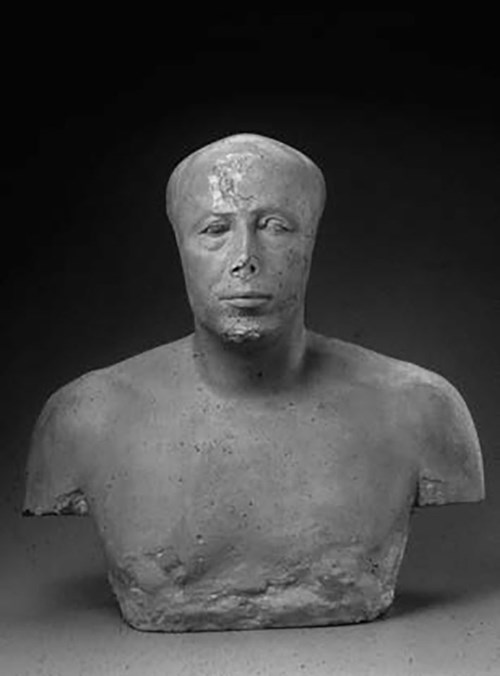
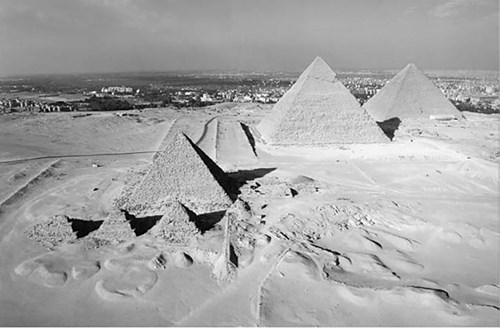
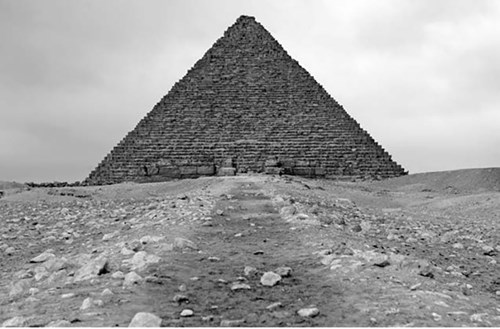
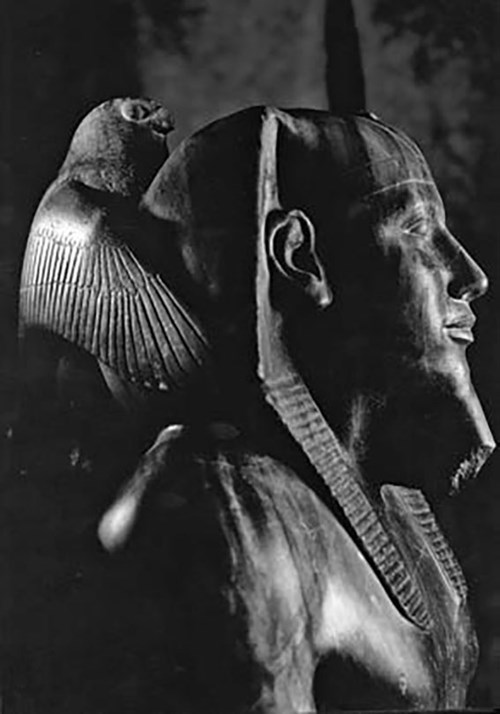
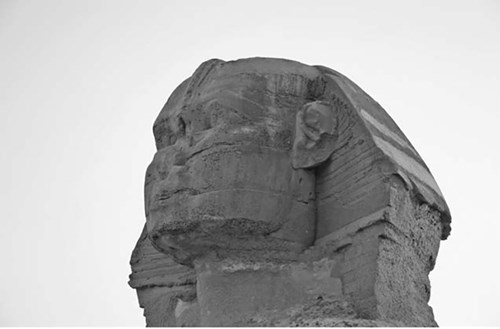
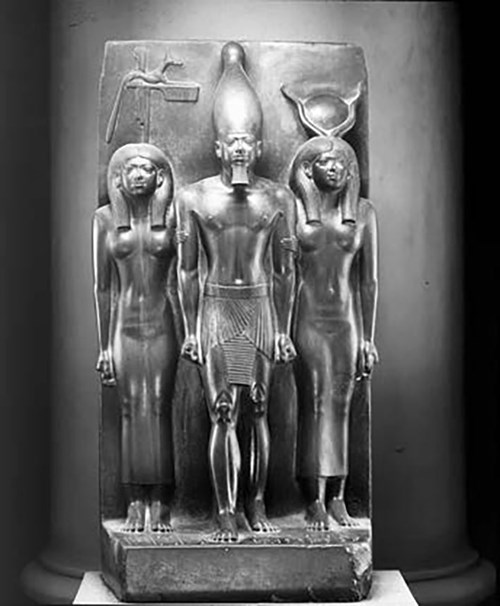
There are nineteen black & white images to bring the text to life.

I offer these six to show you what you are in for. The American University in Cairo Press made this trade paper edition to their usual quality standard. You'll be treated to a story that is astonishing in its timelessness, amazing in how very old it is, and unnerving in how familiar the personalities are.

Personalities are all we have left when history gets through with us. Hawass has one of the Egyptian personalities that will shape the pharoahs' journey into a very long future, one even greater than they could've imagined. Read his spirited advocacy of the culture and people who...by their own mental and physical labor...created the pyramids that we're gawkin' at five thousand years on.

Tuesday, December 19, 2023

FOLLOWING CAESAR: From Rome to Constantinople, the Pathways That Planted the Seeds of Empire, armchair travel with the best kind of guide


FOLLOWING CAESAR: From Rome to Constantinople, the Pathways That Planted the Seeds of Empire
JOHN KEAHEY

St. Martin's Press
$30.00 hardcover, available now

Rating: 4* of five

The Publisher Says: A travel narrative following three ancient roads and looking at more than two thousand years of history of Ancient Rome through the modern eye.

In 66 B.C., young, ambitious Julius Caesar, seeking recognition and authority, became the curator of the Via Appia. He borrowed significant sums to restore the ancient highway. It was a way to curry favor from Roman citizens in villages along the route, built from Rome to Brindisi between 312-191 B.C. He succeeded and rapidly grew in popularity. After achieving greatness in Rome and the far reaches of Gaul, he led armies along this road to battle enemies in Roman civil wars. And then, across the Adriatic Sea, he joined Via Appia's sister road, the Via Egnatia that began in today's Albania. Other armies followed these two roads that eventually connected Rome to Byzantium, today's Istanbul. Octavian, who became, in 27 B.C., Rome's first emperor, and his friend and later enemy Mark Antony traveled portions of both roads to defeat Caesar's murderers Brutus and Cassius at Philippi in eastern Macedonia. The great Roman statesman Cicero, the Roman poet Homer, the historian Virgil and many other notables traveled along one or both of these roads. In the first century of the Roman Empire in the earliest years of Christianity, the apostles Peter and Paul traversed portions of them. Pilgrims, seeking salvation in far-away Jerusalem, followed them as well throughout much of the Middle Ages. In the early second century A.D., the emperor Trajan charted a new coastal route between Benevento and Brindisi, later called the Via Traiana.

Today, short stretches of the original three roads can be seen in the ruins of ancient Roman cities, now preserved as archaeological wonders, and through the countryside near, and sometimes under, modern highways. Following those routes is the purpose of treading along the path that Caesar and so many others took over the early centuries. Modern eyes, seeing through the mists of more than two thousand years of history, lead the traveler along these three roads coursing through six countries between Rome and Istanbul. It is a journey full of adventure, discovery, and friendship―one one worth taking.

I RECEIVED A DRC FROM THE PUBLISHER VIA NETGALLEY. THANK YOU.

My Review
: I enjoy history for itself, and the many present-day echoes of historical events just add texture to my pleasure. This historical-tourism book was as deeply involving to me as a standard historical narrative because the conceit...following the Roman roads...is my idea of a great adventure vacation. The author was my guide on this escape from home. It worked as well as anything could because I knew I was in experienced hands (he has written four other books on touring Italy as a history buff.)

While I was very interested in his veteran-journalist's observations of the world traversed by the Roman roads he then traversed himself, and by his reports of his companions' responses to the modern world as well as the archaeology of the paths they traveled together, I was very disappointed that the book contained NO maps or photos.

Don't let that lapse stop you from enjoying the informed, intelligent voice of this forty-five-year veteran reporter as he shares his observations of the world he's moving through. His lifelong fascination with Italy and Rome (men really *are* obsessed with Rome!) gives him a very full view of the countries and regions he takes us through. This book is one of those rare books that, just as a reading experience, solely for the way the author builds an image and creates a simile, is a pleasure to read.

That his trip in Turkey, Asia Minor that was, coincided with COVID and its joys was very evocative for him. Plenty of plagues to meditate on. His religious ruminations are interesting to my deeply, faithfully atheist self...the road network of ancient Rome, and its internal postal connections enabled thereby, are largely responsible for the spread of the religion all across the empire. (There were christians in Pompeii...they found a ROTAS square there! By 79AD there were christians in Italy!)

I do want to mention that the "Caesar" of the title is not Julius; remember that Caesar was a title during the empire, and Trajan, whose Via Traiana is followed, was also a Caesar.

Self-gifting for a lovely time on #Booksgiving, as you settle down in your favorite reading spot, a beverage and a snack close at hand...Italy is involved, there is going to be food talk...and immerse yourself in a part of the world that could not possibly be richer in cultural highlights.

One star off for the absence of photos and/or illustrations.

Saturday, October 31, 2020

THE SHORTEST DAY, a quick hit of Irish magical realism from Colm Tóibín

THE SHORTEST DAY
COLM TÓIBÍN

Amazon Original Stories
$1.99 Kindle edition, available now

Rating: 4.75* of five

The Publisher Says: In Ireland, a man of reason is drawn to a true mystery older than the Pyramids and Stonehenge in this enthralling story about ethereal secrets by New York Times bestselling author Colm Tóibín.

During the winter solstice, on the shortest day and longest night of the year, the ancient burial chamber at Newgrange is empowered. Its mystifying source is a haunting tale told by locals.

Professor O’Kelly believes an archaeologist’s job is to make known only what can be proved. He is undeterred by ghost stories, idle speculation, and caution. Much to the chagrin of the living souls in County Meath. As well as those entombed in the sacred darkness of Newgrange itself. They’re determined to protect the secret of the light, guarded for more than five thousand years. And they know O’Kelly is coming for it.

I RECEIVED A DRC OF THIS STORY FROM THE PUBLISHER VIA NETGALLEY. THANK YOU.

My Review
: I can't imagine too many people I know need to be told what and where Newgrange is.

this image via newgrange.com

It is a stunning and majestic sight, though the location you see has been reconstructed...a fact whose advisability is, to put it mildly, debated in the archaeological community. No matter; here it is, here it stays, and good goddesses isn't it *spectacular*?!

The story Author Tóibín tells us is a simple one: a man of resolutely practical materialistic worldview is contemplating his imminent visit to Newgrange. It is almost Christmas, and in his deeply rooted preciseness of action, he has arranged to be gone *just* until Christmas Eve morning so as to, as always, spend his holidays with wife and children.

The Yule Solstice, a time of great power in Neolithic societies (if the number of archaeological sites with demonstrable connections to the Sun's position on that date is any evidence), has come to his attention as an important time at Newgrange as well. He feels duty bound, as the first archaeologist to possess this information, to investigate despite his unshakeable materialism:
The job of an archaeologist was to make known only what can be proved. The rest was idle speculation.

So two things are immediately apparent from this. First is that this is a story set in the past, as the site in its present state dates from after 1982 (see link beside the photo). Second is that there are those who know more than they have told about the site in the many years of Ireland's fussing about with it. That's very interesting....

As the tale is a short one, I don't want to give too much away. I am sure that the author's fans will, or already have, preordered the story. I know they won't want to know everything...but the story's best qualities are those that Author Tóibín uses in all his works, that remarkable ability to bring you with him as he astrally projects himeself (or whatever sorcery he actually does) into the worlds and eyes and minds of people perfectly real.

His gift is deployed on several strands. It makes me feel completely and happily immersed in the world he's created for them to enact this delightful confluence of streams of thought. It is a damn near perfect read for this wonderfully numinous time of year. Why, even Professor O'Kelly experiences an unaccustomed immanence while he is at Newgrange on the morning of the Solstice:
The professor was almost tempted to note that these people, if studied in the light of these designs on stone, knew something about what was palpable and also what was tangible: they knew about spirit, and they knew about line.
–and–
They must have loved the sun, or trusted it. They lured it down this corridor as though they were pulling it into the chamber by rope.

Even if it's just a hair too ungenerous with the Professor's character-building (that missing quarter-star explained), it is a delight and a worthy enhancement of your avoidance of the stressful events awaiting us on the third.

Thursday, August 18, 2016

CAHOKIA, or Take THAT Euro-exceptionalists!


CAHOKIA: Ancient America's Great City on the Mississippi
TIMOTHY PAUKETAT

Penguin Books
$17.00 trade paper, available now

Rating: 3.5* of five
WATCH THIS HISTORY VIDEO ABOUT CAHOKIA! https://www.youtube.com/watch?v=H5MB5_KlOOQ

The Publisher Says: Almost a thousand years ago, a Native American city flourished along the Mississippi River near what is now St. Louis. Cahokia was a thriving metropolis at its height with a population of twenty thousand, a sprawling central plaza, and scores of spectacular earthen mounds. The city gave rise to a new culture that spread across the plains; yet by 1400 it had been abandoned, leaving only the giant mounds as monuments and traces of its influence in tribes we know today.

In Cahokia, anthropologist Timothy R. Pauketat reveals the story of the city and its people as uncovered by the dramatic digs of American corn-belt archaeologists. These excavations have revealed evidence of a powerful society, including complex celestial timepieces, the remains of feasts big enough to feed thousands, and disturbing signs of large-scale human sacrifice.

Drawing on these pioneering digs and a wealth of analysis by historians and archaeologists, Pauketat provides a comprehensive picture of what's been discovered about Cahokia and how these findings have challenged our perceptions of Native Americans. Cahokia is a lively read and a compelling narrative of prehistoric America.

My Review: Where today sits St. Louis, Missouri, there once sat a huge Native American city we call Cahokia, absent any other name for it, relating it to a creek that flows through the five-square-mile extent of the known city and suburbs. There are Indian mounds galore here, and there even is a state park over on the Illinois side of the river. Serious archaeology has been done mostly in front of the bulldozers and the plows of farmers, developers, and the highway builders. Pauketat is one of the region's many dirt archaeologists, the guys who go out and trench interesting sites and keep uber-meticulous notes and drawings and samples of stuff. (GOD doesn't that sound like a painful bore?) Thanks to him and his colleagues, we now know that some sort of major urbanization kick hit the area in 1054 and ended in tears about 1250. Why? (On both counts.) Who? What the hell? Those are the questions raised by the archeology, and treated in concise chapters in this book.

I am not joking when I say concise. This entire book comes in at 170pp of author's text, plus 15pp of notes and an index. Not a challenging read, right? Wrong. The information conveyed in these pages, with about the expected level of grace from an academic writing about his pernickety, obsessive specialty, is rich and deep. I found myself taking week-long pauses at times, not "oh god what a slog" pauses but "...wait...what...no...wait..." pauses while my inner Bill and Ted tried to work out the IMMENSE and IMPORTANT implications of what I was learning.

Immense indeed. Native Americans are all-too-frequently hagiogrpahized as natural-world-lovin' harmony seekers. Oh really? Explain then, if you please, the six separate sites with as many as seventy sacrificed women buried in the trenches in front of which they were clubbed to death in this MATRILINEAL society? In ranks, meaning the next row stood there while the first row was clubbed to death. Why did the different-genetic-stock neighborhoods outlying Cahokia show the signs of poor diet and overwork that one expects to see in the lower classes, and that are absent from the downtowners? Why is there evidence from as far away as Wisconsin that the Cahokian religion was being proselytized and effectively forced down the throats of the locals via economic might?

Why are these Living Saints, as many counterculture woo-woos have it, suddenly shopping for shoes in the feet of clay department?

I confess that I am uber-gleeful about this. I do not subscribe to a worldview that, once upon a time, before icky-ptoo-ptoo Men got hold of things, there was a beautiful wonderful peaceful womanly world, and matrilineality is the last teensy vestige of that demi-Paradise. Ha! All these sacrifices, hugely overwhelmingly female, in a matrilineal society? Oh dear, got some blood on those girly-hands, don't we?

I also don't for a second buy the "living-in-harmony-with-Mother-Earth" story either. These folks stripped the local landscape bare and planted what supported their chosen life-style. No European involvement possible. When it all came to a halt, the violence of the Plains eternal wars began, and never ended. Massacres (google "Crow Creek" just for giggles), colonization, oh the fun that people have when the lid of powerful neighbors is lifted...all here, present and accounted for in the archeaological record!

So should you read this book? Not unless you're already interested in archeology. If you're a leftover hippie, it's likely to hurt too much. If you're wanting an overview, this ain't it. Definitely for the serious-minded reader.