Pages
- Home
- Mystery Series
- Bizarro, Fantasy & SF
- QUILTBAG...all genres
- Kindle Originals...all genres
- Politics & Social Issues
- Thrillers & True Crime
- Young Adult Books
- Poetry, Classics, Essays, Non-Fiction
- Science, Dinosaurs & Environmental Issues
- Literary Fiction & Short Story Collections
- Sookie Stackhouse/Southern Vampire Books & True Blood
- Books About Books, Authors & Biblioholism
Showing posts with label 19th century setting. Show all posts
Monday, February 16, 2026
LAND OF MY FATHERS, West African historical fiction
LAND OF MY FATHERS
VAMBA SHERIF
HopeRoad Publishing
$22.95 hardcover, available now
Rating: 4.5* of five
The Publisher Says: The proud Republic of Liberia was founded in the 19th century with the triumphant return of the freed slaves from America to Africa.
Once back 'home', however, these Americo-Liberians had to integrate with the resident tribes—who did not want or welcome them. Against a background of French and British colonialists busily carving up Mother Africa, while local tribes were still unashamedly trading in slaves . . . the vulnerable newcomers felt trapped and out of place.
Land of My Fathers plunges us into this world. But in the midst of turmoil, there is friendship. Edward Richard, a man born into slavery and a preacher by profession, is convinced that the future of Liberia lies in bringing peace amongst the tribes. His mission takes him to the far north, where he meets an extraordinary man, Halay. Edward's new and dearest friend is ready to sacrifice his own life to protect his country; for the Liberians believe that with Halay's death, no war will ever threaten their land. A century later, this belief is crushed when war engulfs the land, bearing away with it the descendants of both Edward and Halay. The story of Halay is the untold story of Liberia. What he did would come to stand as symbol of man's ability to defy the odds, to face the inevitable head on.
Where men should have stood shoulder to shoulder, they turned on each other instead.
I RECEIVED AN ARC FROM THE PUBLISHER. THANK YOU.
My Review: Human beings are vile. They are irredeemable. Sweeping statements, condemnatory and accusatory, all-inclusive, and deeply heartfelt. Want to know why? Read this novel about Liberia's history.
I'd wager big money against most people in the US being able to find Liberia on a map, or identify its flag correctly. This one:
...clearly modeled after the US flag, meant to align the new nation with the US principles of equality and freedom. Well...in a curious way it did. The native inhabitants of the country now called Liberia weren't in any great hurry to welcome these dark-skinned colonizers.
To tell his story as a story, not a sermon, Author Vamba Sherif uses a multigenerational structure tracking the developments of Liberian history. It's pretty much all new to me. I was interested in all the details salted through the story. I was always glad to return to the read. I'm deaccessioning my lovely hardcover but I can't say enough about the beautiful design and quality execution of the hardcover.
The story being told is of the same level of craft. It was deeply involving, it presented the disasters of human history in humane terms, giving the reader people to invest in and then giving those people the fates suffered by many millions like them.
I can't say I feel uplifted by this tale of venality, of carefully fanned hatreds overtaking the weakest of human emotions: Kindness.
I recommend the read to all who need a primer on the West African historical disaster that is Liberia.
Monday, August 4, 2025
DUSK, fourth Tasmania-set novel by Tasmanian author extraordinaire Robbie Arnott
DUSK
ROBBIE ARNOTT
Astra House (non-affiliate Bookshop.org link)
$15.99 ebook, preorder now for delivery tomorrow
SHORTLISTED for 2026's The Climate Fiction Prize.
Rating: 4.75* of five
The Publisher Says: For fans of North Woods and The Vaster Wilds, Dusk is a propulsive, moody, and atmospheric take on the Western.
In the distant highlands, a puma named Dusk is killing shepherds. Down in the lowlands, twins Iris and Floyd are out of work, money and friends. When they hear that a bounty has been placed on Dusk, they reluctantly decide to join the hunt. As they journey up into this wild, haunted country, they discover there's far more to the land and people of the highlands than they imagined.
And as they close in on their prey, they're forced to reckon with conflicts both ancient and deeply personal.
I RECEIVED A DRC FROM THE PUBLISHER VIA NETGALLEY. THANK YOU.
My Review: Do you remember my review of Flames? The debut novel from this author, I gave it all five stars six years ago. I'm still amazed how few people look at the tabs on the top bar, so it seems most of y'all missed my reviews of Limberlost and The Rain Heron, so I'm reposting them tomorrow as regular-blog posts. I'll carry on warbling about Author Arnott's prose and his evocations of a natural world I wish to hell I saw and felt as keenly as he does when I went outside, eg "They left at dawn, heading north-west, the steam of their horses cutting through the harshly cold air as they rode across frosted paddocks that soon gave way to plains of soft, snow-dusted buttongrass. The sun slanted onto their backs but did not warm them," from this story.
I badly want you to join me in the world of Arnott stans because he really puts in the work to make wonderful stories, in the older and current senses of that word. I think that merits our time and our treasure. The rewards for spending a bit of both in his quiet, unshowy company are many.
So, this latest novel: It's a Western, in the US sense, that follows twin brother and sister as they make a desperate attempt to eke out survival in a world harsher and less tolerant than we privileged computer-users have ever known. Offspring of a pair transported to distant Tasmania for absurdly trivial "crimes" (efforts to remain alive, really), the Renshaw twins had no chance of an "honest" start in life. They were trained up to thievery. Their long-since executed parents left them to fend for themselves and so they have.
Now, though, the life they were bred to lead has finally snapped shut the social trap of antisocial activity. Rob and cheat your neighbors long enough, they'll stop affording you the chance to do it. This is where we meet Iris and Floyd.
The desperation of hunger drives these parasites on the Body Politic to pursue a cockamamie plan to kill for a bounty a puma that's attacking shepherds in Tasmania's wild back-of-beyond meadows. How these very urban people will accomplish this...let's say I was never convinced it was a *good* plan, but everyone needs a plan, and some hope, for how to survive.
The fully risen sun built a morning of cold colour, of ripped clouds, sharp light washing onto wet wool and frosted fields. It afforded the twins a confidence that they hadn’t felt the previous day. With the sun unshielded, the mist absent, the land was robbed of menace. The river was no longer haunting but placid; the twisted trees appeared graceful and stoic in their contortions; the listless shepherds now seemed merely apathetic, rather than mysterious or threatening.What strikes me in that passage is how one can read it as beautiful sentences; as simile on several levels; as Western-genre foreshadowing of developments. I always love writing that lets me in, that is roomy enough for my imagination to work on the beautiful imagery and its story direction. Like Cormac McCarthy before him, Author Arnott's playing an old instrument in a different way (though not a nihilistic one, I'll hasten to reassure those not fond of ol' Cormac's grimfests).
Iris and Dusk, the female protagonists of this story, and each driven by the actions of men to fight for their very survival against those men simply to sustain their lives. If that's not a metaphor for late-stage capitalism's effects on feminism, I do not know what is. It was not until I finished the book and sat mulling it over that I found this in its substance. Of course, I rest atop a Himalaya of old white male privilege so no tellin' how much faster women will see it...but there it is, Iris needs to survive, Dusk does too, they have to protect those unable to do so for themselves (Floyd's got what I expect is scoliosis and is crippled by it).
Their collision is inevitable. It is primal, cataclysmic. It is the conflict of colonials in a country that they've taken as their own (pumas are placental mammals, not one of which is native to Australia), and Author Arnott makes sure to give us this stonking clue in the form of Lydia's Aboriginal voice. It should be no surprise to anyone that Lydia, the bosslady of a crew of peat-cutters, is our voice given to those still more denied a place than colonializers' women are.
And yet, and yet...read through a US lens, this story's incongruities with actual Tasmanian colonial history (Outback cattle barons become sheep barons and never, for all I know, crudesced into the place) are all in service of Author Arnott's career-long cutting of Tasmania's story-cloth to suit the pattern of story he wants to tell. I myownself think he does a truly wonderful job of it; he tells his wonderful story, simple survival of females in a world colonized and exploited by men, with the enhancements and alterations of a talented imagination.
I'd argue it starts too slowly for its eventual pace, and permaybehaps the ending is "too open" for many readers (though not for me, I like the story to head off into the sunset without me when there's as much to think over as there is here), so I'm not quit at the full-five point.
Damn close, though. It's another exercise in superior storytelling by an established superior storyteller.
Wednesday, March 26, 2025
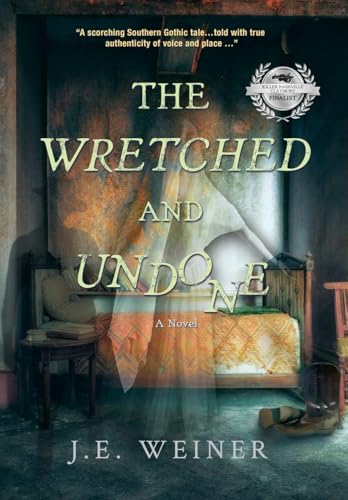
THE WRETCHED AND UNDONE, dark and spooky Texas-set immigrant family saga

THE WRETCHED AND UNDONE
J.E. WEINER
HtF Publishing (non-affiliate Amazon link)
$9.99 ebook, available now
Rating: 4* of five
The Publisher Says: A sweeping Southern Gothic saga unfolds in the Texas Hill Country, where history's silenced voices rise amidst an astonishing tale that defies expectations.
A sinister specter is hell-bent on revenge, and an ethereal woman in white is desperate to repel the menacing force. A battle rages for the hearts, minds, and souls of the Anderwalds and their extended family of immigrant outcasts, Arab camel wranglers, wounded warriors, and a songstress on the verge of madness. A sweeping Southern Gothic saga unfolds in the Texas Hill Country, where history's silenced voices rise amidst an astonishing tale that defies expectations.
On the eve of the Civil War, Polish immigrants Marcin and Agnieszka Anderwald arrive in Bandera, Texas, seeking a new beginning. But when Marcin crosses paths with a vengeful ghost known as the Shadow, their dream quickly turns into a nightmare. The Anderwalds' baby drowns, and Agnieszka is convinced she is to blame. She starves herself to death, returning from the grave as a ghostly Woman in White, determined to protect her family. Marcin and Agnieszka's son, Zacharias, burdened by grief, becomes entangled in a quest for vengeance that threatens his very soul. As he and his wife Liza clash with the relentless Shadow, they cling to hope when blessed with a child, John Marcin Anderwald.
But the curse of the Anderwalds is unyielding. John Marcin grows up amidst murder trials, haunting executions, and the ever-present Shadow that seeks to destroy his family. His love for the troubled singer Anna Schulte leads to further heartache, and his sons, Luke and Junior, inherit a legacy of sorrow and secrets that could tear them apart.
As the Anderwald legacy unfolds, each generation faces its own harrowing ordeal, where love and sacrifice are pitted against an unrelenting evil. Will they break free from the Shadow's curse, or will they remain forever wretched and undone?
I RECEIVED A DRC FROM THE PUBLISHER VIA NETGALLEY. THANK YOU.
My Review: Bandera! Good goddle mitey, y'all, that's just down the road a piece from my home town, Austin. What a surprise to find it in a novel of a cursèd family of Polish immigrants who are purported to be based on real people.
Dunno about all that, but it's cool to read about people I actually know. Or knew...most of the ones I met are bound to be dead by now, they all smoked like chimneys. But a thing most people don't seem to know is just how much the aftermath of the 1848 revolutions affected inbound migration into Texas. The repressions that followed the PTB returning to uncontested power in the Prussian, Austrian, and Russian Empires led to many, many people making their way to Galveston and Indianola to escape repression and reprisals from Bohemia, Poland, and Silesia...most especially Catholics from Poland and Bohemia, Anabaptists from Silesia.
So here's a superstitious Polish family arriving to start a freer, better life in Texas...they'd be so ashamed of their thrice-great grands and the awfulness they're inflicting on those who are seeking the same...and they get tangled up in a curse that travels the generations. Is that because "The Shadow" is supernatural, or because the family's passed it down like a blood feud with the world?
So yes indeed, it's dark, and violent, and misogynistic abuse is rife. Is it a cheery way to wile away a weekend? No. Is it fun? hmmm not all the way sure I'd call it "fun" but I was not about to put it down. Any family as haunted and afflicted as the Anderwalds that somehow staggers from the Civil War of 1860 all the way to the present is, well, tough, stubborn and full of that intangible thing I call "grit." It made me feel invested in the succeeding generations as they succumbed to...whatever "The Shadow" really is.
I'll only give it four stars because I found it so curiously compelling and oddly propulsive. I think many of y'all won't be so tolerant. If historical fiction about the ugly life challenges od immigrant clans that quite literally pull no punches don't send you sprinting for the exit, this read will scratch your dark fiction need. It's borderline supernatural horror without feeling silly to me. That tells you a lot about how deftly Author Weiner handles "The Shadow."
I liked the experience of reading about my old homeplace as well. It's funny...I don't want to live there now, but it's still a weird unwelcoming home to me. Definitely a spooky one to read.
Wednesday, March 5, 2025
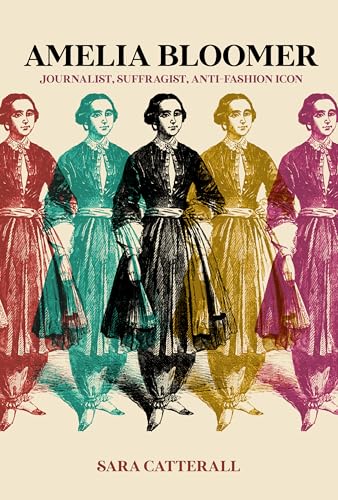
AMELIA BLOOMER: Journalist, Suffragist, Anti-Fashion Icon, a woman of moral certainty and impeccable rectitude who rebelled hard
AMELIA BLOOMER: Journalist, Suffragist, Anti-Fashion Icon
SARA CATTERALL
Belt Publishing (non-affiliate Bookshop.org link)
$11.99 ebook edition, available now
Rating: 5* of five
The Publisher Says: A fascinating look at an underappreciated woman in American history whose newspaper fostered a national conversation on women's issues.
Those who recognize the name Amelia Bloomer usually do so because of bloomers, the clothing item named after her. While she was a rational dress advocate for a time—calling on women to abandon rigid corsets and heavy petticoats and opt for long trousers, shorter skirts, and sensible boots—it was "but an incident" in the larger story of her life and impact.
Bloomer edited and published The Lily, the first newspaper for and by women. Much like Bloomer herself, it started as a temperance rag before broadening to include some of the most important issues to women in that day, including the right to vote, and included contributions from thinkers like Elizabeth Cady Stanton. The groundbreaking paper brought the conversation from Seneca Falls right to the doorsteps of women across the expanding nation.
Guided by a rigid sense of morality and a Puritan work ethic, Bloomer remained open-minded to new ideas. She refused to be swayed by social norms and wrote cutting responses to those who tried to intimidate or shame her and her friends, a group that included Stanton and Susan B. Anthony. This deeply researched biography by Sara Catterall follows the many chapters of her life: her humble upbringing in upstate New York, her role in the temperance movement (and its true legacy as a wellspring of the women's rights movement), her years at The Lily, her groundbreaking position as deputy postmaster in Seneca Falls, her troubled health, and her eventual move to Council Bluffs, Iowa, where she continued to move the needle on women's suffrage in the more flexible new governments of the West.
I RECEIVED A DRC FROM THE PUBLISHER VIA EDELWEISS+. THANK YOU.
My Review: It had never creased my cranium that Amelia Bloomer was a temperance crusader before I read this book. Given that my mother the abuser never drank, and I had one boyfriend in my life who ever raised a hand to me and that never happened while he was drunk, temperance just did not ever cause me to think "good idea". All my associations with Mrs. Bloomer were around her ideas regarding the idiotic way women were caged inside their clothing during this era. Corsets really are the bound feet of Western culture.
I was utterly unprepared to meet this wildly different Bloomer. She was a woman of her time, in many ways moreso than the more famous ladies like her friends Stanton and Anthony...both of whom she knew from living in Seneca Falls, New York, and each of whom influenced her increasingly radical thinking about women's suffrage...as she was married with children and required to earn her living alongside her husband as best she was able while still raising children. Dexter and she were co-workers, as he hired her to work alongside him as a postmaster after his stint as a Whig-supporting newspaper editor landed him the job. A government salary for a woman no less!
Her position as a temperance crusader led her to make the connection that the only way to stop the unregulated flow of alcohol was to exert political pressure to regulate it. That was impossible, on a practical level, absent votes for women. (She didn't live to see Prohibition and its horrifying unintended consequences.) So her rational dress and votes for women all owe their influence on US culture to her christian temperance-movement work. It was spread wider than Seneca Falls by her opening The Lily, a newspaper for and by women that she, despite raising children, suffering chronic illness, and a complete lack of training except by Dexter's example from his newspaperman days. I am *gobsmacked* by her rigidly moral outlook leading her so far in opposition to the stupid cultural norms of "appropriate" behavior for women in a time where they were so very much more entrenched and enforced than they are now.
At this moment in US, and more broadly Western, political history, the example of a woman who looks at the world as she finds it, judges it harshly for its failings, and—at considerable personal cost to herself and her family—sets about opposing that world continuing down its present path, is invaluable. I'd also like to point out her starchy morality was inspired by an upbringing conventionally religious yet her response to it was radically, vocally, and consistently to apply its moral precepts in full and without exceptions.
If more christians were like Amelia Bloomer, the world would be a better place.
I did indeed just say that. Her acerbic wit, another surprise this book held for me, was deployed against obtuse and obnoxious followers of orthodoxy. Yet Mrs. Bloomer's touch with connecting to people who genuinely did not understand the stakes she saw so clearly in the direction society was heading was exemplary. She met those people on their own ground, without preaching or hectoring. I can only envy that skill; I myownself climb onto my ever-present high horse because I'm Right, that ever-losing strategy. Mrs. Bloomer's tone was always respectful...until she sensed ill-will or disingenuousness.
I knew exactly nothing of the substance of her life until Belt Publishing brought out this book. (I also now know that Dexter Bloomer wrote a biography of her in 1896, so I'll Gutenberg that up here directly.) Author Catterall and her publisher are to be praised, and I hope supported with purchases, for telling this unjustly neglected monadnock of probity and moral clarity's story to a needy new generation of readers. All five stars for bringing modern attention to this person from our past with so much to teach us for our future. It's involving prose, built on solidly shown foundations of information.
Wednesday, December 13, 2023
THE EMPEROR'S SON, immersive historical fiction
THE EMPEROR'S SON
VAMBA SHERIF
Iskanchi Press
$25.00 trade paper, available now
Rating: 4.5* of five
The Publisher Says: Vamba Sherif’s The Emperor’s Son tells the story of Zaiwulo, a young boy sent off to the ancient city of Musadu to study under Talata, a great scholar and head of the legendary Haidarah family. The boy soon notices that there is more to the story of his presence among the Haidarahs, and as he grows older and becomes a soldier fighting alongside Emperor Samori whom the French nicknamed “the Black Napoleon”, his resolve to unravel the mysteries of his childhood propels him into an adventure that leads him back home in the forests where there awaits a revelation with far-reaching consequences.
I RECEIVED A DRC FROM THE PUBLISHER VIA NETGALLEY. THANK YOU.
My Review: Historical fiction set in Africa, written by an African author? Sign me up...I love Marlon James's and Kai Ashante Wilson's African-set and -themed fantasy novels, Tade Thompson's Rosewater SF series, and on and on...the genres I read are populated with African writers, and I seek them out.
Until now, historical fiction has not been populated. I have hopes that this will change because this story is awesome. I won't go through a book report because I hate that in a review, but I will say that "the Black Napoleon" as Samori Touré, a Mandinka Muslim cleric, military strategist, and founder of the Wassoulou Empire, is called in this book, was a fascinating character indeed. Start with the Wikipedia article linked and keep going...look up the events in the book...don't stint on the research!
Or do none, that won't harm your pleasure in the story of a young man caught up in the heady slipsteam of a leader who wants, plans for, and wages an effective war to gain independence and self-determination. The people of Western Africa then incorporated into France's colonial empire were working with him, and that kind of personality is fascinating to read about.
The story is deeply immersive, impressively involving, and a delight to read. Any younger reader, say from sixteen up, will not find anything in the story that hasn't passed before their eyes many times before. The violence is not overplayed, or lingered on in a prurient way. It is a fact of war. The balancing factors are the immense amount of cultural knowledge that Author Sherif puts in logical and necessary places. I felt the way he placed them, the level of detail he provided, gave me a deeper picture of the world I was reading about.
At over 500 pages, this is the best kind of immersive, dense, textured read for an adolescent or older person to get as a #Booksgiving gift. What better way to escape the family closeness so many readers dread, in such a pleasant and acceptable way?
Strongly recommended.
Monday, October 10, 2022
THE LINDBERGH NANNY, historical fiction about a case we still talk about 90 years on & HESTER, speculation about Hawthorne's THE SCARLET LETTER
HESTER
LAURIE LICO ALBANESE
St. Martin's Press
$27.99 hardcover, available now
Rating: 3.75* of five
The Publisher Says: A vivid reimagining of the woman who inspired Hester Prynne, the tragic heroine of Nathaniel Hawthorne's The Scarlet Letter, and a journey into the enduring legacy of New England's witchcraft trials.
Who is the real Hester Prynne?
Isobel Gamble is a young seamstress carrying generations of secrets when she sets sail from Scotland in the early 1800s with her husband, Edward. An apothecary who has fallen under the spell of opium, his pile of debts have forced them to flee Edinburgh for a fresh start in the New World. But only days after they've arrived in Salem, Edward abruptly joins a departing ship as a medic—leaving Isobel penniless and alone in a strange country, forced to make her way by any means possible.
When she meets a young Nathaniel Hawthorne, the two are instantly drawn to each other: he is a man haunted by his ancestors, who sent innocent women to the gallows—while she is an unusually gifted needleworker, troubled by her own strange talents. As the weeks pass and Edward's safe return grows increasingly unlikely, Nathaniel and Isobel grow closer and closer. Together, they are a muse and a dark storyteller; the enchanter and the enchanted. But which is which?
In this sensuous and hypnotizing tale, a young immigrant woman grapples with our country's complicated past, and learns that America's ideas of freedom and liberty often fall short of their promise. Interwoven with Isobel and Nathaniel's story is a vivid interrogation of who gets to be a "real" American in the first half of the 19th century, a depiction of the early days of the Underground Railroad in New England, and atmospheric interstitials that capture the long history of "unusual" women being accused of witchcraft. Meticulously researched yet evocatively imagined, Laurie Lico Albanese's Hester is a timeless tale of art, ambition, and desire that examines the roots of female creative power and the men who try to shut it down.
I RECEIVED A DRC FROM THE PUBLISHER VIA NETGALLEY. THANK YOU.
My Review: A book about passion elicits passionate responses. Thus The Scarlet Letter from its date of publication to the present. What Author Albanese did was meld a fact of Hawthorne's life...all his novels save this one sprang from known biographical incidents..and said, "...except...? Hmmm" and ran with it.
Thus we have this novel, which I stress so loudly because I've seen a lot of responses to the book that take exception to the author's assumption that Hawthorne was always a writer working from his own biography. I fail to understand this. It's a novel, and novels are fiction. The way they get their lives is someone thinking, "hey, what if..." and running with it. "Oh it's unsourced in anything from the time" well now, our little firebug Hawthorne might've hidden many a secret forever in his purgings, mightn't he? What he didn't want us to know, we do not know. ...that sounds weird but I don't know how to fix it.
Anyway, considering the story on its own merits...I like it okay. I don't love it.
Too much, too much, I thought as Isobel synesthesia came to the fore, then as we whizzed back into the seventeenth century again.... It's just another thing to mark her out as weird, this strange sensory disorder. Her life was eventful and her loves bone-rattlingly deep wasn't enough? When I read novels I want to think about how the life unfolding before me is moving, not how it's making me move between emotional registers. That's when I begin to feel a bit like a footstool, moved here, plopped there, and all in service of someone else's visions and needs.
Yes yes, I know, that is what novelists do. But the ones whose work I treasure do it with less grunting and heaving.
Setting the novel in Salem, and with Hawthorne...well, the parallels to his probable state of guilt and discomfort over the history even then looked on as brutal and his treatment of Isobel aren't challenging to form are they. I wasn't particularly enamoured with the author's take on Hawthorne, finding him a dreary sort of navel-gazing git. I'm not all the way sure that he could've been as quivery as a blancmange and still written the work he did. I could, of course, be wrong. After all, I suspect that Melville's obvious tendresse for Hawthorne was not entirely unreciprocated and I am *loudly*assured* this is unthinkable.
Back to Hester. I wish it was less hectic. I would've enjoyed a more uncluttered interior for the novel to present itself to me; one colored less hectically and decorated less thoroughly with lovely bibelots and literary objet d'art. But the read as it was, distractingly stuffed into a space a bit too small for it, was a deeply interesting and quite soundly reasoned story. The passive little Hawthorne falling for the intensely alive Isobel? Yes, I see it. The quivering awakening of the young people to bodily pleasure? It is ever thus, and so always involving to me. The resolution of the matters that, quite inevitably, come from the aforementioned awakening? Fortuitous! And, as the epilogue-y thing at the end makes Ever. So. Clear, it all came good.
Please don't tie bows and smack 'em on the butts of my stories. I'd like some room to put my own thoughts into the story's likely continuation.
These are the things that kept me from warbling my fool lungs out about this read. Others will, I do not doubt, feel differently. I expect so, in fact, and hope I'll be seeing the author's gorgeous cover art in many a gift pile this Yule.
++++++++++++++++++++++++++++++++++++++++++++++++++++++++++++++++
THE LINDBERGH NANNY
MARIAH FREDERICKS
Minotaur Books
$27.99 hardcover, available 15 November 2022
Rating: 4* of five
The Publisher Says: Mariah Fredericks's The Lindbergh Nanny is powerful, propulsive novel about America’s most notorious kidnapping through the eyes of the woman who found herself at the heart of this deadly crime.
When the most famous toddler in America, Charles Lindbergh, Jr., is kidnapped from his family home in New Jersey in 1932, the case makes international headlines. Already celebrated for his flight across the Atlantic, his father, Charles, Sr., is the country’s golden boy, with his wealthy, lovely wife, Anne Morrow Lindbergh, by his side. But there’s someone else in their household—Betty Gow, a formerly obscure young woman, now known around the world by another name: the Lindbergh Nanny.
A Scottish immigrant deciphering the rules of her new homeland and its East Coast elite, Betty finds Colonel Lindbergh eccentric and often odd, Mrs. Lindbergh kind yet nervous, and Charlie simply a darling. Far from home and bruised from a love affair gone horribly wrong, Betty finds comfort in caring for the child, and warms to the attentions of handsome sailor Henrik, sometimes known as Red. Then, Charlie disappears.
Suddenly a suspect in the eyes of both the media and the public, Betty must find the truth about what really happened that night, in order to clear her own name—and to find justice for the child she loves.
I RECEIVED A DRC FROM THE PUBLISHER VIA NETGALLEY. THANK YOU.
My Review: A lot of ink is still spilled about this dreadful criminal act, ninety years on; it has everything we love in a public spectacle: a pretty woman, a handsome hero, a quiet young girl with big dreams. That these won't survive contact with the ever-increasing celebrity culture that mass media, only recently including newsreels and radio broadcasts, with its invasive tentacles shoving into each and every cranny of the principals' lives, thoughts, actions before, during, and after the events described, is the darkest tinge of tragedy.
As part of this non-fiction novel coming this November, Author Fredericks presents her research in epitome..."this is true, this bit's been changed but is mostly true"...which to my mind is the proper way to handle a researched work of fiction that is based on fact. I do not care for the research-paper lists of sources, citations, and so forth, that some authors provide so as to spike the many, many guns aimed at creators in internet culture. "Appropriation! Inaccuracies and falsehoods!" ::eyeroll:: It's called FICTION, people, CTFD.
My personal axe now ground to my own satisfaction, let me tell you what I enjoyed most about the read:
It's not clear where I'll be living. I'm part of the Lindbergh household, but they have no house of their own yet, which is why they're living with her parents. They've not even been married two years and seem to have spent most of that time in the air.
That's Betty's voice from the beginning of chapter three. She's direct. She's concise. She does not shilly-shally, not ever and not once. I like that in a person, I appreciate that in a character, and I am glad to say that Betty was (despite the media circus that she endured without much in the way of role models to guide her) a delightful companion in her own life as well. (The author speaks of her meeting with A. Scott Berg when he was writing his Lindbergh biography, what transpired during that meeting, and this informed her awareness of how she wants Betty's voice to sound. She nailed it.)
This being a factual story, and the author giving no hint that she intended to pull a fast one at the end, I was deeply pleased to feel invested in the unfolding tale. It's really easy, with a story not exactly underreported, and about which there is quite an extensive trove of writing already. (Ye gawds some of what's been said...!) No, the ending hasn't changed; yes, the guilty party's guilt is evident; but there are so many cockroaches scuttling for cover in any person's existence if an arc-lamp like the one aimed at the Lindberghs is trained on it that there's room for a lot of juicy speculation.
How can you not be impressed when someone takes ninety-year-old facts and makes a solid, well-made story out of them?
But...I hear the Gotcha! Gang clearing their throats...this is a four-star review and you're describing a five-star experience. Well, no thing made by human hands is perfect, is it. I rankle mightily at the author's choice to ascribe a certain suspect's furtive, secretive, and frankly unpleasant suspiciousness as down to that suspect's gayness. Yes indeed, the suspect's actual sexuality was not ever even hinted to be "deviant" in the parlance of the day. In the endnotes, the author says she made this deliberate choice to give the character a "need for privacy that would be instantly understandable to the modern reader."
Uh-huh.
That star-losing choice aside...Yes, I'm impressed. Yes, I'd say go pre-order one. I'm so glad I was able to read it as a DRC because the wait for the library's inevitable copy will be long. Get on it soon.
Thursday, December 9, 2021
CHINA COURT, deeply satisfying read by a "snoozer biddy" extraordinaire
jacket of my mother's 1961 Viking Press edition
CHINA COURT
RUMER GODDEN
Open Road Media (non-affiliate Amazon link)
$1.99 sale price! Go get one!
Rating: 3.875* of five
The Publisher Says (flap copy of my mother's 1961 Viking Press edition): In this intricately plotted novel of a Cornish country house and the five generations who have peopled it, the story of American-reared Tracy Quin's homecoming is intertwined with the stories of her ancestors. Tracy comes home to visit her grandmother on the day after old Mrs. Quin dies, and becomes involved in the question of what will happen to China Court, the house she loves, which is hopelessly outdated and requires a great deal of repair—repair for which there is no money.
The old stories rise one by one as Tracy's unfolds—the story of lonely, brilliant Eliza; of Jared and Lady Patrick's fragile, bitter marriage; of Borowis and John Henry and old Mrs. Quin herself, when she was beautiful young Ripsie and an outsider to the family. As the lives of those who loved China Court are unfolded, the question of what will happen to the house becomes even more pressing, and soon only Tracy and Mrs. Quin's young tenant Peter St. Omer stand in the way of its destruction.
Serialized in the Ladies' Home Journal in 1960.
My Review: When I was a youngster, my mother had a lot of books from the 1930s to the 1960s on her shelves. I was allowed to roam freely among them, because she said that if I was old enough to want to read something, I should be able to do so.
As one can imagine, the large majority of a mother's bookshelf wasn't all that appealing to a young boy...Taylor Caldwell, Mary Lasswell, Anya Seton, Kathleen Winsor, and Rumer Godden were all well-represented. I called them, collectively, "snoozer biddies." Lots of long-face about loves lost, and noble sacrifices in the name of love, and mothers Doing Their All for Their Children, and blah blah blah blah.
Forty years later, I picked up China Court at the prompting of memory and the LT connection cloud bringing Rumer Godden's name back up to me. I half-remember some plot points, I do remember thinking that the rest of the snoozer biddies shoulda talked to this lady, she knew her onions comes to writin', and this was a good story.
It's a really good story! I think family sagas always appealed to me, and that's why this book snuck past the general opprobrium of youthful disdain heaped on the other books.
Not everyone in this book is likable, in fact most of them are pretty skeevy...motivated by greed, lust, vengeful meanness, thence to do some extraordinarily good things, and some cruel ones too. It reminded me then, and does also now, of my own family.
China Court is a house. It's not some Stately Manor, it's a big, old-fashioned family house. In the early 1960s, big places like this were in a serious period of desuetude in England. This book chronicles the house and the family's intertwined fates at this now-very-distant moment of crisis. It's structured in echo of the Book of Hours that Mrs. Quin, the last nineteenth-century native to live in the house, treasured and apparently read often. A Book of Hours, for the non-Catholic, divides the day into periods of prayer. Most of us have heard the terms "Lauds" and "Prime" (in the non-Amazon sense) and so forth, but these are just words...the idea of them, their purpose, is to give a reverential and spiritual cast to a person's every day and every act.
Speaking as a practicing anti-Christian, I think this is one of the best, most missed, ideas that modernity has rendered obsolete. I think, if this system of spiritual organization were to be reintroduced, the number of people who *actually* understood the religion they profess would rise exponentially, and I am just optimist enough to hope that there would be a corresponding reduction in the amount of loathsome hate-speech emanating from them.
As a narrative force in this novel, I think it's excellent and inspired. I think Rumer Godden deserves the attention of today's readers for her technical talent, her spiritual message, and her ahead-of-the-curve ideas. I recommend this to you.
CHINA COURT
RUMER GODDEN
Open Road Media (non-affiliate Amazon link)
$1.99 sale price! Go get one!
Rating: 3.875* of five
The Publisher Says (flap copy of my mother's 1961 Viking Press edition): In this intricately plotted novel of a Cornish country house and the five generations who have peopled it, the story of American-reared Tracy Quin's homecoming is intertwined with the stories of her ancestors. Tracy comes home to visit her grandmother on the day after old Mrs. Quin dies, and becomes involved in the question of what will happen to China Court, the house she loves, which is hopelessly outdated and requires a great deal of repair—repair for which there is no money.
The old stories rise one by one as Tracy's unfolds—the story of lonely, brilliant Eliza; of Jared and Lady Patrick's fragile, bitter marriage; of Borowis and John Henry and old Mrs. Quin herself, when she was beautiful young Ripsie and an outsider to the family. As the lives of those who loved China Court are unfolded, the question of what will happen to the house becomes even more pressing, and soon only Tracy and Mrs. Quin's young tenant Peter St. Omer stand in the way of its destruction.
Serialized in the Ladies' Home Journal in 1960.
My Review: When I was a youngster, my mother had a lot of books from the 1930s to the 1960s on her shelves. I was allowed to roam freely among them, because she said that if I was old enough to want to read something, I should be able to do so.
As one can imagine, the large majority of a mother's bookshelf wasn't all that appealing to a young boy...Taylor Caldwell, Mary Lasswell, Anya Seton, Kathleen Winsor, and Rumer Godden were all well-represented. I called them, collectively, "snoozer biddies." Lots of long-face about loves lost, and noble sacrifices in the name of love, and mothers Doing Their All for Their Children, and blah blah blah blah.
Forty years later, I picked up China Court at the prompting of memory and the LT connection cloud bringing Rumer Godden's name back up to me. I half-remember some plot points, I do remember thinking that the rest of the snoozer biddies shoulda talked to this lady, she knew her onions comes to writin', and this was a good story.
It's a really good story! I think family sagas always appealed to me, and that's why this book snuck past the general opprobrium of youthful disdain heaped on the other books.
Not everyone in this book is likable, in fact most of them are pretty skeevy...motivated by greed, lust, vengeful meanness, thence to do some extraordinarily good things, and some cruel ones too. It reminded me then, and does also now, of my own family.
China Court is a house. It's not some Stately Manor, it's a big, old-fashioned family house. In the early 1960s, big places like this were in a serious period of desuetude in England. This book chronicles the house and the family's intertwined fates at this now-very-distant moment of crisis. It's structured in echo of the Book of Hours that Mrs. Quin, the last nineteenth-century native to live in the house, treasured and apparently read often. A Book of Hours, for the non-Catholic, divides the day into periods of prayer. Most of us have heard the terms "Lauds" and "Prime" (in the non-Amazon sense) and so forth, but these are just words...the idea of them, their purpose, is to give a reverential and spiritual cast to a person's every day and every act.
Speaking as a practicing anti-Christian, I think this is one of the best, most missed, ideas that modernity has rendered obsolete. I think, if this system of spiritual organization were to be reintroduced, the number of people who *actually* understood the religion they profess would rise exponentially, and I am just optimist enough to hope that there would be a corresponding reduction in the amount of loathsome hate-speech emanating from them.
As a narrative force in this novel, I think it's excellent and inspired. I think Rumer Godden deserves the attention of today's readers for her technical talent, her spiritual message, and her ahead-of-the-curve ideas. I recommend this to you.
Wednesday, March 26, 2014
THE BLIND CONTESSA'S NEW MACHINE, an extraordinarily beautiful first novel
THE BLIND CONTESSA'S NEW MACHINE
CAREY WALLACE
Penguin Books
$15.00 trade paper, available now
Rating: 4.75* of five
The Publisher Says: In the early 1800s, a young Italian contessa, Carolina Fantoni, realizes she is going blind shortly before she marries the town's most sought-after bachelor. Her parents don't believe her, nor does her fiancé. The only one who understands is the eccentric local inventor and her longtime companion, Turri. When her eyesight dims forever, Carolina can no longer see her beloved lake or the rich hues of her own dresses. But as darkness erases her world, she discovers one place she can still see--in her dreams. Carolina creates a vivid dreaming life, in which she can not only see, but also fly, exploring lands she had never known.
Desperate to communicate with Carolina, Turri invents a peculiar machine for her: the world's first typewriter. His gift ignites a passionate love affair that will change both of their lives forever.
Based on the true story of a nineteenth-century inventor and his innovative contraption, The Blind Contessa's New Machine is an enchanting confection of love and the triumph of the imagination.
My Review: On the eve of her wedding to the most eligible, handsomest bachelor in her small world, Contessa Carolina Fantoni announces to him that she is going blind. He laughs dismissively, then kisses her indulgently, thus setting the tone for their entire relationship. After full blindness sets in, her eccentric childhood friend and neighbor, a married inventor and amateur scientist, creates for her the world's first typewriter, that she may continue to communicate with the outside world. And thus a passionate affair begins, one that bids fair to destroy two marriages and possibly four lives. That is hardly a new plot nor is there a shocking modern-sensibilities dénouement. But in its bittersweet presentation, it's clear that the author understands the losses of compromise and accommodation that all relationships demand of us.
I am mortally afraid of only a few things in this life: 1) Blindness; 2) being eaten by a shark; and 3) suffocating/drowning. My mother went blind a year or more before she died, and it was a torture. She read passionately, and suddenly couldn't; she was never able to adapt to audiobooks. This rings me like a bell, a tocsin of terror that has me sweating and crying as I type this on a c-o-l-d night. And this book's careful, polished prose made that horrific nightmare (literally for me, at least once a year) endurable, survivable, where in hands less skilled than Carey Wallace's I would simply have burned the book and paid the library for it.
How she did this is, she presented the onset and completion of the process in a series of vignettes that define what it is to see, and to judge the world on what is seen; Wallace makes that process so arbitrary, so essentially meaningless, that as the Contessa charts her progress into eternal night, she and the reader understand that vision as primary perception is a habit of mind. The Contessa plumbs the darkness fearlessly. She lives in it, after she accepts its permanence, with more grace than she appeared to muster during her sighted years.
It's quite a lovely achievement, and it's told in lovely sentences. Wallace, whose author photo rather distressingly resembles a high-school senior picture, had an excellent editor, and handed that editor a lovely book to begin with, you can be sure. This sort of prose doesn't get forged into being on an editor's anvil, it gets the spurs and cracks annealed out of it. Something of the book's raw state remains, thank goodness, because there are some places where opportunities are missed and others are simply AWOL where they would have been welcome. Why thank goodness? Because if this effort were to be perfect, I'd have to hunt this youngster down and kill her in furious writerly envy, that's why.
And I don't want to go to jail over a book.
CAREY WALLACE
Penguin Books
$15.00 trade paper, available now
Rating: 4.75* of five
The Publisher Says: In the early 1800s, a young Italian contessa, Carolina Fantoni, realizes she is going blind shortly before she marries the town's most sought-after bachelor. Her parents don't believe her, nor does her fiancé. The only one who understands is the eccentric local inventor and her longtime companion, Turri. When her eyesight dims forever, Carolina can no longer see her beloved lake or the rich hues of her own dresses. But as darkness erases her world, she discovers one place she can still see--in her dreams. Carolina creates a vivid dreaming life, in which she can not only see, but also fly, exploring lands she had never known.
Desperate to communicate with Carolina, Turri invents a peculiar machine for her: the world's first typewriter. His gift ignites a passionate love affair that will change both of their lives forever.
Based on the true story of a nineteenth-century inventor and his innovative contraption, The Blind Contessa's New Machine is an enchanting confection of love and the triumph of the imagination.
My Review: On the eve of her wedding to the most eligible, handsomest bachelor in her small world, Contessa Carolina Fantoni announces to him that she is going blind. He laughs dismissively, then kisses her indulgently, thus setting the tone for their entire relationship. After full blindness sets in, her eccentric childhood friend and neighbor, a married inventor and amateur scientist, creates for her the world's first typewriter, that she may continue to communicate with the outside world. And thus a passionate affair begins, one that bids fair to destroy two marriages and possibly four lives. That is hardly a new plot nor is there a shocking modern-sensibilities dénouement. But in its bittersweet presentation, it's clear that the author understands the losses of compromise and accommodation that all relationships demand of us.
I am mortally afraid of only a few things in this life: 1) Blindness; 2) being eaten by a shark; and 3) suffocating/drowning. My mother went blind a year or more before she died, and it was a torture. She read passionately, and suddenly couldn't; she was never able to adapt to audiobooks. This rings me like a bell, a tocsin of terror that has me sweating and crying as I type this on a c-o-l-d night. And this book's careful, polished prose made that horrific nightmare (literally for me, at least once a year) endurable, survivable, where in hands less skilled than Carey Wallace's I would simply have burned the book and paid the library for it.
How she did this is, she presented the onset and completion of the process in a series of vignettes that define what it is to see, and to judge the world on what is seen; Wallace makes that process so arbitrary, so essentially meaningless, that as the Contessa charts her progress into eternal night, she and the reader understand that vision as primary perception is a habit of mind. The Contessa plumbs the darkness fearlessly. She lives in it, after she accepts its permanence, with more grace than she appeared to muster during her sighted years.
It's quite a lovely achievement, and it's told in lovely sentences. Wallace, whose author photo rather distressingly resembles a high-school senior picture, had an excellent editor, and handed that editor a lovely book to begin with, you can be sure. This sort of prose doesn't get forged into being on an editor's anvil, it gets the spurs and cracks annealed out of it. Something of the book's raw state remains, thank goodness, because there are some places where opportunities are missed and others are simply AWOL where they would have been welcome. Why thank goodness? Because if this effort were to be perfect, I'd have to hunt this youngster down and kill her in furious writerly envy, that's why.
And I don't want to go to jail over a book.
Subscribe to:
Posts (Atom)