Saturday, March 1, 2025

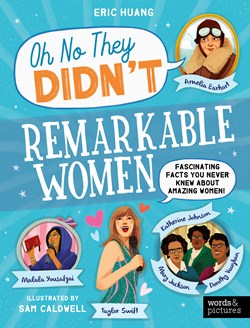
OH NO THEY DIDN'T! REMARKABLE WOMEN: Fascinating Facts You Never Knew About Amazing Women!, a juvenile book about women with power


OH NO THEY DIDN'T! REMARKABLE WOMEN: Fascinating Facts You Never Knew About Amazing Women!
ERIC HUANG
(illus. Sam Caldwell)
words & pictures/Quarto Group (non-affiliate Amazon link)
$12.99 trade paper, available now

Rating: 4.5* of five

The Publisher Says: In this myth-busting guide to remarkable women past and present, everything you think you know will be proven wrong!

Remarkable women have been at the forefront of history. They’ve changed the world and are leading the way to our future. But how much do you really know about the remarkable women who’ve shaped our world? We all know that. . .
  • Frida Kahlo made her name as a painter
  • Jane Austen wrote simple romance novels
  • Men pioneered scientific breakthroughs in the past
  • AND that ancient people only worshipped strong male gods. . .
  • Or did they. . . ? Because. . . OH NO THEY DIDN'T!

    Misconceptions about women from the past and present are everywhere, but none of them are true! In Oh No They Didn't: Remarkable Women myths are busted about over 50 remarkable women from politicians to legends, performers, activists, scientists, mathematicians, creatives, and more.

    In this fresh and funny guide learn about inspiring women from all over the world as well as their influence on history and popular culture. Stylishly designed and humorously illustrated by Sam Caldwell, Oh No They Didn't: Remarkable Women makes learning fun with unexpected facts and a playful, upbeat approach to non-fiction.

    Oh No They Didn't: Remarkable Women is the perfect inspiring guide for ALL young people to learn about the influential women who may have been left out of traditional history books and deserve to be celebrated.

    I RECEIVED A DRC FROM THE PUBLISHER VIA EDELWEISS+. THANK YOU.

    My Review
    : My mother was my introduction to the waste of potential, and the weight of prejudice, that has plagued women since patriarchy took over the globe. Her (probably sexually, certainly emotionally) abusive father convinced her she was unable to understand math, science, or any other "male" stuff. He forbade her to accept a scholarship to study journalism, another to study acting, because she should get a husband and have babies.

    Sadly for her she obeyed, hated her life, and "raised" children whom she neglected and abused...and she wasn't alone. May books like this one teach girls especially, and the boys they'll make lives with too (on current trends compulsory heterosexuality is on the way back, which this book quietly resists), that biology ≠ destiny.

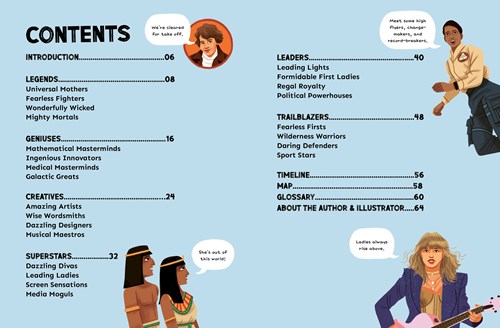
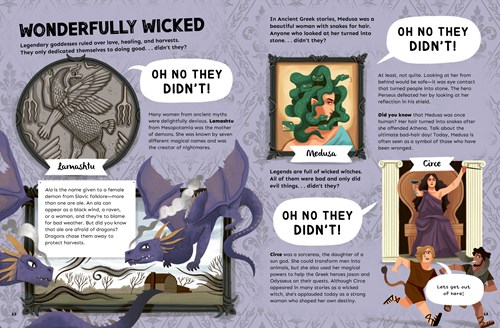
    Where we're going; with whom we're going; and even here, note that Motherhood Comes First.

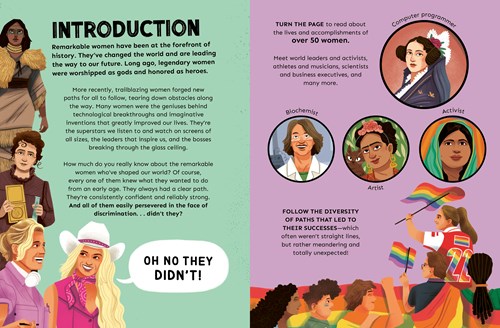
    The statement of purpose is quite lively, colorful, and well-judged, IMO.

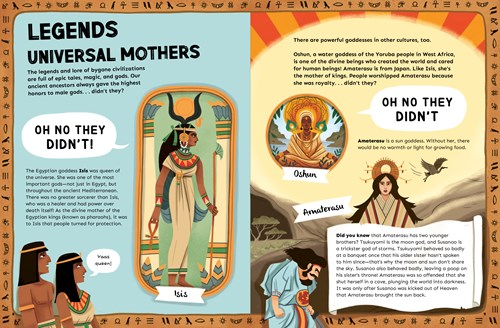
    Okay, they're the universal mother archetypes; but really...?


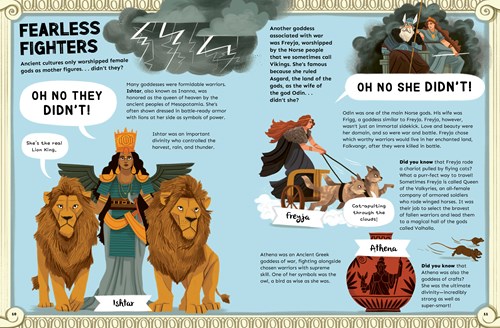
    More to my taste, these are the women engaged in the USE of power...a message we can not afford to skimp on giving to the young.

    Lest those darker impulses feel shamed, here are the role models for being angry, and still getting shit done.

    That's what the good people of the Quarto Group allow me to share with you in the way of illustrations. I think this subject, empowering girls and normalizing them having and using power, is one we are woefully poor at passing on...it's telling that, when adding this book to my database of books read, not one library of the dozen or so I searched had this book in its collection.

    It's up to us, grands and aunts and mothers. We're (surprise, surprise, surprise! in your best Gomer Pyle mental voice) gettin' no help or support for this message from The PTB. This book is part of the Oh No They Didn't! series, and the author penned the mythbusting entry in this series on US Presidents, as well as Pride: A Seek-and-Find Celebration: Adventure Through the History of the Queer Community, aimed at the same age group. You'll clutch your pearls, I'm sure, when I tell you these aren't in my searched library databases, either.

    Resist being shoved back into being subservient to a straight white man, and model it for all the youth.

    Friday, February 28, 2025

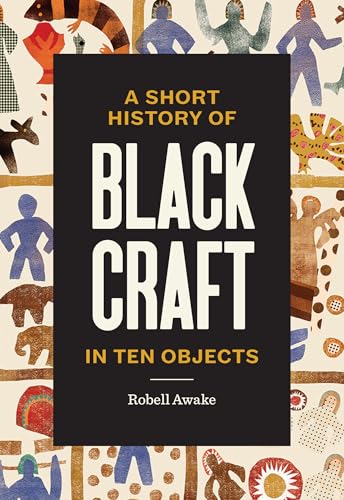
    A SHORT HISTORY OF BLACK CRAFT IN TEN OBJECTS, beautiful gift object as well as solid primer on crafts-as-art


    A SHORT HISTORY OF BLACK CRAFT IN TEN OBJECTS
    ROBELL AWAKE
    (illus. Johnalynn Holland; afterword by Tiffany Momon)
    Princeton Architectural Press (non-affiliate Amazon link)
    $12.99 ebook editions, available now

    Rating: 4.5* of five

    The Publisher Says: Ten beautifully illustrated essays tell the stories of handcrafted objects and their makers, providing inspiration and insight into Black history and craftsmanship.

    Black artisans have long been central to American art and design, creating innovative and highly desired work against immense odds. Atlanta-based chairmaker and scholar Robell Awake explores the stories behind ten cornerstones of Black craft, including:
  • The celebrated wooden chairs of Richard Poynor, an enslaved craftsman who began a dynasty of Tennessee chairmakers.
  • The elegant wrought-iron gates of Philip Simmons, seen to this day throughout Charleston, South Carolina, whose work features motifs from the Low Country.
  • The inventive assemblage art and yard shows of Joe Minter, James Hampton, Bessie Harvey, and others, who draw on African spiritual traditions to create large-scale improvisational art installations.

  • From the enslaved potters of Old Edgefield, South Carolina, to Ann Lowe, the couture dressmaker who made Jacqueline Kennedy's wedding dress, to Gullah Geechee sweetgrass basket makers, to the celebrated quilters of Gee's Bend, A Short History of Black Craft in Ten Objects illuminates the work of generations of Black craftspeople, foregrounding their enduring contributions to American craft.
  • BLACK CRAFT AND AMERICANA: Delving into the history of Black skilled artisans, estimated to have outnumbered white artisans five to one in the southern United States in the late 1800s, this unique art history book celebrates handcrafted objects that reflect the dynamic nature of Black culture.
  • DYNAMIC ILLUSTRATED ESSAYS: Luminous color illustrations by artist Johnalynn Holland highlight beloved craft objects and their makers, creating a fascinating volume to study and treasure.
  • ART HISTORY EXPERTISE: Author Robell Awake is a notable furniture maker, artisan, and educator whose work has been featured in the New York Times and in group shows at Verso Gallery in New York City and the Center for Craft in Asheville, NC. Dr. Tiffany Momon, who contributes an afterword, is the founder and co-director of the Black Craftspeople Digital Archive and a leading scholar of Black history and African American placemaking throughout the southeast.
  • BEAUTIFUL GIFT BOOK: The gorgeous design is ideal for art collectors and craft enthusiasts, as a keepsake reminder of Black heritage, for Black History Month and beyond.

  • I RECEIVED A DRC FROM THE PUBLISHER VIA EDELWEISS+. THANK YOU.

    My Review
    : There's a lot to love about Black History Month. One big thing is its use as a goad to look out for Black creators, and creativity centering Black life and experiences, in my otherwise very, very white life. I am an old white man and really appreciate the push to look out for ideas and art I don't see on the regular.

    I think you're going to like it. Look:

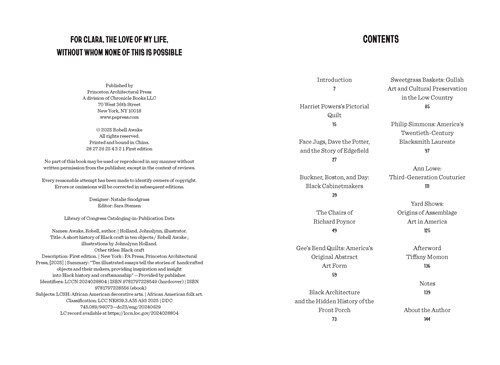
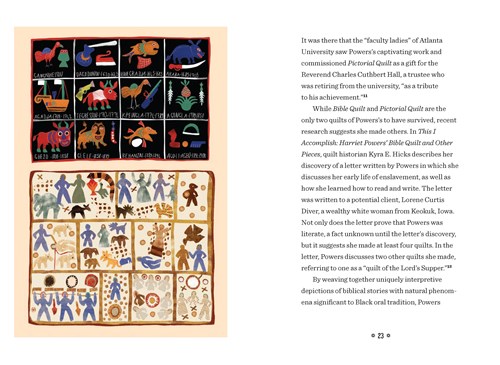
    Laying out the course we'll follow.

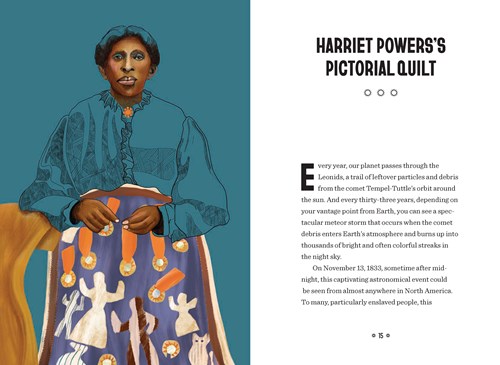
    So beautiful, the evocation of the spirit of the quilt.


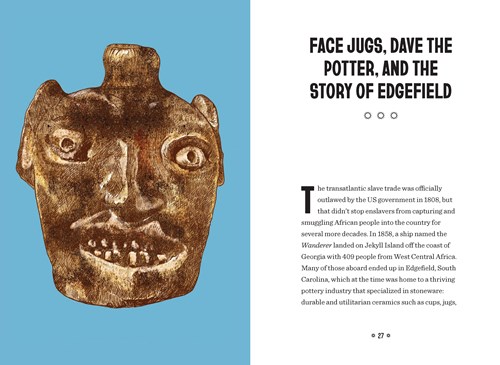
    They're stunning as art; they're vital as cultural documents.

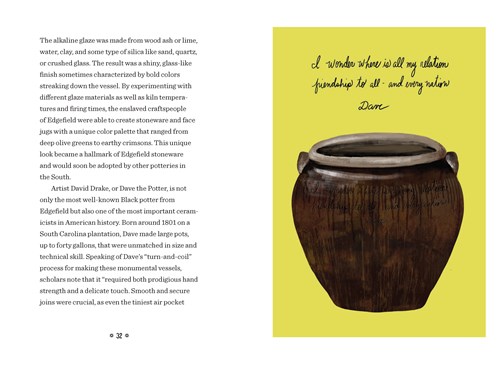
    This kind of pottery makes my hairs stand up. Such a shot of Truth! It's a personality, it's a real Presence, an avatar of interiority.


    Speaking real, home truth there, Dave.


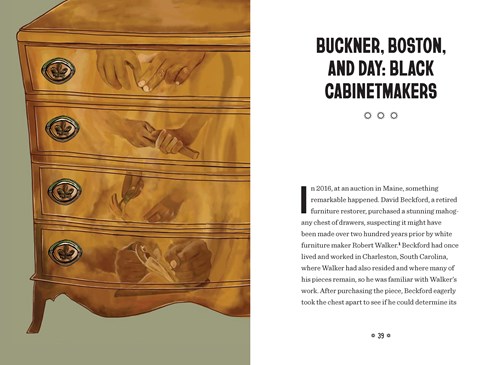
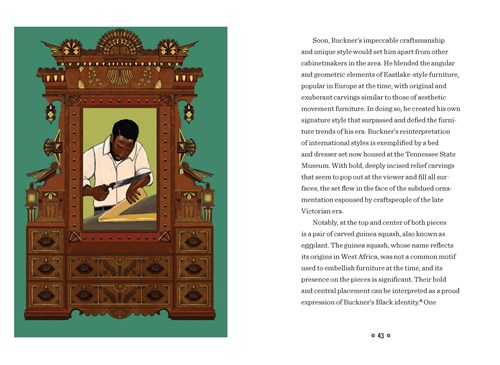
    It's a bureau that, as I look at it, is exactly like one Mama had; I wonder if that one was made by a Black craftsman, and I have no way to know....

    A beautiful object about beautiful objects. An adornment for the coffee table. The essays aren't exactly stunning prose, or hugely academic; they're tonally appropriate enhancements of one's existing, or good seedstock for one's entirely absent, knowledge base of the long, long tradition of Black art in the craft sphere. Can't quite give it that full fifth star because it's doing its job but not stretching me as a reader; it will others, though.

    Thursday, February 27, 2025

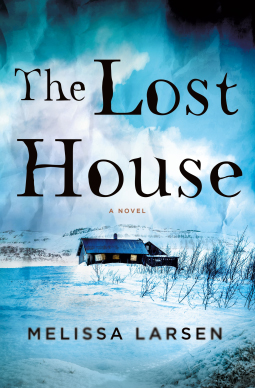
    THE LOST HOUSE, entertaining cold-weather family tragedy story


    THE LOST HOUSE
    MELISSA LARSEN

    Minotaur Books (non-affiliate Amazon link)
    $14.99 ebook edition, available now

    Rating: 3.5* of five

    The Publisher Says: In Melissa Larsen's The Lost House comes the mesmerizing story of a young woman with a haunting past who returns to her ancestral home in Iceland to investigate a gruesome murder in her family.

    Forty years ago, a young woman and her infant daughter were found buried in the cold Icelandic snow, lying together as peacefully as though sleeping. Except the mother’s throat had been slashed and the infant drowned. The case was never solved. There were no arrests, no conviction. Just a suspicion turned into a the husband did it. When he took his son and fled halfway across the world to California, it was proof enough of his guilt.

    Now, nearly half a century later and a year after his death, his granddaughter, Agnes, is ready to clear her grandfather’s name once and for all. Still recovering from his death and a devastating injury, Agnes wants nothing more than an excuse to escape the shambles of her once-stable life—which is why she so readily accepts true crime expert Nora Carver’s invitation to be interviewed for her popular podcast. Agnes packs a bag and hops on a last-minute flight to the remote town of Bifröst, Iceland, where Nora is staying, where Agnes’s father grew up, and where, supposedly, her grandfather slaughtered his wife and infant daughter.

    Is it merely coincidence that a local girl goes missing the very same weekend Agnes arrives? Suddenly, Agnes and Nora’s investigation is turned upside down, and everyone in the small Icelandic town is once again a suspect. Seeking to unearth old and new truths alike, Agnes finds herself drawn into a web of secrets that threaten the redemption she is hell-bent on delivering, and even her life—discovering how far a person will go to protect their family, their safety, and their secrets.

    Set against an unforgiving Icelandic winter landscape, The Lost House is a chilling and razor-sharp thriller packed with jaw-dropping twists that will leave you breathless.

    I RECEIVED A DRC FROM THE PUBLISHER VIA NETGALLEY. THANK YOU.

    My Review
    : I'll always say yes to cold-weather thrillers. After all, I read, then watched, The Terror with the gruntled hygge of a true Northerner. Now you're waving Bifröst in my face?! Sign me right on up!

    The sleuths are, to put it politely, secondary to my enjoyment of the setting. Nora, in particular, grated my nerves like a box-grater does soft cheese. If I met her in meatspace I would either do her grievous bodily harm or turn away in the first moments of listening to her whiny, manipulative BS on her podcast. I was no fonder of Agnes, again finding her crutching of the terrible physical trauma and subsequent drug dependence grounds for whining unpleasant me-me-me behavior. I suffer from grinding chronic pain, am dependent on drugs to continue living, and make a concerted effort not to do what Agnes is helping herself to: Making everything about herself, her pain, her life.

    Unpleasant trait in my book. Raised my hackles.

    Another hackle-raiser was the author's weird opinion of Icelandic people as credulous...treating Agnes as a sort of avatar or reincarnation of her grandmother, the murder victim, and therefore a carrier of the miasma of bad luck. It seems also a bit on the nose to call the town Bifröst, the name of the rainbow bridge between Earth and the afterlife in Norse myth. I doubt there'd be such a name chosen in Christian Iceland of the nineteenth century or earlier, and the town isn't presented to us as, say, a WWII new-build or something.

    Well, anyway, those are the issues that shaved more than a star off my rating...but it's a read I'd tell you to get out of the library soon. I liked the way the author built her atmosphere of distrust at every opportunity. I found it a solid replacement for the identity of the murderer not being in the least surprising.

    Bifröst is, pace its nose-thump of a name, a well-realized setting with a readily pictured landscape. It's just enough to get me over the three-star hump. I don't think these characters would, even if they could, draw me into reading a series, but I am not mad I read this book to pleasantly wile away a few hours.

    Wednesday, February 26, 2025

    LISTEN TO YOUR SISTER, an exhortation at least two Black men shoulda taken to heart


    LISTEN TO YOUR SISTER
    NEENA VIEL

    St. Martin's Griffin (non-affiliate Amazon link)
    $12.99 ebook editions, available now

    Rating: 4.25* of five

    The Publisher Says: For fans of Jordan Peele’s films, Stranger Things, and The Other Black Girl, Listen To Your Sister is a laugh-out-loud, deeply terrifying, and big-hearted speculative horror novel from electrifying debut talent Neena Viel.

    Twenty-five year old Calla Williams is struggling since becoming guardian to her brother, Jamie. Calla is overwhelmed and tired of being the one who makes sacrifices to keep the family together. Jamie, full of good-natured sixteen-year-old recklessness, is usually off fighting for what matters to him or getting into mischief, often at the same time. Dre, their brother, promised he would help raise Jamie–but now the ink is dry on the paperwork and in classic middle-child fashion, he’s off doing his own thing. And through it all, The Nightmare never stops haunting Calla: recurring images of her brothers dying that she is powerless to stop.

    When Jamie’s actions at a protest spiral out of control, the siblings must go on the run. Taking refuge in a remote cabin that looks like it belongs on a slasher movie poster rather than an AirBNB, the siblings now face a new threat where their lives–and reality–hang in the balance. Their sister always warned them about her nightmares. They really should have listened.

    I RECEIVED A DRC FROM THE PUBLISHER VIA NETGALLEY. THANK YOU.

    My Review
    : "Listen to your sister" is the most oddly edged weapon in the arsenal of control. Listen to her wisdom. Listen to her express while she experiences despair. Listen to her, learn how the wisdom comes out of the same swamp as the despair.

    Being tasked with responsibilities beyond your capabilities is a common feature in many child-as-custodian tales. Rising to meet the challenge, failing at it, muddling through...well, that's adulthood as parent or guardian or, to be completely honest, any old thing as a legal adult.

    What sets this story above most I've read like it, from The Outsiders as a kid on, is The Nightmare. It's a really big part of Calla's quotidian awareness. It's a looming, energy-sapping Presence...éminence grise writ literal...that defines Calla's every waking thought about her ward/little brother. In The Nightmare Jamie dies, and dies, and dies; the most horrific death. Here's Calla, responsible for the life of someone she honestly should never have been if her parents had...well, what? not died? not run away? where are they and why aren't they there?...not, in any event, left her responsible unhelpfully unbackstopped by her other brother, useless Dre.

    Now my full attention is engaged. Starting just before the halfway point I began to listen to my own niggling awareness. Permaybehaps this is Calla finding a coping mechanism to make sense of this utter reorientation of her world...permaybehaps she's tuned in to something like a psychic K-Cthulhu...she might simply be going quietly insane...and in the US a young Black woman whose self-image is of being too hefty who's also now responsible for shepherding a teenaged Black man into adulthood alive and unencarcerated when he has a big mouth and a powerful eye for hypocrisy....

    I was deeply interested in the way I wasn't answered as I got these musings phrased into questions. I was instead led to ideas about the answers supported in the story. That we see the narrative through all three siblings' eyes lent the book the air of fairness, until you thought a minute about it when Calla's centrality swims into focus ever more clearly. She is the only one who acts for the clearly conceptualized good of the Family, where her brothers (one too young, one too narcissistic) think only of how The Nightmare and its embodiment in their sister affects them. It is through those young men's eyes that The Nightmare feeds into horror. They mock and disbelieve, thinking she's nuts and/or trying to control them.

    Sound familiar, Cassandra fanciers? Calla's awful stresses are external, internal, self-inflicted, inevitable for a young woman of color in a deeply racist white world. They're real. They're just fearful imaginings. They can't be taken seriously. Laugh them off.

    That goes as well as it usually does when men ignore sound advice from women. As a subject for social horror, I'm hard-pressed to think of a better, more trenchant way to build a story.

    What I ended up enjoying the most in this read was less the plot...first novels are almost always a bit baggy at the knees...than Calla's mellifluous voice and her sense of humor. BE AWARE THAT THE N-SLUR IS USED A LOT. I don't like it, this is something I have trouble with from my 1960s childhood where it was used *very*differently* so I want you to know that fact. Mostly, Calla's a smart, funny woman doing a thankless job she wouldn't have had to do had death and abandonment not landed her where she is.

    I can't go a fifth star because of the N-slur stuff. It made me think hard about many things, and might should get that five; but not with the (appropriate, well-thought-out) use of N-words.

    YMMV, but in any event I encourage you to find out soon.

    Monday, February 24, 2025

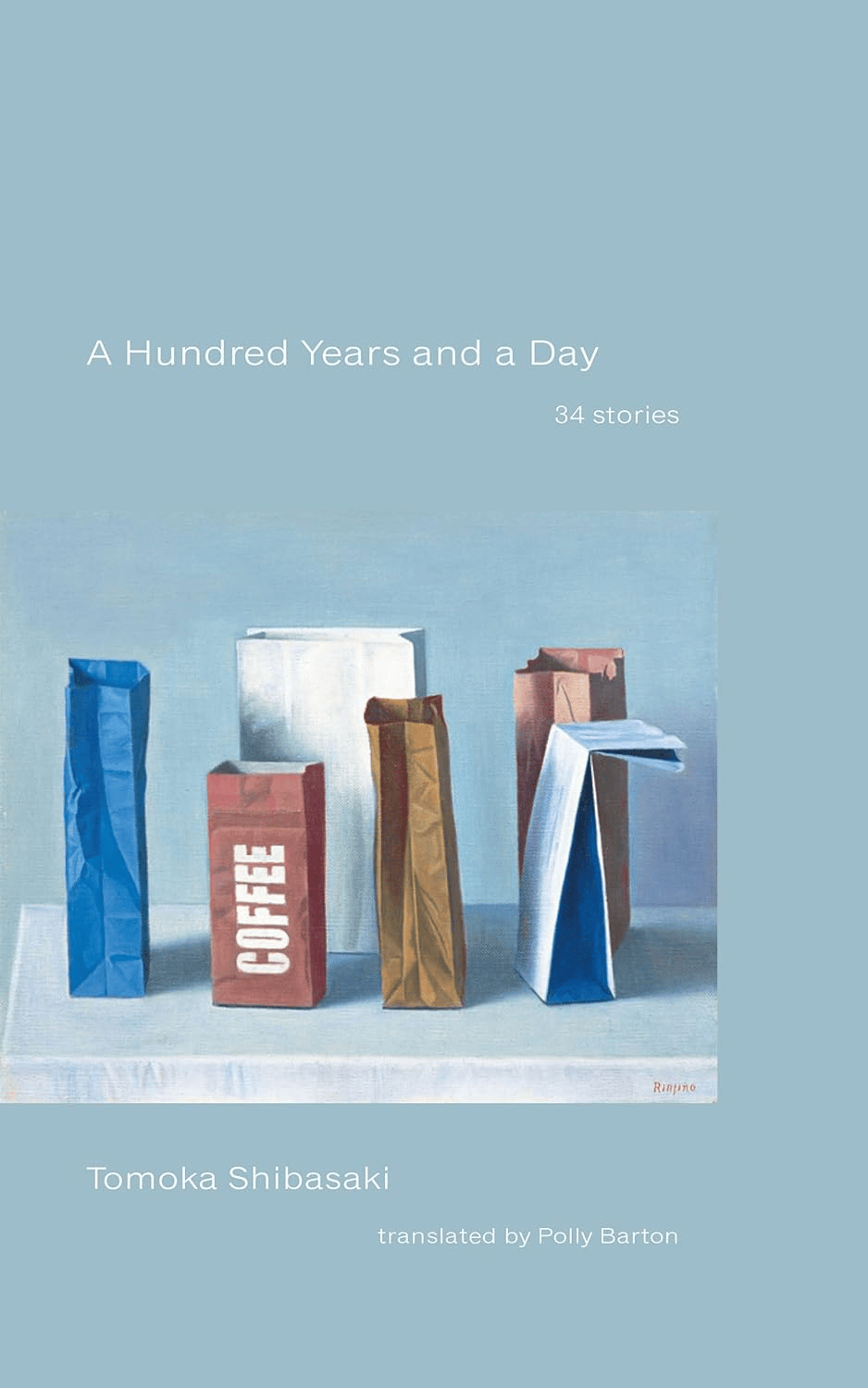
    A HUNDRED YEARS AND A DAY: 34 Stories defies all the Japanese-fiction expectations by embracing the form


    A HUNDRED YEARS AND A DAY: 34 Stories
    TOMOKA SHIBASAKI
    (tr. Polly Barton)
    MONKEY/Stone Bridge Press (non-affiliate Amazon link)
    $9.95 ebook edition, available now

    Rating: 4.5* of five

    The Publisher Says: This ground-breaking collection from Tomoka Shibasaki, author of the acclaimed novel Spring Garden, pushes the short story to a new level.

    In these stories of human connection in a contemporary, alienated world, people come together to share pieces of their lives, then part. We meet the women who share a house after the outbreak of war before going their separate ways once it is over; the man who lives in a succession of rooftop apartments; the diverging lives of two brothers who are raised as latch-key kids by factory workers; the old ramen restaurant that endures despite the demolition of all surrounding buildings; people who watch a new type of spaceship lift off from a pier that once belonged to an island resort; and more.

    These 34 tales from all over the planet have the compulsive power of news reports, narrated in a crisp yet allegorical style.

    I RECEIVED A DRC FROM THE PUBLISHER VIA NETGALLEY. THANK YOU.

    My Review
    : There is a pattern I follow when reviewing short stories: I call it, for convenience, The Bryce Method after my old friend Bryce and his collection-spanning short summary followed by a very short summary and rating of the individual story habits from his blogging days.

    Not going to work here.

    Thirty-four stories in two hundred pages is problem one; not much between summary and spoiler. Two is these are stories that begin with something I'd call a spoiler: a summary-like paragraph set off from the text, which honestly took a half-star off my overall rating for off-puttingness. I think it's pointless, for these reasons, to use my old method as it would really add to the wall-to-wall spoilers. To avoid a close encounter with the shrieking Spoiler Stasi maniacs, allow me to review the gestalt of the collection for you.

    It was fine. Nice prose, I'd say based on a long reading life with more than the usual number of translated works in many genres, quite gracefully translated. Plenty of well-woven-in clues to words that wouldn't translate. A solid, creditable job for a nice book of stories.

    Does anything here do something that "pushes the short story to a new level"? No.

    Does it really need to? No. Breathless copy does nothing good for this solid, well-crafted collection of short fiction mostly exploring the horrors of trying to communicate with actual other human beings in mutually satisfying connective ways. It's a collection full of fun, if weird, ways for that to fail. It has no central character or group, unlike that Ryu Murakami book I wasn't keen on that did mostly the same thing. It isn't set in one place like Pleasantville, that braided-stories novel I liked so well. In the off-kilter liminal spaces we're in for the whole collection, I'm most put in mind of the way Brian Evenson, in his uneasy style, makes the world feel. These are *not* horror, or even horror-adjacent, stories; instead, they partake of the weirdness and not-quite-ness of horror without any of the sillier trappings.

    Polly Barton's ear for, say, how a wisteria vine relates to the wisteria vine it's been entwined with for goddesses only know how long, is the main vehicle for little minds like thee and me to get access to the core of longing and need in each of these very Japanese tales. Will we really know what's what? Not in my experience, and all the more fun to read because of it.

    When I finished this read I had to sit a minute and look into my emotional reactor core to see what this bolus of new fuel was doing. I'm impressed that the way Author Shibasaki and her able translator, Polly Barton, never once threw a sucker punch. These stories deliver their intensely meant, unshielded radioactivity to you direct. It's not fussy; it's not overwrought; it's the high-quality story-ore, direct to your well-shielded reactor core to be processed.

    I gave it a half-star less than perfect because, in some cases, the oddball opening paragraphs say too much even for me. That's hard to do!

    Sunday, February 23, 2025

    February 2025's Burgoine and Pearl-Rule reviews


    Author 'Nathan Burgoine posted this simple, direct method of not getting paralyzed by the prospect of having to write reviews. The Three-Sentence Review is, as he notes, very helpful and also simple to achieve. I get completely unmanned at the idea of saying something trenchant about each book I read, when there often just isn't that much to say...now I can use this structure to say what I think is the most important idea I took away from the read and not try to dig for more.

    Think about using it yourselves!

    ++++++++++++++++++++++++++++++++++++++++++++++++++++++++++++++++
    ++++++++++++++++++++++++++++++++++++++++++++++++++++++++++++++++


    Tali Girls: A Novel of Afghanistan by Siamak Herawi (tr. Sara Khalili)

    Rating: 3.25* of five

    The Publisher Says: An intimate look at the lives, loves, horrors, and dreams of girls and women in an Afghan mountain village under Taliban rule

    A heartbreaking tragedy in the vein of The Kite Runner from a major English-speaking Afghan figure famous for his books and long career in politics


    Siamak Herawi brings Afghan women centerstage and takes us deep into the heart of his motherland to witness the reality of their lives under the Taliban’s most extreme interpretation of Islam. Based on true stories, the result is a sobering and harrowing tale that relates the current ethos of a country under occupation by one power or another for more than half a century.

    Told in a direct, conversational prose, this chorus of voices offers us a vivid picture of the endless cycle of the suffering of girls and women in the grip of the Taliban authorities, of the imbalance of power and opportunity.

    The central figures illuminate the power of love, friendship, and generosity in the face of poverty and oppression. Their experiences and dilemmas have a visceral power and we become deeply attached to Kowsar, Geesu, and Simin. These are testaments of resilience, hope, courage, and visceral fear, of doors of opportunity opening just a crack that offer a way out.

    In Sara Khalili’s vibrant and nuanced translation from the Persian, Tali Girls tears down the curtain and exposes the treacherous realities of what women are up against in modern-day, war-torn Afghanistan.

    I RECEIVED A DRC FROM THE PUBLISHER VIA EDELWEISS+. THANK YOU.

    My Review
    : Do you believe it can't happen here? Even after the decade of horrible we've endured since 20 January 2025? Read this clear-eyed, scathingly honest book about what happened in Taliban country. The author's used a polyphonic approach to telling stories based on real experiences. It lends an immediacy to the read; it dilutes the emotional investment in the characters. On balance a choice I understand, but don't feel is for the story's best expression. Hence, at the halfway mark, I settled into a rating of 3.25 stars instead of 4.5, which is where I was headed from the off.

    Archipelago (non-affiliate Amazon link) charges $16.99 for an ebook. Used paperbacks are cheaper; I think the read is worthwhile and deeply engaging.

    ++++++++++++++++++++++++++++++++++++++++++++++++++++++++++++++++


    Blood on the Brain by Esinam Bediako

    Rating: 3* of five

    The Publisher Says: An impulsive, madcap, and newly concussed young woman comes of age as she navigates her Ghanaian American identity, her relationships, and the muddled landscape of history, memory, imagination, and delusion.

    Twenty-four-year-old Akosua is easily knocked off her feet. When she falls and hits her head, she’s too preoccupied with her latest dramas to fully absorb the shock. In the span of three months, she has broken up with her boyfriend Wisdom, discovered that her deadbeat dad has moved back to the States from Ghana, and dropped so many classes that she believes she’s the only history grad student in the history of grad students to be registered for just one partial-credit class. Instead of facing her problems, Akosua seeks distraction in Daniel, a “good Ghanaian man.”

    But as her head injury worsens, she questions whether she can continue to run away from her father any more than she can keep ignoring her brain and its traumas. Vibrant, funny, and bittersweet, Blood on the Brain is a novel about the complications of family, romance, and culture—and how coming of age can feel like a blow to the head.

    I RECEIVED A DRC FROM THE PUBLISHER VIA EDELWEISS+. THANK YOU.

    My Review
    : Books about women obsessing over men who clearly do not want to engage with them, will not provide emotional connection for them, and have no interest in or intention of making any changes to step in that direction are unpleasant to me. When the woman in question is quite clearly using every means at her disposal to use that reality as a seriously maladaptive coping mechanism for the wounds inflicted by paternal rejection and neglect from childhood, my blood pressure begins to spike to dangerous levels for a reader who's already had three strokes.

    Add in a literal closed-head injury as the catalyst for some nascent stabs at introspection, and we're back at the level of aggravation I felt while viewing 1945's Spellbound, or "severe with spells of acute." I've given it three stars for the very well-used and -placed Ghanaian cultural tidbits, and the flashes of humor I quite enjoyed.

    Red Hen Press (non-affiliate Amazon link) charges $9.99 for an ebook.

    ++++++++++++++++++++++++++++++++++++++++++++++++++++++++++++++++


    GRIMby David Cinnella

    Rating: 3.5* of five

    The Publisher Says: Gabriel Matthews has always been able to see the Grim Reaper when death is near. Silent and imposing, the Reaper has lingered as a terrifying yet fascinating figure in the teen’s life.

    Until now.


    When unexpected tragic news arrives, the Reaper offers Gabriel a terrible choice, one that demands everything he has to give, and that will thrust him into a nightmare far worse than he ever imagined.

    The cost? His humanity.

    As Gabriel spirals deeper into the Reaper’s dark game, the lines between right and wrong blur, and every decision he makes brings him closer to the point of no return. Death, it seems, isn’t just the end. It’s where the true horror begins.

    Grim is a chilling tale of sacrifice, morality, and the devastating cost of love. Perfect for fans of Scythe and Death Note, this gripping horror fantasy will haunt you long after the final page.

    I RECEIVED A DRC FROM THE PUBLISHER VIA NETGALLEY. THANK YOU.

    My Review
    : A very interesting, well-told thought experiment for anyone who ever wanted with every atom of their being to have someone back. It goes down better as a teen, but I suspect each of us could easily conjure someone we'd take Death's deal to keep.

    The horror elements here are of the unscary-to-me supernatural kind. The ethical and moral questions posed are far more interestinfg than any frisson a horror fan might be missing. The author's prose os more than up to the job he needs it to do. I'm not eager for more because it's a change rung on the theme; but a decent one.

    The Kindle edition's out Tuesday the 26th; it's $5.99 (non-affiliate Amazon link).

    ++++++++++++++++++++++++++++++++++++++++++++++++++++++++++++++++


    Three Days in June by Anne Tyler

    Rating: 3.5* of five

    The Publisher Says: A new Anne Tyler novel destined to be an instant classic: a socially awkward mother of the bride navigates the days before and after her daughter's wedding.

    Gail Baines is having a bad day. To start, she loses her job—or quits, depending on whom you ask. Tomorrow her daughter, Debbie, is getting married, and she hasn’t even been invited to the spa day organized by the mother of the groom. Then, Gail’s ex-husband, Max, arrives unannounced on her doorstep, carrying a cat, without a place to stay, and without even a suit.

    But the true crisis lands when Debbie shares with her parents a secret she has just learned about her husband to be. It will not only throw the wedding into question but also stir up Gail and Max’s past.

    Told with deep sensitivity and a tart sense of humor, full of the joys and heartbreaks of love and marriage and family life, Three Days in June is a triumph, and gives us the perennially bestselling, Pulitzer Prize–winning writer at the height of her powers.

    I RECEIVED A DRC FROM THE PUBLISHER VIA NETGALLEY. THANK YOU.

    My Review
    : Gail's me: Needs a much more effective social filter, has a complicated past full of times said filter could've prevented...unpleasant...conflicts with long-lasting consequences, and isn't going to get one. Her complicated life gets moreso when her ex shows up the day before their daughter's wedding, sunnily expecting her to fix his issues (again), just as she's reeling from personal disappointment and their daughter's untimely news about the groom in the scheduled wedding.

    I'm being coy about the problem her daughter drops on her because it is The Point, and spoiling it will genuinely make the read utterly pointless, sort of like The Crying Game. (Not a hint!) In Tyler's hands it's a short but fun ride, a solid character study, and really quite poignantly amusing. All missing stars are for the goddamned c-a-t.

    Knopf (non-affiliate Amazon link) says "$14.99 please" at checkout.

    ++++++++++++++++++++++++++++++++++++++++++++++++++++++++++++++++


    The Best Strangers in the World: Stories from a Life Spent Listening by Ari Shapiro

    Rating: 3.5* of five

    The Publisher Says: INSTANT NEW YORK TIMES BESTSELLER

    “The Best Strangers in the World is a witty, poignant book that captures Ari Shapiro’s love for the unusual, his pursuit of the unexpected, and his delight at connection against the odds.”—Ronan Farrow, Pulitzer Prize-winning investigative journalist and New York Times-bestselling author of Catch and Kill and War on Peace


    From the beloved host of NPR's All Things Considered, a stirring memoir-in-essays that is also a lover letter to journalism.

    In his first book, broadcaster Ari Shapiro takes us around the globe to reveal the stories behind narratives that are sometimes heartwarming, sometimes heartbreaking, but always poignant. He details his time traveling on Air Force One with President Obama, or following the path of Syrian refugees fleeing war, or learning from those fighting for social justice both at home and abroad.

    As the self-reinforcing bubbles we live in become more impenetrable, Ari Shapiro keeps seeking ways to help people listen to one another; to find connection and commonality with those who may seem different; to remind us that, before religion, or nationality, or politics, we are all human. The Best Strangers in the World is a testament to one journalist’s passion for Considering All Things—and sharing what he finds with the rest of us.

    I BOUGHT THIS BOOK ON KINDLESALE.

    My Review
    : The Felonious Yam and Muskolini are coming for NPR. Racism and sexism figleafed Muskolini's war on the bureaucrats investigating the wrongdoings of his businesses. The Felonious Yam was heading to jail on multiple counts. They made common cause, so neither would suffer the humiliating legal consequences of their long-running cons against the taxpayers.

    Queer journalists like Ari Shapiro were bringing the goodness of US citizens to the public. That doesn't stoke the outrage machine that makes stupid people feel smart, and good about their viciousness; so the institution they serve, NPR, will take them down as the scum that's risen to the top shutters an impartial, evidence-based information source to better aid in hiding their crimes.

    HarperOne (non-affiliate Amazon link) would like $11.99 for this memoir. I'm here to say that is a fitting farewell to the smiling face of freedom.

    ++++++++++++++++++++++++++++++++++++++++++++++++++++++++++++++++
    ++++++++++++++++++++++++++++++++++++++++++++++++++++++++++++++++


    This space is dedicated to Nancy Pearl's Rule of 50, or "the Pearl Rule" as I've always called it. After realizing five times in December 2021 alone that I'd already Pearl-Ruled a book I picked up on a whim, I realized how close my Half-heimer's is getting to the full-on article. Hence my decision to track my Pearls!

    As she says:
    People frequently ask me how many pages they should give a book before they give up on it. In response to that question, I came up with my “rule of fifty,” which is based on the shortness of time and the immensity of the world of books. If you’re fifty years of age or younger, give a book fifty pages before you decide to commit to reading it or give it up. If you’re over fifty, which is when time gets even shorter, subtract your age from 100—the result is the number of pages you should read before making your decision to stay with it or quit.

    So this space will be each month's listing of Pearl-Ruled books.

    ++++++++++++++++++++++++++++++++++++++++++++++++++++++++++++++++
    ++++++++++++++++++++++++++++++++++++++++++++++++++++++++++++++++


    Helpmeet (67%) by Naben Ruthnum

    Rating: 3.5* of five

    The Publisher Says: It's 1900, and Louise Wilk is taking her dying husband from Manhattan to the upstate orchard estate where he grew up. Dr. Edward Wilk is wasting away from a mysterious affliction acquired in a strange encounter: but Louise soon realizes that her husband's worsening condition may not be a disease at all, but a transformative phase of existence that will draw her in as much more than a witness.

    I RECEIVED A DRC FROM THE PUBLISHER VIA EDELWEISS+. THANK YOU.

    My Review:
    Beautiful sentences, emotionally evocative imagery, a genuinely affecting story, give this body horror novella all its stars. The quiet emotional truth of loving a person who has wronged you, who will never know their own interior well enough even to know they have wronged you, would have earned it more stars. What I disliked was the truly horrifying body horror. My friend E, who's a horror writer, was even taken by surprise by how affecting these images were. Let him tell you about it:
    https://www.youtube.com/watch?v=GV_NskzBfAw

    A bridge too far for me, and very sad to say it. This is a creative talent indeed; I'll seek his non-horror work out, see if I can stick that.

    Undertow Publications (non-affiliate Amazon link) asks a minimal investment of $4.99 for the ebook.

    ++++++++++++++++++++++++++++++++++++++++++++++++++++++++++++++++


    The Sower of Black Field: Inspired by the True Story of an American in Nazi Germany (35%) by Katherine Koch

    Rating: 3* of five

    The Publisher Says: Throughout the Third Reich, millions of Germans pledged allegiance to Adolf Hitler. In the Bavarian village of Schwarzenfeld, they followed an American citizen.

    As he struggles to rekindle the faith of a guilt-ridden Wehrmacht veteran, a morose widow, and her grieving teenage son, Fr. Viktor Koch, C.P. is haunted by self-doubt. What is driving him to stay in the Third Reich? Is he following a higher plan, or the mystic compulsion of his German heritage? Exposed to American ideals, his parishioners grow restless under Nazi rule. Relying upon his ingenuity to keep them out of prison, Fr. Viktor solicits aid from an unlikely intercessor-the Nazi charity worker who confiscated his monastery for state purposes.

    In April 1945, American liberators make a gruesome the SS have left a mass grave of concentration camp victims on Schwarzenfeld's borders. Enraged by the sight, the infantry commander orders the townspeople to disinter 140 corpses, construct coffins despite material shortages, dig a grave trench, and hold a funeral ceremony-all in 24 hours. If they fail to fulfill this ultimatum, he vows to execute all German men in town.

    Fr. Viktor has to pull off a he must convince his countrymen that his followers are not the enemy. Their humanity is intact. And most of all, they are innocent.

    I RECEIVED A DRC FROM THE PUBLISHER VIA NETGALLEY. THANK YOU.

    My Review
    : It was my mistake to accept this DRC. It is okay in writing but poor in thinking, in my opinion; valorizing a Catholic priest set me off, but making this little microcosm of unNazi Germans leans into the "Good German" myth I find so...off-putting.

    Germans and the Catholic Church have terrible sins of omission and commission to atone for, just like those in the US will when the horrors of the camps come once again to our shores. This book is not that; this book is exculpatory of the few for the crime of indifference committed unapposed, uhectored, unchastized by these good people hiding from the evil that surrounds them. Not good enough for me.

    Free to read on Kindle Unlimited (non-affiliate Amazon link) should you be so inclined.
    Friday, February 21, 2025

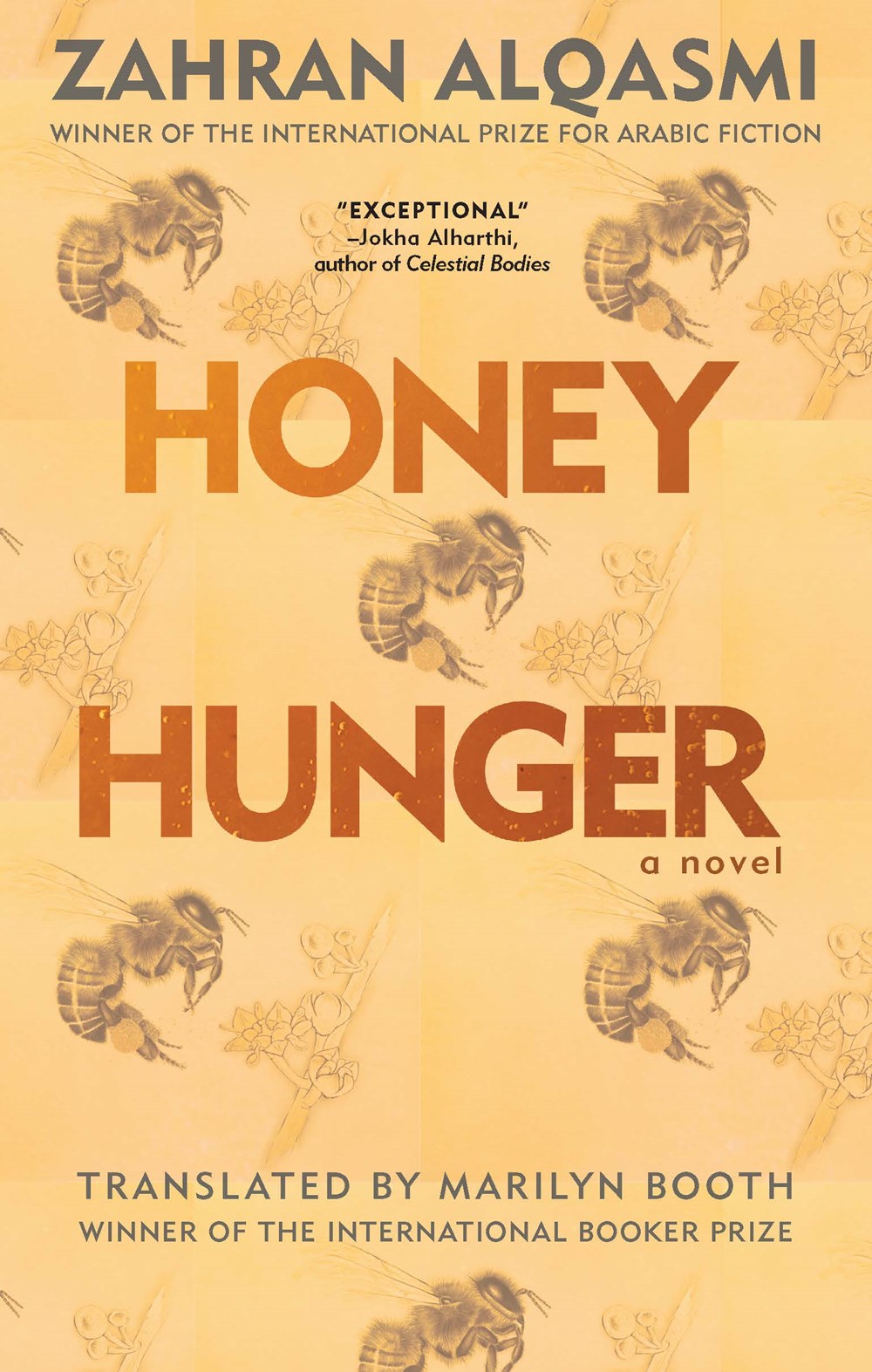
    HONEY HUNGER: A Novel, Marilyn Booth's excellent translation of Zahran Alqasmi's novel of Oman


    HONEY HUNGER: A Novel
    ZAHRAN ALQASIMI
    (tr. Marilyn Booth)
    Hoopoe Books|American University in Cairo Press (non-affiliate Amazon link)
    $18.95 ebook edition, available now

    Rating: 4.75* of five

    The Publisher Says: A breathtaking novel of longing, uncertainty, and ultimately of hope, written by an International Prize for Arabic Fiction-winning author and an International Booker-prize winning translator

    Azzan is a beekeeper in a rural community in Oman. Devoted to tending his bees and searching for wild hives, he encounters Thamna, a lone shepherd woman, on a mountain slope and is captivated by her and her honey-colored eyes. Across the breathtaking vistas of Oman’s remote mountains and plains, Azzan’s troubled past and present unfold. A disappointment to his family, he turns to drink, and ultimately discovers the healing power of his beekeeping, before an accident in which he loses all.

    Zahran Alqasmi’s masterful novel thrums forward with a subtle momentum. His lucid, poetic writing conveys a visceral sense of time and place, of the fragile ecologies inhabited by both bees and humans alike, in this intense and compelling novel of loss and hope.

    I RECEIVED A DRC FROM THE PUBLISHER VIA EDELWEISS+. THANK YOU.

    My Review
    : Does the old nostrum, "still waters run deep," ring a bell in your cultural education? Azzan is the personification of it. He's quiet on these pages. He's still physically and psychically until summoned into action in service to some need. Author Alqasmi uses his stillness to carefully, incrementally, accustom you to the reality of Oman, of a place he seems to assume you will want to know feel and smell and hear, without intrusive human-ness. Gradually, Azzan's eyes...our cameras onto this sparely furnished landscape...show us more, bring us to the places—in the company that hearken to the quiet sounds that we call "silence" in technology's noisy embrace. Azzan's not a beekeeper by happenstance, either as a character or a PoV.

    These are the choices that lead you the audience into the creation of an author whose poetry output outweighs his prose, ten to four; but whose prose garnered him the 2023 International Prize for Arabic Fiction (IPAF) for The Water Diviner; I believe this is the immediate predecessor to this novel in Arabic. It is obvious to me that the quality of the vision here is not a chance sport, an artifact of a talented translator's vision alone. That disappointment has befallen me before when a multiple translation career has yielded...inconsistent...results. Being the first of his works translated into English, I could still be disappointed; it just *feels* like a good bet to make, after reading this story.

    I'm sure the idea of beekeeping in a landscape as arid as Arabia is overall seems odd. It is an ancient reality though. Deserts bloom, even if sparingly. Beekeepers are not hugely wealthy anywhere bit seldom lack for work for very long. It is a surprisingly mobile task in this story, one that enables Azzan to be see, hear, participate in, a lot of lives in making his life with bees. The honey they make is the life he leads; but it's also large in the life of the people. The product that makes life just enough less harsh to be fun at times for the people Azzan's belovèd bees serve. His knowledge of the lies, cheats, and kindnesses others never even think they don't know about all revolve around his deep and unwavering interest in and commitment to his charges the bees.

    It gives the author a free rein to point up character traits in the narrator's orbit and beyond, for good and for ill; is Thamna, the herdswoman he encounters so fleetingly, an object of obsessive lust, actual love, or simply a fixation because of her novelty in his mostly male world? Does his thinking about bees, those matriarchal marvels without a permanent male presence, and their coveted honey drive or lead his itinerancy? If he's led by it, it makes his questing for wild honey that much more about the world he observes so intently; if driven instead, that condition of needing the honey makes his sharply observant eye that of the exploiter, the taker of all the work of others he is not entitled to have. All of these are within this novel's possible meanings.

    Azzan's obsession with bees and their care is, while unusual to the US-fiction reader, an outgrowth of his blighted past. He is a recovering alcoholic in a society that frowns on alcohol use. He has never been a success, felt as though he was enough for or even wanted by those who raised him. It is this strange selfness, this sense of himself as needing and wanting but never receiving unless he takes (as from the bees, his compatriots), that is reinforced by the lyrical language of description that never devolves into possession; rather it settles on taking the product without "owning" the producer, on caring for and feeling committed to the bees, the goats, the donkeys and living among them in place of being their "owner."

    Is that the place held by the exploiter, the user, the rentier? Azzan does not give off that vibe; I can still see it in the flow of his honeyed words of praise and appreciation and admiration for the bees. It comes down to the sense the author gives all these people who live among the animals they use; they take on the risks and protect their charges from harms they will all suffer from. In return they exert a right to practical rewards of sustenance.

    A man who longs for love he is sure he does not deserve and whose object is safely always independent of his custodial care and capable of being just fine without him sounds to me like a man in need of a perspective check; he's fine how he is, too, just busily denying himself the peace of contentment to punish his perceived failings as received from the eyes and ideas of others.

    So with all this praise why not five whole stars? Because these ideas and words of beauty and layers of meaning come with a labor tax of non-Western-standard punctuation and dialogue tags. I don't think that's a bad thing myownself. It does mean I can't five-star flag it for all y'all to pick up and devour ASAP. So many won't work this hard. Heck, even *I* had to read some things over twice to choose meanings that would change depending on to whom I attributed the words.

    For me that's fun, for most it's work, so four and three-quarter stars seems fair.