Pages
- Home
- Mystery Series
- Bizarro, Fantasy & SF
- QUILTBAG...all genres
- Kindle Originals...all genres
- Politics & Social Issues
- Thrillers & True Crime
- Young Adult Books
- Poetry, Classics, Essays, Non-Fiction
- Science, Dinosaurs & Environmental Issues
- Literary Fiction & Short Story Collections
- Sookie Stackhouse/Southern Vampire Books & True Blood
- Books About Books, Authors & Biblioholism
Showing posts sorted by date for query booksgiving. Sort by relevance Show all posts
Thursday, January 1, 2026
Happy Incoming 2026
↟↟↟↟↟↟↟↟↟What I want to say to 2025's ghosts, ghouls, and gross old pedophiles. I've already said elsewhere that I won't be focusing attention on the number of books I've read, or any of the rest of the numbers game, because it feels like bragging. I have none of the pressures on me that normal people have. I've got my datastick of notes from reads as much as thirteen years old, never written into reviews for any number of reasons. I have a huge hoard of rage at the kakistocracy fueling a desire to do something, a disability that doesn't allow that something to be kinetic, and so I write.
It's what I can do, so it's what I will keep doing until ICEstapo starts coming for domestic enemies of the kakistocracy. Emptying that data stick of the backlog of more-or-less coherent notes taken might last me the year, if I get even close to 2025's levels of success in writing away my emotional pain. My reviewing schedule for 2026 will begin on the second...there will be hashtag events during the year that I'll announce the weekend before they begin...I still won't post reviews on Tuesdays (traditional book-release day in the US) until publishing slows down the new-books firehose in December as #Booksgiving hots up. The most exciting books of 2025's reading were translations so I'm definitely continuing my focus on reading translated literature in 2026.
Y'all already know about my six-stars-of-five read for 2025 (the whole list is at the bottom of this post): THE REMEMBERED SOLDIER by ANJET DAANJE, and translated from Flemish by David McKay via the estimable tastemakers at New Vessel Press (Support an excellent indie press!). My review should say it all about the layered, subtle evocation of memory's centrality to identity, about the effort love takes, about the nature of desire and its propulsive projective power. It's the kind of (long!) read that I want to put in peoples' hands to explain themselves -to- themselves.
It is a New York Times 100 Notable Books designee, it was a finalist for the National Book Award for Translated Fiction, on lists from Publishers Weekly and LitHub and the Wall Street Journal...it deserves the patient companionship and compassion of readers seeking a window into forming...discovering...identity through its loss and rebuilding Trauma does not have to be war, you know. The world can, and does, do similar devastating things to us callously and carelessly in the course of Life. Buy one, tree book or ebook, ask your library for one so they'll know people want it, get on their wait list for it, or get one via their ILL program. It is a good, impactful story told the best way a story can be: carefully, caringly, with the cares and the needs of its characters and its readers at its heart.
Since the entirety of 2026 is looking politically unstable, I'm making a point to review books that treat that instability as a chance to reflect on how we got here, so we can get out...and stay out. I'm not a bit sure anyone will enjoy it. It is urgent not to lose sight of the reality that our right to read and think and behave like, about, and what we think is best is very much under attack. 6870 times in the 2024-2025 school year alone. Guess whose identities were targeted most often. "Books by authors of color, by LGBTQ+ authors, by women. Books about racism, sexuality, gender, history. PEN America pushes back against censorship and the intolerance and exclusion that undergird it." I recommend joining PEN America to support a key player in the fight to oppose and reverse the school bans.
𝗠𝗔𝗥𝗞 𝗥𝗢𝗧𝗛𝗞𝗢, Untitled, 1968 Oil on paper mounted on canvas Pace Gallery, London Photo by Chris Weekes
I'll end on the image of a Rothko that evokes my sense of peaceful hope, optimism, and faith in humanity. I wish all of those things to every living one of us. No matter who; no matter where; no matter what.
ALL MY 6*-OF-FIVE REVIEWS
1994. MONTANA 1948...the original; the perfect read!
Monday, December 22, 2025
SEE YOU ON BOXING DAY!
Another #Booksgiving done and dusted. I hope at least a few reviews piqued your interest in a title you wouldn't otherwise have heard of.
It feels good to be able to write to a few readers, hopeful feelings stir when I see signs of folk checking in to see what's on offer. Writing hundreds of reviews in 2025 has kept me sane, prevented me from falling into a pit of despair as the world changes around us all in ways I hate and must (to keep faith with my moral beliefs) resist in the only ways I can.
Thanks for reading, and I do not mean just my words...thanks for being a reader. It matters how you get your stories delivered. It matters that you develop the habit of getting your stories in more than one way, from more than one source. Your choices matter. Don't lose sight of that fact in the days, weeks, months, and years you'll be told that they do not matter. No one bothers to insist that something truly irrelevant and unimportant does not matter. It's the same kind of high-control social engineering as making rules against actions and beliefs. No one ever tells you not to do something unimportant, or bad for you, unless they mean it's bad for them in some way. (Safety is never the real reason for warning labels, it's to prevent you from being able to sue them.)
Well, that turned dark. Let's sweeten the tone: I found an excellent six-stars-of-five read for 2025 in THE REMEMBERED SOLDIER by ANJET DAANJE, and translated from Flemish by David McKay via the estimable tastemakers at New Vessel Press. My review should say it all about the layered, subtle evocation of memory's centrality to identity, about the effort love takes, about the nature of desire and its propulsive projective power. It's the kind of (long!) read that I want to put in peoples' hands to explain themselves to themselves.
Support an excellent indie press! It is a New York Times 100 Notable Books designee, it was a finalist for the National Book Award for Translated Fiction, on lists from Publishers Weekly and LitHub and the Wall Street Journal...it deserves the patient companionship and compassion of readers seeking a window into forming, discovering identity through its loss and rebuilding...trauma does not have to be war, you know. The world can, and does, do similar things to us callously and carelessly in the course of Life. Buy one, tree book or ebook, ask your library for one so they'll know people want it, get on their wait list for it, or get one via their ILL program. It is a good, impactful story told the best way a story can be: carefully, caringly, with the cares and the needs of characters and readers in its sights.
Some stories go beyond a solid idea and a good execution, beyond even a lucky meeting of idea and author. A few other books were truly extraordinarily good in my 2025 reading. I enjoyed my Jess Zafarris reads the most of any in October, Words from Hell: Unearthing the Darkest Secrets of English Etymology and Useless Etymology: Offbeat Word Origins for Curious Minds were each separately delightful...read together I was giggling and snorting my way through the month. "Rantallion" is my new favorite weird word to unleash on the unsuspecting. Jess and Rob's video podcast, Words Unravelled on YouTube, is a must listen every week.
August was, as always, Women In Translation Month (#WITMonth); as usual it was a solid month of pleasure reads. Funny way for me to say it, though, because it was the month of Fang Fang's Soft Burial, anything but a "pleasant" read...the true nature of memory seemed to be my August accidental theme. It's memory's loss that clues us in to the centrality of memory to identity, to selfhood; I got that from a male perspective in The Remembered Soldier and a female one in this read. Dementia is a better guide to the effects than is the soap-opera stuff we're trained to think of. It's brutal, devastating; it's happened to many for no causal action on their own part, and that's the worst, cruelest, most repugnant part.
Back in June, the most satisfying read I had was The Surge, Adam Kovac's war story via Tortoise Books. It's told in laconic warrior-appropriate prose. It exemplifies an experience I do not think soldiers will ever have again as AI and automation turn war into a weirdly impersonal industrial slaughterhouse...as we're seeing in this year's oil war they're starting in Venezuela. Moving on...May brought a lovely, up-buoying quality via Forest Euphoria: The Abounding Queerness of Nature that made it my beacon-of-sanity read. This book was genuinely smile-granting. I hope it will go on to become a standard text in biology classes (once sanity is restored and we start teaching again).
In April, a good month for reading, I read my first merman/man romance, When the Tides Held the Moon, amusing enough if...well...silly. Laurent Binet's superb Perspective(s) elevated my mood. Not so elevating was Sad Tiger, likely the most important book I read, possibly in all of 2025, for what it has accomplished in the world with the conversation around incest and assault it has started.
I liked The Case of Cem best of March's reads because it made polyphony its most interesting point through the device of a court case in the Afterlife. More Earthly and still legally based was the utterly infuriating The Man Nobody Killed, the latest from Elon Green. What an enraging travesty of justice! I still boil up over it. In a translation-heavy year of reading, an early delight was the extraordinary Río Muerto, my first all-five-stars read of 2025, by Ricardo Silva Romero and translated from Spanish by the gifted Victor Meadowcroft. Voiceless narrators don't come better than this; many language-choice delights in its pages. My January best-quality read, Fire Exit by Morgan Talty, was this Native American talent's first-ever novel. Aaalmost all five stars from me, and happy to give them I was!
I began 2025 deeply unhappy and very, very scared. I'm ending it much the same, but with the perspective that there's always, always the heartening world of literary imagination to grant a different view to a reader. In writing reviews of books I've read over the past ten-plus years, I've learned that I am a creature of deep greed, insatiable hunger, for that magic of storytelling: the gift of perspective.
I have never in my life been more grateful to be a reader than I am right now.
Wednesday, December 10, 2025
ROBBIE CONAL: STREETWISE: 35 Years of Politically Charged Guerrilla Art, visual proof you are not alone
ROBBIE CONAL: STREETWISE: 35 Years of Politically Charged Guerrilla Art
G. JAMES DAICHENDT (Foreword by Shepard Fairey)
Schiffer Publishing (non-affiliate Bookshop.org link)
$45.00 hardcover, available now
Rating: 5* of five
The Publisher Says: With a foreword by Shepard Fairey, this is the definitive history of "America's foremost street artist" (Washington Post).
The politically charged art of Robbie Conal is gnarled, gut retching, and emotionally laden. Featuring every image in Robbie Conal’s storied poster campaigns, this is the definitive history of “America’s foremost street artist” (Washington Post). A foreword by Shepard Fairey, American contemporary street artist, graphic designer, and activist, sets the scene. Conal's satirical posters of political figures are given richer context as his life story is insightfully joined with art criticism by expert Daichendt. Today honored by museums and arts organizations around the world, Conal hit high speed during the Reagan administration in 1986, when he began turning his grotesque portraits into street posters. We see Conal's life come together at a critical moment to attack issues of censorship, war, social injustice, and the environment.
I RECEIVED A DRC FROM THE PUBLISHER VIA EDELWEISS+. THANK YOU.
My Review: Do I need to explain why this book is on my #Booksgiving list? Look at the art.
You tell me why a book like this is a worthy gift item for your lefty giftee in need of heartening proof they are not alone in seeing the world this way.
No one's career starts out in high gear. We're tracing Conal's development in this book.
...but even as an ornamental object, not a subject of art-world interest to the recipient, this will gladden the heart of anyone saddened, enraged, or simply ground down by 2025's world.
"You are not alone" and "It's happened before and we made it through" are empowering and important messages to send, and to receive.
Friday, November 28, 2025
Kicking off #Booksgiving for 2025
I keep doing this in celebration of the joy that books, stories, and reading bring me all 365 days of the year. You'll see if you follow the link just how much pleasure this annual event brings me.
The Icelandic Jólabókaflóð is an annual custom of giving to, recieving from, and reading with, a book to your loved ones on Christmas Eve. I'd love to believe that custom is spreading in 2025 because books are some of the few items inexpensive enough to make sense as gifts in this recession. Even the expensive illustrated books are, comparatively, cheap when tariffs are biting budgets. Over $100 added to the average Yule shopper's 2025 expenditures just for tariffs.
It makes sense to emulate Miss Dolly Parton in giving books to children, every chance you get but particularly when their attention is so highly fractured by everything going on in their world. I've picked some of the most fun-for-me to read and look at picture books as ideas for you to gift to the niblings/grands in your life. Starter links:
Juvenile non-fiction
Juvenile books in total
middle-grade literature.
Their older sibs need reading material, too: YA across genres including our queer youth.
Need something for a guy? A stereotypical gift for a man you don't know well, or one you do and know what lind of STEM reaging he does? A few jumping-off points:
Cars.
Booze/drinking.
Always thinking of the entertainment world? A giftee on your list a music/film fan? Plenty of illustrated gift books to give, ranging from single-song treatises to film-genre studies! Or is there a petrol/gearhead among those you want to spoil? Bet they'll like the single-make studies or the industry-segment overviews on this #Booksgiving list. Celebrity culture.
I'm pretty sure we're all united by our love of The Book, the object that carries stories and information into our heads. Pretty illustrated books about books there are here. Books about books.
Pretty books about the natural world, about the cultures we don't know we don't know about, about gardens, food, drinks, about history...entering a topic in the search box will get you a ton of ideas:
Art books.
Gardens and gardening.
Of course most everyone loves them a mystery, or a thriller. Got y'all covered on those fronts, too: Mystery series.Thriller.
None of these are exhaustive...exhausting, up to you to decide, but incomplete and with the expected enshittified results that our tech masters think are good enough for the likes of us. There are a lot of reviews here, so think of a category, search for it, and very possibly it will turn up useful results. I have tried hard to do that over the past twelve and a half years of reviewing.
The Icelandic Jólabókaflóð is an annual custom of giving to, recieving from, and reading with, a book to your loved ones on Christmas Eve. I'd love to believe that custom is spreading in 2025 because books are some of the few items inexpensive enough to make sense as gifts in this recession. Even the expensive illustrated books are, comparatively, cheap when tariffs are biting budgets. Over $100 added to the average Yule shopper's 2025 expenditures just for tariffs.
It makes sense to emulate Miss Dolly Parton in giving books to children, every chance you get but particularly when their attention is so highly fractured by everything going on in their world. I've picked some of the most fun-for-me to read and look at picture books as ideas for you to gift to the niblings/grands in your life. Starter links:
Juvenile non-fiction
Juvenile books in total
middle-grade literature.
Their older sibs need reading material, too: YA across genres including our queer youth.
Need something for a guy? A stereotypical gift for a man you don't know well, or one you do and know what lind of STEM reaging he does? A few jumping-off points:
Cars.
Booze/drinking.
Always thinking of the entertainment world? A giftee on your list a music/film fan? Plenty of illustrated gift books to give, ranging from single-song treatises to film-genre studies! Or is there a petrol/gearhead among those you want to spoil? Bet they'll like the single-make studies or the industry-segment overviews on this #Booksgiving list. Celebrity culture.
I'm pretty sure we're all united by our love of The Book, the object that carries stories and information into our heads. Pretty illustrated books about books there are here. Books about books.
Pretty books about the natural world, about the cultures we don't know we don't know about, about gardens, food, drinks, about history...entering a topic in the search box will get you a ton of ideas:
Art books.
Gardens and gardening.
Of course most everyone loves them a mystery, or a thriller. Got y'all covered on those fronts, too: Mystery series.Thriller.
None of these are exhaustive...exhausting, up to you to decide, but incomplete and with the expected enshittified results that our tech masters think are good enough for the likes of us. There are a lot of reviews here, so think of a category, search for it, and very possibly it will turn up useful results. I have tried hard to do that over the past twelve and a half years of reviewing.
Monday, November 3, 2025
XOLO, the dog-headed lightning god's story told at last
XOLO
DONNA BARBA HIGUERA (illus. Mariana Ruiz Johnson)
Levine Querido (non-affiliate Bookshop.org link)
$19.99 hardcover, available now
Rating: 5* of five
The Publisher Says: It is said the mighty feathered serpent god, Quetzalcoatl, helped create the earth. He is the hero who stole back the bones of humanity from the evil god of the Underworld. In his quest to bring humans to the earth, Quetzalcoatl's dog-headed twin brother, Xolotl, was present. Not much is known of Xolotl, the god of lightning, death, and misfortune. A monster.
This is what really happened.
From Newbery Medalist Donna Barba Higuera comes a singular twist on the Aztec myth of the origin of man—and man's best friend—illustrated throughout with stunning full-color art from Mariana Ruiz Johnson.
I RECEIVED A DRC FROM THE PUBLISHER VIA EDELWEISS+. THANK YOU.
My Review: A wonderful read (literally...full of wonders), a corrective to the more triumphal tellings of Quetzalcoatl's origin story, and a gorgeous object to possess.
It's a long one, by page count; it isn't a text-forward read, though. It occupies a middle ground I didn't realize existed, long page count made up of a narrative told in sequential graphic art but with some text. It's a step between a picture book and a graphic novel, aimed squarely at the reluctant reader with its very interesting untold mythological tale of gods and lightning.
Here is the story's genesis explained by author and illustrator:
I was enchanted from the get-go.
I want to schmoozle his doggie-god ears!
Gods need mom-hugs, too!
The story goes on from here, obviously, but it is a real book-length affair. I had a gracious plenty of art to choose from...Levine Querido is very generous...so I've looked through it a couple times and selected a few to demonstrate the feel of the project.
I strongly recommend all grands and parents think about this as a #Booksgiving gift for their story-loving descendants; their boys who seem more reluctant to engage with text; their mythology soakers; and not least themselves. I hope and expect it will teach any of us more about the Indigenous myths our Anglophone schools ignored, as well as pop your eyes out with its beauty.
a particularly effective, emotionally resonant design job; one turns the page to get to the second illustration
text-heavy narrative; sequential-art narrative
I'd go on; I'd love all y'all to see and enjoy the entire book. It's published on 4 November 2025, and this is posted on 3 November 2025 in hopes some will find the joy of the art, the unfamiliar story, and the sheer pleasure of such a work existing will magically spring open their wallets. Order now and you can (carefully) read it yourself before gifting to the kid(s) you love enough to present it to.
Pinkie-promise not to tell.
Saturday, December 21, 2024
WELLNESS, a truly moving, involving, deeply-felt trip inside Commitment with a capital "C"

WELLNESS
NATHAN HILL
Alfred A. Knopf (non-affiliate Amazon link)
$13.99 Kindle edition, available now
Rating: 4.75* of five
The Publisher Says: A witty and poignant novel about marriage, middle age, tech-obsessed health culture and the bonds that keep people together
When Jack and Elizabeth meet as college students in the '90s, the two quickly join forces and hold on tight, each eager to claim a place in Chicago's thriving underground art scene with an appreciative kindred spirit.
Fast-forward twenty years to married life, and alongside the challenges of parenting, they encounter cults disguised as mindfulness support groups, polyamorous would-be suitors, Facebook wars, and something called Love Potion Number Nine. For the first time Jack and Elizabeth struggle to recognize one another, and the no-longer-youthful dreamers are forced to face their demons, from unfulfilled career ambitions to painful childhood memories of their own dysfunctional families. In the process Jack and Elizabeth must undertake separate, personal excavations, or risk losing the best thing in their lives: each other.
I RECEIVED A DRC FROM THE PUBLISHER VIA NETGALLEY. THANK YOU.
My Review: The struggles that all who form, and sustain, the heavy bonds of matrimony are everfreen plots because most of us have some experience of them. It doesn't matter how much you love each other, it matters how committed you each are to the friendship you share with your chosen partner. Love ebbs and flows, common interests wax and wane, people grow and change, and what makes couple-stories so endlessly interesting is how they are shown managing...or not...these deeply familiar challenges.
It is absolutely clear to me that Author Hill, in his second novel after the startlingly assured The Nix, has honed his craft to a sharp edge. He doesn't shy away from the difficult or the painful parts of commitment. The hateful, hurtful things people say when they are in a deeply enmeshed relationship are both unique and common. There is a certain kind of dynamic in US couples of different socioeconomic backgrounds that's central to this book. We are taught that ours is a classless society, but it is not. The wealth of one family is always a weapon in the couplehood of one its members; a more effective one when the other partner is not from equal wealth.
That bludgeon goes both ways, of course. After a child is born, dynamics change, often for the worse, as incompatible parenting goals are a major cause of divorce. In this story, the couple...a daughter of wealth and privilege, a psychologist, and a deeply wounded soul who feels shackled and devalued by her working class artist husband...are twenty years into a commitment neither can remember why they made.
It absolutely does NOT help that they're living in a surveillance-capitalist society that valorizes getting and spending, when neither has a set of core values instilled from solid bases in love to resist these relentless pressures. It is obvious Author Hill has little use for facile patching-up life hacks or quick-fix lifestyle gurus. He dedicates a lot of space to social media's machiavellian algorithm driven effects. (Coulda been less for all of me, but hey...) The thesis is, however, what good is hacking or fixing stuff too fragile and hollow to last? Your old marriage is not delivering the same thrills...move on, get something new and better.
Right?
Not necessarily. Not even desirably. Open your mind to the possibility that just maybe your life doesn't need to be fixed. Maybe instead your relationship to your life needs to be recalibrated, reassessed, revalued. This being a message I resonate with, I found the read compelling and involving.
Does learning to make the best of it mean settling? Mean getting less out of life? Or is it instead the way to find deeper, more important ways of being who you are inside this long-term commitment to yourself, and your partner, to be well and truly together?
Wellness is that endlessly relatable journey, set in a time where even asking that kind of question isn't encouraged by anything around us. Anyone in a couple, past or presnt, ongoing or ending, will find a lot of deeply interesting details to muse over. A lot of richly textured background to admire, even envy. A lot of deep and scary emotions to batten on from the safe remove of fiction.
I'd rate this the full five of five were it not for what felt to me like the author's rather-too-evident need to overshare. A funny thing to say in a review of a novel about intimacy, I know, but I'm left a bit overfamiliar wuth his opionons of the self-help/new-age/quick-fixery. A couple times, okay; after a while, what is this really about, Author Hill?
I'm highly recommending this read for all partners in a long-term relationship to load onto the /kindle this #Booksgiving. It is manna from heaven to feel seen in stressful times; family "Togetherness" is rough any time, but now...? Bring some independent comfort with you this Yule.
Thursday, December 19, 2024
SANDY ROBSON'S PAGE: The Grand-Mafia Series for #Booksgiving reading pleasure

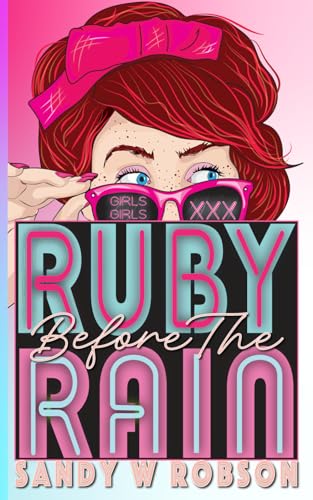
RUBY BEFORE THE RAIN
SANDY ROBSON
Sandy Robson Books (non-affiliate Amazon link)
$5.99 Kindle edition, KU avaiable
Rating: 3.5* of five
The Publisher Says: The Scandalous origin story of the last true sex symbol.
Hot on the heels of Bone Park and Snow Bird, Sandy dives deep into one of the fan favorites. The Grand Mafia's siren...RUBY!
From naughty to notorious...homeless to home wrecker, harlot to household name. Ruby Hewton (one half of the infamous Buffalo Girls from the Grand-Mafia Series) has a history even more risque than her retirement. The path to fortune and fame is a very crooked one.
I RECEIVED A DRC FROM THE PUBLISHER VIA NETGALLEY. THANK YOU.
My Review: Raunchy, saucy origin story for some terribly fun old-people sleuths' senior sex kitten.
I like this series because I need some fun that requires very little beyond crude decoding skills that, heaven knows, I possess. You do, too, or you wouldn't be here. You should know that Ruby's struggles are bona fide struggles with unkind unpleasant consequences for her...and the gory details are not stinted by Author Robson.
You are warned. It's not all funny-funny chucklefest. I think you'd do well to read this one first, the move on to the two books I've reviewed below. All three are on KU so make great escape-the-family-togetherness reads.
++++++++++++++++++++++++++++++++++++++++++++++++++++++++++++++++
Snow Birds (Grand Mafia Series #2) by Sandy W. Robson
Rating: 3.5* of five
The Publisher Says: Get ready to immerse yourself in the gripping, golden-years finale of the Grand-Mafia Series! If the quirky escapades in Bone Park left you hungry for more, buckle up for a wild ride with this compelling conclusion.
Bernie, Ruby, Freda, and Opal are four indomitable spirits, each uniquely shaped by the tempestuous world of Cicada Hollow. They've accidentally started a burgeoning criminal empire, their story unfolding like a modern-day "Thelma and Louise" saga.
But as their empire expands, so do the risks. These ladies might have expected bingo nights and quiet book clubs in their later chapters, but fate had other, far more thrilling plans.
This book isn't just a story—it's a captivating journey through the ups and downs of friendship in the face of remarkably unconventional challenges.
Join us for a story that combines heart, suspense, and just a touch of criminal activity. It's a reminder that adventure doesn't retire – and neither do the fabulous ladies of Cicada Hollow. Grab your copy and prepare for a series finale proving retired life doesn't have to be boring (but make sure you have a good alibi)!
I RECEIVED A DRC FROM THE PUBLISHER VIA NETGALLEY. THANK YOU.
My Review: Still decently entertaining, with the expected pleasures of a cozy mystery that subverts our cultural expectations of old women existing solely as powerless, sweet Little Old Ladies. I will, I confess, miss the Grand-Mafia now that their adventures have come to an end.
The right combination of fun and silly with a light salting of pointed social commentary in the background. Great for the first sunny afternoon on the front porch.
A Kindle edition is $5.99 (non-affiliate Amazon link), and it is available via Kindle Unlimited as well.
++++++++++++++++++++++++++++++++++++++++++++++++++++++++++++++++
Bone Park: The Golden Girls Meets The Godfather by Sandy Robson
Rating: 3.5* of five
The Publisher Says: In 1991, the quiet Florida retirement community of Cicada Hollow was the perfect place for seniors to relax and enjoy their golden years. It also was the place where four retired women joined together out of necessity, to become the biggest crime syndicate in American history.
Love, sex, dreams, revenge and regrets have no age limit. Friendship and loyalty get stronger with time and these four bad-ass broads are about to draw a line in the Florida sand that no one will ever cross.
I RECEIVED A DRC FROM THE PUBLISHER VIA NETGALLEY. THANK YOU.
My Review: Decently entertaining, and while I *abominate* the use of long, promotional subtitles that read like advertising copy written by an overeager intern, I can't fault this one for accuracy.
Approached with the expectation of having some good-spirited chuckles with your revenge fantasy fulfillment, this is a very successful read. The hole in ones heart left by The Golden Girls and the yawning gap of Jessica Fletcher's, (of Murder, She Wrote fame) endless supply of keen observation and devotion to justice are herein plugged. My very favorite thing about the read was the series title: Grand-Mafia Series! Apt, appropriate, and very much on brief. Book 1 will not, and should not, be book only, I predict.
A Kindle edition is $5.99 (non-affiliate Amazon link), and it is available via Kindle Unlimited as well.
Monday, December 16, 2024
WOMEN IN THE VALLEY OF THE KINGS: The Untold Story of Women Egyptologists in the Gilded Age, well worth your effort to be amazed at your foremothers' strength

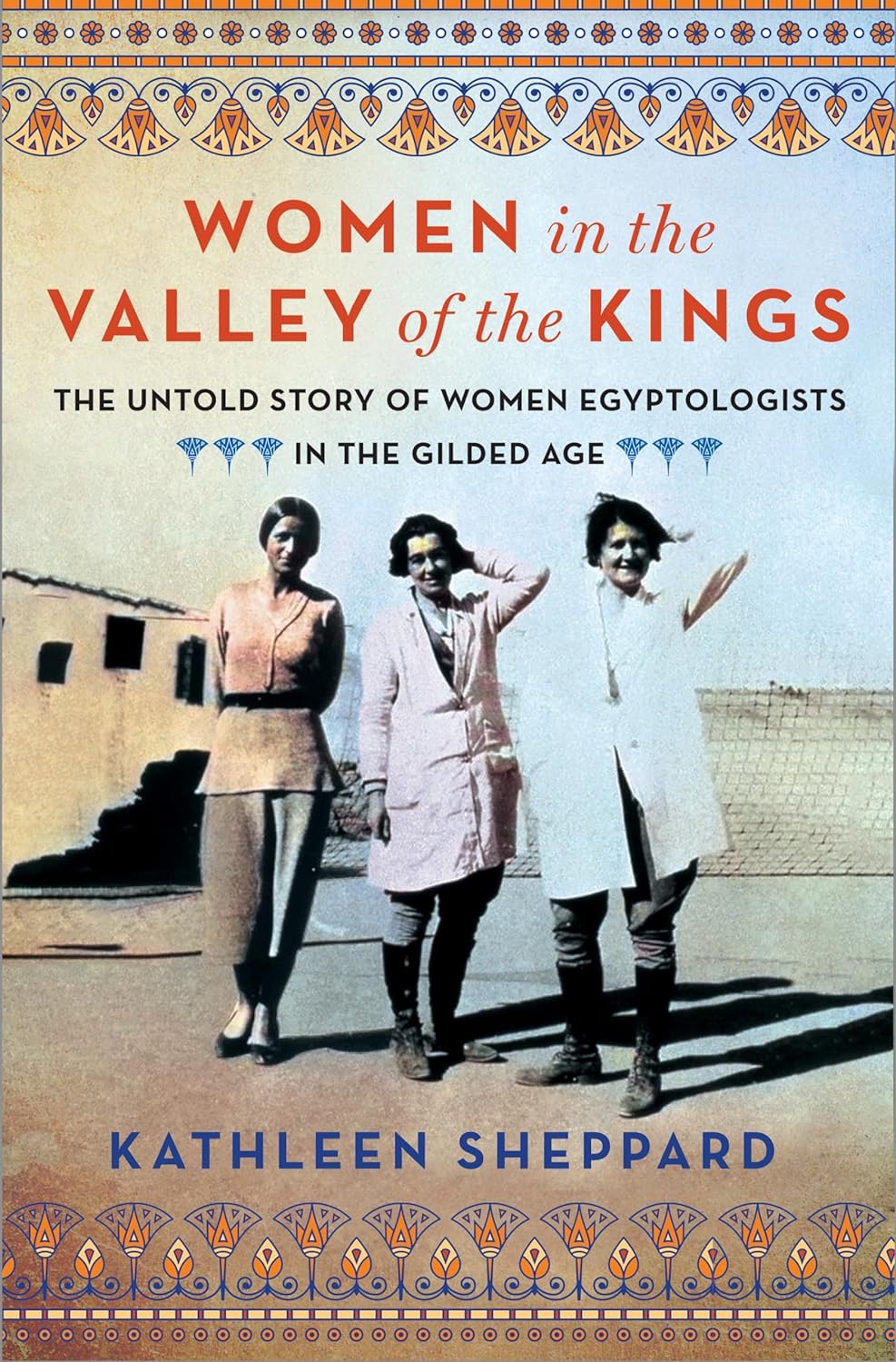
WOMEN IN THE VALLEY OF THE KINGS: The Untold Story of Women Egyptologists in the Gilded Age
KATHLEEN SHEPPARD
St. Martin's Press (non-affiliate Amazon link)
$30.00 hardcover, available now
Rating: 4* of five
The Publisher Says: The never-before-told story of the women Egyptologists who paved the way who paved the way for exploration in Egypt and laid the groundwork for Egyptology
The history of Egyptology is often told as yet one more grand narrative of powerful men striving to seize the day and the precious artifacts for their competing homelands. But that is only half of the story. During the so-called Golden Age of Exploration, there were women working and exploring before Howard Carter discovered the tomb of King Tut. Before men even conceived of claiming the story for themselves, women were working in Egypt to lay the groundwork for all future exploration.
In Women in the Valley of the Kings: The Untold Story of Women Egyptologists in the Gilded Age, Kathleen Sheppard brings the untold stories of these women back into this narrative. Sheppard begins with some of the earliest European women who ventured to Egypt as travelers: Amelia Edwards, Jenny Lane, and Marianne Brocklehurst. Their travelogues, diaries and maps chronicled a new world for the curious. In the vast desert, Maggie Benson, the first woman granted permission to excavate in Egypt, met Nettie Gourlay, the woman who became her lifelong companion. They battled issues of oppression and exclusion and, ultimately, are credited with excavating the Temple of Mut.
As each woman scored a success in the desert, she set up the women who came later for their own struggles and successes. Emma Andrews’ success as a patron and archaeologist helped to pave the way for Margaret Murray to teach. Margaret’s work in the university led to the artists Amice Calverley’s and Myrtle Broome’s ability to work on site at Abydos, creating brilliant reproductions of tomb art, and to Kate Bradbury’s and Caroline Ransom’s leadership in critical Egyptological institutions. Women in the Valley of the Kings upends the grand male narrative of Egyptian exploration and shows how a group of courageous women charted unknown territory and changed the field of Egyptology forever.
I RECEIVED A DRC FROM THE PUBLISHER VIA NETGALLEY. THANK YOU.
My Review: There's a reason workers are called that. They do the many practical tasks that make discoveries whose credit is assigned to some colonial "master" for the purpose of making "history"; never have I typed his story with more bilious growling.
Kathleen Sheppard does a lot for my mood by not focusing on the colonial "mistresses" shall we say without some acknowledgment of the role of the normally so unacknowledged as to be invisible workers. There is a kind of grim humor in these men and women vanishing into the role of shabtis. I don't know that this term, or even this concept, had made it into Egyptology by the time Author Sheppard writes about (c.1880–1930). I found it...ironic.
Now, to be clear, none of the women under discussion were free of colonial mentality, some more than others. As people experiencing a pretty dramatic regime of prejudice themselves, with belittlement, credit-grabbing, and harrassment their daily lot, one would like to imagine they would be sensitized to the issue of discounting another's labor based on irrelevant externalitites. Alas, real life seldom shows a smooth face to the future.
One thing I was surprised to learn was that not all the men working in Egyptology were abusive in the various ways it was possible for them to be. Few of them hurdled even that low bar, but it was positive that a few did. I myownself wonder if the utter novelty of learning about the ancient culture and its rules, its people, and its existence in relation to its peers for the very first time in thousands of years didn't have some damping effect on them...can't lord it over others when you yourself know so very little. I know it will surprise no one that many tried the tack anyway.
Author Sheppard took time to delve into lives of some women more than others, which is down to survival of records...look at the notes. I'm also unsurprised at the presence of many of my lesbian siblings in these ranks. If there's a place people can be found doing hard, intellectually rigorous work, my siblings will be there and in the forefront as often as not. In dealing with these women's personal lives Author Sheppard is without period-appropriate coyness or reticence, thank goodness. The world has changed for the better in so many ways since the time we're discussing. This is a huge one: Being queer is fairly unremarkable now. It's this reality that makes the hate-filled control freaks so damn mad.
What that leads me to is, in fact, the source of my missing star on the book's rating. It's a terrific breeze of openness and transparency to have the lives, not just the work, of figures from the past openly discussed. It's inevitable that some deeply uncomfortable details emerge, like one woman's husband getting physical with her when she was twelve and he twenty-three, tolerated by her mother in full knowledge of it because she fancied the man herself. *ew* But these are all presented in a way that I found more than a bit irksome. Nothing like an internal chronology of a woman's life is followed, only the general structure of chapters being about one woman in the main, and other women's entries and exits from her story are handled as they arise not placed aside as references to that other woman's chapter (eg, "See chapter 77, page 666"). The narrative thrust of following one story is thus squandered in Wikipedia searches and/or note-taking. It does leave me a bit bumfuzzled as to who in the publishing house signed off on such an organizational idea.
It's a genuine complaint, but the truth is most of these women were unknown to me at all, even as names, so honestly I'd've been doing that searching anyway. In a few hundred pages about one of the most explosive developmental regimes in the entire course of historiography and archaeology as disciplines, and the birth and exponential growth of Egyptology, this was going to be the case.
So don't take this as code for "avoid this read" but as an urging to do the opposite. Get this book and start appreciating that, when our parents, grands, and greats were kids, Humanity was first learning about the people of the distant past in their own fragmentary words, and from their own uncovered material possessions. Author Sheppard has brought the palpable excitement of the women who were there, whose presence and guidance made much of the progress we now stand in top of to look still deeper into the past from the mountains their work made.
It was a flawed, slightly disorganized book, but so was the story its subjects were busy living. A strong recommendation for a self-gift to enjoy on #Booksgiving.
Monday, December 9, 2024
ART RULES: How great artists think, create and work, great gift for your blocked-creative giftee
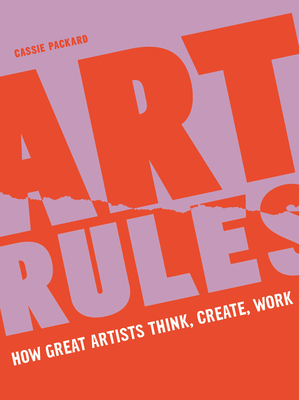
ART RULES: How great artists think, create and work
CASSIE PACKARD
Frances Lincoln Ltd
$24.99 "flexi-bind" (whatever that is), available now
Rating: 4.5* of five (the "Pink Ding" taken off from five)
The Publisher Says: The best thing about rules is that you can break them: here are over 100 mantras for anyone interested in creating great art.
What can we learn from great artists? When we hold their practices up to the light, what do we see – and how might those encounters reshape our own thinking about art?
Delving into the attitudes, working practices and mantras of artists hailing from the eighteenth century to the present day, Art Rules distills over 100 insights into the lives of artists inside the studio and out. This book is animated by questions: How do artists think about creativity? What forms can process take? How might artists craft a personal definition of success?
Drawing upon art historical research and artist interviews, the accessible takeaways on these virtuosos’ varied practices pack a punch. This lively compendium offers up a wealth of perspectives from an international, intergenerational group of artists working across media. Art historical heavyweights including Louise Bourgeois, Marcel Duchamp, Frida Kahlo and Henri Matisse appear alongside relatively newer names such as Kerry James Marshall, Ana Mendieta and Mika Rottenberg, as well as exciting artists on the rise like Emilie Louise Gossiaux and Madeline Hollander.
Some of the insights may seem more practical, while others trend conceptual; some may unearth existing knowledge, while others may come as a surprise; some will stay with you forever, while others you’ll only need to try once. Art Rules allows readers to either dip in at random or read from cover to cover for lessons in how great artists think, make and work.
I RECEIVED A DRC FROM THE PUBLISHER VIA EDELWEISS+. THANK YOU.
My Review: There is a lot to be said for listening to the thoughts of experts in their field. In this case, artists talk about the nature and the process of creating art...more broadly applicable to creativity as well. The artworks shown are so beautiful it's easy to see a case for giving it (to self or others) as a browser's book of gorgeous stuff to look at!
My favorite thing about this beauty as a gift is that it doesn't have the "are you blocked? let me help you" vibe that lots of creativity-focued books do. It can sneak in under a resistant recipient's radar. That is no small feat. Author Packard has a deft touch, honed in many of the art world's best wordy venues. A partial list of her credits: Art in America, Artforum, BOMB, frieze, and the Los Angeles Review of Books. Quality venues, one and all, and her prose shows it. Here are some sample spreads to show the æsthetic of the object you're gifting:

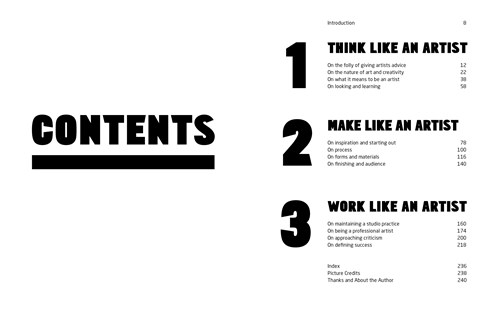
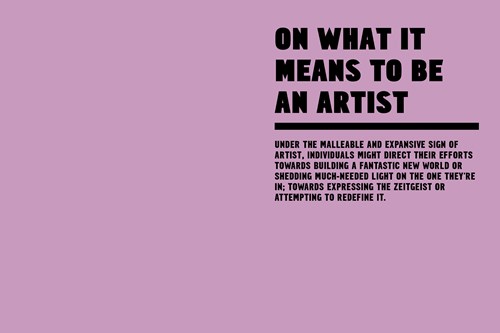
The Contents page...a clear statement of clarity and quality.

Introduction's part-title. What's the deal with pink this year? Me no likee.

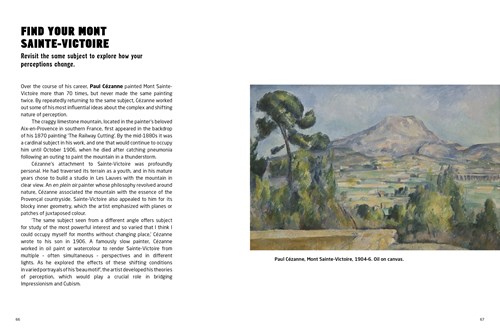
Is there ever a bad time to include a Cézanne image of Mont Sainte-Victoire? I do no think so. The advice to seek inspiration in your surroundings, in nature, in the physical place you live, is timeless and always correct.

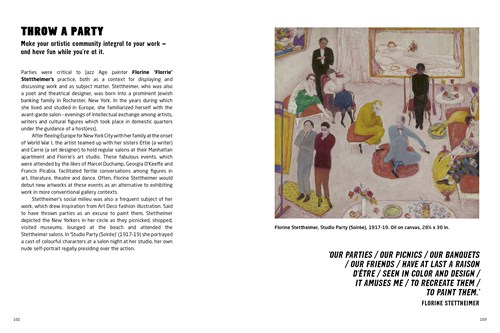
Never underestimate the generative power of showing off. You might not have a vernissage...yet, but you can gather some folks and show 'em what you got. Florine Stettheimer's painting is both lovely and inspiring.

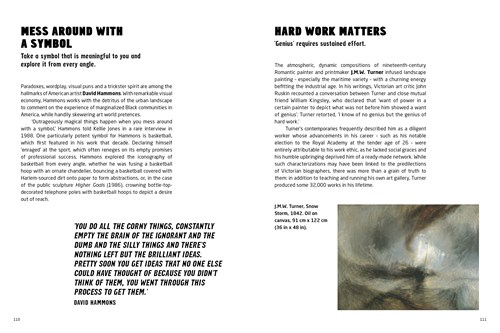
The shorter pieces are mostly like this, simple and designed to be absorbed without deep contemplation of the art. They're still both pithy and useful, as the whole book is, while being very clearly designed with the visual person in mind. Absorbing advice is always easier when it comes packaged in your preferred wrappings.
Terrific way to support a fearful or blocked aspiring visual artist or visually-oriented creative soul. Booksgiving never had a clearer winner.
Saturday, December 7, 2024
THE AMERICAN ART-UNION: Utopia and Skepticism in the Antebellum Era, beautiful art history-filled object for #Booksgiving
THE AMERICAN ART-UNION: Utopia and Skepticism in the Antebellum Era
KIMBERLY A. ORCUTT
Empire State Editions (non-affiliate Amazon link)
$39.95 hardcover, available now
Rating: 4.5* of five
The Publisher Says: The first comprehensive treatment in seventy years of the American Art-Union's remarkable rise and fall
For over a decade, the New York-based American Art-Union shaped art creation, display, and patronage nationwide. Boasting as many as 19,000 members from almost every state, its meteoric rise and its sudden and spectacular collapse still raise a crucial Why did such a successful and influential institution fail? The American Art-Union reveals a sprawling and fascinating account of the country's first nationwide artistic phenomenon, creating a shared experience of visual culture, art news and criticism, and a direct experience with original works.
For an annual fee of five dollars, members of the American Art-Union received an engraving after a painting by a notable U.S. artist and the annual publication Transactions (1839–49) and later the monthly Bulletin (1848–53). Most importantly, members' names were entered in a drawing for hundreds of original paintings and sculptures by most of the era's best-known artists. Those artworks were displayed in its immensely popular Free Gallery. Unfortunately, the experiment was short-lived. Opposition grew, and a cascade of events led to an 1852 court case that proved to be the Art-Union's downfall. Illuminating the workings of the American art market, this study fills a gaping lacuna in the history of nineteenth-century U.S. art. Dr. Kimberly A. Orcutt draws from the American Art-Union's records as well as in-depth contextual research to track the organization's decisive impact that set the direction of the country's paintings, sculpture, and engravings for well over a decade.
Forged in cultural crosscurrents of utopianism and skepticism, the American Art-Union's demise can be traced to its nature as an attempt to create and control the complex system that the early nineteenth-century art world represented. This study breaks the organization's activities into their major components to offer a structural rather than chronological narrative that follows mounting tensions to their inevitable end. The institution was undone not by dramatic outward events or the character of its leadership but by the character of its utopianist plan.
I RECEIVED A DRC FROM THE PUBLISHER VIA EDELWEISS+. THANK YOU.
My Review: I've mentioned before my upbringing was very heavy on the art-world access, and a lot of art history came into my knowledge base as part of that. I was drawn to this book in part because it dealt with a topic I'd heard about, but had never gotten too much information regarding, so...well, curiosity got the better of me.

Thomas Hicks, Calculating, 1844. Oil on canvas, 13 5/8 x 17 in. (34.61 x 43.18 cm). Museum of Fine Arts, Boston, Gift of Maxim Karolik for the M. and M. Karolik Collection of American Paintings, 62.273. Photograph © 2024 Museum of Fine Arts, Boston.

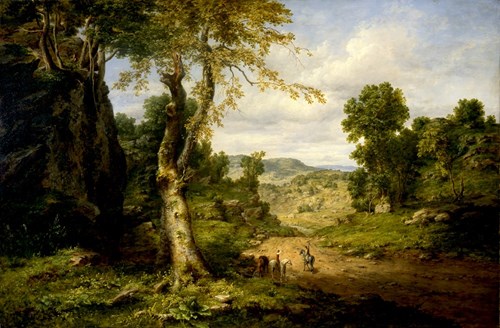
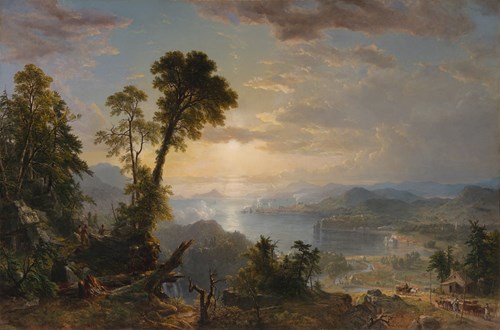
George Inness, View in Berkshire County, Massachusetts, Clearing off After a September Storm, 1849. Oil on canvas, 48 x 72 1/4 in. (121.92 x 183.52 cm). Buffalo Bill Center of the West, Cody, Wyoming; Whitney Western Art Museum; Gift in Memory of L.G. Phelps and Frances Phelps Belden, 21.00.

Asher B. Durand, Progress (The Advance of Civilization), 1853. Oil on canvas, 48 × 72 in. (121.92 × 182.88 cm). Virginia Museum of Fine Arts, Richmond. Gift of an anonymous donor, 2018.547. Photo: Travis Fullerton © Virginia Museum of Fine Arts.

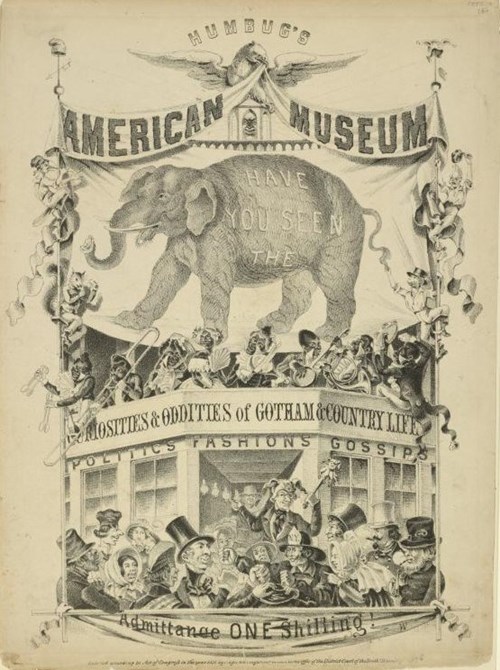
Nagel and Weingärtner, Humbug’s American Museum, 1851. The Miriam and Ira D. Wallach Division of Art, Prints and Photographs: Print Collection, The New York Public Library.

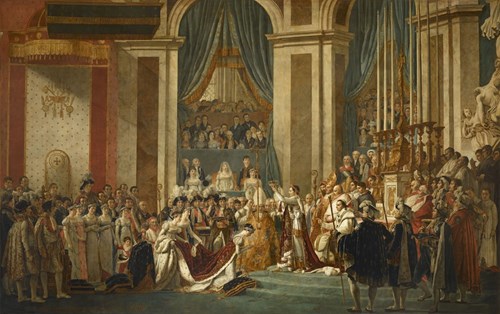
Jacques Louis David, Coronation of Emperor Napoleon and Josephine at Notre-Dame in Paris, December 2, 1804, 1808–22. Oil on canvas, 240 1/8 x 382 1/4 in. (610 x 971 cm). Chateaux de Versailles et de Trianon. © RMN-Grand Palais / Art Resource, NY

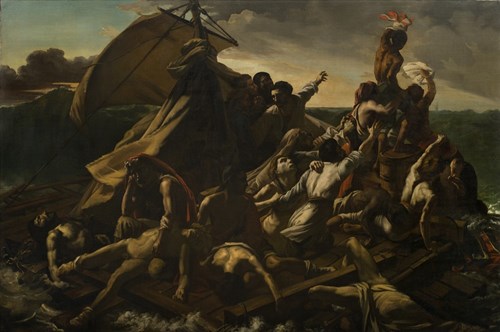
George Cooke, Raft of the Medusa, ca. 1830. Oil on linen, 51 3/8 × 77 1/4 in. (130.5 × 196.2 cm). New-York Historical Society, Bequest of Uriah Phillips Levy, 1862.4. Photography © New-York Historical Society.

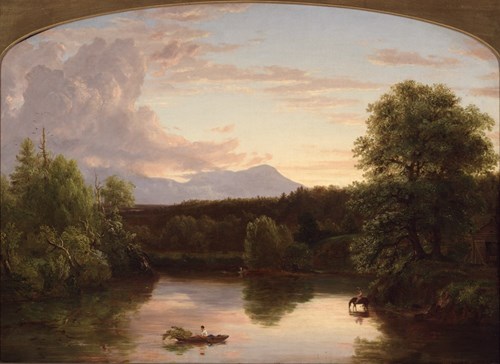
Thomas Cole, North Mountain and Catskill Creek (Sunset on the Catskill), 1838. Oil on canvas, 26 7/16 × 36 7/16 in. (67.2 × 92.6 cm). Yale University Art Gallery, Gift of Anne Osborn Prentice, 1981.56.

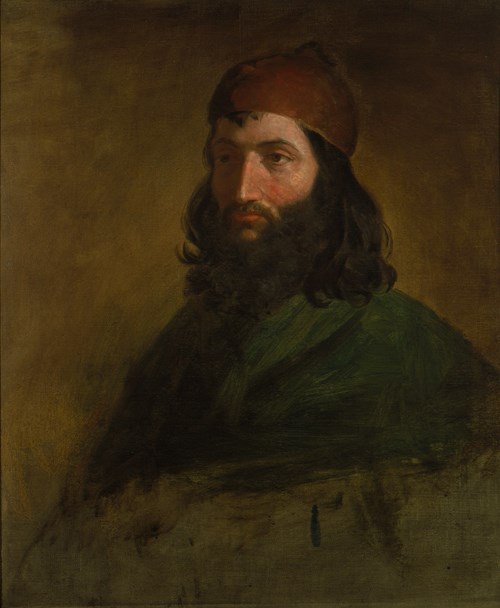
Washington Allston, Sketch of a Polish Jew, 1817. Oil on canvas, 30 1/4 × 25 1/4 in. (76.8 × 64.1 cm). National Gallery of Art, Corcoran Collection (Museum Purchase, William A. Clark Fund).

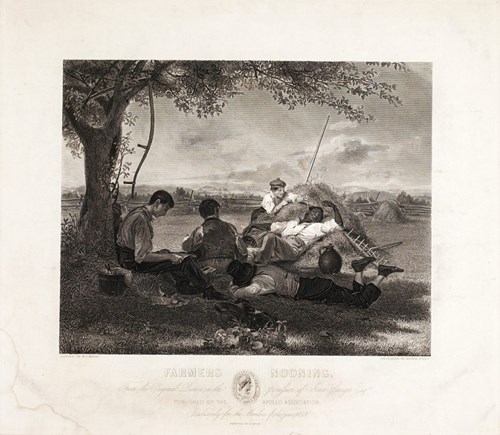
Alfred Jones after William Sidney Mount, Farmers Nooning, 1843. Engraving. National Museum of American History, Smithsonian Institution.
☀☀☀☀☀☀☀☀☀☀☀☀☀☀☀☀☀☀☀☀☀☀☀☀☀☀☀☀☀☀☀☀☀☀☀☀☀☀
I've selected these images from the ones made available for reviewers to draw from in their reviews. (There are eighty-seven illustrative images in the entire text.) I think these choices offer the gifter of the book, to self or others, a pretty solid overview of the aesthetic on display in the book. If you like nineteenth-century art, more or less academic in its emphasis, this book is a great choice to ornament your coffee table.
The idea of the American Art-Union, its aim to bring visual culture to the entire borning nation, resonated with me like I was a bell and it was a clapper. Its aims, its choices, and the idea of a drawing to win original art...well, take my money, y'all.
Sadly the times were just not in sync with this lofty aim. The inevitable problems with Authority, among the membership, and all the usual nonsense that attends doing something large and ambitious that exceeds the practical and the cultural infrastructure, concatenated in a spectacular flame-out.
Unusually, the author chose to follow the internal threads of the story. I felt a bit at sea for a while, as I'd expected the bog-standard chronological structure. No indeed...and to be honest, it serves the story being told better than a chronolgy would have done. I can see that this technique will make enemies, though, so I don't want you to go in to a $40 book only to be blindsided with a synthetic approach where one expects an analytical one.
I'm eager for fellow appreciators of nineteenth-century utopianism, of the urgent need to create a visual culture in this world of philistines, and those who just flat love to look at art, to get one of these beauties for themselves, or a like-minded friend.
The Table of Contents, with its relative page counts, will show you better than I can what the author does with this story. The amount of text dedicated to the events chronicled is proportional to the importance of the events themselves, much more directly than I find is usual in art-history works:
Introduction: The Dream of Art for the People | 1This is a fine work of scholarly thought, meeting beautiful art images, and coming together to produce a book that your budding historian, your culture vulture, and your very artsy giftee will eat up with a terribly refined runcible spoon.
1 Engravings: To Lead Taste or to Follow? | 29
2 Selecting Artworks for Distribution: From Democracy to Oligarchy | 63
3 The Free Gallery: Art, Anxiety, and Revolution | 99
4 Distributions and Membership: “Messengers and Missionaries of Art”? | 122
5 The Bulletin: From Education to Provocation | 155
6 Slowly, Then All at Once: The Demise of the American Art-Union | 180
Acknowledgments | 209
Appendix A: American Art-Union Resources | 211
Appendix B: American Art-Union Officers and Committee of Management, 1839–51 | 213
Appendix C: American Art-Union Engravings Distributed to All Members | 216
Notes | 219
Sources Cited | 253
Index | 271
I did.
Subscribe to:
Posts (Atom)