Showing posts sorted by relevance for query #WITMonth. Sort by date Show all posts

Wednesday, July 31, 2024

August is #WITMonth: Women in Translation will feature all August long


August is W.I.T. Month!

This ten-year-old readfest is described on their website (linked above) as follows:
WITMonth—aka Women in Translation Month—is an annual celebration of women writers from around the world, writing in languages other than English. Started by Meytal Radzinski in 2014, WITMonth has grown to become a staple of the online literary community, as well as a prominent presence in independent bookstores around the world.

Every August, readers from all continents around the world (except Antarctica, but we’ll get those penguins yet!) gather in spirit (and sometimes in person) to read, review, and discuss works by women writers in translation. The idea is to spread the word about the Women in Translation project at large, and promote individual women writers in translation specifically. Follow #WITMonth on Twitter, Instagram, Booktube, and across the world!

The overarching purpose is one I support most of all because it is the opposite of the TERF essentialist and exclusionary mindset. A bit of history about their work, again from their website...
The #womenintranslation project is:

International, intersectional, and built around the notion that all women* (*and transgender and nonbinary and intersex individuals) deserve to have their voices heard. This project is committed to giving space to women* from all countries, all languages, all religions, all ethnicities, all cultures, all sexualities, all marginalized gender identities, all abilities, all bodies, all classes, and all ages.

Due to the stunning gender disparity in non-English language literature, this project will focus on all literature written by women* in any language other than English, regardless of the language in which it is read or discussed. This project shall not discriminate based on literary genre or designation, seeking instead to open as many gates as possible to all readers. This project is open to all readers, from all languages, from all countries, in the hopes that together we may build a better world.

This month I will focus on works written and/or translated into English by *women. My intention is to post twenty-one reviews, not including Burgoines and Pearl-Rules, in the thirty-one days of August. See the previous years' reviews, too.

I encourage all who love reading to join the fun...one book or ten, add some women's writing and translating to your TBR!
***
August is #WITMonth in Review

I wrote twenty-four reviews, Burgoines, and Pearl-Rules in August. I'd planned to make twenty-one full blog posts of #WITMonth reads, and failed, making thirteen full-blown reviews. My excuse is what my LT friend Katie calls "The Rona" bashed me for several days...though that might be a self-misdiagnosis. The pharmacist who shot me up with my vaccines yesterday said the profile I described sounded more like the onset and course of RSV.

Anyway, I'm all jabbed up and really don't want any re/visits from anything, thenkewveddymahch.

My favorite read of the month was, hands down, Hum by Helen Phillips. Excellent, thought-provoking story of how humans will always screw up inhuman systems because what programmers call "edge cases" actually make up the bulk of human life. I was gripped, beginning to end.

The most enjoyed #WITMonth read was the estimable Of Saints and Miracles, translated ably from its Spanish edition by Claire Wadie. I absolutely rang like a newly-founded bell with its story of betrayal for gain. Not the cheeriest story, permaybehaps, but one I think we can all feel in our water.

September will be themeless as I ramp up for #Deathtober and #Booksgiving. It's all the more urgent to me that I not die before those themes are polished and properly posted because my notes say some pretty scathing things and need toning down for public consumption.

Thursday, July 31, 2025

AUGUST 2025 is #WITMonth again!

Boydell & Brewer's beautiful 2019 banner
Women In Translation Month (#WITMonth) is a long-running project, since 2013, now observed in the US in August. It's meant to address a lack of attention (readership follows attention) to women writing in, or translating from, languages not English. "The project also promotes works by underrepresented trans and nonbinary writers, unless they otherwise ask not to be included in the gendered project," per their FAQ, so I feel more comfortable supporting their laudable aims.

I seek out women's writing all year round. I'm trying to promote translated literature as a delight to read, a fascinating extra layer of peeking into a non-US culture's storytelling, by using the hashtag #WITMonth year-round to make it easy for those seeking out translations at any time. There's also #NationalTranslationMonth in September for the US reader not committed to gender politics. I'm a bit more lax about hashtagging that one.

I don't set numerical goals very often, they feel performative for me because I read so very much...old, disabled, not much into TV, and hooked into the DRC ecosystem means I've got enough reading material to last until I'm dead...twice over. For 2025's #WITMonth, I'll state as my goal to publish a review of a title at least once a day six days a week. Five full weeks in August this year means at least thirty reviews.

Since July 2025 was a sixty-two review month, barring a horrible unknown thing preventing me, I ought to get there with room to spare. I encourage everyone who visits my blog to join me to whatever level is attainable to you.

Friday, August 22, 2025

AUGUST WAS #WITMONTH...NOW IT'S SEPTEMBER, NATIONAL TRANSLATION MONTH


AUGUST 2025 was a very satisfying #WITMonth! My goal was writing at least 30 reviews of works translated by, or written by and then translated, from women the world around sourced from the DRC aggregators.

End of celebration report: thirty-two (32) posted, two ahead of my goal. As is always true, searching the tag "#WITMonth" on the blog, by clicking it at the bottom of this entry or by entering the text in the search box, will give you all the entries so tagged. You can also click right here.

There were standout reads, of course; fewer than I would've preferred, but including a strong contender for my 2025 six-stars-of-five accolade is The Remembered Soldier, a Dutch Great-War story of identity, of need and longing and love you can't imagine life without, all so precisely, sharply even, wrapped in that wooliest of media: Memory. There is nothing in any of that warbling of joy to detract from the amazing non-fiction work (So What) If I'm a Puta that tells the own-voices stories of transfem sex workers in Brazil. Transfem folk are at the highest risk imaginable for femicide. It's a tough, bleak read, but it left me fully aware of how easy it is for transphobic...people...to do their ugly, hateful work without knowing a fraction of the cost others must pay for it.

I'm delighted that August is going out on the happy note of a lovely stretch of just-right days with sun, breeze, not-hot not-cold temperatures, not-too-humid (I live on the beach, humid gonna happen) air. It's like it was before climate change really began biting us.

So, September is #NationalTranslationMonth, which I'll be leaning into for my reviewing. I'll include women's translations as new ones pop up, hashtagging with both #NationalTranslationMonth and #WITMonth to be sure they're discoverable from every abgle. It won't be as focused a push, but will definitely be noticeable. No goals set so I'm not pressuring myself to accomplish something; I'll just be taking extra note of a book's origins.

And with that, I'll wish global-northerners a happy incoming fall and global-southerners the same for spring! Excellent reading mojo for all, of course.

Saturday, August 1, 2026

JULY 2026 IN REVIEW & August 2026 is #WITMonth

Amplifying voices: celebrating women in translation month | ProZ.com, via LinkedIn
JULY IN REVIEW

A month of wonders was had by all. Forty-one reviews written, fifty-three DRCs received; twenty-three of those reviewed in their publication month. That's 43%! Could not be happier with that. Of the remaining eighteen reviews, one was a five-star review of a 2020 novel from New Vessel Press: The Piano Student by Lea Singer, translated from German by Elisabeth Lauffer. I five-starred Beginning Middle End by Valeria Luiselli, and all but five-starred Ada by Mark Haber; Unsayable: A Life in Writing by Michael Cunningham; The Sixth Nik by Pulitzer-winner Daniel Kraus; Event Horizon by [[Balsam Karam]]; and shockingly Grief Eater, lesbian zombie story by [[Emma Osborne]].

What a month! That's better than some years (notably 2018, only 65 reviews blogged the whole year)! While there were disappointments, they weren't Biblical disasters like The Dove and the Dragon: A Cultural History of the Apocalypse. *shudder*

On to August, with a high heart and a happy soul. Women in Translation Month is an August staple on my blog. Entries start in 2014. I'm always delighted to tell all y'all about this twelve-year tradition of shouting out the incredibly broad and wildly varied works by, about, and translated from every language and country I can think of, by women. Working in multiple languages to represent as accurately as possible the artistry of another person for the reading joy Anglophone readers is truly an act of the greatest generosity and highest cultural importance. Open Letter Books' site says, "Women in Translation Month is always an exciting time to discover, read, discuss, and celebrate books by women from around the world. It was created by Meytal Radzinski back in 2014, and has since spawned numerous articles, events, and even the Warwick Prize for Women in Translation." And WomenInTranslation.org, the Mothership if you will, says it most authoritatively:
"WITMonth—aka Women in Translation Month—is an annual celebration of women writers from around the world, writing in languages other than English. Started by Meytal Radzinski in 2014, WITMonth has grown to become a staple of the online literary community, as well as a prominent presence in independent bookstores around the world. Every August, readers from all continents around the world (except Antarctica, but we’ll get those penguins yet!) gather in spirit (and sometimes in person) to read, review, and discuss works by women writers in translation. The idea is to spread the word about the Women in Translation project at large, and promote individual women writers in translation specifically. Follow #WITMonth on Twitter, Instagram, Booktube, and across the world!" I'm planning to write at least thirty-one full reviews of works translated by women this month. Even if they're translating men's writing. (I've been told before that this is "not in the spirit of the celebration" and I'm "diluting the intended impact of the hashtag," both of which snarky stupidities I have very consciously and intentionally ignored. This will not change.)

As an act of celebration I'm including a few special discounts I know publishers are offering on parts of their lists below with all the relevant details and the links to their sites. I'll add to these links as and when I come across more:

SEVEN STORIESThrough the end of August 2026, take 25% off all currently available translated books by women authors! Please note that all forthcoming books are available for preorder at 10% off. https://sevenstories.com/blogs/385-celebrate-women-in-translation-month-2026

TRANSIT BOOKS 30% off all titles by women in translation through the end of August with the discount code WITMONTH. https://www.transitbooks.org/postscript/women-in-translation-month

OPEN LETTER BOOKS 40% discount on all Open Letter print titles written by women, along with any book translated by a woman, for the whole month of August. Discount applied automatically at checkout. https://www.openletterbooks.org/collections/women-in-translation-month

COLUMBIA UNIVERSITY PRESS Use coupon code WITM at checkout to save 20% on your purchase. https://cup.columbia.edu/promotions/women-in-translation-month/women-in-translation-booklist/*
More, I hope, to come below:

SYRACUSE UNIVERSITY PRESS Women in Translation Month celbration: 40% off all translations. Offer valid through September 15, use discount code 05FAIR26 at checkout. https://press.syr.edu/supressbook-subject/literature-in-translation/

WORLD EDITIONS offers a 40% discount on any orders (US, UK & Canada) of our WIT books. Please use code wit26 at checkout if you'd like to take advantage. https://worldeditions.org/home-4/books-written-translated-by-women/

Thursday, August 6, 2026

HILDA HILST'S PAGE: #WITMonth DELIGHT THE OBSCENE MADAME D; pervy LETTERS FROM A SEDUCER


THE OBSCENE MADAME D
HILDA HILST
(tr. Nathanaël, & Rachel Gontijo Araujo)
Pushkin Press Classics (non-affiliate Bookshop.org link)
$11.99 ebook, available now

Rating: 4.75* of five

The Publisher Says: A wickedly funny work of depraved genius by one of Brazil’s most radical twentieth-century writers; imagine the Marquis de Sade as written by Clarice Lispector

An electrifying masterpiece by one of modern Brazilian literature’s most significant and controversial writers, Hilda Hilst takes us into the disorder and beauty of a mind restlessly testing its own limits.

Every month I ingested the body of God, not in the way one swallows green peas or agrostis, or swallows swords, I ingested the body of God the way people do when they know they are swallowing the More, the All, the Incommensurable, for not believing in finitude I would lose myself in absolute infinity...

The Obscene Madame D tells the story of Hillé, a sixty-year-old woman who has decided to abandon conventional life and spend the rest of her days in contemplation in a recess under the stairs. There, she is haunted by the perplexity of her recently deceased lover, Ehud, who cannot understand her rejection of common sense, sex and a simple life in favour of metaphysical speculations that he considers delusional and vain.

In a stream-of-consciousness monologue that’s part James Joyce, part Clarice Lispector, and part de Sade, Hillé speaks of her search for spiritual fulfilment from a space of dereliction, as she searches for answers to great questions of life, death and the relationship between body and soul.

I RECEIVED A DRC FROM THE PUBLISHER VIA EDELWEISS+. THANK YOU.

My Review
: Wow. *fans self*

Horny, thy name is Hillé. No wonder poor ol' Ehud is (it would seem) grouchy about being dead and about Hillé's decision to take herself into seclusion and contemplate The Divine. Saint Teresa of Ávila got nothin' on her! Observant, intelligent, philosophical, self-reflective...all apply to both women. Such a waste for a pervy old ghost/revenant/remnant.
"You wear a mask, love , a livid and violent mask, to look at you is to penetrate into the vortex of nothingness, may your silence make itself mine and we’ll wander together in a lacunous vastitude, that’s why I speak, speak to exorcise you, that’s why I work with words, also to exorcize myself, that the bitterness of the abysses may cease, that may break in this tide of phonemes, of syllables, that a light may break, exempt of anguish it’s best to be quiet when your name is passion."

In under 100pp, Hillé does more to demonstrate the primacy of sensual awareness as a motivating factor in every mode of life than Freud's entire all-too-male œuvre. It is a work where the images, the words used in forming them, the events described by them, the colors smells sensations all evoke the kind of sexual awareness of the world that slots in with the saint's immanent experiences of her god.
I don't understand the body either, that caltrop, nor the bloody logic of days, nor the faces that stare me down in this village in which I live, nor what are a house, a concept, what legs are, what is coming and going, toward where and what, Ehud, what these old women are, the howls of childhood, these spent men, what do the fools think of themselves, the children, what is thinking, what is clarity, the sonorous, what is sound, a trill, a cry, a howl, what's a wing uhn?
What happens in these pages is alchemical, psychological simmering and then the transubstantiation of breakdown breaking fracturing into insight:
Dross, yes, the attempt to compose a speech without knowing anything of its beginning nor its end, nor why the necessity for this speech, why the necessity to try to situate oneself, which amounts to attempting to remain clutching a rope over the abyss and without even knowing how it is that one wound up there, nor whether one ought now to move to the right rather than the left, around the fog, bellow a roar, or above it? water? voices? ships? I am reconstituting sophisticated evenings, politics, duties, a sociology of future, a being here, they ask me, kindred with the world, and acting, and authors, citations, foaming verbosity, the ear hearing itself foremost but responding to the people with elegance propriety care as though in fact it had listened to people, theatre, all theatre
I know a lot of y'all don't like long quotes and/or don't see how the quotes I've selected are connected to my ideas in the review. I put them in less and less often because of that feedback.

Here is my last quote from this remarkable fever-dream of a story. It is a summation of life as lived inside a human body. It looks at the processes proceeding all unseen, invisible, hidden and covered up because they're ugly, because to be ugly is terrible and shameful and not to be shared:
Animals, say, why do we kill them? To eat. But eating is abominable, no? All that stuff going down the tube and later becoming mass and even later shit. Close your eyes and try to imagine your body inside. Wriggling, blood. Take the microscope. Ah, not me. What a thing, flesh, nails, hair, and such colors in there, purplish-red. Look at yourself. Where are you now? I'm looking at my stomach. It's horrible Ehud. And you? I'm looking at my lungs. They dilate, compress. Everything enters into me, everything goes out. There's nothing that only goes in? No. And God? God enters and goes out, Ehud? I don't know about that. The priest says that God is inside the heart. So, look at yours, see if it's there, inside. I'm lookin'. Is it? No. Let me listen to your heart. Lord, how it beats!
...and realize Ehud is not alive, a woman in psychological distress is sharing these gobbets of thought and powerfully phrasing the offal in her mind to address it to a man who was but is not.

A deeply, enfoldingly, humanely beautiful story of life and need and longing and love. Profound. Moving. So short it's one long sitting of a Sunday afternoon read. I've left Madame D and her Ehud a warmer, more accepting soul.

Also horny.

+++++++++++++++++++++++++++++++++++++++++++++++++++++++++++++++


LETTERS FROM A SEDUCER
HILDA HILST
(tr. John Keene)
Pushkin Press Classics (non-affiliate Bookshop.org link)
$12.99 ebook, available now

Rating: 4.25* of five

The Publisher Says: A grand, perturbing erotic novel in which the wealthy, amoral Karl records his sexual life and search for meaning in letters with a surprising legacy

This epistolary novel tells the story of Karl, a wealthy, amoral and erudite man who records his daily life in a series of 20 letters to his sister Cordelia. She is cloistered and chaste, but the letters are wildly promiscuous—not just in their explicit sexual content, which have earned the novel the epithet ‘pornographic’, but in their form. Ranging in style and register from modernist fragments worthy of James Joyce and Samuel Beckett, to letters that could have been penned by Enlightenment libertines like Choderlos de Laclos and the Marquis de Sade, the letters make up a polyphonic text that pushes the boundaries both of fiction and of decency.

The novel—a standalone masterpiece which originally appeared as part of a Brazilian tetralogy—changes form again partway through, when the indigent poet Stamatius finds Karl’s record of his erotic adventures in a trash can, and begins to write stories based on what he reads, and then to break down those stories into even briefer fragments. Karl’s letters inspire Stamatius’ writing, and their narratives and identities become ever more fragmented, until we begin to doubt whether they are truly separate people. What unites them is an abundantly lewd imagination and a fantastically creative relationship to the greatest seducer of all: language.

I RECEIVED A DRC FROM THE PUBLISHER VIA EDELWEISS+. THANK YOU.

My Review
: Straight-people sex *shudder* in astoundingly intense, deeply evocative flashes, fragments, and impressionistic sweeps of imagery. Lovely writing, the imagination behind these pieces is one that gets far, far too little attention in Anglophone readership.

It is going to offend prudes. It will genuinely repulse people who do not like the bodyness of sex. For the rest of us, it's aspirational; it proves the largest human sex organ is the brain. It is also the most important sex organ. The way these bits and moments work is in a frame that might make some unwilling to read the work at all: Karl, a rich, bored jerk writes to his sister about his bedroom gymnastics in detail. It kept me away from the read until, for #WITMonth, I had to become Stamatius...the starving artist whose sections of narrative are no less erotically charged but because he's impoverished it's okay (?...no more sense made here than Karl's wealth TBH), and he's, um, not quite so...he's free-form let's say.

Highly literary porn. It's the kind of "story" one associates with those old-timey one-handed reading letters from "real readers" magazines (do those still exist, or is the advent of streaming porn to blame for another cultural shift?) that kinda petered out when the writer'd uhh finished their thought.

No-plot all-vibes readers will love this little novella-length piece. Those who need an actual crafted narrative aren't really likely to enjoy it. And if reading about the juice and friction of the body in congress with others bothers you, click away, turn the corner, go wash something.

Thursday, June 30, 2022

ARCADIA, rare intersex representation & THE WASTELAND, London life of gay poet/literary ikon T.S. Eliot


THE WASTELAND
HARPER JAMESON

Level 4 Press (non-affiliate Amazon link)
$3.99 Kindle edition, available now

Rating: 3.75* of five

The Publisher Says: The extraordinary career and devastating life of T.S. Eliot.

T.S. Eliot is a hollow man trapped in a dreary world. He works at a bank, a slave to the clock, the same routine, day after day. While London’s elite enjoy a Great Gatsby lifestyle and poets like Robert Frost are rock stars, attracting thousands of fans to each reading, Mr. Eliot walks past life, peering at it through cracks or around corners. Only in his imagination does the world drip with color.

Then one day he comes across Jack, an out and proud gay man being badly beaten, and something compels him to intervene. Life will never be the same.

Jack introduces Mr. Eliot to the gay underground of early twentieth-century London and to feelings Mr. Eliot had crammed down and locked away. And with freedom comes poetry. Extraordinary poetry that takes London by storm. But as Mr. Eliot’s fame increases, pressure for conformity does as well. Religious intolerance, fascism’s increasingly popular message of traditional values, and the allure of untold success present him with a decision that could have devastating consequences.

The Wasteland is the untold story of T.S. Eliot, his secret struggle with being gay, the people left in the wake of his meteoric career trajectory, and the madness that helped produce his greatest work.

I RECEIVED A DRC FROM THE PUBLISHER VIA EDELWEISS+. THANK YOU.

My Review
: Sadness. Grey, enveloping sadness. That's the take-away I had from this technically adept reinvention of poet T.S Eliot's early-1920s life in London.
Even if there were no light on the bank, Mr. Eliot would still know it was there. It's always there, waiting to welcome him with open arms, more than willing to take more tocks from his clock.

–and–

"We return you now to our regular broadcast," the announcer drones.

"Clair de Lune." Claude Debussy. Relaxation. Baloney.

Baloney indeed, and more than just that in a penitential dry sandwich consumed in a lonely penitentiary. With the aplomb of a dab hand at this fantastical-reimaging stuff, Eliot's life is peopled with the souls embodied and conjured on a magical-realist visit with the great poet. We even see him conjuring Mr. J. Alfred Prufrock (whose peaches are uneaten and coffee spoons resolutely empty) on the day he learns his new crush, Jack, is no longer with the bank. But Mr. Eliot is in for a major surprise in this case....

...as are the readers of this historical fantasia on themes of gay men's circumscribed lives. Mr. Eliot, for I cannot bear to call him Tom, is a creative and passionate soul in the body of a Puritan. He is deformed and damaged by a world he despises as he obeys it. Mr. Eliot will get his revenge. He blares forth a trumpet of poetic passion that has stood its ground atop English-language poetry. Its creator is given, here, by Author Jameson, a life that commingles reality and fantasy as only a poet could merit, warrant, summon forth from beyond the grave's creative silence.

++++++++++++++++++++++++++++++++++++++++++++++++++++++++++++++++


ARCADIA
EMMANUELLE BAYAMACK-TAM
(tr. Ruth Diver)
Seven Stories Press
$13.96 trade paper, available now

Rating: 3.5* of five

25% OFF DIRECT PURCHASES OF #WITMONTH TITLES HERE: https://sevenstories.com/blogs/385-celebrate-women-in-translation-month-2025

The Publisher Says: An English-language debut that reveals and subverts contemporary conceptions of normative sexuality, capitalist culture, and environmental degradation.

Winner, Prix du Livre Inter, 2019

Farah moves into Liberty House–an arcadia, a community in harmony with nature–at the tender age of six, with her family. The commune’s spiritual leader, Arcady, preaches equality, non-violence, anti-speciesism, free love, and uninhibited desire for all, regardless of gender, age, looks, or ability. On her fifteenth birthday, Farah learns she is intersex, and begins to question the confines of gender, and the hypocritical principles those within and outside the confraternity live by. What, Farah asks, is a man or a woman? What is it to be part of a community? What is the endgame for a utopia that exists alongside refugees seeking shelter by the millions and in a society moving ever farther away from nature and its protections. As Liberty House devolves into a dystopia amidst charges of sexual abuse, it starts to look a lot like the larger world, confused in its fears and selfish hedonism.

Emmanuelle Bayamack-Tam delivers a magisterial novel, a scathing critique of innocence in the contemporary world.

I RECEIVED A DRC FROM THE PUBLISHER VIA EDELWEISS+. THANK YOU.

My Review
: Really, really squicked out by what I see as a borderline-coercive sexual relationship between a fifteen-year-old who's just discovered they're intersex and the much-older leader of the cult that they and their family now belong to. I took a long break from the read because I was not sure I wanted to finish this entire story. It brought up my mother's sexually abusive power-plays against me. That was not comfortable at all.

So I'm unusually alert to sexual undertones in relationships between kids and adults. I felt Arcady, the cult/commune leader, was less grooming Farah than responding to Farah's burgeoning sense of themself as a sexual, intersex person. While that doesn't lessen my personal discomfort with Arcady's power imbalance with Farah, it does show that Author Bayamack-Tam possesses a clear sense of the need to keep the power dynamic in balance. Add to that Farah's rare and possibly genetically-heritable anatomical anomaly resulting in an indeterminate sex and gender presentation.

Prime candidate for a charismatic cult leader's sexual manipulation. Which, it must be said, is present; but the clear and repeated caveat from older Arcady is that they reach maturity before he will sexually engage with them. Farah, quite understandably, is not willing to wait some indeterminate amount of time for someone not her to decide they're capable of offering informed consent and, mirabile dictu, pushes the schedule to meet their burgeoning sexual desires.

Totally understand that. But great-grandfather does not think with a teen's hormones, and holds Arcady to a higher standard. But anyway, this was not anything Farah regrets or has doubts about; and again, the stage was set for this to be as unrevolting as possible because we know what Farah is thinking and feeling.

I've gone on about the subject and left out the nudist free-spirit grandmother, the cypher parents who really are affectless, the communards whose existence is merely suggested not explored in even the slightest depth...in general, this is a decent novel by a hippie-wannabe, a French-lady Brautigan, with an agenda and an axe being ground noisily in the background. Also a fun story to read.

Friday, August 15, 2025

THE CURIOUS CASE OF DASSOUKINE'S TROUSERS, Moroccan author's Anglophone debut from 2016


THE CURIOUS CASE OF DASSOUKINE'S TROUSERS
FOUAD LAROUI
(tr. Emma Ramadan; intro. Laila Lalami)
Deep Vellum (non-affiliate Bookshop.org link)
$9.95 ebook, available now

Rating: 4.5* of five

The Publisher Says: Award-winning English-language debut by Morocco's most prominent contemporary author, a linked story collection exploring what it means to be foreign.

  • Included in World Literature Today's "75 Notable Translations of 2016"
  • One of Literary Hub's Books to Read this May
  • One of Asbury Park Press Books to Read this Summer
    This long-awaited English-language debut from Morocco's most prominent contemporary writer won the Prix Gouncourt de Nouvelles, France's most prestigious literary award, for best story collection. Laroui uses surrealism, laugh-out-loud humor, and profound compassion across a variety of literary styles to highlight the absurdity of the human condition, exploring the realities of life in a world where everything is foreign.

    I RECEIVED A DRC FROM THE PUBLISHER VIA EDELWEISS+. THANK YOU.

    My Review
    : Funny, farcical, sometimes surreal...or do I just lack context to get the concrete reality of what he's saying...we have Laila Lalami to thank for this collection's appearance in English nine years ago. She set out to interest US publishers in a different book entirely, On Islamism: A Personal Refutation of Religious Fundamentalism, which is still untranslated into English (though available in Dutch and, of course, French) and which I myownself would devour whole, but this collection won the nod of premiering Laroui's quirky worldview to us. Deep Vellum does this work from multiple languages into US English and, every #WITMonth, takes a strong lead on books reviewed here.

    The tone of this collection is deadpan. Much of the humor, culturally bound, in it requires a moment's thought to "get" but is never crudely or condescendingly signposted by either the author or translator Emma Ramadan. I find this refreshing; I am happy to make an effort to understand what I'm reading, and I'm aware people who read my reviews are, too. There is a lot of surface fun, and a lot of surreal oddness, to enjoy in the stories. It's a collection that tells us, no matter where we are in space and time, others in other spaces and times were and are just as perplexed, bemused, and wryly amused as we are.

    Comme d'habitude, these nine stories will be dealt with by the Bryce Method.

    The Curious Case of Dassoukine's Trousers has fun with the fish-out-of-water trope, telling it in slightly Kafkaesque twists as a self-important fool has truly weird things...your trousers ever just disappear on you?...then even stranger responses to his predicament that are wildly disproportionate. Skewers every archetype of The Establishment. As the fool narrates his story to "us" (the invisible audience stand-in) he grows more and more agitated, and I grew louder and louder in my cackles and snorts. 4.5*

    Dislocation does what it says on the tin...dislocates you. The question, repeated with variations. "What would it be like, he asked himself, a world where everything is foreign?" and we are off into an entire field of rabbit holes leading into misuderstandings, double entendres, miscommunications. What does Maati's "sweet, kind Anna" mean when she says he's "Moroccan by birth, in body, but "French in the head"? What levels of displacement, belonging without being accepted, are there in "sweet, kind Anna" (who isn't) "laughed in his face {when} even he wasn't very convinced by his pro domo plea." (An argument made in support of one's existing case.) Deeper and deeper, Anna the touchstone, the source of all the emotion (mostly anger) as the narrator, I kept thinking of him as the interlocutor, the straight man, feeding me thoughts I found funny-hmmm and funny-haha in differing proportions the deeper we got into Utrecht where he seeks asylum and has married "sweet, kind Anna" as "{t}his one went forth in quest of truth as a hero, and at last got for himself a small, decked-up lie: his marriage he calleth it."

    He decides, stunned, what these twists and turns and gyrations mean. You get the same privilege. I was swept into the slipstream and liked where I went. 4*

    Born Nowhere is hung on the story-nail in the wall of Melpomene's study holding up the tragedy's summation: "After all, I know who I am, right?"

    That remains to be seen, Moroccan in Paris, trying to evade repression oppression and impression: "This story proves what I have always believed. Identity problems don't exist. We create them! 'Who am I? Where am I going? What am I good for?'" He's in for an ugly surprise, like so many in this ever-more-tightly surveilled world of 2025. 3.5* for its sketchiness, incompleteness of narrative

    Kuourigba, or the Laws of the Universe allows us to eavesdrop on the coffee-house chat of several young men, one a stringer for La Tribune de Casablanca with a tale of Kuourigba to tell. A general strike, a blow against global capitalism, and the forces of reaction writ small, local, petty in the French sense. Much palaver there in the Café de le Univers, in the shaggy-dog story way of young men solving problems they're a ways off from understanding. 3*

    What's Not Said in Brussels is just not sayable. How does a couple survive long-distance (a question I'm intimately enmeshed in now) and survive language mismatches and cultural cross-purposes too? Annie (who doesn't get his jokes) and John (who "mansplains" everything) arrange to meet in Brussels with the intent of breaking up, though neither has said that to the other yet. A cloud of seemingly random bits and patches of thought and memory obtrude, intrude, exude a mist of influence over each of them.

    Never decide things in the silence of your head when they need to be enacted in the clamor of life as we humans live it. It's pointless and it causes a lot of wasted anxiety. 4*

    Bennani's Bodyguard poor Nagib, those autoimmune diseases might've been preferable.

    Another Café romp through what language does when friends, close enemies that they are, become, and embody for each other, are in full cry as they pursue storycraft to the detriment, or the exaltation in reverse, of mere logic. 4.5*

    The Invention of Dry Swimming is so surreal, so funny within that range of unreality, and so impossible to convey in summary that I'm offering only this: "If this story does not make you laugh in startled awareness of these thoughts being expressed, seek medical assistance for your probable ischemic event." 4.5*

    Fifteen Minutes as Philosophers feels the most like it was written by a French intellectual (it was) and aimed at other French intellectuals (I ain't). I can't decide if this is intended to cause embarrassment or amusement. It left me unmoved. The only one in the entire collection I did not fully enjoy, it was still very intriguing because I was uncertain of the effect on me that was intended. 3*

    The Night Before Revolution! War! Action at last! Overthrowing the Oppressor!

    ...and then what...? 4*
  • Wednesday, August 13, 2025

    TOO GOOD TO GET MARRIED: The Life and Photographs of Miss Alice Austen, biography of a recovered queer elder


    TOO GOOD TO GET MARRIED: The Life and Photographs of Miss Alice Austen
    BONNIE YOCHELSON
    (foreword by Victoria Munro & Jessica B Phillips)
    Empire State Editions (non-affiliate Bookshop.org link)
    $39.95 hardcover, available now

    Rating: 4.5* of five

    The Publisher Says: Explore Gilded Age New York through the lens of Alice Austen, who captured the social rituals of New York’s leisured class and the bustling streets of the modern city. Celebrated as a queer artist, she was this and much more

    Alice Austen (1866–1952) lived at Clear Comfort, her grandparent’s Victorian cottage on Staten Island, which is now a National Historic Landmark. As a teenager, she devoted herself to photography, recording what she called “the larky life” of tennis matches, yacht races, and lavish parties.

    When she was 25 and expected to marry, Austen used her camera to satirize gender norms by posing with her friends in their undergarments and in men’s clothes, “smoking” cigarettes, and feigning drunkenness. As she later remarked, she was “too good to get married.” Austen embraced the rebellious spirit of the “New Woman,” a moniker given to those who defied expectations by pursuing athletics, higher education, or careers. She had romantic affairs with women, and at 31, she met Gertrude Tate, who became her life partner. Briefly, Austen considered becoming a professional photographer. She illustrated Bicycling for Ladies, a guide written by her friend Violet Ward, and she explored the working-class neighborhoods of Manhattan to produce a portfolio, “Street Types of New York.” Rejecting the taint of commerce, however, she remained within the confines of elite society with Tate by her side.

    Although interest in Austen has accelerated since 2017, when the Alice Austen House was designated a national site of LGBTQ history, the only prior book on Austen was published in 1976. Copiously illustrated, Too Good to Get Married fills the need for a fresh and deeply researched look at this skillful and witty photographer. Through analysis of Austen’s photographs, Yochelson illuminates the history of American photography and the history of sexuality.

    I RECEIVED A DRC FROM THE PUBLISHER VIA EDELWEISS+. THANK YOU.

    My Review
    : This isn't an obvious fit for the usual definition of #WITMonth I've been working with. Indulge me for a moment: In society, now as much as in Austen's time, there is a phenomenon called "code switching." It's a kind of translation your queer friends know well, and your young friends, your opposite-gender friend;, we are most all of us doing a bit of code-switching.

    What Author Yochelson does in this magisterial biography of lesbian artist and bon vivant is a translation of Austen's code-switching between woman of substance and closeted (as all were then required to be)...if only barely...lesbian in a long-term partnership.

    It occurred to me to call this a translation when I read more about how Austen "{rejected} the taint of commerce...{and} remained within the confines of elite society with Tate by her side." This was a woman who spoke one language, of intimacy and sapphic love, at home, and a very, very different one among her public social circle. Austen documented, and Author Yochelson caringly and carefully examines, the world of women we would otherwise never know existed.

    What this book does with skill and panache is the very thing the presently installed in government social reactionaries hate the most: Demonstrate in words and pictures that queerness, its existence and its joyfulness, has always existed and thus is among the real identities others can ascribe to.
    There is more shock in the world of today at these intimate, fun-having images than there was in the earlier Gilded Age, because the sexual lives of others are more publicly known and thus easier to discuss...and judge...than the private lives of the day. Gossip was then shameful, vulgar, low; and is now journalism, casually reported and widely and openly discussed. Reality TV and celebrity journalism are thoroughly established in respectability.

    It is a world I suspect Miss Austen would thoroughly dislike.
    This house, this family, is Miss Austen's native world. Gossip about personal lives, while surely (humanly) indulged in, would not be done in public by these folk. Officially. Behind hands and doors and fans, sure! Thus the need to code-switch constantly would've kept Miss Austen and later Miss Tate (her partner) as well quite busy and alert.
    The ladies in question in later life

    The value of this explication of life among the hidden sapphic sisters of the era can't be overstated. Aesthetically we're all much richer for the re-emergence of these images; societally, we are hugely enriched by this evidence of the way diversity has flourished and enriched the culture of every era.
    Look carefully, these were shocking, as tame as they seem now!

    I think this work of translation from lives once unable to be spoken openly to the mass medium of publishing, as a rescue operation of identity and artistry previously masked and ignored, is worth the purchase price. There are over 100 photographs in the text. It is a treasure trove of lesbian life in the first Gilded Age. It is also a human life's worth of creative joy and pleasure shared.

    It is, most importantly in my eyes, my elder sibling in queerness restored to me, guiding me through the world's rage and hate by her example. Celebrate that beauty and gift.

    Wednesday, August 23, 2023

    MY MEN, #WITMonth translation of Norwegian novel about first known US female serial killer


    MY MEN
    VICTORIA KIELLAND
    (tr. Damion Searls)
    Astra House
    $25.00 hardcover, available now
    Trade paper AVAILABLE 13 AUGUST 2024 for $16.00
    Rating: 4* of five

    The Publisher Says: Based on the true story of Norwegian maid turned Midwestern farmwife Belle Gunness, the first female serial killer in American history. My Men is a fictional account of one broken woman's descent into inescapable madness.

    Among thousands of other Norwegian immigrants seeking freedom, Brynhild Størset emigrated to the American Upper Midwest in the late nineteenth century, changing her name and her life. As Bella, later Belle Gunness, she came in search of not only fortune and true faith but, most of all, love.

    From Victoria Kielland, a rising star of Norwegian literature, comes My Men , a literary reimagining of the harrowing true story of Belle Gunness, who slowly but irreversibly turned to senseless murder for release from her pain, becoming America’s first known female serial killer. In pursuit of her American Dream, Kielland’s Belle grows increasingly alienated, ruthless, and perversely compelling.

    Raw, visceral, and altogether hypnotic, My Men is a brutal yet radically empathetic glimpse into the world of a woman consumed by desire.

    I RECEIVED A DRC FROM THE PUBLISHER VIA EDELWEISS+. THANK YOU.

    My Review
    : When a writer sets their talent to the task of fictionalizing evil, there are choices to make that will determine the level of suspension of disbelief the reader's being asked to invest. Is the evil inherent (readily believable), evoked (sympathetically believable), or situational (tough to justify or invest in)? Is the perpetrator the victim lashing out, taking power back, or simply looking to survive in hard conditions? All of these ask us, as readers, to put aside our judgments of the bad actor to some extent and to come to a fuller understanding of what really happened (in the cases where evil is factually based, as this one is).

    I'll say that I understood Belle Gunness a lot differently after this read than before it.

    A more-or-less stream of consciousness, loosely structured narrative style suits the apparent purpose of humanizing a murdering, remorseless killer of many people. What the author seems to want me to do is to think of Belle as a person, in hard circumstances, not as just a killing machine. That didn't happen. As I followed her increasingly disordered thoughts and feelings, as I saw what she saw and worked back from there to her probable outside stimulus, I felt sympathy drain away from me. This is the situationally evil character, one who just does what she (in this case) does because she can. This person was a killer who liked killing for the power it conferred on her. The inner thoughts of such a person, as ficionalized, left me thinking how very easy it seemed to be for her to untether her blunted, stunted moral sense from anything that was outside her own mind. I'd assumed Gunness was existentially threatened herself and then enacted that on others. Before this read, what I saw was a need to redress her powerless victim state. After, she came through these pages as a narcissistic bundle of insecurities with a grossly overblown sense of what the world owed her.

    If, like me, you thought we'd get a retelling of the life Belle Gunness led that made her what she was, get that out of your head. We're inside Belle's mind, arguably a more interesting place to be. It's going to put some readers off, because it's 100% conjecture. You're not tethered to the facts of Belle's life. You're asked to put aside that readerly need. Your disbelief buys you, however, the strange and deeply interesting view of a murdering sociopath's thought processes.

    I hope like hell someone at the publisher's end made more than a cursory check on the author's background because she's very, very good...chillingly good...at making this horrifying person's inner life accessible to a casual reader.

    I don't think everyone will appreciate this read. I know I expected something other than what I got. I liked the actual book better than the one I thought I'd be reading in the end.

    Saturday, August 24, 2024

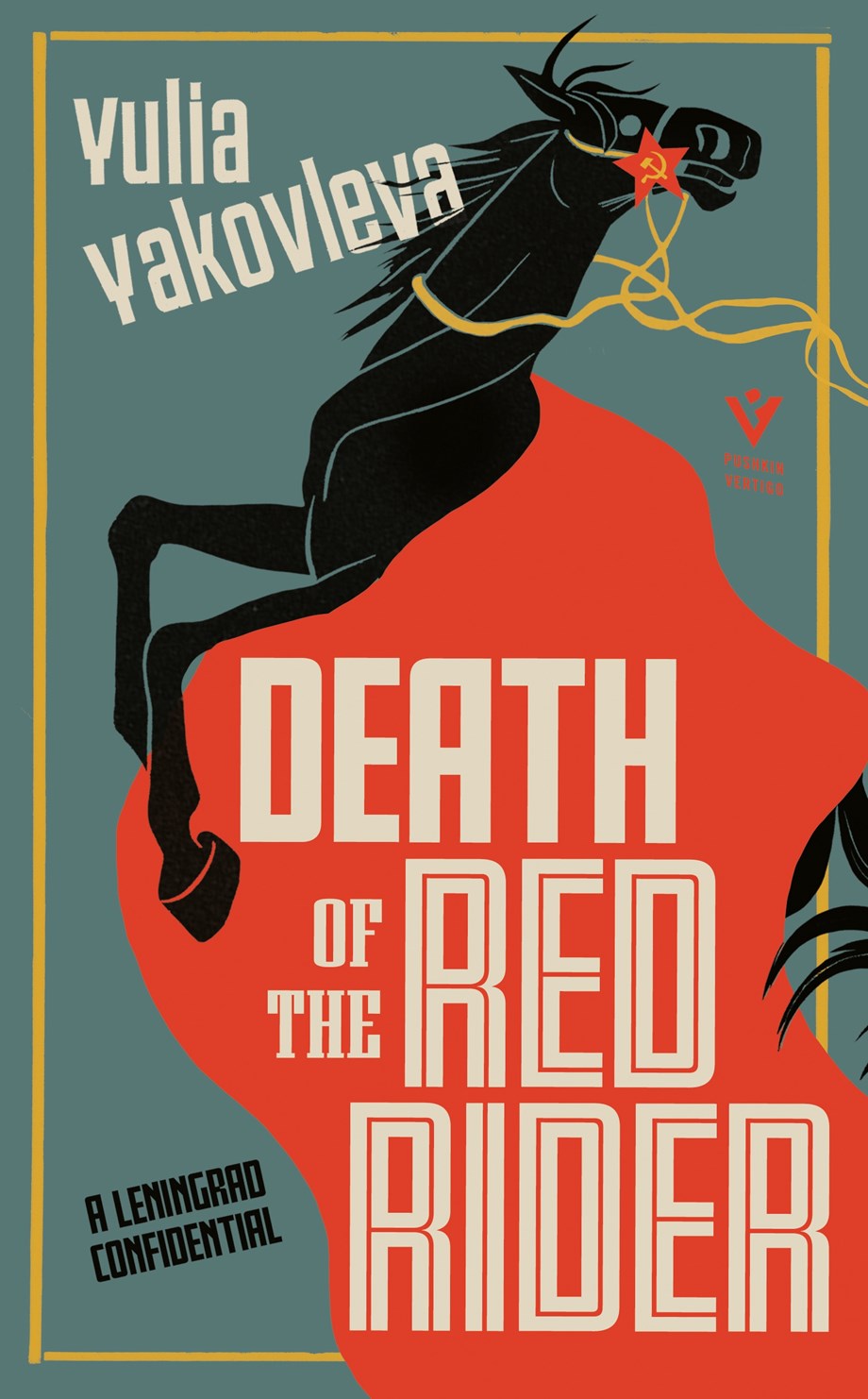
    DEATH OF THE RED RIDER, The Leningrad Confidential series #2


    DEATH OF THE RED RIDER
    YULIA YAKOVLEVA
    (The Leningrad Confidential series #2) (tr. Ruth Ahmedzai Kemp) Pushkin Vertigo (non-affiliate Amazon link)
    $9.99 ebook editions, available now

    Rating: 4.5* of five

    The Publisher Says: As the Red Terror gathers pace, a horseman and horse mysteriously collapse in the middle of a race in Leningrad. Weary Detective Zaitsev, still raw from his last brush with the Party, is dispatched to the Soviet state cavalry school in Novocherkassk, southern Russia, to investigate. As he witnesses the horror of the Holodomor, and the impact of Soviet collectivisation, he struggles to penetrate the murky, secretive world of the cavalry school.

    Why has this particular murder attracted so much attention from Soviet officials? Zaitsev needs to answer this question and solve the case before the increasingly paranoid authorities turn their attention towards him...

    Don’t miss the second installment in the atmospheric and relentlessly dark detective series set in Stalinist Russia, where corruption, informers, and purges take paranoia to the next level.

    I RECEIVED A DRC FROM THE PUBLISHER VIA EDELWEISS+. THANK YOU.

    My Review
    : Less gray-skied than Punishment of a Hunter, just as paranoid, just as nail-bitingly intense. The action moving south of Leningrad to "Cossack country," a nomenclatural sidestep from the modern name of a place Little Vladdy Pu-Pu doesn't much like having mentioned at present, changes the externals and, if anything, ramps up the internal conflicts between self and State present in every single breath taken in Stalinist times.

    Zaitsev has a new...comrade? minder? internal spy?...in Zoya, a woman with a chip on her shoulder about being judged unfairly (because woman), a woman with a difficult attitude of disrespect for the people among whom she and Zaitsev must do their investigative job, and a general poor substitute for last book's Nefyodov. When you're among people who are extra-suspicious of you because you're Russian when they were already unhappy to see someone sent by the central authorities to poke around in places they'd just as soon leave unpoked, thanks, to solve a crime that took place a world away, to someone whose life was a-rattle with the skeletons in his closet...this will not end well for plenty of folks.

    It's heavenly!

    No one can be trusted! About/with/for ANYthing! Every time Zaitsev finds something out he has to unwrap more shades of meanings than Tut had embalmers' bandages! Impressively, Author Yakovleva manages to make the thriller-y bits cohere well. There's a secondary theme in who was murdered, where, and why, though it's not particularly energetically explored. It very much comes with the murdered man's identity, and I found it and its deeper ramifications interesting, but if I don't holler about it the importance won't be obvious to most. And I won't. This series has, as one of its main pleasures, the pressure cooker of Zaitsev sweating out the clues, in the teeth of multiple prongs of opposition, while uncovering realities of his life lived in Soviet Russia that break him on a human level.

    So my attention was riveted again...last book I gave an extra quarter-star to, elevating it almost to fivehood. Not this one, despite my praising it; so why?

    As pleasure reading, deeply interesting history of the Red Terror is...challenging. The information Zaitsev discovers as his investigation goes on would've gotten him shot in 1937 Russia. He could not have survived learning what he did...too much evidence to the contrary exists in the identities of the many murdered. So my disbelief muscle was sore from overuse. Also, why didn't he just shove Zoya under a tram or into a combine harvester and have done with it? She was more than a poor partner for an investigator, she was a provocatively bad investigator herself.

    So there's the missing fractional star. Noe of that made me less eager to get to the next chapter, and I could not wait to pick up the read every day.

    So a big #WITMonth win for Pushkin Vertigo, and me; y'all, too, if you go get one now.

    Tuesday, April 1, 2014

    MUNDO CRUEL, stories with huge bite force and better aim


    MUNDO CRUEL: Stories
    LUIS NEGRÓN
    (tr. Suzanne Jill Levine)
    Seven Stories Press
    $13.93 all editions, available now

    WINNER OF THE 26th Lambda Literary Award—BEST GAY GENERAL FICTION!

    25% OFF DIRECT PURCHASES OF #WITMONTH TITLES HERE: https://sevenstories.com/blogs/385-celebrate-women-in-translation-month-2025

    Rating: 5* of five

    The Publisher Says: Luis Negrón’s debut collection reveals the intimate world of a small community in Puerto Rico joined together by its transgressive sexuality. The writing straddles the shifting line between pure, unadorned storytelling and satire, exploring the sometimes hilarious and sometimes heartbreaking nature of survival in a decidedly cruel world.

    My Review: I read the book in 1974. I got a hardcover Modern Library edition from my decade-older sister, who owned a bookstore. I read it in one solid week of enchantment, followed by a year of revisits and studies of the notes and other references. (The librarians at my high school agreed with the kids who teased me for being weird.)

    This is a new translation, I have a copy, but many chunksters await my attention that I haven't read before. I'll get back to it. I look forward to getting back to it! I'll be using the Bryce Method to give you a story-by-story précis of my opinions.

    The Chosen One

    The Vampire of Moca

    For Guayama

    La Edwin

    Junito

    Botella

    So Many: Or On How the Wagging Tongue Sometimes Can Cast a Spell

    The Garden

    Mundo Cruel

    Thursday, June 2, 2016

    INFIDELS, Author Abdellah Taïa's deeply felt & extremely unpopular among Muslims short novel


    INFIDELS: A Novel
    ABDELLAH TAÏA
    (tr. Alison L. Strayer)
    Seven Stories Press
    $23.95 hardcover, available now

    25% OFF DIRECT PURCHASES OF #WITMONTH TITLES HERE: https://sevenstories.com/blogs/385-celebrate-women-in-translation-month-2025

    Rating: 4* of five

    The Publisher Says: Set in Salé, Morocco—the hometown Abdellah Taïa fled but to which he returns again and again in his acclaimed fiction and films—Infidels follows the life of Jallal, the son of a prostitute witch doctor—"a woman who knew men, humanity, better than anyone. In sex. Beyond sex." As a ten-year-old sidekick to his mother, Jallal spits in the face of her enemies both real and imagined.

    The cast of characters that rush into their lives are unforgettable for their dreams of love and belonging that unravel in turn. Built as a series of monologues that are emotionally relentless—a mix of confession, heart's murmuring, and shouting match—the book follows Jallal out of boyhood on the path to Jihad. It's a path that surprises even him.

    I RECEIVED AN ARC FROM THE PUBLISHER. THANK YOU.

    My Review
    : Stellar, stellar read. I was sent to the online translation-dictionary at least 10 times, which is a good thing for me. It's a genuine pleasure to look at and hold, as you'd expect from a Seven Stories book. The story only makes the aesthetic pleasure better, as well-crafted as such a concentrated fiction can possibly be.

    As with all of Taïa's writing, this is a spectacularly beautiful-sounding text.
    War was declared from the very first note. This woman...was not afraid of repeating herself, of saying the same words over and over, fighting a solitary battle. The battle of love, of course.
    You whose love gave my life flavor, color
    I'll never give you up, whatever happens
    Whatever happens
    And if a word was said in anger
    And injured our hearts
    We forget our sadness
    And which of us spoke,
    It's through the soul that we love
    We'll always be together
    All our lives, together
    Whatever happens
    I loved you
    When I found you
    Before my eyes a distant dream
    Was in my eyes
    Out of reach
    The next moment it was in my hand
    Who chooses to leave paradise?
    Why destroy our own hopes
    And spend the rest of our lives regretting
    What happened?
    You whose love gave my life flavor, color
    I'll never give you up, whatever happens
    Whatever happens
    Never
    Never
    Give you up
    Whatever happens.

    It took our breath away.
    The song lasted almost seven minutes. It was so powerful. And the voice...rang out from the heart of the war. War to the bitter end, the final breath. ...
    "The man she's talking about in that song doesn't exist. No man can be worthy of such love and sacrifice."

    You will never know how much the moment costs while you're in it, but that is the precise inflection point where a youth becomes a warrior.

    It is Part III that seems to cause Muslims the most outrage, the betrayed hurt of being misunderstood from within; Taïa is one of their own! He sends young Jallal into such pain and loneliness that not even a god could endure; a mother murdered before her body dies and all for what? What justifies the torture of another soul? (Nothing, of course, but there's always a reason even when there can be no excuse.) And here is Mouad, a stranger, a Belgian whose heart heard the Prophet's call; he has parts of Jallal's mother that her son can't see or hear, so naturally he hates the man who usurped his child's place beside his mother.

    But it is Mouad who, indirectly, leads Jallal to Mathis-Mahmoud; leads him to a death that is Resurrection and completion.

    Yes, the horror happens.

    But God is beyond mere human hates and judgments. Mathis-Mahmoud and Jallal are, in a soliloquy of God's, united and blessed and made whole together.
    You see, I'm like you. In misfortune and in power. Divine and orphaned. I'm made of the same stuff as you. I'm in you. In every body. Every night. Every dream.
    Don't cry, Jallal.
    Take his hand, Mathis.
    Go. Go. As brothers of the heart. There, behind that door, life has not even begun for you.
    Go. On the way you'll pass a beautiful pomegranate tree. Pick two pomegranates. And later, before you go to sleep, take a moment to eat them.

    Friday, August 8, 2025

    EMPTY CAGES, latest read from Hoopoe Books for #WITMonth


    EMPTY CAGES
    FATMA QANDIL

    Hoopoe Books|American University in Cairo Press (non-affiliate Bookshop.org link)
    $18.99 ebook, available now

    Rating: 4.5* of five

    The Publisher Says: Winner of the Naguib Mahfouz Medal for Literature, Empty Cages is an urgent and raw confessional of memory and family and all that is lost and won in one woman's lifetime

    The discovery of an old tin of chocolates, its contents long ago devoured, marks the entry into this intimate story that reaches back through a lifetime of memories in search of self and home.

    In celebration and suffering, triumph and disappointment, Qandil’s voice is unflinching, revealing both a determination to speak the truth and a poetic sensitivity that is disarming. Reflecting on a family disintegrating—and with it, perhaps, a whole way of life—memories of a happy childhood melt away to reveal the fecklessness of selfish older brothers, a father’s addiction, a mother’s illness, and the violence and death—both literal and figurative—of those nearby.

    Recipient of the Naguib Mahfouz Medal for Literature, this stunning fictional debut marks the arrival of a stunning new voice.

    I RECEIVED A DRC FROM THE PUBLISHER VIA EDELWEISS+. THANK YOU.

    My Review
    : Lyrically examining disappointment as a goad to seek one's own path is not an ordinary novelistic choice. Author Qandil chooses that course in this story of Fatma designing a life that suits her, that agrees with her, and that excludes the always unpleasant reality of family failures and failings. Quite radical for a woman in Egypt...or anywhere for that matter...to choose.

    I can see the reasons Author Qandil was awarded a literary prize, and it is meet and right that she should receive one named for Nahfouz. Adam Talib has rendered her prose into fluid, mellifluous English, so I can feel the richness and harmony of her native language underpinning the translation. The story commences with meditations on a Cadbury's chocolates tin, and for several pages we follow Fatma's thoughts and memories as they swirl and coruscate to form a story out of what I'd see as trash.

    When poets write prose it can be a beautiful gift. Poet and novelist Qandil's story exemplifies this in her (I assume, perhaps incorrectly) autobiographical novel. I was never sure, nor do I feel I was expected to be, how much Fatma was Everywoman, and how much was generalized from the unending fight against the plight of women in a patriarchal world.

    That plight is exemplified by novel-Fatma's cultural expectation of her advantageous (to the men in her family) marriage. She bears much cultural weight in coping alone (dead mother, only girl) with her addict father and her unbearably narcissistic brothers. Marriage she flatly rejects. Takes bold, brassy confidence to do that, and succeed...yet never trigger a violent backlash in a world around her that is steeped in misogynistic violence.

    Mostly.

    Whenever you read a passage and think, "oh, that means this," don't get too invested in that interpretation. Author Qandil does not traffic in certainty or security or any other absolutes. Her story is smoke, water, sunlight...smooth to look at, seeming solid from this way or that of examining it, but grasp it and end up with something you did not expect left in your hands.

    That, my friends, is how you know you're seeing Art being made before your dazzled gaze.

    Why not five stars? Some details are culture-specific enough as to require explication that does not happen. I think none are holes that make the story unrelatable, just smaller moments that add nothing in English but feel like they did originally. If they did not, then the docked half-star stays the same.

    Saturday, August 29, 2026

    THE CULTURE OF LIES, last collection of essays I have of Dubravka Ugrešić's to review


    THE CULTURE OF LIES
    DUBRAVKA UGREŠIĆ
    (tr. Celia Hawkesworth)
    Open Letter Books (non-affiliate Bookshop.org link)
    $9.95 ebook, available now

    Rating: 4.75* of five

    The Publisher Says: The Culture of Lies is one of the most intelligent and lucid accounts of an appalling episode in history. It shows us the banality and brutality of nationalism and the way that nationalistic ideology permeates every pore of life. Ugrešić's acerbic and penetrating essays cover everything from politics to daily routine, from public to private life.

    With a diverse and unusual perspective, she writes about memory, soap operas, the destruction of everyday life, kitsch, the conformity of intellectuals, propaganda and censorship, the strategies of human manipulation and the walls of Europe which, she argues, never really did fall.

    Shot through with irony and sadness, satirical protest and bitter melancholy, The Culture of Lies is a gesture of intellectual resistance by a writer branded "a traitor" and "a witch" in Croatia.

    I RECEIVED A DRC FROM THE PUBLISHER VIA EDELWEISS+. THANK YOU.

    My Review
    : A collection of very wise, trenchant, and tendentious essays to cap off #WITMonth.

    Shifting from Yugoslav nationality to Croatian was not a seamless process for Author Dubravka. A new passport under a new governing entity does not change the passport holder's identity or thought processes or, dangerously, political beliefs. Dissent is even more dangerous in a newly created state struggling to distance itself from the burdensome and ill-fitting imposed identity and ideology. Author Dubravka didn't fit in when Yugoslav was a political state's demonym, but neither did loads of other folk. "Croatian" as a political demonym is new enough that to dissent from the new ruling class is to risk losing the right to use it. This is where Author Dubravka ended up, an ethnic Croat instead of a Croatian citizen.

    Labels don't matter much to me in my white US male's privilege. Unless I insist on bringing my Otherness to the fore, I can simply walk around being an "American," a label that makes me wince at its arrogance. Author Dubravka did not exist in that bubble of certainty. Her identity, dissenter, observer, critic, meant her labeling got complicated quickly in the upheavals of Communism's death throes. The wry tone of these works does not foreground a thing I perceive, possibly that I interpolate, the trauma and pain of losing an identity, a building block of selfhood. It's clear the fact of that loss is central to Author Dubravka's work; she does not wallow or lament but rather observes and analyzes. I still feel an edge of strong emotion despite it not being foregrounded.
    I know of a writer colleague who claimed to a foreign journalist that he was ‘the victim of repression’ under Yugo-communism, that his books were banned, and that he had been in prison. That colleague was never in prison nor was he ‘the victim of repression’ and all his books were regularly published. I do not believe that he was lying. Exposed to media brainwashing, terror by forgetting and collective compulsion, my colleague had simply forgotten his personal history, he carried out an unconscious mental touching-up, and in the general context the spoken lie became an acceptable truth. And after all, the foreign journalist had come to hear just such a story, in his Westerner’s head he already carried such a stereotype: the story of a repressed writer in the former communist regime and a happy end in the new, democratic one.
    It's not a shouted pain, it's a carefully phrased analysis of trauma's aftermath that shows how very painful it was for all to need to re-craft selves when their world ended. New nationalisms, new canons, new ethnic expressions glorified...all processes we undergo in youth and that are painful enough to live through even in that more mentally agile passage of life; as an older, even an old, person...!
    I am no one. And everyone. In Croatia I shall be a Serb, in Serbia a Croat, in Bulgaria a Turk, in Turkey a Greek, in Greece a Macedonian, in Macedonia a Bulgarian… Being an ethnic ‘bastard’ or ’schizophrenic’ is my natural choice, I even consider it a sign of mental and moral health. And I know that I am not alone. Violent, stubborn insistence on national identities has provoked a response: today many young citizens of former Yugoslavia, particularly those scattered throughout the world, stubbornly refuse any ethnic labels.

    There is a lot to be learned for us in the US on the subject of nationalism and identity in 2026 that a public intellectual from a disintegrating polity can teach us from the 1990s. Author Dubravka felt, though, analyzed, contextualized for us already. I hope more of us will now absorb and appreciate that gift in our own parlous times.

    Monday, August 26, 2024

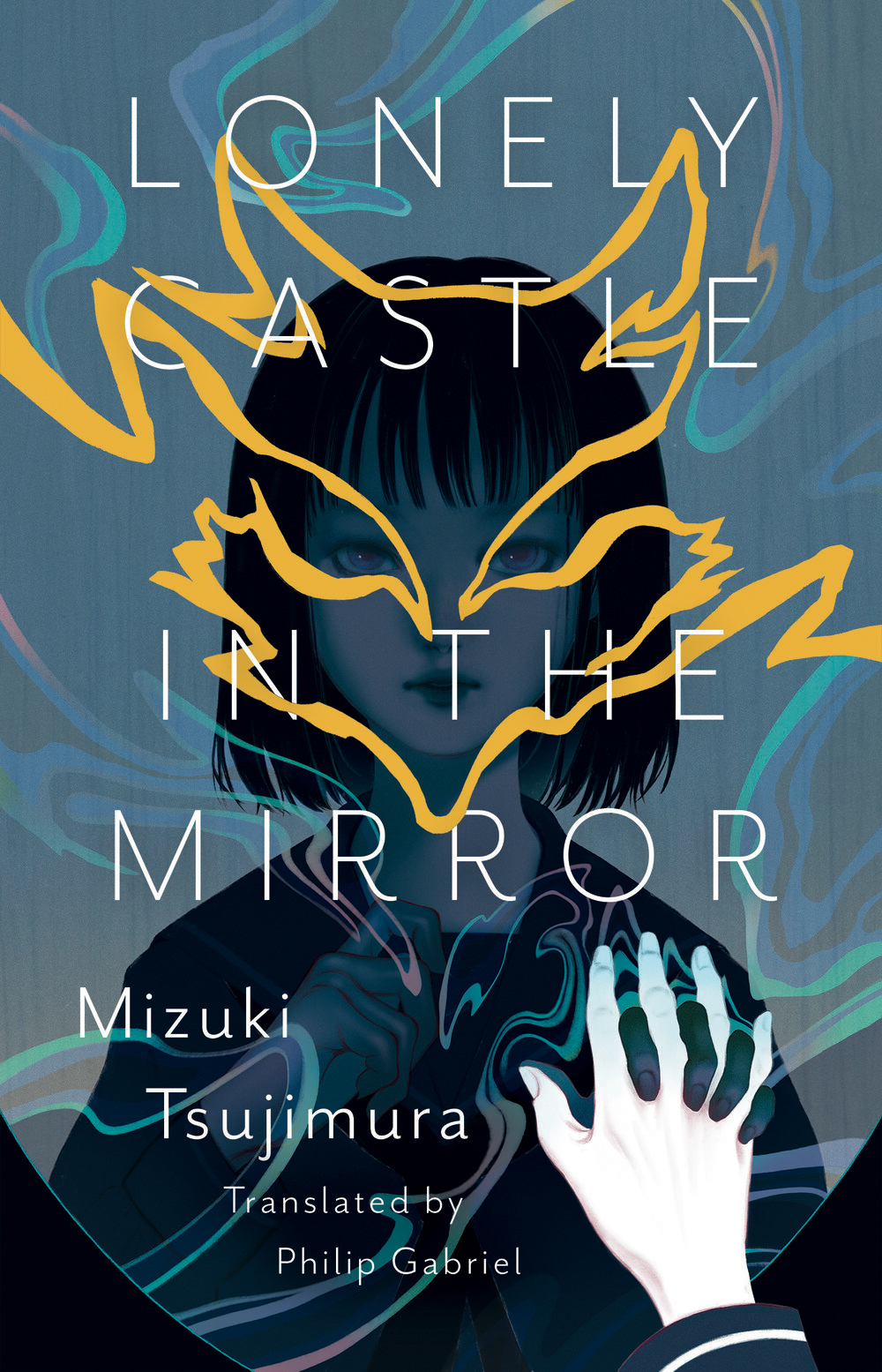
    LONELY CASTLE IN THE MIRROR, #WITMonth Japanese YA fantasy page-turner


    LONELY CASTLE IN THE MIRROR
    MIZUKI TSUJIMURA
    (tr. Philip Gabriel)
    Erewhon Books
    $27.95 hardcover, available now

    Rating: 4.5* of five

    The Publisher Says: In a tranquil neighborhood of Tokyo seven students are avoiding going to school—hiding in their darkened bedrooms, unable to face their family and friends—until the moment they find the mirrors in their bedrooms are shining.

    At a single touch, they are pulled from their lonely lives into to a wondrous castle straight out of a Grimm’s fairy tale. This whimsical place, oddly lacking in food and running water but full of electrical sockets, is home to a petulant girl in a mask, named Wolf Queen and becomes their playground and refuge during school hours. Hidden within the walls they’re told is a key that will grant one wish, and a set of clues with which to find it. But there's a catch: the key must be found by the end of the school year and they must leave the premises by five o'clock each day or else suffer a fatal end.

    As time passes, a devastating truth emerges: only those brave enough to share their stories will be saved. And so they begin to unlock each other's stories: how a boy is showered with more gadgets than love; how another suffers a painful and unexplained rejection and how a girl lives in fear of her predatory stepfather. As they struggle to abide by the rules of the game, a moving story unfolds, of seven characters trapped in a cycle of misunderstanding and loneliness, who are ultimately set free by the power of friendship, empathy, and sacrifice.

    Exploring vivid human stories with a twisty and puzzle-like plot, this heart-warming novel is full of joy and hope for anyone touched by sadness and vulnerability. At the heart of this tender, playful tale is a powerful message about the importance of reaching out which shows how with one kind act you can change your life for the better, and more importantly, you can change the lives of others.

    I RECEIVED A DRC FROM THE PUBLISHER VIA EDELWEISS+. THANK YOU.

    My Review
    : A story about coming out, though not the kind that phrase currently evokes. These socially maladroit and thus ostracized middle-schoolers are magically transported away from the bullying horrors of that age...the characterization of reincarnation as an endless round of middle-school lifetimes makes me so very glad I'm not A Believer...but, of course, there's a price to pay for this act of rescue. The seven of them must open up, honestly share their experiences, and only then will they be truly safe.

    Well. That sounds like something I'd be sharpening my flensing knife with a ghoulish grin on my face, doesn't it? More adolescent exceptionalism! And with an added splodge of fantasy goo! "Oh he's gonna go to town on this one!"

    Not this time.

    Any story in which adolescent readers are encouraged, without bludgeoning, to share, and to respect the gift of sharing from another, gets my vote. Then to put it in a fantasy world that protects the wounded ones? Bonus points! To go on with the worldbuilding in a way that connects their safe escape spot back to the world they're rescued from, yet without the toxicity they need rescuing from flooding in after them? Rare and delicate flower, let me inhale you! The most usual problems are here, the bullying and the losses of safety and love. Each person's also shown to be made aware from the response to the issue that led the sufferer to this magical safe space of how much different the same stimulus can feel to different people.

    Literally the point of this entire book is to learn the art of perspective in dealings with others.

    I would like to experience no surprise, no extra frisson of happiness at this. The world would be a better place if I didn't. But I did, and I encourage all y'all with grands, niblings, kids of twelve or more, to grab this story up thence to present it ever-so-casually to them. It's a message, one of kindness and the presumption of goodwill on the part of all who are not genuinely rotten-souled, that I'd strongly urge getting into their heads.

    Their dads and uncles, older brothers, and so on, as well.

    Thursday, August 21, 2025

    VIVIAN, #WITMonth biographical novel illuminating a complex woman from many angles


    VIVIAN
    CHRISTINA HESSELHOLDT
    (tr. Paul Russell Garrett)
    Fitzcarraldo Editions (non-affiliate Bookshop.org link)
    $17.95 trade paper, available now

    Rating: 3.5* of five

    The Publisher Says: In her new novel, Christina Hesselholdt delves into the world of the enigmatic American photographer, Vivian Maier (1926-2009), whose unique photographic body of work only reached the public by chance.

    On the surface, Vivian Maier lived a quiet life as a loving, firm and feisty nanny for wealthy families in Chicago and New York. But throughout four decades, she took more than 150,000 photos, mainly with Rolleiflex cameras. The pictures were only discovered in an auction shortly before she died, impoverished and feasibly very lonely. In a time when self-obsession and representation are at an all-time high, Vivian Maier holds a particular fascination. Who was this eccentric person? And why did she not try to make a living from her art?

    In VIVIAN, a chorus of voices, including Vivian's own, address these questions. We watch Vivian grow up in a severely dysfunctional family in New York and Champsaur in France, and we follow her as a nanny in Chicago and as a photographer on the streets of these American cities and in rural France. The novel comprises multiple voices: Vivian's, her mother's, one of the children she looked after and her parents. And crucially, the voice of the inquisitive narrator, who pulls the threads together and asks Vivian prying questions.

    I RECEIVED A DRC FROM THE PUBLISHER VIA EDELWEISS+. THANK YOU.

    My Review
    : There's a chorus in this book, all right, one that talks around Vivian Maier's life...because there are so few real reliable sources on the life of this odd, fragmented woman...because the film about her already plowed the factual field of her life...because she was a pretty ordinary person as well as an extraordinary observer.

    All of which adds up to a life that doesn't have enough factual meat but has very interesting story-bones to carry a text treatment that adds to the excellent films that center her wonderful visual legacy. A polyphonic novel can stitch together points of view that can't bear non-fiction's scrutiny while making truthful points about how Vivian became the figure, the outsider icon, the feminist parable that she was so perfectly suited to become.

    A woman doing childcare as a career while creating hundreds of thousands of photographs, many iconic now they're public, is proof of women's clear statements that The System&8480; is set up to ignore women's creativity. Her life wasn't just odd, though, because she was brought up oddly; I think her personality as it comes through literally everywhere she is discussed is that of an outsider. It makes one a better observer to feel and to be perpetually outside the herd, away from the hearth, looking in at it with removed detached clarity.

    This novel, from structure to execution on a sentence level, reinforces that sense. As I read the story, I realized how much it added to my appreciation of Author Hesselholdt's presentation of Vivian to realize that she researched her subject in a foreign language source pool; wrote her story in Danish (to wide praise); and then I read it in English translation.

    It is perfection as an origin story; it has some concomitant infelicities on the gestalt. The multiple PoV structure gets wearing because it demands one exercise memory to connect what that character said quite a reading-while ago. It also, while illuminating Vivian in the light she blocked for different people, makes me wish for fewer shifts and a shorter book. At under two hundred pages, I was sure I'd knock out the read in a day and a half; it took over five years because he aforementioned required concentration wasn't always available for me to give leading to five separate re-starts.

    While I ended up a true aficionado of the story I was there because I'm really stubborn. Others might not feel like putting in the effort of resolving polyphony into its complex harmony, in focusing the varying wavelengths of light into a very slightly blurry image. I'd recommend you do, but I know it's a style that won't suit all. If possible read the ebook sample available to check how you vibe with the style.

    Authors who take unusual approaches to storytelling are to be praised; it's down to your unique taste if they're to be supported. I'm praising, are you supporting?